Étiquette : Gianpietrino
ARTKAREL AUDIO COMMENT : Leonardo’s splendid copy of his Last Supper in Tongerlo, Belgium
To listen to the audio from the pdf you can click on this link :
https://artkarel.com/artkarel-audio-guide-leonardos-splendid-copy-of-his-last-supper-in-tongerloo-belgium/
Leonardo’s Last Supper,
the splendor of the copy of Tongerlo
by Karel Vereycken
In 1495, Leonardo da Vinci, tasked by Ludovico Sforza, the duke of Milan, started painting his fresco The Last Supper, in the refectory of the Dominican Cloister of Milan. It took him three years. Taking a huge risk, the master tested an experimental technique by using an oily tempera paint on a dry chalk wall, rather than using the traditional fresco technique.
While Leonardo’s composition is fantastic, his technical experiment failed. Rapidly the paint started to flake off from a wet wall, with the image increasingly fading away. Today, before restoration, only 20 % of the original paint has survived.
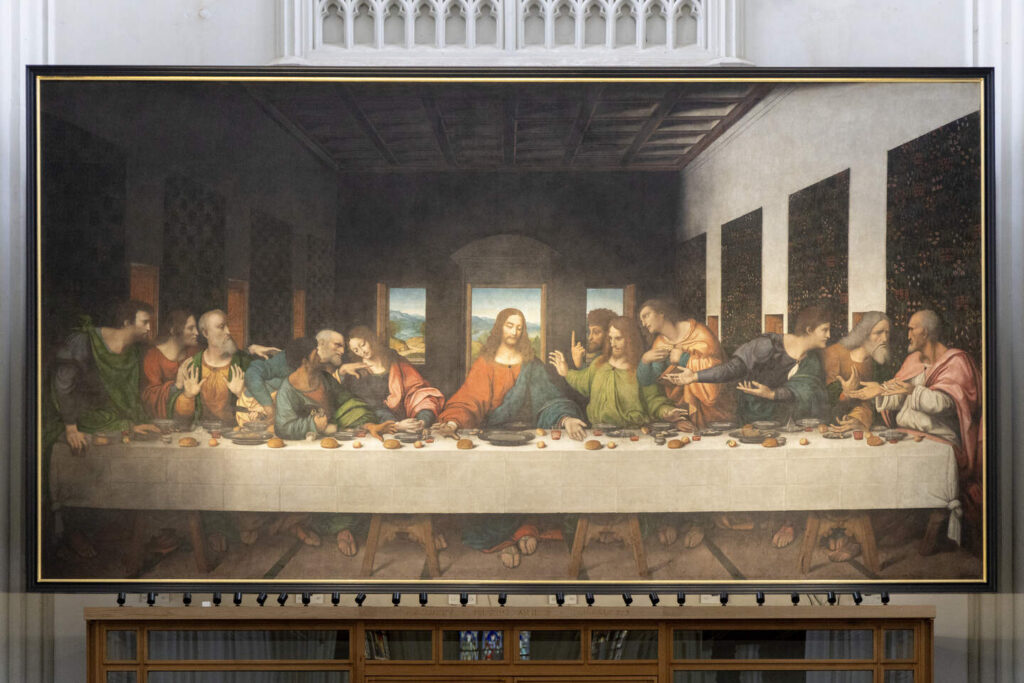
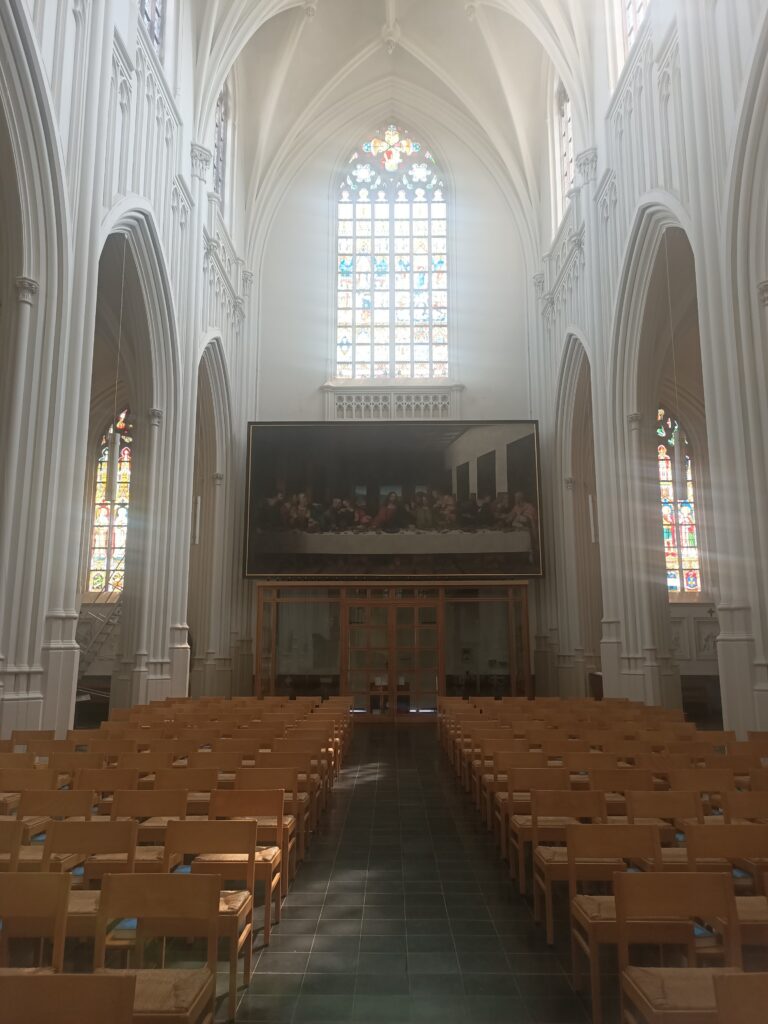
The Italian restorer, the now deceased professor Madame Penin Brambilla, who spent 20 years restoring the original in Milan, stated that “If you want to taste the full splendor of the Last Supper, you have to see the life size copy painted before 1508 by Leonardo himself and a team of pupils, hanging in the Church of the Norbertine Abbey of Tongerlo, Belgium.”
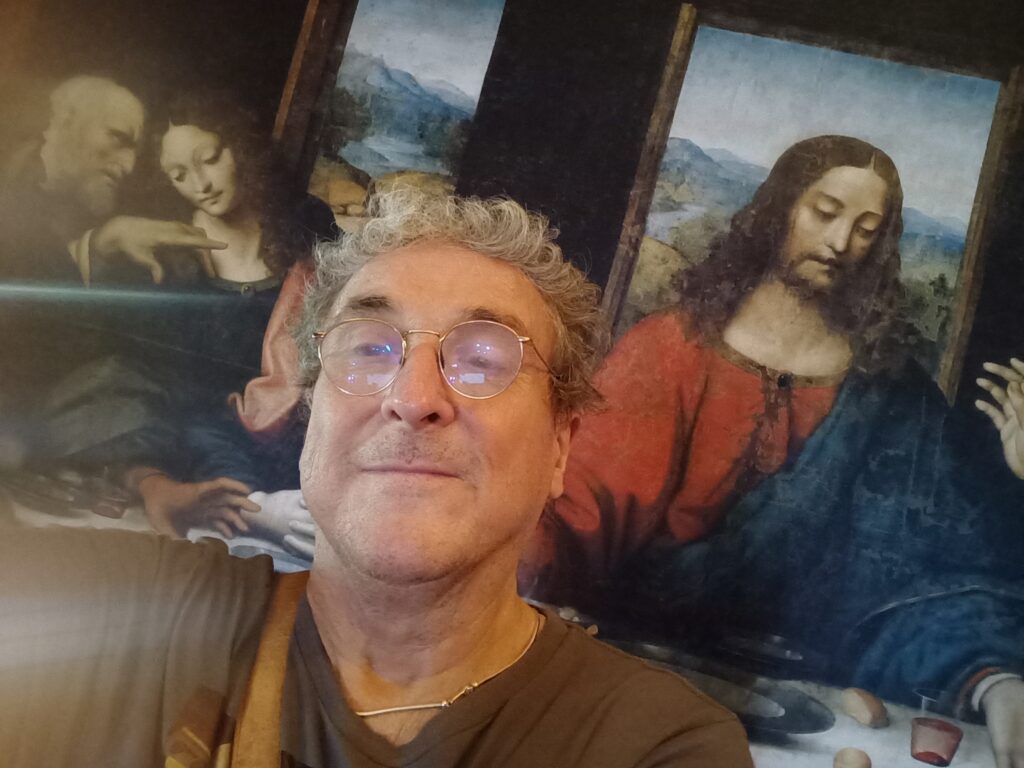
That is where I stand right now. Since people are praying, I taped this audio in the adjacent building, where visitors can see an excellent documentary about the history of this copy.
I have discussed the content of this painting in an article many years ago and for reasons of time, I will not list here the series of dramatic accidents (fires, accidents, thefts) that mark the history of this copy once it was finished.
I will only will try to answer one question : who made this copy ?
Recent research has discovered crucial historical documents. The first indicates that the French King Louis XII, once his army took Milan, fell in love with Leonardo’s fresco. Consequently, he asked his engineers to take the entire wall and ship it to France ! Once the kings engineers showed him this was impossible, the only remaining option was to ask Leonardo to make a copy on canvas.
In fact, as soon as Leonardo finished his fresco, copies were made of it. Making copies of your own artistic production was not unusual at that time since by far the best way to get visibility for your works, especially before the printing industry flourished. Hence, Leonardo made or had copies made of several of his own works, including the Mona Lisa, the Virgin on the Rocks and Saint Anne and the Virgin.
About the copies of the Last Supper, the following:
–One was made by Marco d’Oggiono (1470-1549), one of Leonardo’s pupils. It is a lot smaller and hangs in the Musée de la Renaissance in Ecouen in France.
–Another one was made by another pupil, Giampietrino. It hangs today in the Royal Academy of the Arts in London which acquired it in the 19th century.
–But the copy bought in Antwerp in 1545 by the Abbey of Tongerlo is considered the most exact and most delicious. It’s origin is known, since it is mentioned in the inventory of the castle of Gaillon, which was property of cardinal Georges d’Amboise, archbishop of Rouen and minister of king Louis XII.
Technical features indicate that the copy (on hemp and not on linen) was made in Italy before 1508 by three pupils working under Leonardo’s direct, active personal leadership: Andrea Solario (1465-1524), Giampietrino (1495-1549) and Marco d’Oggiono. Each would have painted a particular group of apostles. For example, Gianpietrino would have painted five of them starting from the left.
The American professor Jean-Paul Isbouts, who examined the work with the most advanced state of the art technology, noted that while under-drawings exists for nearly the entire painting, they lack for the head of Christ and that of John the apostle, whose face is very feminine and reminds viewers of Leonardo’s “Virgin on the Rocks.” (Louvre, Paris).
With still other investigative techniques, the Russian Professor Vadim Parfenov of the University of Saint Petersburg, came to the conclusion that those faces (Christ and Saint John) were painted by a left-handed artist, most likely Leonardo who we know was left-handed.
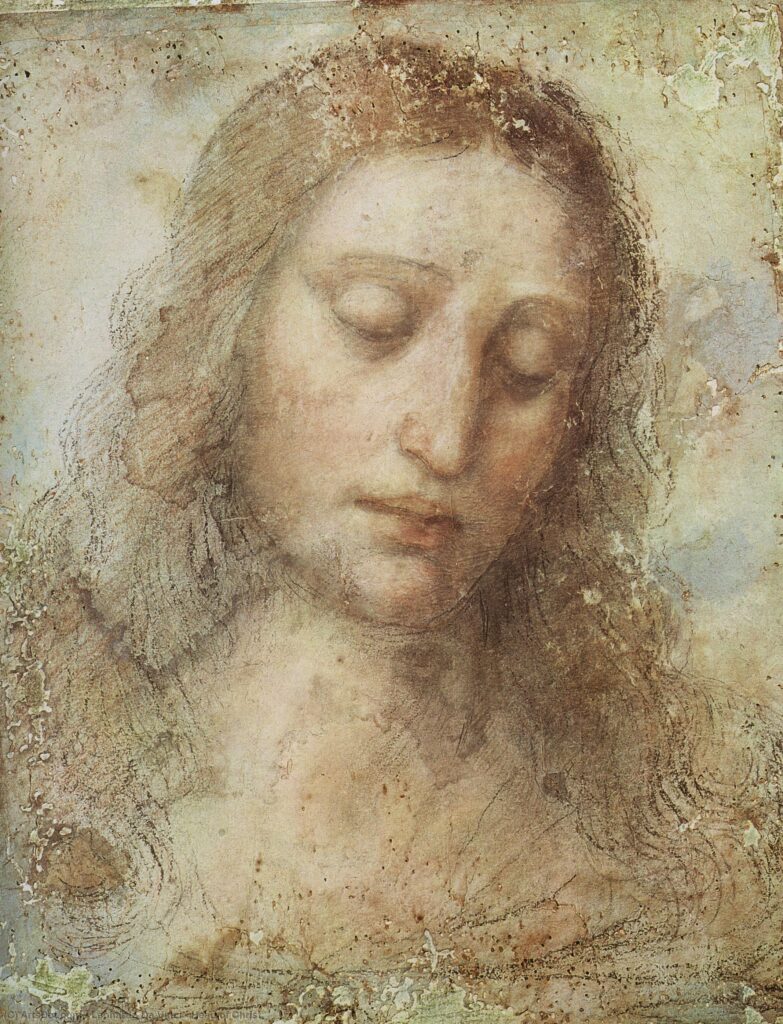
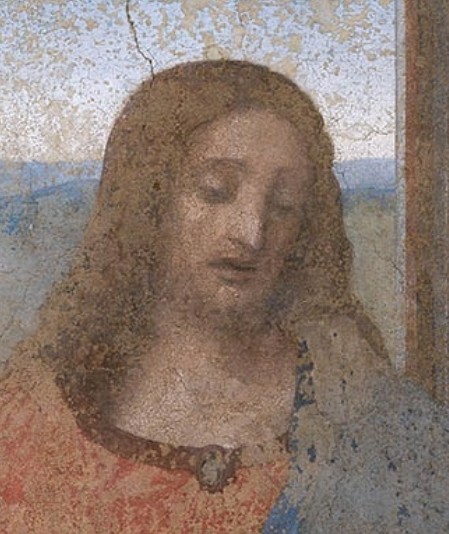
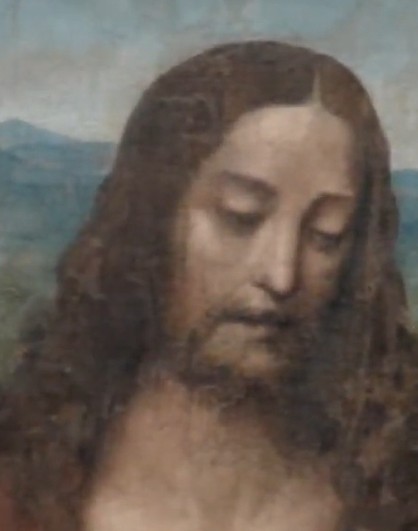
All this new research blew my mind, since I thought it was a late copy and didn’t suspect to see Leonardo at work in producing copies himself of his own works.
Reflect for a second. Imagine Leonardo’s Milan fresco of his Last Supper totally disappearing by the failure of his technical experiment, a highly predictable outcome in that time. Humanity would have lost the entire achievement. Only a good copy, such as that of Tongerlo, would have preserved Leonardo’s genius for the next generations, and in a sense, it did. For example, the landscape in the background, only survives visually thanks to the Tongerloo copy !
So if you are a brilliant painter, feel free to produce handmade copies or have your pupils make them! It is a joy for all of us and hopefully for a long time!