Catégorie : Média
Media coverage, couverture de presse
Karel Vereycken selected for « 101 Art Book : Faces Edition »
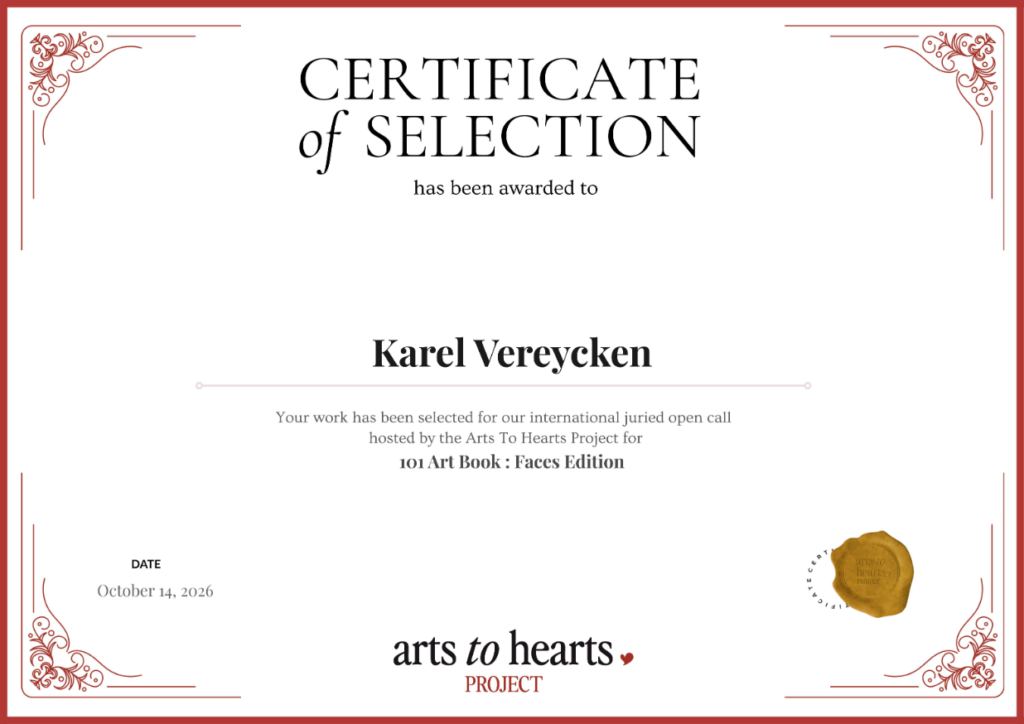
On Oct. 14, 2026, Franco-Belgian Painter engraver Karel Vereycken was informed that his work was selected to be inclued in « 101 Art Book: Faces Edition » published by Arts to Hearts Project.
According to the publisher:
« 101 Art Book: Face Edition is a carefully curated hardcover publication that brings together 101 artists, each exploring one of the most timeless and expressive subjects in art—the face. While every artist begins with the same theme, no two interpretations are alike. Together, these works reveal the incredible diversity of contemporary artistic practice and the countless ways we understand identity, emotion, and human connection. »
More news to follow.
Karel Vereycken in World Art Collection book
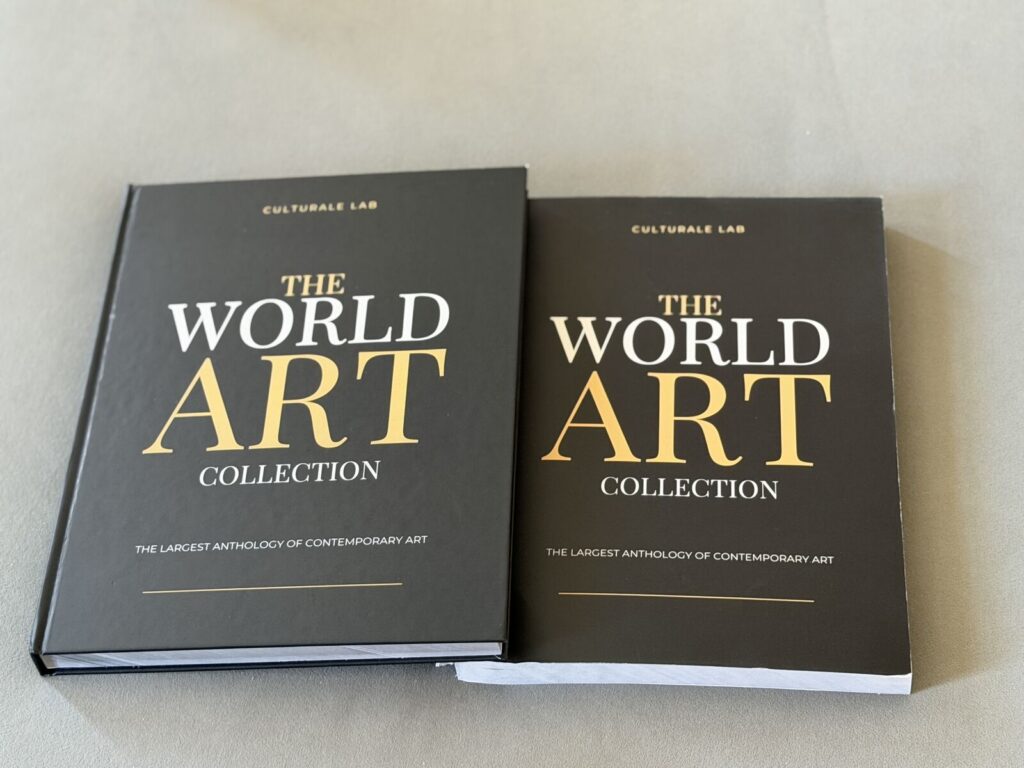
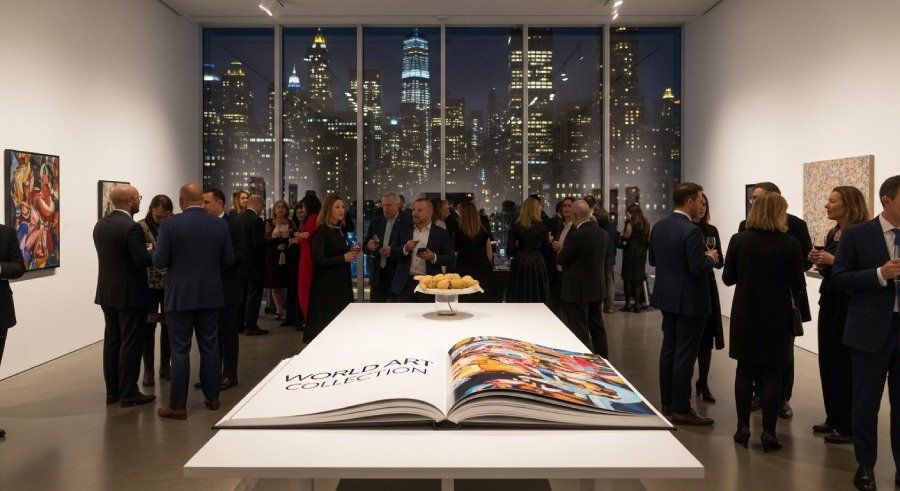
Karel Vereycken’s profile and artwork is featured in the « World Art Collection« , an incredible international project by Culturale Lab that brings together more than 5,000 artists from every corner of the globe, creating a monumental publication that celebrates creativity in all its forms.
The World Art Collection will be officially unveiled in New York City in September/October 2026. The book launch will be documented and shared across all platforms. This might be the biggest art project book ever created, connecting artists, galleries, and art lovers worldwide.
A link to the event and the publication will become available in October 2026.
Karel Vereycken selected for Best Contemporary Visual Artists Worldwide Guide & Catalog Vol. 4
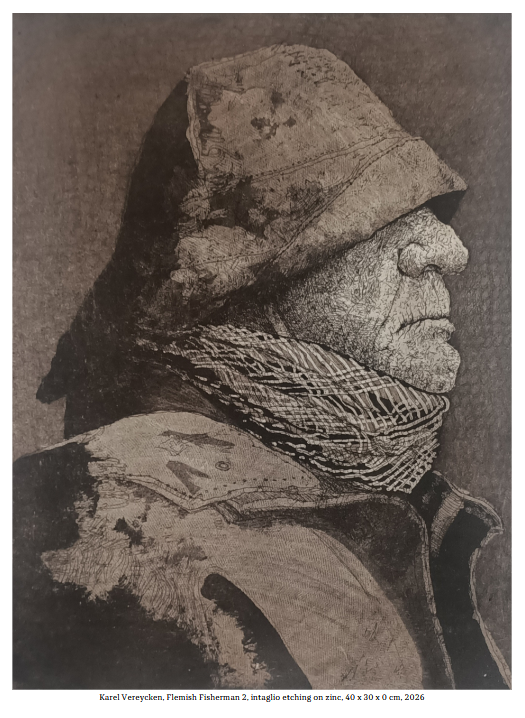
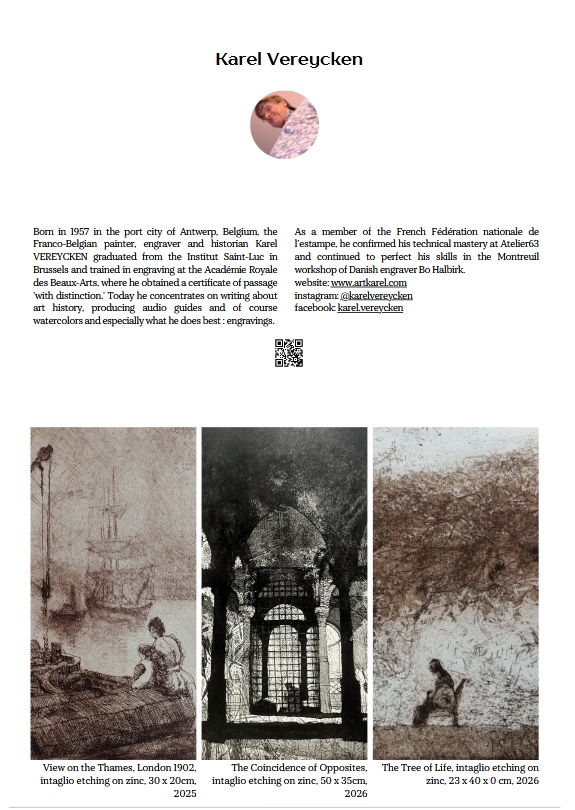
Franco-Belgian painter engraver Karel Vereycken was selected for publication in Vol. 4 of Best Contemporary Visual Artists Worldwide Guide & Catalogue, an ongoing international art book series presenting a selection of leading contemporary visual artists from around the world. Previous volumes are available through Amazon.
The series are curated by Alex Colard, a French-born painter and multidisciplinary artist based in Stockholm. He studied Art at École Bellecour in Lyon and Parsons The New School in New York, where he lived for eleven years before relocating to Sweden in 2017.
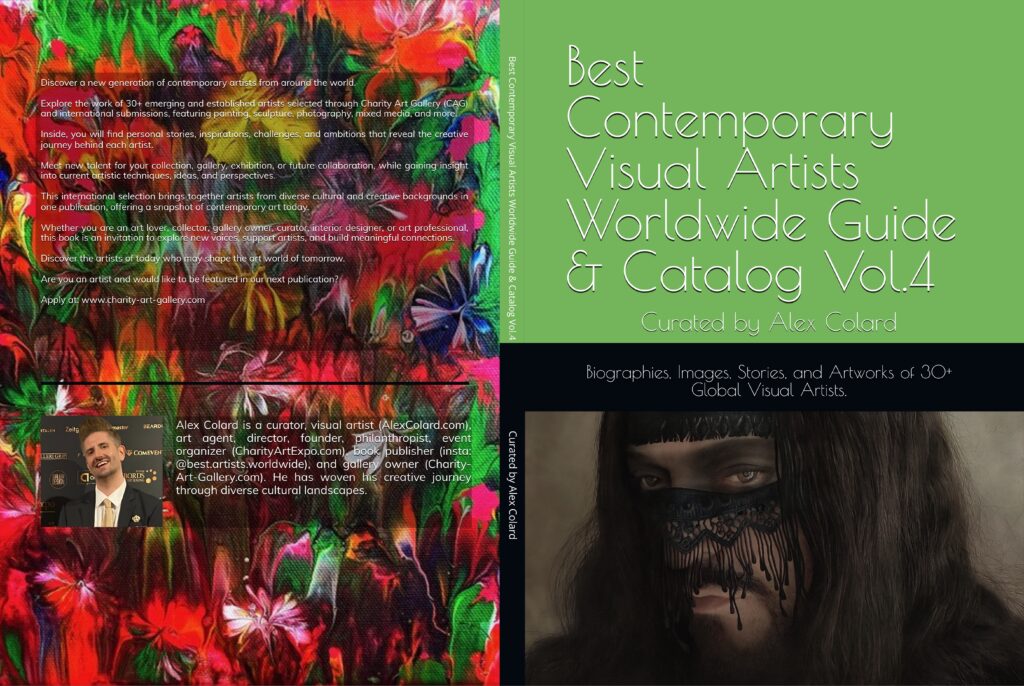
Pre-layout of the pages about Karel Vereycken.
The book is available on Amazon
Karel Vereycken wins Noble Art Award for Outstanding Contribution to Artistic Heritage
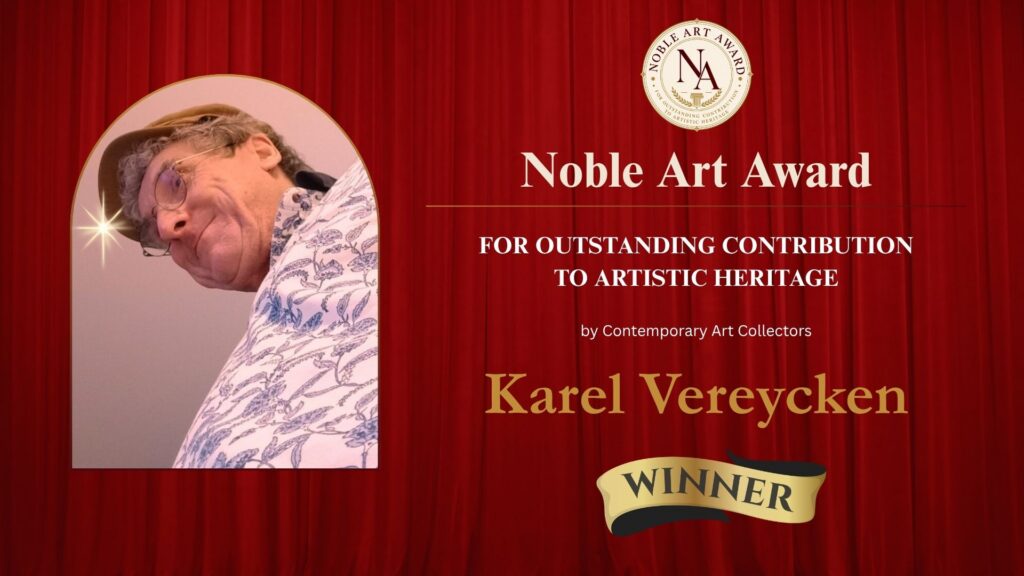
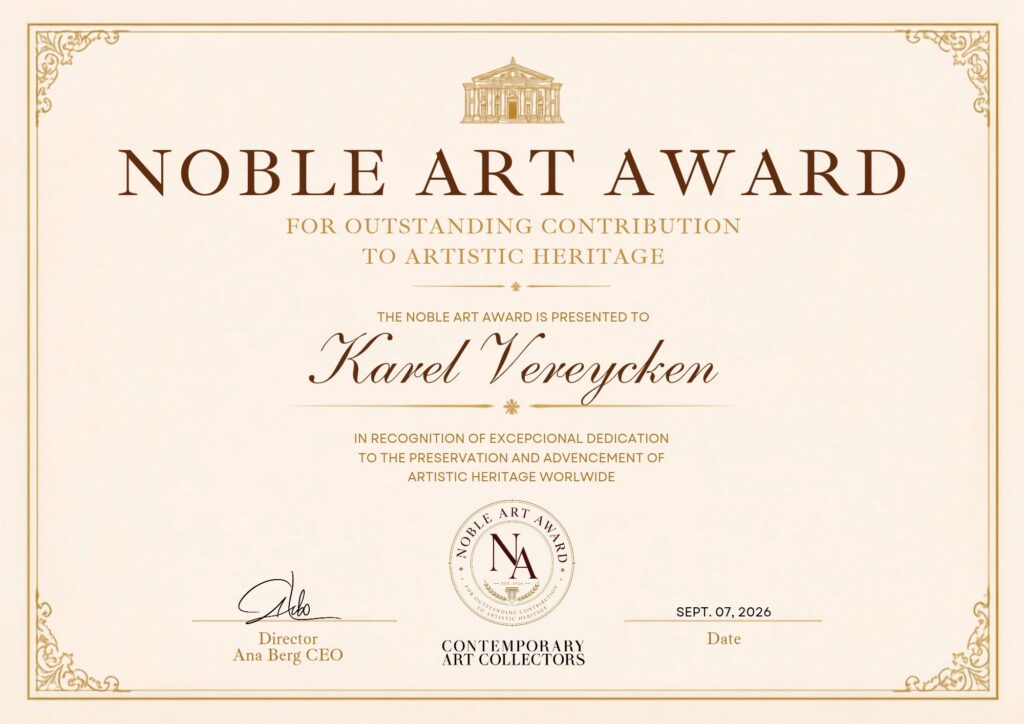
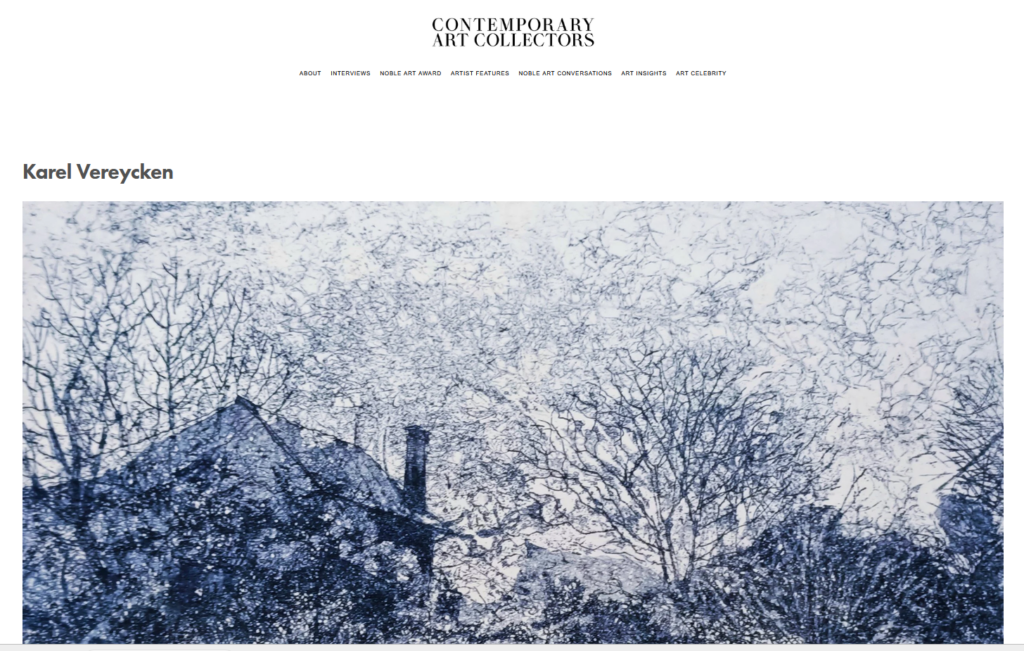
On Sept. 2, 2026, Franco Belgian painter engraver Karel Vereycken received the following message from Contemporary Art Collectors:
« Dear Karel,
Congratulations once again on being selected as a winner of the Noble Art Award | For Outstanding Contribution To Artistic Heritage.
We are pleased to share with you the link to your official Noble Art Award Winner’s Profile:
https://www.contemporary-art-collectors.com/winners/karel-vereycken«
The online profiles of the winners will be edited as a book to be published later this year under the title « Noble Art Award for Outstanding Contribution to Artistic Heritage ».
Below, the raison d’être and the significance of the reward as explained on the website of Contemporary Art Collectors:
The NOBLE ART AWARD, FOR OUTSTANDING CONTRIBUTION TO ARTISTIC HERITAGE, presented by Contemporary Art Collectors, recognizes artists whose sustained creative practice represents a significant contribution to contemporary art and to the broader continuum of artistic heritage.
The Award is conceived around an understanding of artistic heritage as a living and continuously developing field. Heritage does not belong exclusively to the historical past; it is also formed through the artistic practices, ideas, visual languages, and cultural positions that emerge in the present. Within this perspective, contemporary artistic practice participates in an ongoing historical process, contributing to the ways in which art is understood, experienced, and transmitted across generations.
The NOBLE ART AWARD acknowledges artists whose work demonstrates artistic quality, dedication, innovation, and a sustained commitment to their practice. It recognizes the importance of an artistic journey developed over time and the capacity of an artist’s work to contribute meaningfully to the wider field of art.
Rather than approaching artistic achievement solely through immediate visibility or prevailing tendencies, the Award places emphasis on the enduring qualities of artistic practice. Its central consideration is the significance of the artist’s contribution: the seriousness with which a practice has been developed, the consistency of its artistic language, the level of commitment evident throughout the artist’s trajectory, and its contribution to the continuing development of visual culture.
Recognition of Artistic Contribution
The selection of a recipient represents recognition of the artist’s talent, dedication, innovation, and contribution to the Art World. It acknowledges an artistic practice that has developed with purpose and consistency and whose work has achieved significance within a broader cultural context.
The Award considers artistic achievement not simply as the production of individual works, but as the development of an artistic trajectory. Within such a trajectory, individual works become part of a larger practice—one shaped by the artist’s evolving ideas, methods, decisions, and commitment to artistic production.
In this sense, the NOBLE ART AWARD recognizes both achievement and continuity. It acknowledges what an artist has established through their practice while situating that contribution within a larger cultural and historical framework.
Recognition through the Award also brings increased attention to the recipient’s practice, contributing to its visibility within the international art context. This visibility is understood as part of a broader process of cultural recognition: the identification of artistic practices considered worthy of sustained attention and inclusion within contemporary artistic discourse.
A Curatorial Process
The NOBLE ART AWARD is not open for application. Participation is by invitation only, with artists identified through a global curatorial selection process.
This structure distinguishes the Award from open-call competitions and application-based prizes. Artists do not nominate themselves or submit an application for consideration. Instead, the selection process is initiated curatorially, through the identification of artistic practices considered relevant to the principles and purpose of the Award.
The curatorial process places emphasis on artistic quality, sustained practice, dedication, innovation, and contribution to the field of art. Central to this approach is a preference for enduring artistic value over temporary trends. The Award therefore seeks to consider artistic practice within a longer cultural perspective rather than through the immediate conditions of fashion or visibility.
Such an approach reflects the Award’s relationship to the idea of heritage itself. If artistic heritage is understood as something that develops across time, the evaluation of contemporary practice necessarily requires attention to qualities that may extend beyond the present moment.
Beyond the Immediate Present
The distinction between the contemporary and the historical is never absolute. Works created today enter an existing cultural dialogue while simultaneously contributing to the material from which future histories of art will be constructed.
The NOBLE ART AWARD is situated within this intersection between present artistic practice and future cultural memory. Its focus on outstanding contribution to artistic heritage reflects an understanding that the history of art remains open: it is continually expanded by artists whose work becomes part of the cultural experience of their time.
For this reason, the Award considers artistic practice not only in relation to contemporary recognition but also in relation to continuity. The emphasis on timeless mastery articulated by the Award refers to this longer view—an attention to artistic qualities that are not dependent solely upon passing tendencies, but that emerge through commitment, development, and sustained artistic work.
The Award consequently proposes a form of recognition grounded in duration. It acknowledges that artistic significance is rarely contained within a single moment and that an artist’s contribution is often revealed through the cumulative development of a practice.
The Artist Within the Living History of Art
Art history is not only the account of what has already been established. It continues to be formed through the work of practicing artists and through the ways their contributions are recognized, interpreted, documented, and carried forward. Contemporary artists therefore occupy a particular position: they work within the present while simultaneously producing part of the cultural material through which that present may eventually be remembered.
The Award’s reference to the living history of art expresses this relationship between artistic practice, recognition, and cultural continuity. To recognize an artist’s contribution to artistic heritage is to acknowledge that heritage itself remains unfinished.
Within this framework, receiving the NOBLE ART AWARD, FOR OUTSTANDING CONTRIBUTION TO ARTISTIC HERITAGE marks a significant moment in an artist’s professional trajectory. It recognizes the quality and importance of the artist’s work, the dedication demonstrated throughout their artistic journey, and their contribution to the enrichment of the Art World.
The NOBLE ART AWARD is therefore conceived not simply as a prize, but as a form of curatorial recognition: an acknowledgment of artistic practice as part of an evolving cultural history and of the artist’s contribution to the continuing formation of artistic heritage.
Karel Vereycken selected for 100 Watercolour Artists of Europe 2026
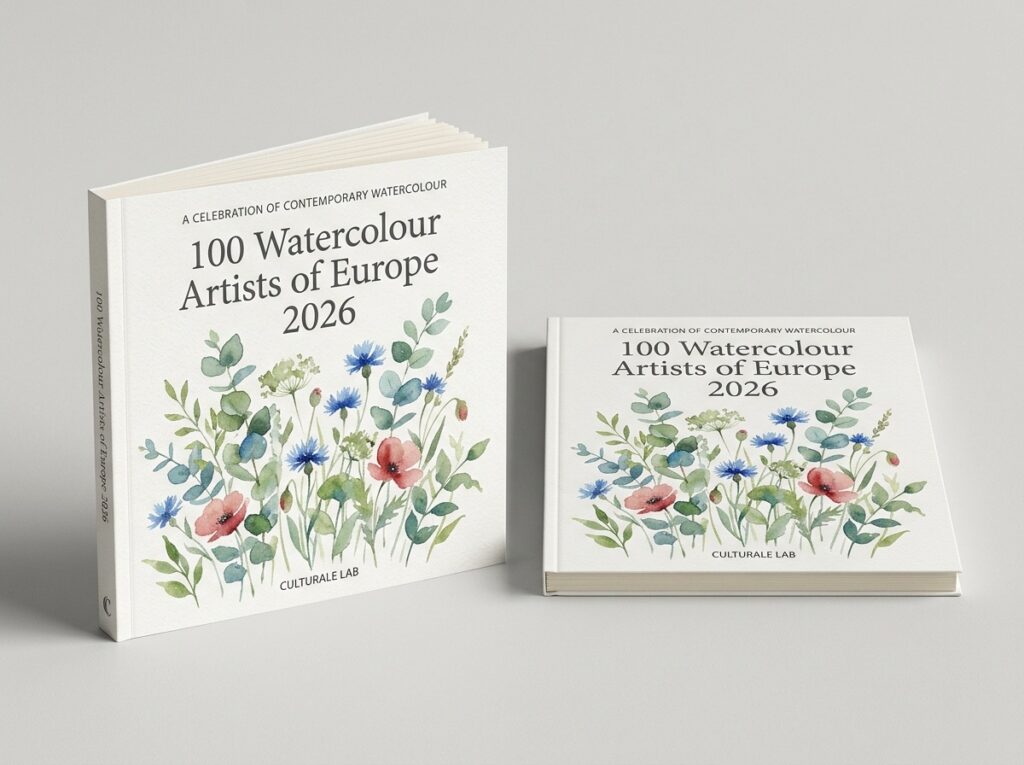
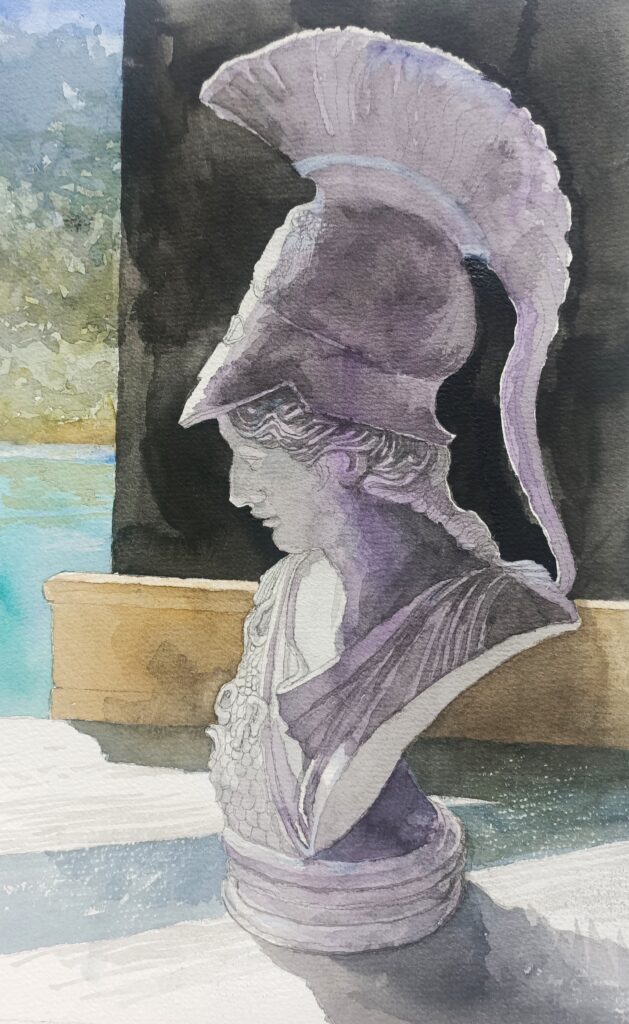
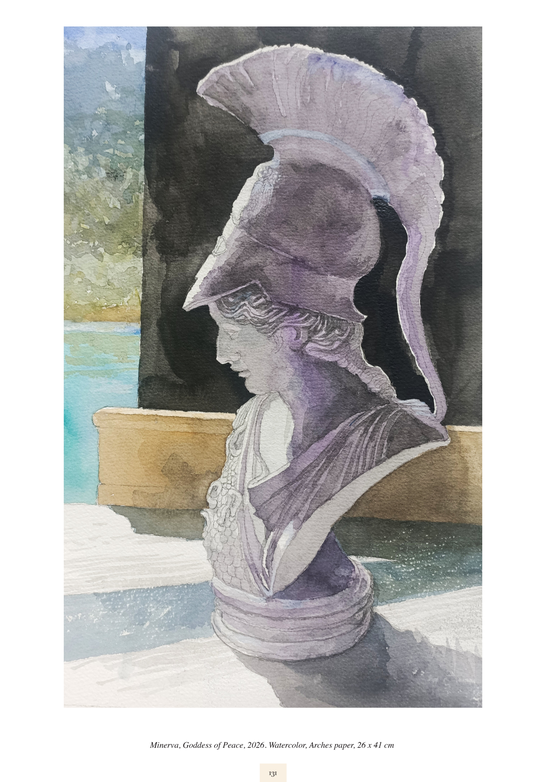
In August 2026, Franco-Belgian Painter engraver Karel Vereycken was informed that Culturale Lab, a major platform, selected his work, in particular his recent watercolor Minerva, goddess of Peace, to be included in « 100 Watercolour Artists of Europe – 2026 », to come out and reach the bookstores at the end of this year.
This curated volume, says Culturale Lab, is « a physical printed watercolour collection book, that brings together and celebrates the talent of 100 watercolour artists shaping contemporary watercolour across Europe. »
« Watercolour is one of the oldest and most beloved of media — luminous, immediate and unforgiving — yet it is too rarely celebrated in print on its own terms. « 100 Watercolour Artists of Europe 2026″ puts it at the centre: one hundred voices, styles and stories, gathered in a single, beautiful volume that will endure over time. »
Karel Vereycken’s work presented in Contemporary Art Curator Magazine
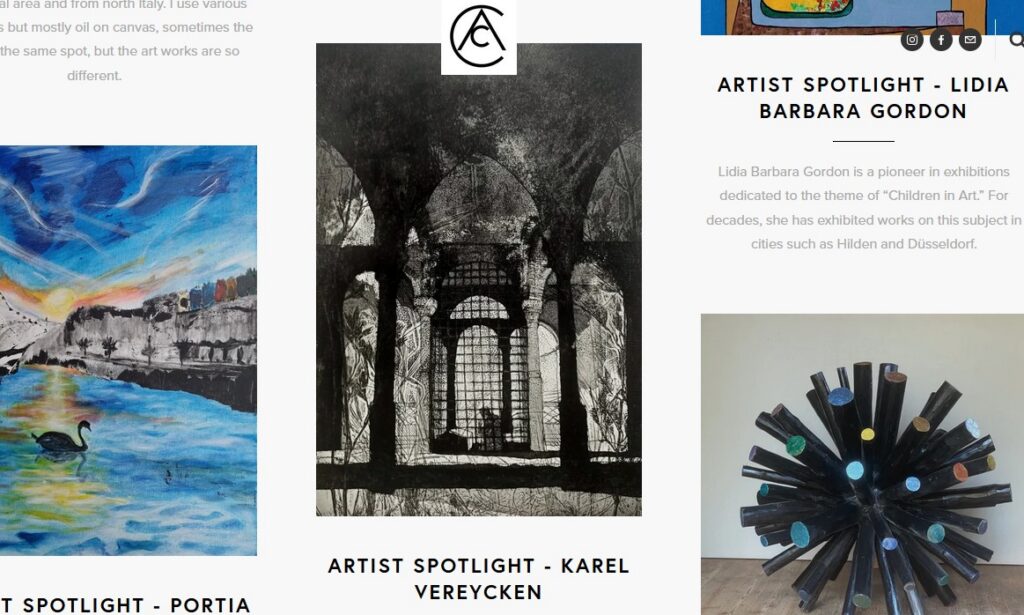
On June 16, the leading Contemporary Art Curator Magazine presented the art work and vision of Franco-Belgian Painter Engraver Karel Vereycken.
https://www.contemporaryartcuratormagazine.com/home-2/karel-vereycken-artist-spotlight
Karel Vereycken:以悖论式隐喻,显现无形之物
Posted on by Jonathan Hale
Also available in: EN ES FR DE IT
在一个充斥着浮光掠影与浅显直白的世界里,有这样一位艺术家,他致力于挖掘更深层的真理,将无形之物引入可见之境。Karel Vereycken 正是这样一位艺术家。他是一位版画家,其艺术之旅始于比利时的历史名城安特卫普,如今在法国的阿尔让特伊绽放光彩。他的作品超越了单纯的再现,通过精心构建的悖论式隐喻,深入探究人类经验的复杂织锦。Vereycken 的艺术不仅供人观赏,更是一场深刻对话的邀约,一场对塑造我们生活的无形力量的沉思。
Karel Vereycken 于1957年出生于安特卫普,他的艺术之路并非坦途,而是一场由际遇和内在驱动力共同塑造的丰富探索。他的父母在港口与船舶维修行业的背景下艰难谋生,但他们认识到文化熏陶对孩子成长的重要性。Vereycken 早年曾短暂学习音乐,后因刻板的教学方法而中断,转而进入一所社区绘画学校,正是这里为他未来的艺术生涯播下了种子。在雕塑家 Herman Cornelis 的指导下,他学会了观察与复制的力量,这位老师采用的是一种亲身实践、凭直觉教学的方式。十二岁时,他迎来了人生的一个关键时刻——赢得了他的第一个艺术奖项。这份认可,加上老师对他“宝贵天赋”的肯定,促使他接受更正规的训练。在母亲的鼓励下,他进入布鲁塞尔的圣卢克学院,沉浸在造型艺术的学习中。在这里,通过对解剖学以及达芬奇和阿尔布雷希特·丢勒等大师作品的严谨研究,他为理解形式与表达奠定了坚实的基础。随后,他在皇家美术学院继续深造,以“优异”的成绩获得了铜版画专业的结业证书,进一步巩固了他对技艺掌握的执着追求。
之后移居巴黎的时期,Vereycken 参与了多样的活动。他最初为一家非商业出版物从事新闻和编辑工作,但艺术的呼唤始终萦绕心头。他回归其艺术本源,起初探索古代绘画技术,使用手工制作的蛋彩和传统的油画技法重现古典大师的作品。这段时期虽然在技术探索上收获颇丰,但在展览方面却充满挑战,因为这些作品在他有机会展出之前就已被人收藏。这促使他重新将注意力转向水彩和精细的蚀刻版画工艺,这些媒介后来成为他创作实践的核心。
他持续参与法国的蚀刻版画社群,这体现了他对磨练技艺的不懈追求。作为法国国家版画联合会的成员,Vereycken 在 Atelier63 工作室提升了他的技术实力,并在丹麦版画家 Bo Halbirk 创立的蒙特勒伊印刷工作坊进一步完善了他的工艺。这段从安特卫普充满活力的街道到布鲁塞尔和巴黎艺术中心的旅程,彰显了他对卓越的终生追求,以及对艺术创作不朽力量的根深蒂固的热情。
“Sublimart”:悖论式隐喻的艺术
Vereycken 的艺术创作可以用他自创的术语“sublimart”来最好地描述——一个融合了“sublime”(崇高)与“art”(艺术)的词。这个新词概括了他独特的创作手法:运用悖论式隐喻,将灵魂提升至崇高境界的具象艺术。他的作品无关乎肤浅的美或直白的叙事,而是构建视觉上的悖论,以此作为通往更深层次理解的大门。正如他言简意赅地指出的,“让无形可见”是他创作背后的驱动力。他实现这一目标并非通过传统的象征主义或直接的描绘,而是将迥异的元素编织在一起,以此挑战观者的感知,激发深入的思考。
他主要运用的材料和技术——蚀刻、绘画、油画和水彩——都经过了审慎的选择。蚀刻版画,凭借其固有的精确性与错综复杂的线条表现力,尤其适合他探索层层递进的意义。蚀刻的过程需要耐心与审慎的行动,这与其观念性隐喻的深思熟虑的构建过程如出一辙。他对古典技术的执着,结合现代的感性,使其具象作品充满了深刻的情感与智识共鸣。每一件作品都是形式与观念之间精心编排的对话,邀请观者踏上一段个人的发现之旅。
Vereycken 作品的主题基础并非刻意为之,而是从他与世界的互动及艺术探索中自然生发。他希望“通过向人们展示,没有什么比‘古典’艺术更‘现代’、更‘革命’,从而震撼他们”。然而,他对古典艺术的定义远非僵化或学院派。对 Vereycken 而言,它代表着一种“基于非犬儒、具解放性、充满反讽与诗意隐喻的构图科学”。他相信,这些隐喻是所有艺术形式(无论是视觉艺术还是音乐)的根本关键。他的方法植根于这样一种理解:艺术是艺术家赠予观者的深刻“礼物”,是一种促进联结和共享体验的爱的行动。
艺术启迪的愿景
Karel Vereycken 的艺术事业充满了深刻的使命感,远不止于创作赏心悦目的物品。他将自己的工作视为一种“教学活动”,一场“人文主义思想游击战”,旨在唤醒观者,让他们感知到新的维度。虽然他承认销售对于推进其艺术事业的重要性,但他最终的动机并非迎合大众品味,而是促进与观者更深层次的联结。他努力使艺术成为一扇“窗户”,通往人们凭直觉认为重要却往往无法触及的领域。
他致力于分享自己的知识和热情,这充分体现了他对这一愿景的承诺。他曾在巴黎卢浮宫、安特卫普、布鲁塞尔或法兰克福的博物馆、米兰的布雷拉美术馆、柏林的画廊以及纽约大都会艺术博物馆等主要艺术机构举办过多次导览。这些沉浸式体验已被记录下来,部分录音可在他的网站上获取,让更广泛的受众能从他的见解中受益。他收到的由衷感谢,许多人表示惊讶于思想竟能通过绘画如此深刻地传达,这突显了他教学方法的影响力。
展望未来,Vereycken 的发展轨迹依然以积极参与和扩大其影响力的愿望为标志。他的作品曾在纽约的 ARTEXPO 和巴黎卢浮宫卡鲁塞尔厅的 ARTSHOPPING 以数字形式展出,他持续活跃于当代艺术平台。在赢得“蒙娜丽莎奖”并随后在巴黎的 Galerie Mona Lisa 举办展览之后,他的重心仍然是分享他那具有变革力量的艺术。即将在萨尔瓦多为 SUMARTE 2026 举办展览的计划,标志着他的国际抱负以及让全球观众接触到他独特视角的持续承诺。他正在进行的作品,如概念丰富的《天堂阶梯》,展示了他对融合多元视觉灵感——在此例中是中国黄山的风光与佛兰德的风景画传统——的持续探索,旨在为人类旅程打造强有力的隐喻。
Karel Vereycken 的艺术证明了求知欲、精湛技艺以及对艺术启迪人类精神能力的深刻信念所具有的持久力量。通过创造悖论式的隐喻,他邀请我们超越表象,去探寻塑造我们存在的无形意义之流。他的作品有力地提醒我们,真正的艺术性不仅在于所见之物,更在于所感、所悟,并最终被揭示的一切。
欲联系 Karel Vereycken 并探索其引人入胜的作品,请访问他的网站及社交媒体平台:
- 网站: https://artkarel.com/
- Instagram: https://www.instagram.com/karelvereycken/
- Facebook: https://www.facebook.com/karel.vereycken/
- Manifestampe 个人资料: https://www.manifestampe.org/utilisateur/karel-vereycken/profil
- 《当代艺术策展人杂志》访谈: https://www.contemporaryartcuratormagazine.com/home-2/karel-vereycken-interview
Karel Vereycken: Creare metafore paradossali per svelare l’invisibile
Posted on by Jonathan Hale
Also available in: EN ES FR DE IT
In un mondo spesso saturo dell’immediato e dell’ovvio, esiste un artista dedito a scavare alla ricerca di verità più profonde, a traghettare l’intangibile nel regno del visibile. Karel Vereycken, incisore il cui percorso è iniziato nella storica città di Anversa, in Belgio, e che oggi fiorisce ad Argenteuil, in Francia, è uno di questi artisti. La sua opera trascende la mera rappresentazione, addentrandosi nella complessa trama dell’esperienza umana attraverso metafore paradossali meticolosamente elaborate. L’arte di Vereycken non è fatta semplicemente per essere osservata; è un invito a un dialogo profondo, una contemplazione delle forze invisibili che modellano le nostre vite.
Nato ad Anversa nel 1957, il percorso artistico di Karel Vereycken non è stato una linea retta, ma una ricca esplorazione modellata tanto dalle circostanze quanto da una spinta innata. I suoi genitori, che lavoravano nell’industria portuale e delle riparazioni navali, riconobbero l’importanza di un arricchimento culturale per i loro figli. Un primo approccio alla musica, interrotto da un metodo di insegnamento troppo rigido, lo portò a una scuola di disegno popolare, e fu qui che vennero gettati i semi del suo futuro artistico. Sotto la guida di Herman Cornelis, uno scultore dall’approccio pratico e intuitivo, Vereycken imparò il potere dell’osservazione e della riproduzione. Un momento cruciale arrivò all’età di dodici anni, quando vinse il suo primo premio d’arte. Questo riconoscimento, unito alla convinzione del suo insegnante che possedesse un “talento prezioso”, lo spinse verso una formazione più accademica. L’incoraggiamento della madre lo condusse all’Institut Saint-Luc di Bruxelles, dove si immerse nelle Arti Plastiche. Qui, lo studio rigoroso dell’anatomia e delle opere di maestri come Leonardo da Vinci e Albrecht Dürer gli fornì una comprensione fondamentale della forma e dell’espressione. La sua dedizione alla maestria si consolidò ulteriormente all’Académie Royale des Beaux-Arts, dove ottenne un certificato di passaggio in incisione su rame “con lode”.
Il successivo trasferimento a Parigi segnò un periodo di impegni diversificati. Inizialmente, Vereycken si dedicò al giornalismo e all’editing per una pubblicazione non-profit, ma il richiamo dell’arte rimase insistente. Tornò così alle sue radici artistiche, esplorando inizialmente le antiche tecniche pittoriche e ricreando le opere dei grandi maestri con la tempera all’uovo preparata a mano e i metodi tradizionali a olio. Questo periodo, sebbene arricchente per la scoperta tecnica, si rivelò difficile dal punto di vista espositivo, poiché le opere trovavano nuovi acquirenti prima che potesse presentarle al pubblico. Ciò lo portò a concentrarsi nuovamente sull’acquerello e sulla meticolosa arte dell’acquaforte, mezzi espressivi che sarebbero diventati centrali nella sua pratica.
Il suo costante impegno nel perfezionare le proprie abilità è evidente nel suo continuo dialogo con la comunità dell’incisione in Francia. Come membro della Fédération nationale de l’estampe, Vereycken ha affinato la sua abilità tecnica presso l’Atelier63 e ha ulteriormente perfezionato la sua arte nel laboratorio di stampa di Montreuil, fondato dall’incisore danese Bo Halbirk. Questo viaggio, dalle vibranti strade di Anversa ai poli artistici di Bruxelles e Parigi, sottolinea una ricerca dell’eccellenza durata tutta la vita e una passione radicata per il potere intramontabile della creazione artistica.
“Sublimart”: l’arte della metafora paradossale
La produzione artistica di Vereycken è descritta al meglio dal termine da lui coniato, “sublimart”, una fusione di “sublime” e “arte”. Questo neologismo racchiude il suo approccio unico: un’arte figurativa che impiega metafore paradossali per elevare l’anima a un livello sublime. La sua opera non riguarda la bellezza superficiale o la narrazione diretta, ma la costruzione di paradossi visivi che fungono da portali verso una comprensione più profonda. “Rendere visibile l’invisibile”, come lui stesso afferma sinteticamente, è la forza motrice delle sue creazioni. Raggiunge questo obiettivo non attraverso un simbolismo convenzionale o una rappresentazione diretta, ma intrecciando elementi disparati in un modo che sfida la percezione e stimola la contemplazione.
I materiali e le tecniche che utilizza principalmente – acquaforte, pittura, olio e acquerello – sono impiegati con mano sapiente. L’acquaforte, con la sua precisione intrinseca e le linee complesse che consente di tracciare, è particolarmente adatta alla sua esplorazione di significati stratificati. Il processo dell’acquaforte richiede pazienza e un’azione deliberata, rispecchiando la costruzione ponderata delle sue metafore concettuali. La sua dedizione alle tecniche classiche, unita a una sensibilità moderna, gli permette di infondere nelle sue opere figurative una profonda risonanza emotiva e intellettuale. Ogni opera è un dialogo accuratamente orchestrato tra forma e concetto, che invita lo spettatore a intraprendere un personale viaggio di scoperta.
I fondamenti tematici del lavoro di Vereycken non sono perseguiti consapevolmente, ma emergono piuttosto in modo organico dal suo confronto con il mondo e dalle sue esplorazioni artistiche. Cerca di “scioccare il pubblico mostrando che nulla è più ‘moderno’ e ‘rivoluzionario’ dell’arte ‘classica’”. Tuttavia, la sua definizione di arte classica è tutt’altro che rigida o accademica. Per Vereycken, essa rappresenta una “scienza della composizione basata su metafore non ciniche, liberatorie, ironiche e poetiche”. Queste metafore, a suo avviso, sono le chiavi fondamentali di ogni forma d’arte, sia essa visiva o musicale. Il suo approccio si fonda sulla comprensione che l’arte è un “dono” profondo dell’artista allo spettatore, un atto d’amore che promuove la connessione e l’esperienza condivisa.
Una visione di illuminazione artistica
Gli sforzi artistici di Karel Vereycken sono intrisi di un profondo senso di scopo, che va oltre la creazione di oggetti esteticamente piacevoli. Considera il suo lavoro come una forma di “attività didattica”, una “guerriglia intellettuale umanistica” volta a risvegliare negli spettatori nuove dimensioni della percezione. Pur riconoscendo l’importanza delle vendite per portare avanti la sua ricerca artistica, la sua motivazione ultima non risiede nell’assecondare il gusto popolare, ma nel facilitare una connessione più profonda con lo spettatore. Si sforza di rendere l’arte una “finestra” su mondi che le persone riconoscono intuitivamente come significativi, ma ai quali spesso è stato negato l’accesso.
Il suo impegno verso questa visione è esemplificato dai suoi sforzi per condividere la sua conoscenza e la sua passione. Ha condotto numerose visite guidate in importanti istituzioni artistiche come il Louvre di Parigi, i musei di Anversa, Bruxelles o Francoforte, la Pinacoteca di Brera a Milano, la Gemäldegalerie di Berlino e il Metropolitan Museum di New York. Queste esperienze immersive sono state documentate e alcune registrazioni audio sono disponibili sul suo sito web, permettendo a un pubblico più vasto di beneficiare delle sue intuizioni. La sincera gratitudine che ha ricevuto, con persone che hanno espresso il loro stupore per la profondità con cui le idee possono essere trasmesse attraverso la pittura, sottolinea l’impatto del suo approccio pedagogico.
Guardando al futuro, la traiettoria di Vereycken continua a essere segnata da una partecipazione attiva e dal desiderio di ampliare il proprio raggio d’azione. Dopo essere stato presentato in formato digitale ad ARTEXPO a New York e ad ARTSHOPPING al Carrousel du Louvre a Parigi, continua a essere attivo sulle piattaforme dell’arte contemporanea. Dopo la vittoria del “Premio Monna Lisa” e la successiva mostra alla Galerie Mona Lisa di Parigi, il suo obiettivo rimane quello di condividere la sua arte trasformativa. La prospettiva di una mostra in El Salvador per SUMARTE 2026 testimonia le sue aspirazioni internazionali e un impegno costante nel rendere la sua prospettiva unica accessibile a un pubblico globale. Il suo lavoro attuale, come l’opera concettualmente ricca “Stairway to Heaven”, dimostra la sua continua esplorazione nel coniugare diverse ispirazioni visive – in questo caso, i paesaggi delle Montagne Gialle cinesi con la tradizione paesaggistica fiamminga – per creare potenti metafore del viaggio umano.
L’arte di Karel Vereycken è una testimonianza del potere intramontabile della curiosità intellettuale, della maestria tecnica e di una profonda fiducia nella capacità dell’arte di illuminare lo spirito umano. Attraverso la creazione di metafore paradossali, ci invita a guardare oltre la superficie, a entrare in contatto con le correnti invisibili di significato che modellano la nostra esistenza. La sua opera è un promemoria essenziale del fatto che la vera maestria artistica non risiede solo in ciò che si vede, ma in ciò che si sente, si comprende e, infine, si svela.
Per entrare in contatto con Karel Vereycken ed esplorare il suo affascinante lavoro, visitate il suo sito web e i suoi canali social:
- Sito web: https://artkarel.com/
- Instagram: https://www.instagram.com/karelvereycken/
- Facebook: https://www.facebook.com/karel.vereycken/
- Profilo Manifestampe: https://www.manifestampe.org/utilisateur/karel-vereycken/profil
- Intervista su Contemporary Art Curator Magazine: https://www.contemporaryartcuratormagazine.com/home-2/karel-vereycken-interview
Karel Vereycken: Die Gestaltung paradoxer Metaphern, um das Unsichtbare sichtbar zu machen
Posted on by Jonathan Hale
Also available in: EN ES FR IT ZH
In einer Welt, die oft vom Unmittelbaren und Offensichtlichen gesättigt ist, gibt es einen Künstler, der sich der Freilegung tieferer Wahrheiten verschrieben hat und dem Ungreifbaren eine sichtbare Form verleiht. Karel Vereycken, ein Grafiker, dessen Weg in der geschichtsträchtigen Stadt Antwerpen in Belgien begann und nun in Argenteuil, Frankreich, seine Blüte entfaltet, ist ein solcher Künstler. Sein Werk geht über die reine Darstellung hinaus und taucht durch sorgfältig ausgearbeitete paradoxe Metaphern in das komplexe Geflecht der menschlichen Erfahrung ein. Vereyckens Kunst will nicht nur betrachtet werden; sie ist eine Einladung zu einem tiefgründigen Dialog, einer Kontemplation über die unsichtbaren Kräfte, die unser Leben formen.
Geboren 1957 in Antwerpen, war Karel Vereyckens künstlerischer Weg kein geradliniger, sondern eine reiche, von Umständen und innerem Antrieb geprägte Entdeckungsreise. Seine Eltern, die die Herausforderungen eines von Hafen und Schiffsbau geprägten Umfelds meisterten, erkannten die Bedeutung kultureller Bereicherung für ihre Kinder. Während ein früher Ausflug in die Musik, der durch eine starre Lehrmethode jäh beendet wurde, ihn an eine städtische Zeichenschule führte, wurde hier der Samen für seine künstlerische Zukunft gesät. Unter der Anleitung von Herman Cornelis, einem Bildhauer mit einem praxisnahen, intuitiven Ansatz, lernte Vereycken die Kraft der Beobachtung und Nachbildung. Ein entscheidender Moment kam im Alter von zwölf Jahren, als er seinen ersten Kunstpreis gewann. Diese Anerkennung, gepaart mit der Überzeugung seines Lehrers von seinem „wertvollen Talent“, trieb ihn zu einer formelleren Ausbildung. Die Ermutigung seiner Mutter führte ihn an das Institut Saint-Luc in Brüssel, wo er sich in die Bildenden Künste vertiefte. Hier vermittelte ihm das rigorose Studium der Anatomie und der Werke von Meistern wie Leonardo da Vinci und Albrecht Dürer ein grundlegendes Verständnis von Form und Ausdruck. Sein Streben nach Meisterschaft festigte sich weiter an der Académie Royale des Beaux-Arts, wo er sein Diplom in Kupferstich „mit Auszeichnung“ erhielt.
Der anschließende Umzug nach Paris markierte eine Zeit vielfältigen Engagements. Vereycken arbeitete zunächst als Journalist und Redakteur für eine nicht-kommerzielle Publikation, doch der Ruf der Kunst blieb eindringlich. Er kehrte zu seinen künstlerischen Wurzeln zurück und erforschte zunächst alte Maltechniken, indem er die Werke alter Meister mit selbst hergestellter Eitempera und traditionellen Ölmethoden nachbildete. Diese Phase, obwohl bereichernd in ihrer technischen Entdeckung, erwies sich in Bezug auf Ausstellungen als schwierig, da die Werke neue Besitzer fanden, bevor er sie präsentieren konnte. Dies führte zu einem erneuerten Fokus auf Aquarelle und das akribische Handwerk der Radierung – Medien, die für seine Praxis zentral werden sollten.
Sein kontinuierliches Engagement, seine Fähigkeiten zu verfeinern, zeigt sich in seiner fortwährenden Einbindung in die Radierer-Szene in Frankreich. Als Mitglied der Fédération nationale de l’estampe verfeinerte Vereycken sein technisches Können im Atelier63 und perfektionierte sein Handwerk weiter in der Druckwerkstatt in Montreuil, die vom dänischen Grafiker Bo Halbirk gegründet wurde. Dieser Weg, von den lebhaften Straßen Antwerpens zu den künstlerischen Zentren Brüssel und Paris, unterstreicht ein lebenslanges Streben nach Exzellenz und eine tief verwurzelte Leidenschaft für die beständige Kraft des künstlerischen Schaffens.
„Sublimart“: Die Kunst der paradoxen Metapher
Vereyckens künstlerisches Schaffen lässt sich am besten mit dem von ihm geprägten Begriff „Sublimart“ beschreiben – eine Verschmelzung von „sublim“ und „Art“ (Kunst). Dieser Neologismus fasst seinen einzigartigen Ansatz zusammen: figurative Kunst, die paradoxe Metaphern verwendet, um die Seele auf eine sublime Ebene zu heben. In seinem Werk geht es nicht um oberflächliche Schönheit oder direkte Erzählung, sondern um die Konstruktion visueller Paradoxa, die als Tore zu einem tieferen Verständnis dienen. „Das Unsichtbare sichtbar machen“, wie er es treffend formuliert, ist die treibende Kraft hinter seinen Schöpfungen. Er erreicht dies nicht durch konventionelle Symbolik oder einfache Darstellung, sondern indem er ungleiche Elemente so miteinander verwebt, dass die Wahrnehmung herausgefordert und die Kontemplation angeregt wird.
Die von ihm hauptsächlich verwendeten Materialien und Techniken – Radierung, Malerei, Öl und Aquarell – werden mit kundiger Hand eingesetzt. Die Radierung, mit ihrer inhärenten Präzision und den feinen Linien, die sie ermöglicht, eignet sich besonders für seine Erforschung vielschichtiger Bedeutungen. Der Prozess des Radierens erfordert Geduld und überlegtes Handeln und spiegelt so die durchdachte Konstruktion seiner konzeptuellen Metaphern wider. Seine Hingabe an klassische Techniken, kombiniert mit einer modernen Sensibilität, ermöglicht es ihm, seinen figurativen Werken eine tiefe emotionale und intellektuelle Resonanz zu verleihen. Jedes Stück ist ein sorgfältig inszenierter Dialog zwischen Form und Konzept, der den Betrachter auf eine persönliche Entdeckungsreise einlädt.
Die thematischen Grundlagen von Vereyckens Werk werden nicht bewusst verfolgt, sondern ergeben sich organisch aus seiner Auseinandersetzung mit der Welt und seinen künstlerischen Erkundungen. Er möchte „die Menschen schockieren, indem er ihnen zeigt, dass nichts ‚moderner‘ und ‚revolutionärer‘ ist als ‚klassische‘ Kunst“. Seine Definition von klassischer Kunst ist jedoch alles andere als starr oder akademisch. Für Vereycken stellt sie eine „Wissenschaft der Komposition dar, die auf nicht-zynischen, befreienden, ironischen und poetischen Metaphern beruht“. Diese Metaphern, so glaubt er, sind die fundamentalen Schlüssel zu allen Kunstformen, ob visuell oder musikalisch. Sein Ansatz wurzelt in dem Verständnis, dass Kunst ein tiefgründiges „Geschenk“ des Künstlers an den Betrachter ist, ein Akt der Liebe, der Verbindung und gemeinsame Erfahrung fördert.
Eine Vision der künstlerischen Aufklärung
Karel Vereyckens künstlerisches Streben ist von einer tiefen Sinnhaftigkeit durchdrungen, die über die Schaffung ästhetisch ansprechender Objekte hinausgeht. Er betrachtet seine Arbeit als eine Form der „Lehrtätigkeit“, einen „humanistischen intellektuellen Guerillakrieg“, der darauf abzielt, die Betrachter für neue Dimensionen der Wahrnehmung zu öffnen. Obwohl er die Bedeutung von Verkäufen für die Förderung seiner künstlerischen Bestrebungen anerkennt, liegt seine letztendliche Motivation nicht darin, sich dem Publikumsgeschmack anzubiedern, sondern eine tiefere Verbindung mit dem Betrachter zu ermöglichen. Er strebt danach, die Kunst zu einem „Fenster“ in Welten zu machen, von denen die Menschen intuitiv erkennen, dass sie bedeutsam sind, zu denen ihnen aber oft der Zugang verwehrt wurde.
Dieses Engagement für seine Vision zeigt sich beispielhaft in seinen Bemühungen, sein Wissen und seine Leidenschaft zu teilen. Er hat zahlreiche Führungen durch große Kunstinstitutionen wie den Louvre in Paris, die Museen von Antwerpen, Brüssel oder Frankfurt, die Brera in Mailand, die Gemäldegalerie in Berlin und das Metropolitan Museum in New York geleitet. Diese eindringlichen Erlebnisse wurden dokumentiert, und einige Audioaufnahmen sind auf seiner Website verfügbar, sodass ein breiteres Publikum von seinen Einsichten profitieren kann. Die herzliche Dankbarkeit, die er erfahren hat, wobei Menschen ihre Verwunderung darüber ausdrückten, wie tief Ideen durch Gemälde vermittelt werden können, unterstreicht die Wirkung seines pädagogischen Ansatzes.
Mit Blick auf die Zukunft ist Vereyckens Weg weiterhin von aktiver Teilnahme und dem Wunsch geprägt, seine Reichweite zu vergrößern. Nachdem er digital auf der ARTEXPO in New York und beim ARTSHOPPING im Carrousel du Louvre in Paris präsentiert wurde, bleibt er auf zeitgenössischen Kunstplattformen präsent. Nach dem Gewinn seines „Mona Lisa Prize“ und der anschließenden Ausstellung in der Galerie Mona Lisa in Paris konzentriert er sich weiterhin darauf, seine transformative Kunst zu teilen. Die Aussicht auf eine Ausstellung in El Salvador für SUMARTE 2026 signalisiert seine internationalen Ambitionen und sein fortwährendes Engagement, seine einzigartige Perspektive einem globalen Publikum zugänglich zu machen. Seine laufende Arbeit, wie das konzeptuell reiche „Stairway to Heaven“, zeigt seine kontinuierliche Erforschung der Verbindung vielfältiger visueller Inspirationen – in diesem Fall die Landschaften der chinesischen Gelben Berge mit flämischen Landschaftstraditionen –, um wirkungsvolle Metaphern für die menschliche Reise zu schaffen.
Karel Vereyckens Kunst ist ein Zeugnis für die unvergängliche Kraft intellektueller Neugier, technischer Meisterschaft und eines tiefen Glaubens an die Fähigkeit der Kunst, den menschlichen Geist zu erhellen. Durch die Schaffung paradoxer Metaphern lädt er uns ein, über die Oberfläche hinauszublicken und uns mit den unsichtbaren Strömungen der Bedeutung auseinanderzusetzen, die unsere Existenz prägen. Sein Werk ist eine eindringliche Erinnerung daran, dass wahre Kunstfertigkeit nicht nur in dem liegt, was gesehen, sondern in dem, was gefühlt, verstanden und letztlich offenbart wird.
Um mit Karel Vereycken in Kontakt zu treten und seine fesselnden Arbeiten zu entdecken, besuchen Sie bitte seine Website und seine Social-Media-Profile:
- Website: https://artkarel.com/
- Instagram: https://www.instagram.com/karelvereycken/
- Facebook: https://www.facebook.com/karel.vereycken/
- Profil auf Manifestampe: https://www.manifestampe.org/utilisateur/karel-vereycken/profil
- Interview im Contemporary Art Curator Magazine: https://www.contemporaryartcuratormagazine.com/home-2/karel-vereycken-interview
Karel Vereycken : Élaborer des métaphores paradoxales pour révéler l’invisible
Also available in: EN ES DE IT ZH
Posted on by Jonathan Hale
Dans un monde souvent saturé par l’immédiat et l’évident, il est un artiste qui se consacre à mettre au jour des vérités plus profondes, à donner corps à l’immatériel pour le rendre visible. Cet artiste, c’est Karel Vereycken, un graveur dont le parcours a débuté dans la ville historique d’Anvers, en Belgique, pour s’épanouir aujourd’hui à Argenteuil, en France. Son œuvre transcende la simple représentation, explorant la trame complexe de l’expérience humaine à travers des métaphores paradoxales méticuleusement élaborées. L’art de Vereycken ne se contente pas d’être observé ; il est une invitation à un dialogue profond, une contemplation des forces invisibles qui façonnent nos vies.
Né à Anvers en 1957, Karel Vereycken n’a pas suivi un parcours artistique linéaire, mais plutôt une riche exploration façonnée à la fois par les circonstances et par une profonde motivation personnelle. Issus du milieu de l’industrie portuaire et de la réparation navale, ses parents, conscients des défis de leur environnement, ont su reconnaître l’importance de l’enrichissement culturel pour leurs enfants. Une première incursion dans la musique, écourtée par une pédagogie trop rigide, le conduit vers une école de dessin municipale où les graines de son avenir artistique seront semées. Sous la tutelle d’Herman Cornelis, un sculpteur à l’approche pratique et intuitive, Vereycken apprend le pouvoir de l’observation et de la reproduction. Un moment charnière survient à l’âge de douze ans, lorsqu’il remporte son premier prix d’art. Cette reconnaissance, alliée à la conviction de son professeur qui voit en lui un « talent précieux », le pousse vers une formation plus académique. Encouragé par sa mère, il intègre l’Institut Saint-Luc à Bruxelles pour s’immerger dans les Arts Plastiques. L’étude rigoureuse de l’anatomie et des œuvres de maîtres tels que Léonard de Vinci et Albrecht Dürer lui offre une compréhension fondamentale de la forme et de l’expression. Son engagement envers la maîtrise technique se consolide à l’Académie Royale des Beaux-Arts, où il obtient un certificat de passage en gravure sur cuivre « avec distinction ».
Son installation à Paris marque le début d’une période d’engagements variés. Vereycken se tourne d’abord vers le journalisme et l’édition pour une publication non commerciale, mais l’appel de l’art demeure insistant. Il renoue avec ses racines artistiques, explorant d’abord les techniques de peinture anciennes et recréant les œuvres de maîtres anciens à l’aide de tempera à l’œuf faite main et de méthodes traditionnelles à l’huile. Si cette période s’avère enrichissante sur le plan technique, elle pose des défis en matière d’exposition, ses œuvres trouvant preneur avant même qu’il ne puisse les présenter. Cela le conduit à se recentrer sur l’aquarelle et l’art méticuleux de la gravure, des médiums qui deviendront centraux dans sa pratique.
Son engagement continu à perfectionner son art est manifeste dans son implication au sein de la communauté de la gravure en France. Membre de la Fédération nationale de l’estampe, Vereycken a affiné ses prouesses techniques à l’Atelier63 et a poursuivi son perfectionnement à l’atelier d’impression de Montreuil, fondé par le graveur danois Bo Halbirk. Ce voyage, des rues animées d’Anvers aux pôles artistiques de Bruxelles et de Paris, témoigne d’une quête d’excellence de toute une vie et d’une passion profonde pour le pouvoir pérenne de la création artistique.
« Sublimart » : L’art de la métaphore paradoxale
La production artistique de Vereycken se définit le mieux par le terme qu’il a lui-même forgé, « sublimart » — une fusion de « sublime » et d’« art ». Ce néologisme résume son approche singulière : un art figuratif qui emploie des métaphores paradoxales pour élever l’âme à un niveau sublime. Son travail ne vise pas la beauté superficielle ou le récit direct, mais la construction de paradoxes visuels qui ouvrent des portes vers une compréhension plus profonde. « Rendre visible l’invisible », comme il le formule de manière concise, est la force motrice de ses créations. Il y parvient non pas par un symbolisme conventionnel ou une représentation littérale, mais en entrelaçant des éléments disparates d’une manière qui défie la perception et suscite la contemplation.
Les matériaux et techniques qu’il privilégie – la gravure, la peinture, l’huile et l’aquarelle – sont employés avec un grand discernement. La gravure, avec sa précision inhérente et la finesse des lignes qu’elle autorise, est particulièrement adaptée à son exploration des sens superposés. Le processus de gravure exige de la patience et une action délibérée, reflétant la construction réfléchie de ses métaphores conceptuelles. Son attachement aux techniques classiques, combiné à une sensibilité moderne, lui permet d’imprégner ses œuvres figuratives d’une profonde résonance émotionnelle et intellectuelle. Chaque pièce est un dialogue soigneusement orchestré entre la forme et le concept, invitant le spectateur à entreprendre son propre voyage de découverte.
Les fondements thématiques de l’œuvre de Vereycken ne sont pas consciemment recherchés ; ils émergent plutôt de manière organique de son rapport au monde et de ses explorations artistiques. Il cherche à « provoquer les gens en leur montrant que rien n’est plus “moderne” et “révolutionnaire” que l’art “classique” ». Cependant, sa définition de l’art classique est loin d’être rigide ou académique. Pour Vereycken, il s’agit d’une « science de la composition basée sur des métaphores non cyniques, libératrices, ironiques et poétiques ». Ces métaphores, selon lui, sont les clés fondamentales de toutes les formes d’art, qu’elles soient visuelles ou musicales. Son approche est ancrée dans la conviction que l’art est un « don » profond de l’artiste au spectateur, un acte d’amour qui favorise la connexion et l’expérience partagée.
Une vision de l’illumination artistique
Les démarches artistiques de Karel Vereycken sont habitées par une finalité profonde, qui va au-delà de la création d’objets esthétiquement plaisants. Il conçoit son travail comme une forme d’« activité pédagogique », une « guérilla intellectuelle humaniste » visant à éveiller les spectateurs à de nouvelles dimensions de la perception. S’il reconnaît l’importance des ventes pour poursuivre ses projets artistiques, sa motivation ultime ne réside pas dans la satisfaction du goût populaire, mais dans la facilitation d’une connexion plus profonde avec le spectateur. Il s’efforce de faire de l’art une « fenêtre » sur des royaumes que les gens reconnaissent intuitivement comme importants, mais auxquels on leur a souvent refusé l’accès.
Son engagement envers cette vision est illustré par ses efforts pour partager ses connaissances et sa passion. Il a mené de nombreuses visites guidées de grandes institutions artistiques comme le Louvre à Paris, les musées d’Anvers, de Bruxelles ou de Francfort, la Brera à Milan, la Gemäldegalerie à Berlin et le Metropolitan Museum à New York. Ces expériences immersives ont été documentées, et certains enregistrements audio sont disponibles sur son site web, permettant à un public plus large de bénéficier de ses analyses. La gratitude sincère qu’il a reçue, de la part de personnes exprimant leur étonnement quant à la profondeur des idées pouvant être transmises par la peinture, souligne l’impact de son approche pédagogique.
Pour l’avenir, la trajectoire de Vereycken continue d’être marquée par une participation active et un désir d’élargir son audience. Après avoir été présenté numériquement à l’ARTEXPO de New York et à ARTSHOPPING au Carrousel du Louvre à Paris, il reste engagé sur les plateformes d’art contemporain. Suite à sa victoire au « Mona Lisa Prize » et à l’exposition qui a suivi à la Galerie Mona Lisa à Paris, son objectif demeure le partage de son art transformateur. La perspective d’une exposition au Salvador pour SUMARTE 2026 témoigne de ses aspirations internationales et de son engagement continu à rendre sa perspective unique accessible à un public mondial. Ses travaux en cours, tels que le conceptuellement riche « Stairway to Heaven », démontrent son exploration continue du mariage entre diverses inspirations visuelles — en l’occurrence, les paysages des Montagnes Jaunes de Chine et les traditions paysagères flamandes — pour forger de puissantes métaphores du parcours humain.
L’art de Karel Vereycken est un témoignage de la puissance durable de la curiosité intellectuelle, de la maîtrise technique et d’une foi profonde en la capacité de l’art à illuminer l’esprit humain. À travers la création de ses métaphores paradoxales, il nous invite à regarder au-delà des apparences, à nous connecter aux courants de sens invisibles qui façonnent notre existence. Son œuvre est un rappel essentiel que le véritable art ne réside pas seulement dans ce qui est vu, mais dans ce qui est ressenti, compris et, finalement, révélé.
Pour suivre Karel Vereycken et découvrir son œuvre captivante, visitez son site web et ses réseaux sociaux :
- Site web : https://artkarel.com/
- Instagram : https://www.instagram.com/karelvereycken/
- Facebook : https://www.facebook.com/karel.vereycken/
- Profil Manifestampe : https://www.manifestampe.org/utilisateur/karel-vereycken/profil
- Entretien avec Contemporary Art Curator Magazine : https://www.contemporaryartcuratormagazine.com/home-2/karel-vereycken-interview
Karel Vereycken: Forjando metáforas paradójicas para desvelar lo invisible
Posted on FinaArtsNews.com
Also available in: EN FR DE IT ZH
En un mundo a menudo saturado por lo inmediato y lo evidente, existe un artista dedicado a desenterrar verdades más profundas, a atraer lo intangible al reino de lo visible. Karel Vereycken, un grabador cuya trayectoria comenzó en la histórica ciudad de Amberes (Bélgica) y que ahora florece en Argenteuil (Francia), es uno de esos artistas. Su obra trasciende la mera representación para adentrarse en el complejo tapiz de la experiencia humana a través de metáforas paradójicas meticulosamente elaboradas. El arte de Vereycken no está hecho simplemente para ser observado; es una invitación a un diálogo profundo, a una contemplación de las fuerzas invisibles que moldean nuestras vidas.
Nacido en Amberes en 1957, la trayectoria artística de Karel Vereycken no fue una línea recta, sino una rica exploración moldeada tanto por las circunstancias como por un impulso innato. Sus padres, que se desenvolvían en el difícil entorno de la industria portuaria y de reparación de buques, reconocieron la importancia del enriquecimiento cultural para sus hijos. Aunque una incursión temprana en la música, truncada por un rígido método de enseñanza, lo llevó a una escuela de dibujo municipal, fue allí donde se sembraron las semillas de su futuro artístico. Bajo la tutela de Herman Cornelis, un escultor con un enfoque práctico e intuitivo, Vereycken aprendió el poder de la observación y la réplica. Un momento decisivo llegó a los doce años, cuando ganó su primer premio de arte. Este reconocimiento, unido a la convicción de su maestro de que poseía un «talento excepcional», lo impulsó hacia una formación más académica. Animado por su madre, ingresó en el Institut Saint-Luc de Bruselas, donde se sumergió en las Artes Plásticas. Allí, el riguroso estudio de la anatomía y de las obras de maestros como Leonardo da Vinci y Alberto Durero le proporcionó una comprensión fundamental de la forma y la expresión. Su dedicación a la maestría se consolidó aún más en la Académie Royale des Beaux-Arts, donde obtuvo el certificado de grabado en cobre «con distinción».
Su posterior traslado a París marcó un periodo de actividades diversas. Al principio, Vereycken se dedicó al periodismo y la edición para una publicación no comercial, pero la llamada del arte seguía siendo insistente. Regresó a sus raíces artísticas, explorando inicialmente técnicas pictóricas antiguas y recreando las obras de los grandes maestros con temple al huevo de elaboración propia y métodos tradicionales al óleo. Este periodo, aunque enriquecedor por sus descubrimientos técnicos, resultó un reto a la hora de exponer, ya que las obras encontraban nuevos dueños antes de que pudiera presentarlas. Esto le llevó a centrarse de nuevo en la acuarela y en el meticuloso oficio del aguafuerte, medios que se convertirían en el eje de su práctica.
Su compromiso constante por perfeccionar su técnica es evidente en su continua vinculación con la comunidad del grabado en Francia. Como miembro de la Fédération nationale de l’estampe, Vereycken refinó su destreza técnica en el Atelier63 y perfeccionó aún más su oficio en el taller de impresión de Montreuil, fundado por el grabador danés Bo Halbirk. Esta trayectoria, desde las vibrantes calles de Amberes hasta los centros artísticos de Bruselas y París, subraya una búsqueda de la excelencia que ha durado toda una vida y una pasión profundamente arraigada por el poder imperecedero de la creación artística.
«Sublimart»: el arte de la metáfora paradójica
La producción artística de Vereycken se describe a la perfección con el término que él mismo acuñó, «sublimart», una fusión de «sublime» y «arte». Este neologismo resume su enfoque único: un arte figurativo que emplea metáforas paradójicas para elevar el alma a un nivel sublime. Su obra no trata de la belleza superficial ni de la narrativa directa, sino de construir paradojas visuales que actúan como portales hacia una comprensión más profunda. «Hacer visible lo invisible», como él mismo resume, es el motor de sus creaciones. Lo consigue no a través de un simbolismo convencional o una representación directa, sino entrelazando elementos dispares de una manera que desafía la percepción y suscita la contemplación.
Los materiales y técnicas que utiliza principalmente —el aguafuerte, la pintura, el óleo y la acuarela— son empleados con mano experta. El aguafuerte, con su precisión inherente y las intrincadas líneas que permite, resulta especialmente adecuado para su exploración de significados estratificados. El proceso del grabado exige paciencia y una acción deliberada, reflejando la meditada construcción de sus metáforas conceptuales. Su dedicación a las técnicas clásicas, combinada con una sensibilidad moderna, le permite imbuir sus obras figurativas de una profunda resonancia emocional e intelectual. Cada pieza es un diálogo cuidadosamente orquestado entre forma y concepto, que invita al espectador a embarcarse en un viaje personal de descubrimiento.
Los fundamentos temáticos de la obra de Vereycken no son algo que busque conscientemente, sino que surgen de forma orgánica de su interacción con el mundo y de sus exploraciones artísticas. Su objetivo es «sorprender a la gente demostrándoles que no hay nada más “moderno” y “revolucionario” que el arte “clásico”». Sin embargo, su definición de arte clásico dista mucho de ser rígida o académica. Para Vereycken, representa una «ciencia de la composición basada en metáforas no cínicas, liberadoras, irónicas y poéticas». Estas metáforas, en su opinión, son las claves fundamentales de todas las formas de arte, ya sean visuales o musicales. Su enfoque se basa en la idea de que el arte es un profundo «regalo» del artista al espectador, un acto de amor que fomenta la conexión y la experiencia compartida.
Una visión de iluminación artística
Los proyectos artísticos de Karel Vereycken están impregnados de un profundo sentido de propósito, que va más allá de la creación de objetos estéticamente agradables. Considera su trabajo como una forma de «actividad docente», una «guerrilla intelectual humanista» destinada a despertar en los espectadores nuevas dimensiones de la percepción. Aunque reconoce la importancia de las ventas para impulsar su labor artística, su motivación última no reside en complacer el gusto popular, sino en facilitar una conexión más profunda con el espectador. Se esfuerza por hacer del arte una «ventana» a mundos que la gente reconoce intuitivamente como significativos, pero a los que a menudo se le ha negado el acceso.
Su compromiso con esta visión queda patente en sus esfuerzos por compartir sus conocimientos y su pasión. Ha dirigido numerosas visitas guiadas en importantes instituciones artísticas como el Louvre de París, los museos de Amberes, Bruselas o Fráncfort, la Pinacoteca de Brera en Milán, la Gemäldegalerie de Berlín y el Metropolitan Museum de Nueva York. Estas experiencias inmersivas han sido documentadas y algunas grabaciones de audio están disponibles en su página web, lo que permite que un público más amplio se beneficie de sus reflexiones. La sincera gratitud que ha recibido, con personas que expresan su asombro por la profundidad con la que las ideas pueden transmitirse a través de la pintura, subraya el impacto de su enfoque pedagógico.
De cara al futuro, la trayectoria de Vereycken sigue marcada por una participación activa y el deseo de ampliar su alcance. Tras haber sido presentado digitalmente en la ARTEXPO de Nueva York y en ARTSHOPPING en el Carrousel du Louvre de París, sigue implicado en las plataformas de arte contemporáneo. Después de ganar el «Mona Lisa Prize» y su posterior exposición en la Galerie Mona Lisa de París, su objetivo sigue siendo compartir su arte transformador. La perspectiva de una exposición en El Salvador para SUMARTE 2026 es una muestra de sus aspiraciones internacionales y de su compromiso continuo por hacer accesible su singular perspectiva a un público global. Su trabajo actual, como la conceptualmente rica «Stairway to Heaven» (Escalera al cielo), demuestra su continua exploración de cómo fusionar diversas inspiraciones visuales —en este caso, los paisajes de las Montañas Amarillas de China con las tradiciones paisajísticas flamencas— para crear potentes metáforas sobre el viaje humano.
El arte de Karel Vereycken es un testimonio del poder imperecedero de la curiosidad intelectual, la maestría técnica y una profunda fe en la capacidad del arte para iluminar el espíritu humano. A través de la creación de metáforas paradójicas, nos invita a mirar más allá de la superficie, a conectar con las corrientes invisibles de significado que dan forma a nuestra existencia. Su obra es un recordatorio fundamental de que la verdadera maestría artística no reside solo en lo que se ve, sino en lo que se siente, se comprende y, en última instancia, se desvela.
Para conectar con Karel Vereycken y explorar su cautivadora obra, visite su página web y sus redes sociales:
- Página web: https://artkarel.com/
- Instagram: https://www.instagram.com/karelvereycken/
- Facebook: https://www.facebook.com/karel.vereycken/
- Perfil en Manifestampe: https://www.manifestampe.org/utilisateur/karel-vereycken/profil
- Entrevista en Contemporary Art Curator Magazine: https://www.contemporaryartcuratormagazine.com/home-2/karel-vereycken-interview
Karel Vereycken’s mastery of classical techniques
On May 24, 2026, art historian Lode Goukens wrote the following in an article published on the Belgian Flemish website ‘t Pallieterke.
The article was titled « Karel Vereycken’s mastery of classical techniques »
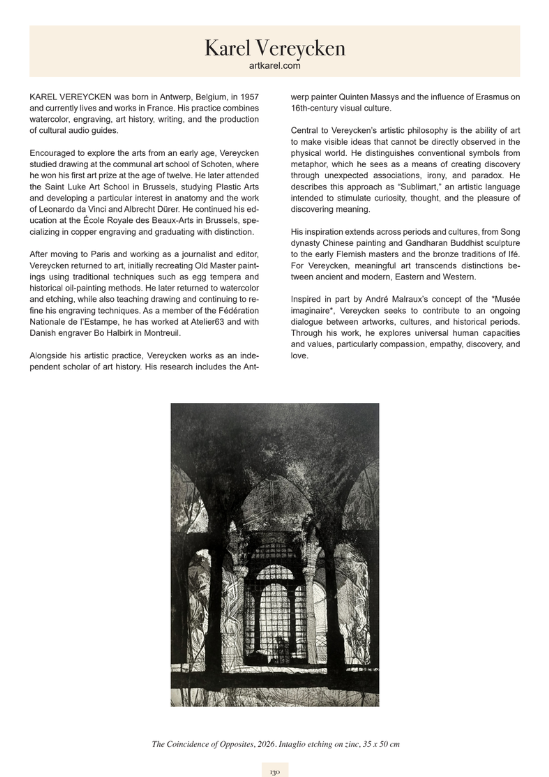
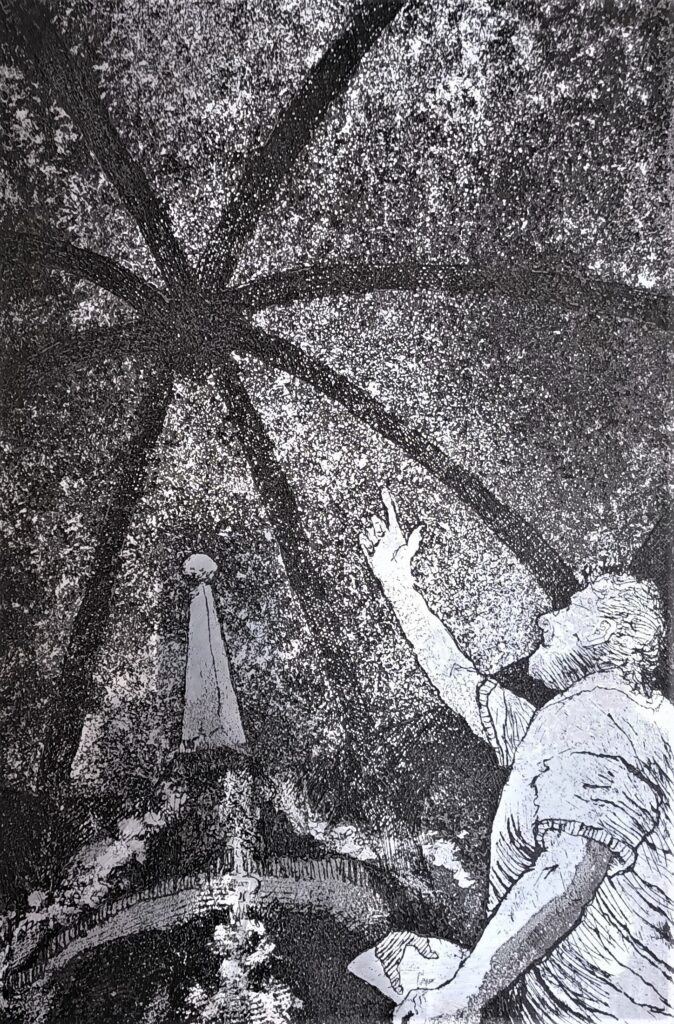
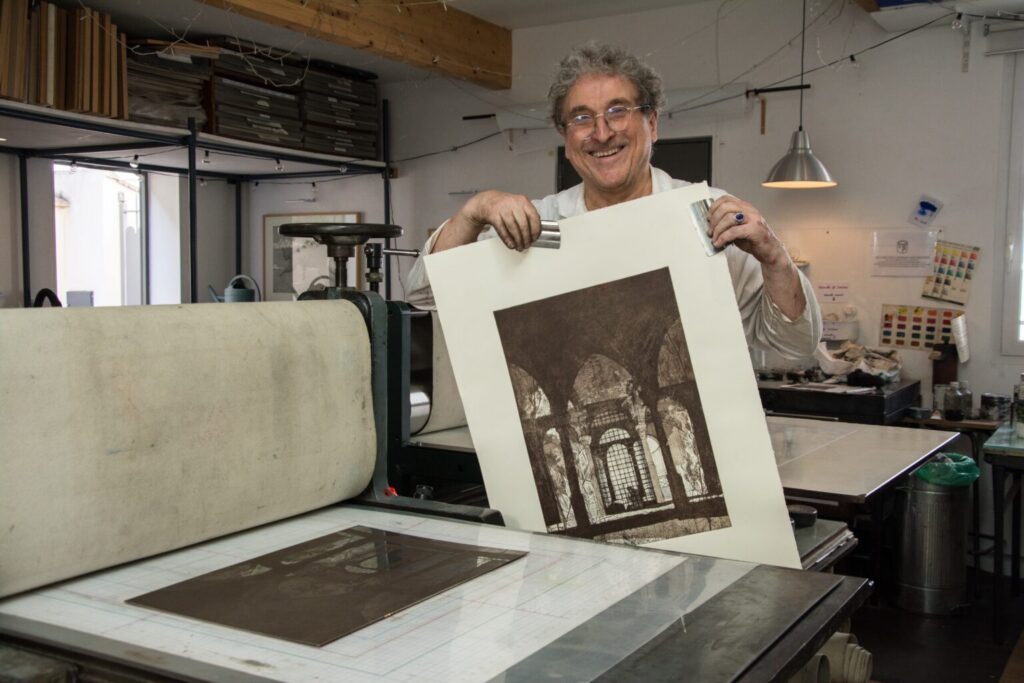
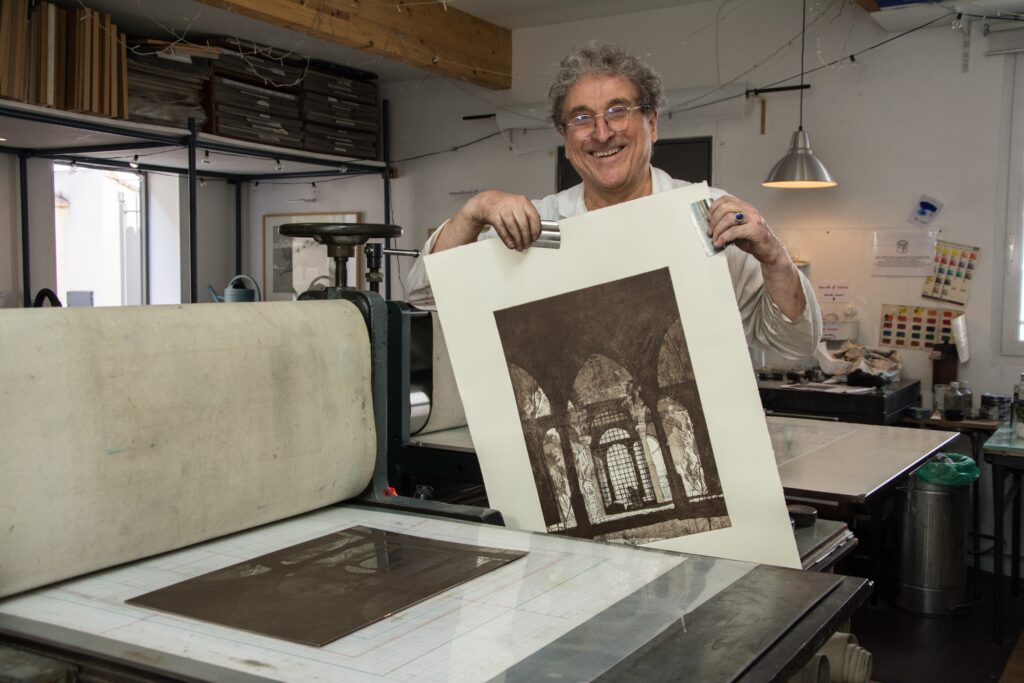
‘The Flemish painter and etcher Karel Vereycken lives and works in France. On May 1, he exhibited his latest etchings. One particularly large one depicted the interior of a monastery with a monk. This exceptional work—of which he produced four versions—illustrates his special interest in the classical masters.’
The etching measures 35 x 50 cm and costs 500 euros. A “state” is a version that is lost if further adjustments are made to the etching plate by the artist or the printer. Rembrandt is known to have sometimes produced dozens of states. Each state is therefore a limited edition, sometimes consisting of only a few copies.
Ideas and Emotions
Karel Vereycken was born in 1957 in Antwerp and grew up in a family with ties to the Port of Antwerp and the shipbuilding industry. Vereycken is primarily active as a painter and engraver, but also writes as an art historian. He studied fine arts at the Institut Saint-Luc in Brussels and subsequently studied engraving at the Académie Royale des Beaux-Arts in Brussels, where he graduated with honors.
For decades, Vereycken has focused on watercolor and printmaking, particularly etchings on zinc and copper, often using techniques such as aquatint, sugar lift, and mousse lift. His work combines classical technical mastery with a strong emphasis on symbolism, allegory, and metaphor, through which he seeks to make ideas and emotions “visible” that are not immediately present in the visible world. Vereycken is working on a book about Quinten Matsys and Da Vinci. It is scheduled to be published at the end of this year.
I spoke with Vereycken about this masterful etching. “When I was recently in Milan to receive an art award, I visited the Pinacoteca Ambrosiana. There are beautiful paintings there, and the library is a leading repository for Da Vinci’s codices. But I also knew there was a crypt. I was deeply impressed by this almost Paleo-Christian monument. I discovered that dreadful cage reminiscent of Piranesi’s depictions of torture and prisons. In the center of that cage stands a painted plaster statue of the praying Charles Borromeo (well-known in Antwerp), bishop of Milan who was made a cardinal in 1560. Borromeo went to pray in that cage every week before a tombstone that is a replica of Christ’s in Jerusalem. What impressed me is how that man (whom I do not hold dear in my heart), as a clergyman, praying in a sort of double prison (cage + crypt), apparently felt spiritually completely free in God. A divine paradox,” Vereycken said.
“So that was my starting point. Hence the Cusian title ‘Coincidence of Opposites.’ I raised the vaults and made them more monumental. I also used varnish to imprint plant motifs, to enhance a spatial effect that is both open and yet enclosed. A bit of sleight of hand, but the magic was definitely there!”
The article was translated by Karel Vereycken from Dutch into English.
Here is a link to the original Flemish version:
https://pal.be/2026/05/de-klassieke-technische-beheersing-van-karel-vereycken/
De klassieke technische beheersing van Karel Vereycken
Op 24 maart 2026 heeft Lode Goukens hetvolgende geschreven in een artikel op de website van ‘t Pallieterke:
‘De Vlaamse kunstschilder en etser Karel Vereycken leeft en werkt in Frankrijk. Op 1 mei toonde hij zijn nieuwste etsen. Eén heel grote in het bijzonder van het interieur van een klooster met een monnik. Dit uitzonderlijke werkstuk – waar hij vier staten van maakte – illustreert zijn bijzondere interesse voor klassieke meesters.’
Lees verder in het pdf hieronder.
Karel Vereycken Celebrated in « 100 Artists of Europe » Book
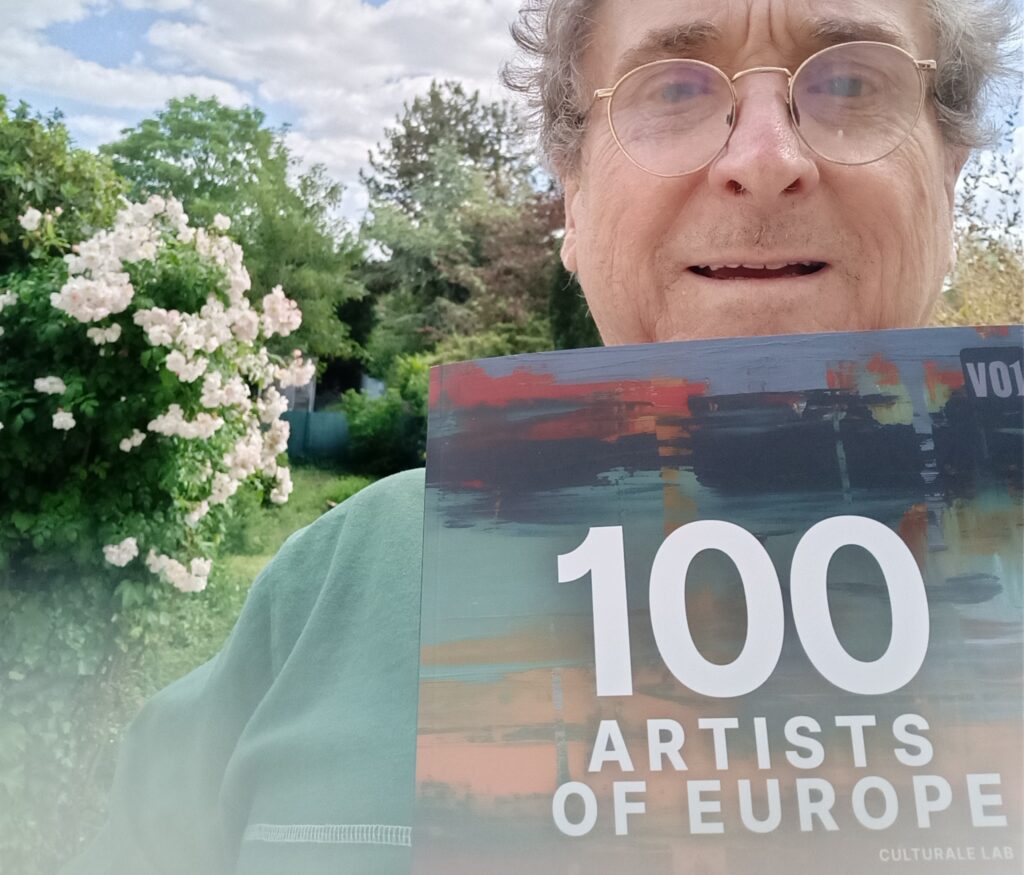
The art work of Franco-Belgian painter engraver Karel Vereycken is featured in the just released book « 100 Artists of Europe » published by Culturale Lab. The artist is honored to be part of this initiative celebrating creativity across our continent ! #100ArtistsOfEurope #EuropeanArt #CultureAndArt
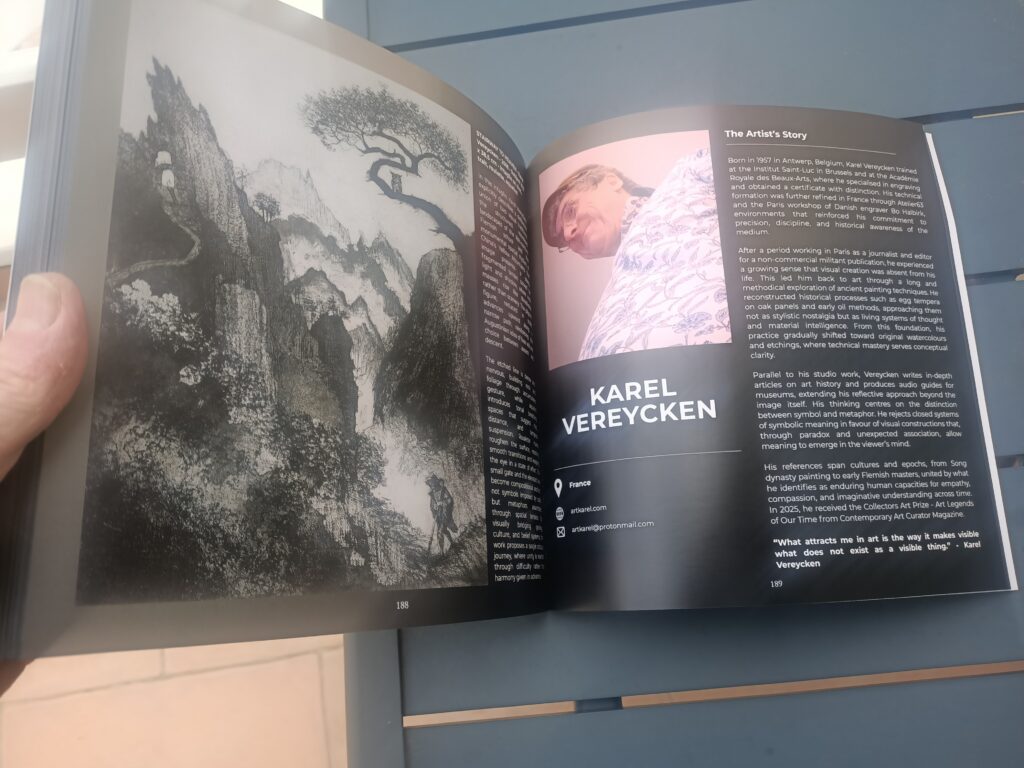
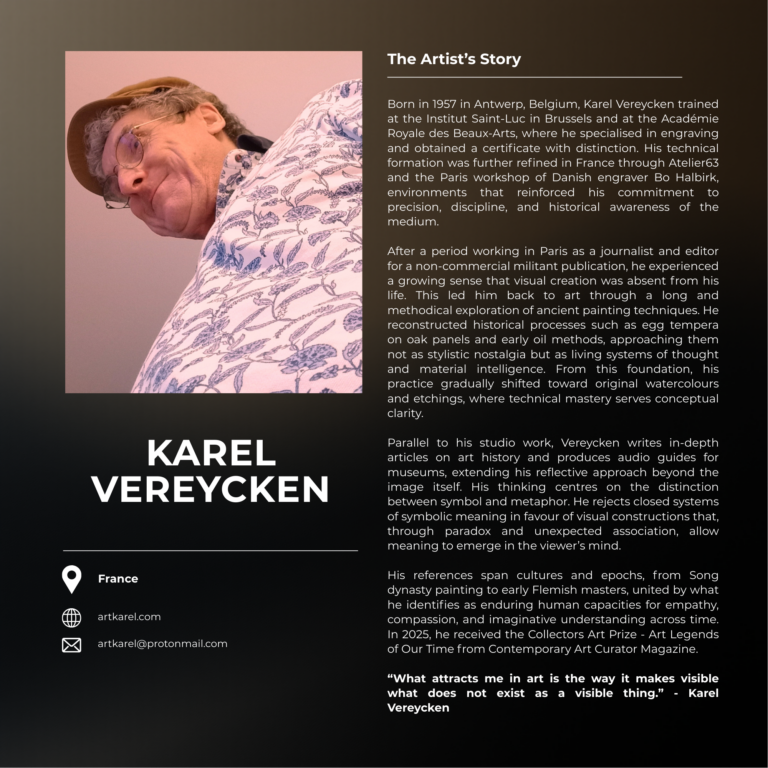
Karel Vereycken featured on FineArtsNews.com
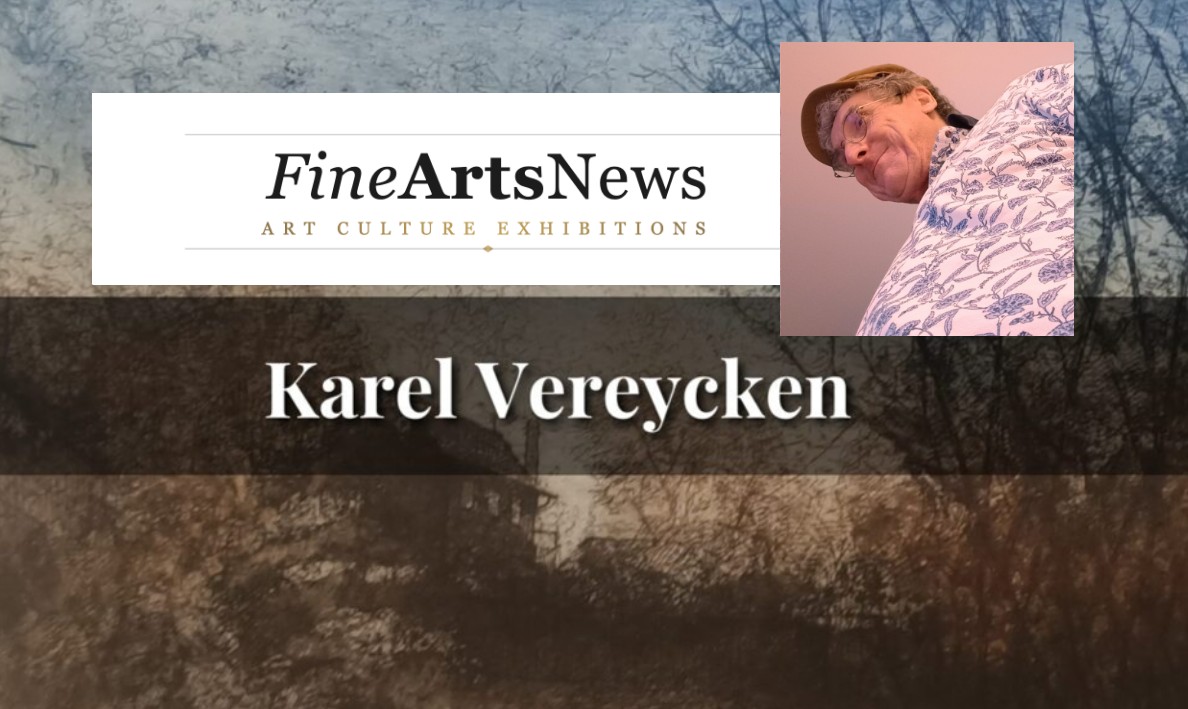
Karel Vereycken: Crafting Paradoxical Metaphors to Reveal the Invisible
Franco-Belgian painter engraver Karel Vereycken is now featured on FineArtsNews.com!
This amazing opportunity was made possible through Culturale Lab (@culturalelab @culturalelab_art), a platform dedicated to supporting and promoting contemporary artists worldwide.
His story has been published on FineArtsNews.com, a respected international publication covering fine arts, museum exhibitions, and the global art scene.
« It’s an incredible honor to have my work and artistic journey showcased to art collectors, gallery professionals, museum curators, and fine art lovers worldwide, » said Vereycken. « This feature explores my creative process, inspirations, and recent works. I’m grateful for this opportunity to connect with art lovers and collectors around the world. »
Read the full article:
https://fineartsnews.com/2026/04/karel-vereycken-crafting-paradoxical-metaphors-to-reveal-the-invisible/
Karel Vereycken: Crafting Paradoxical Metaphors to Reveal the Invisible
Posted on by Jonathan Hale

Also available in: ES FR DE IT ZH
In a world often saturated with the immediate and the obvious, there exists an artist dedicated to excavating deeper truths, coaxing the intangible into the realm of the visible. Karel Vereycken, an engraver whose journey began in the storied city of Antwerp, Belgium, and now flourishes in Argenteuil, France, is such an artist. His work transcends mere representation, delving into the complex tapestry of human experience through meticulously crafted paradoxical metaphors. Vereycken’s art is not simply to be observed; it is an invitation to a profound dialogue, a contemplation of the unseen forces that shape our lives.
A Foundation Forged in Curiosity and Discipline

Born in Antwerp in 1957, Karel Vereycken’s artistic path was not a straight line but a rich exploration shaped by both circumstance and innate drive. His parents, who navigated the challenges of a port and ship repair industry background, recognized the importance of cultural enrichment for their children. While an early foray into music, cut short by a rigid teaching method, led him to a communal drawing school, it was here that the seeds of his artistic future were sown. Under the tutelage of Herman Cornelis, a sculptor with a hands-on, intuitive approach, Vereycken learned the power of observation and replication. A pivotal moment arrived at the age of twelve when he secured his first art prize. This recognition, coupled with his teacher’s conviction of his “precious talent,” propelled him towards more formal training. His mother’s encouragement led him to the Institut Saint-Luc in Brussels, where he immersed himself in Plastic Arts. Here, the rigorous study of anatomy and the works of masters like Leonardo da Vinci and Albrecht Dürer provided a foundational understanding of form and expression. His dedication to mastery further solidified at the Académie Royale des Beaux-Arts, where he earned a certificate of passage in copper engraving “with distinction.”
The subsequent move to Paris marked a period of diverse engagement. Vereycken initially pursued journalism and editing for a non-commercial publication, but the call of art remained insistent. He returned to his artistic roots, initially exploring ancient painting techniques, recreating the works of old masters using hand-made egg tempera and traditional oil methods. This period, while enriching in its technical discovery, proved challenging in terms of exhibition, as the works found new homes before he could present them. This led to a renewed focus on watercolors and the meticulous craft of etching, mediums that would become central to his practice.
His ongoing commitment to honing his skills is evident in his continued engagement with the etching community in France. As a member of the Fédération nationale de l’estampe, Vereycken refined his technical prowess at Atelier63 and further perfected his craft at the Montreuil printing workshop founded by the Danish engraver Bo Halbirk. This journey, from the vibrant streets of Antwerp to the artistic hubs of Brussels and Paris, underscores a lifelong pursuit of excellence and a deep-seated passion for the enduring power of artistic creation.
“Sublimart”: The Art of Paradoxical Metaphor

Vereycken’s artistic output is best described by his coined term, “sublimart”—a fusion of “sublime” and “art.” This neologism encapsulates his unique approach: figurative art that employs paradoxical metaphors to elevate the soul to a sublime level. His work is not about superficial beauty or direct narrative, but about constructing visual paradoxes that act as gateways to deeper understanding. “Making visible the invisible,” as he succinctly puts it, is the driving force behind his creations. He achieves this not through conventional symbolism or straightforward depiction, but by weaving together disparate elements in a way that challenges perception and sparks contemplation.
The materials and techniques he primarily utilizes – etching, painting, oil, and watercolor – are employed with a discerning hand. Etching, with its inherent precision and the intricate lines it allows, is particularly suited to his exploration of layered meaning. The process of etching demands patience and deliberate action, mirroring the thoughtful construction of his conceptual metaphors. His dedication to classical techniques, combined with a modern sensibility, allows him to imbue his figurative works with a profound emotional and intellectual resonance. Each piece is a carefully orchestrated dialogue between form and concept, inviting the viewer to embark on a personal journey of discovery.
The thematic underpinnings of Vereycken’s work are not consciously pursued but rather emerge organically from his engagement with the world and his artistic explorations. He seeks to “shock people by showing them that nothing is more ‘modern’ and ‘revolutionary’ than ‘classical’ art.” However, his definition of classical art is far from rigid or academic. For Vereycken, it represents a “science of composition based on non-cynical, liberating, ironical, poetical metaphors.” These metaphors, he believes, are the fundamental keys to all forms of art, whether visual or musical. His approach is rooted in the understanding that art is a profound “gift” from the artist to the viewer, an act of love that fosters connection and shared experience.
A Vision of Artistic Enlightenment

Karel Vereycken’s artistic endeavors are imbued with a profound sense of purpose, extending beyond the creation of aesthetically pleasing objects. He views his work as a form of “teaching activity,” a “humanistic intellectual guerrilla warfare” aimed at awakening viewers to new dimensions of perception. While he acknowledges the importance of sales for furthering his artistic endeavors, his ultimate motivation lies not in pandering to popular taste but in facilitating a deeper connection with the viewer. He strives to make art a “window” to realms that people intuitively recognize as significant but have often been denied access to.
His commitment to this vision is exemplified by his efforts to share his knowledge and passion. He has led numerous guided tours of major art institutions like the Louvre in Paris, the Museums of Antwerp, Brussels or Frankfurt, the Brera in Milan, the Gemäldegalerie in Berlin and the Metropolitan Museum in New York. These immersive experiences have been documented, with some audio recordings available on his website, allowing a wider audience to benefit from his insights. The heartfelt gratitude he has received, with individuals expressing their astonishment at how deeply ideas can be conveyed through paintings, underscores the impact of his pedagogical approach.
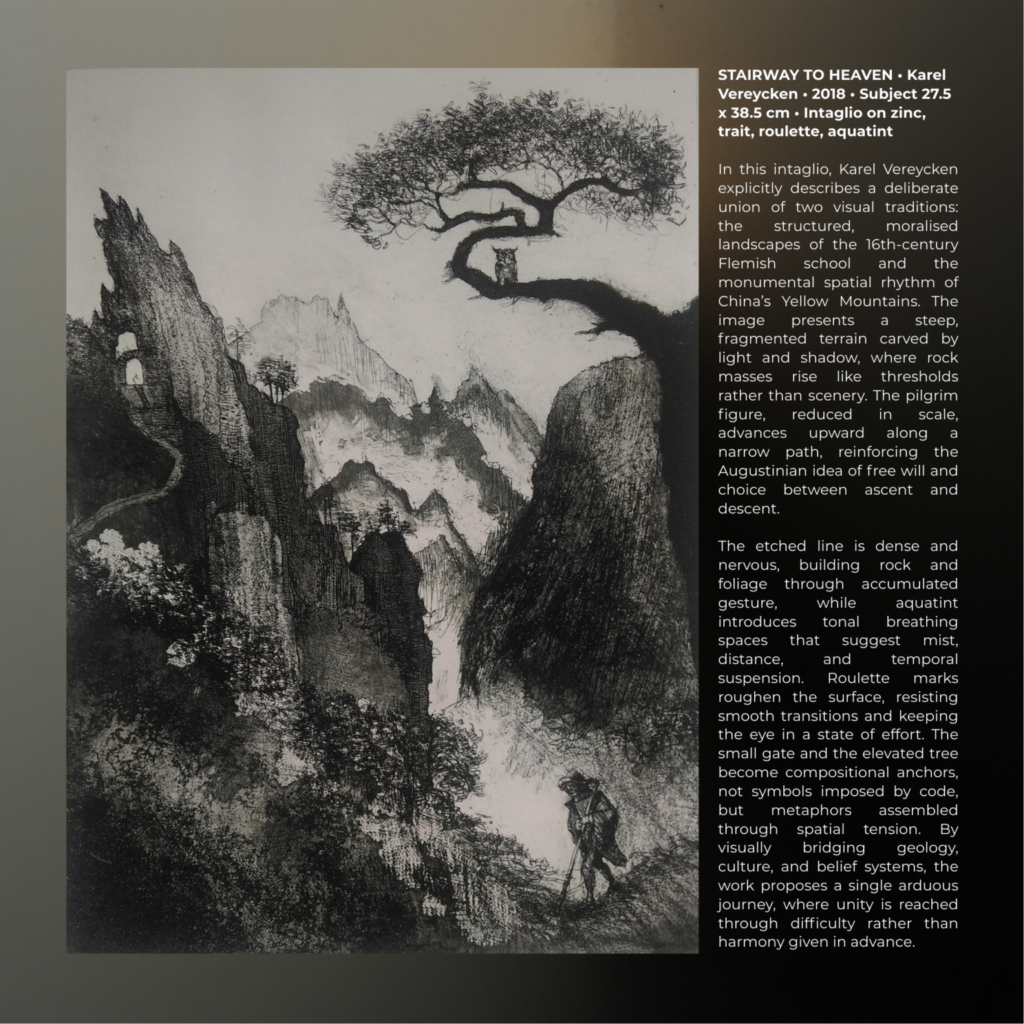
Looking ahead, Vereycken’s trajectory continues to be marked by active participation and a desire to broaden his reach. Having been digitally showcased at ARTEXPO in New York and ARTSHOPPING at the Carrousel du Louvre in Paris, he remains engaged with contemporary art platforms. Following his “Mona Lisa Prize” win and subsequent exhibition at Galerie Mona Lisa in Paris, his focus remains on sharing his transformative art. The prospect of an exhibition in El Salvador for SUMARTE 2026 signals his international aspirations and a continued commitment to making his unique perspective accessible to a global audience. His ongoing work, such as the conceptually rich “Stairway to Heaven,” demonstrates his continued exploration of marrying diverse visual inspirations—in this instance, the landscapes of China’s Yellow Mountains with Flemish landscape traditions—to craft potent metaphors for the human journey.
Karel Vereycken’s art is a testament to the enduring power of intellectual curiosity, technical mastery, and a profound belief in the capacity of art to illuminate the human spirit. Through his creation of paradoxical metaphors, he invites us to look beyond the surface, to engage with the invisible currents of meaning that shape our existence. His work is a vital reminder that true artistry lies not just in what is seen, but in what is felt, understood, and ultimately, revealed.
To connect with Karel Vereycken and explore his captivating work, please visit his website and social media platforms:
- Website: https://artkarel.com/
- Instagram: https://www.instagram.com/karelvereycken/
- Facebook: https://www.facebook.com/karel.vereycken/
- Manifestampe Profile: https://www.manifestampe.org/utilisateur/karel-vereycken/profil
- Contemporary Art Curator Magazine Interview: https://www.contemporaryartcuratormagazine.com/home-2/karel-vereycken-interview
Karel Vereycken webpage at Circle Foundation for the Arts
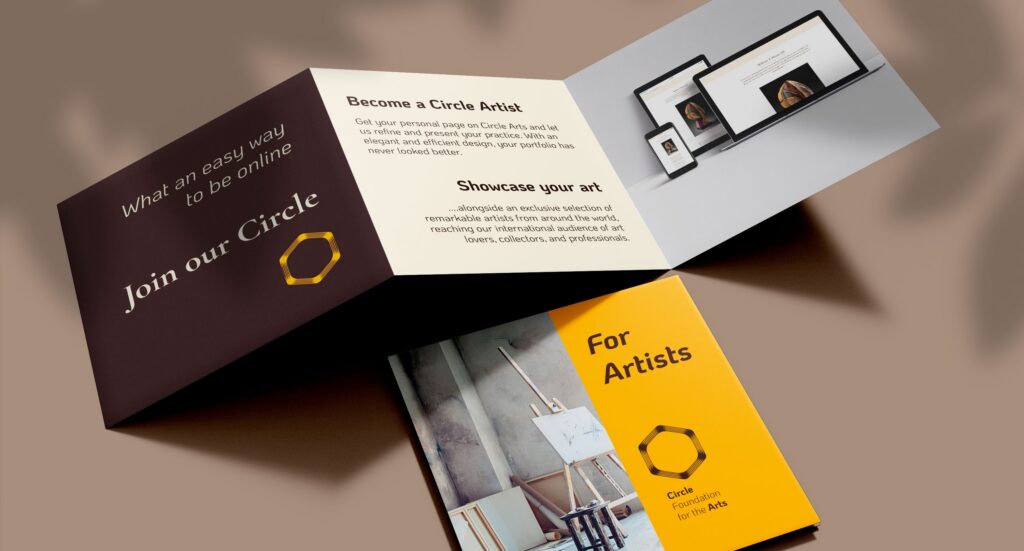
On April 20, 2026, Franco-Belgian painter engraver Karel Vereycken became a member of the Circle Foundation for the Arts (CFA).
In this new capacity of a « Circle Artist » he could open a permanent dedicated webpage on the CFA website, an additional window increasing the artists overall visibility and reach-out.
https://circle-arts.com/member/karel-vereycken/
Thanks for that !
Karel Vereycken featured in « Art to Hearts » Magazine

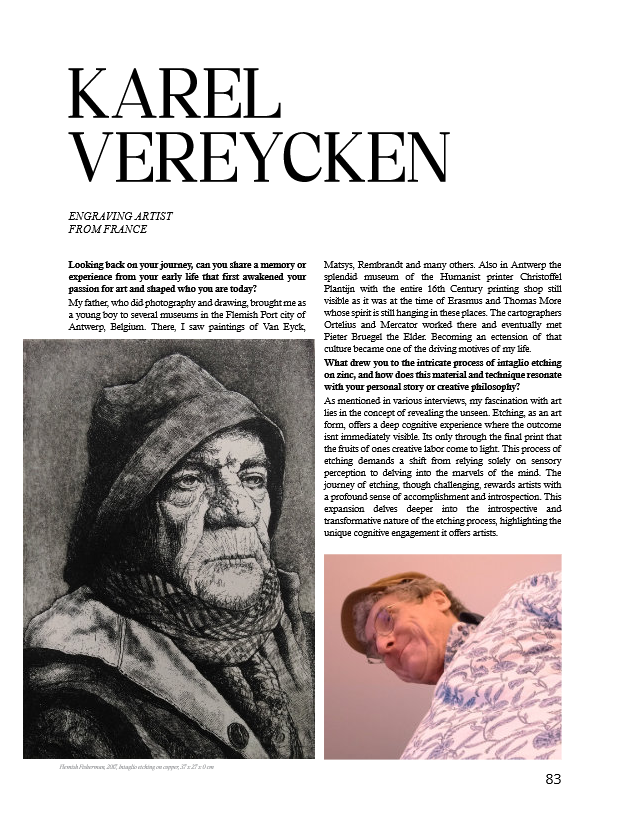
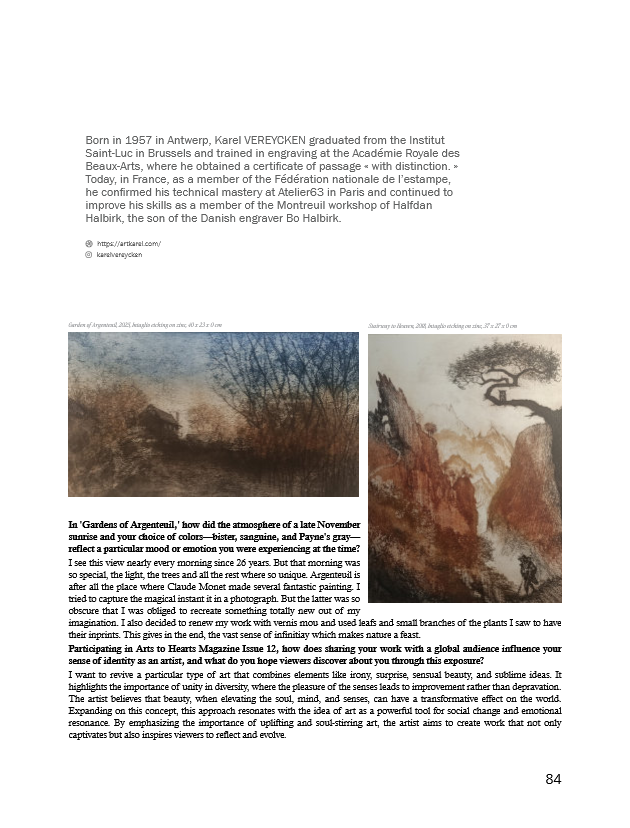
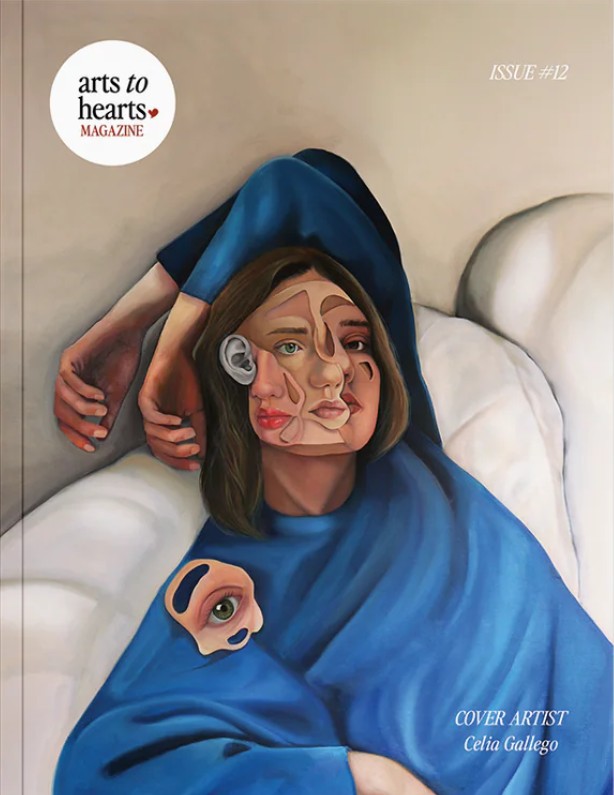
The international art magazine Art to Hearts, in its edition #12 appearing in April 2026, took two pages (p. 83-84) to feature the artistic statement and three engravings of Franco-Belgian painter engraver Karel Vereycken.
Big thanks for that !
« Arts to Hearts Magazine, a key initiative of the Arts to Hearts Project, highlights and amplifies the voices of artists worldwide. This international art publication offers a platform to showcase their diverse talents, perspectives, and stories. Widely available through retailers like Barnes & Noble and Amazon, the magazine connects artists to a global audience of galleries, curators, collectors, and art lovers, bringing their work into the spotlight. »
Karel Vereycken featured in ARTIO Magazine
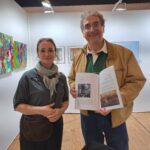
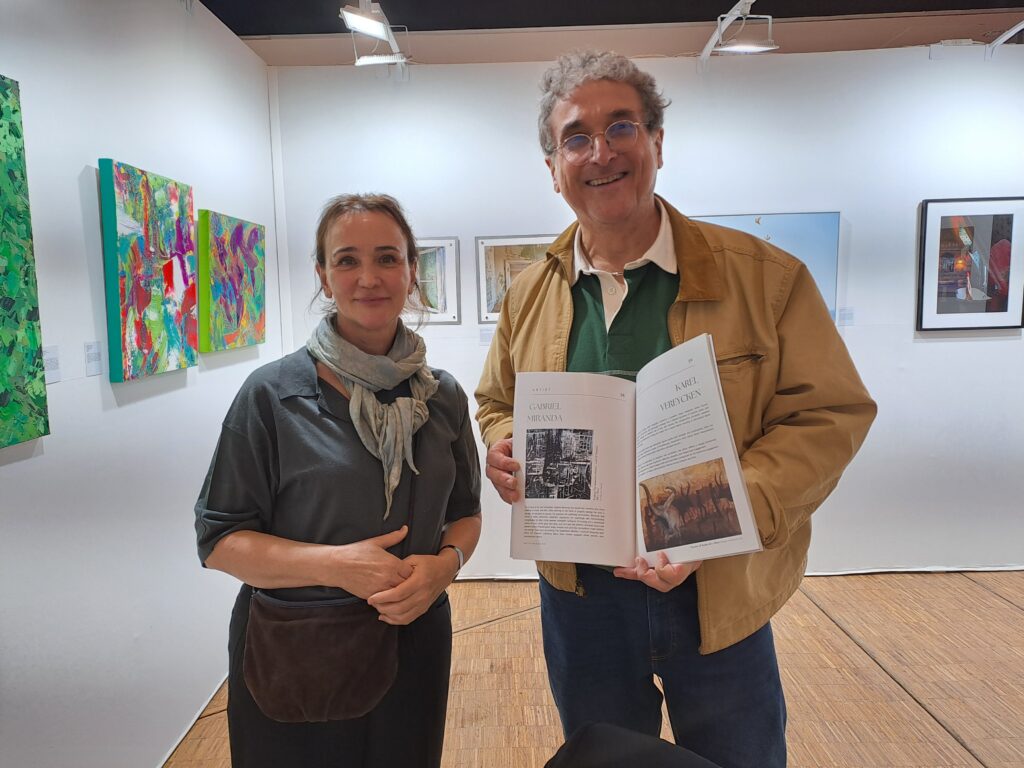
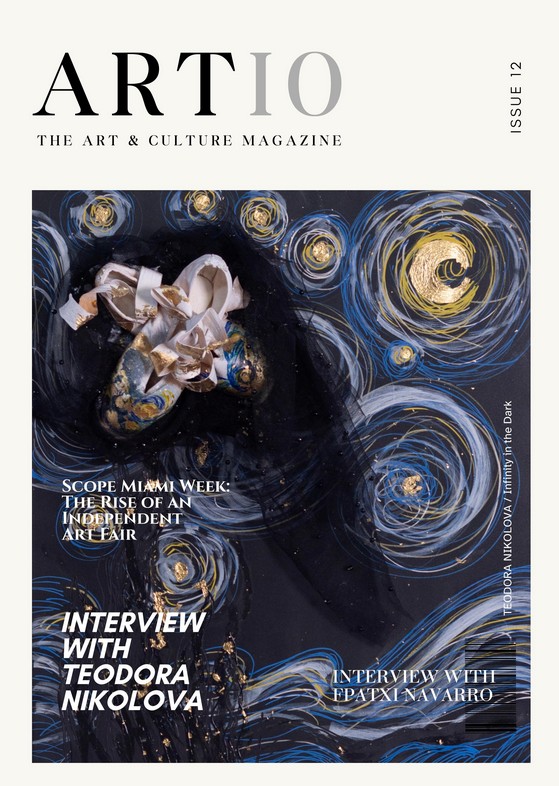
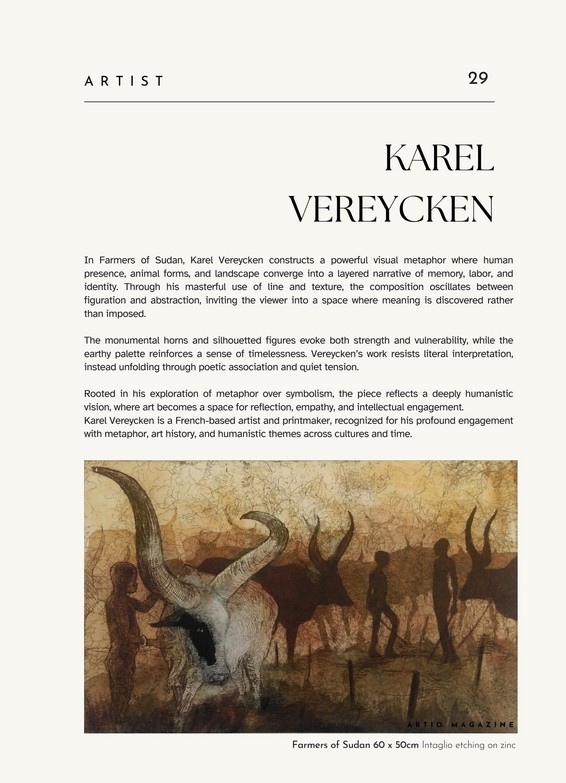
In its March-April issue (N° 12), the Art & Culture Magazine ARTIO published by ARTIO Galery, published a one page feature showing Karel Vereycken‘s etching « Farmers of Sudan ». Big thanks for that to artist Bisa Bennett, its director and curator in chief.
Karel Vereycken featured in ART LOVERS Magazine
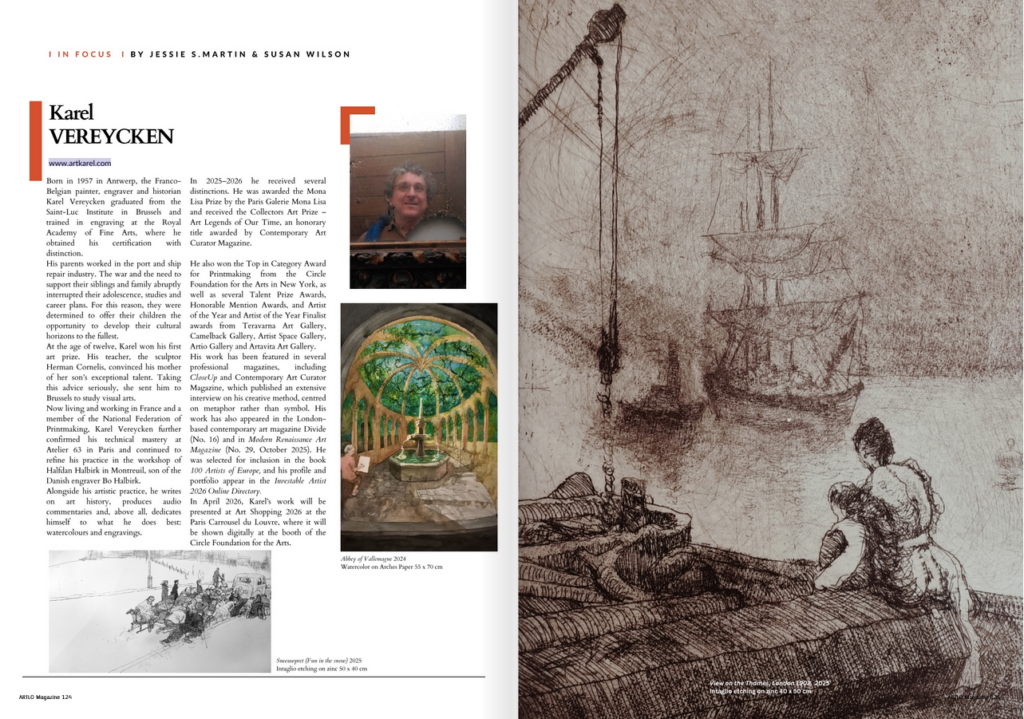
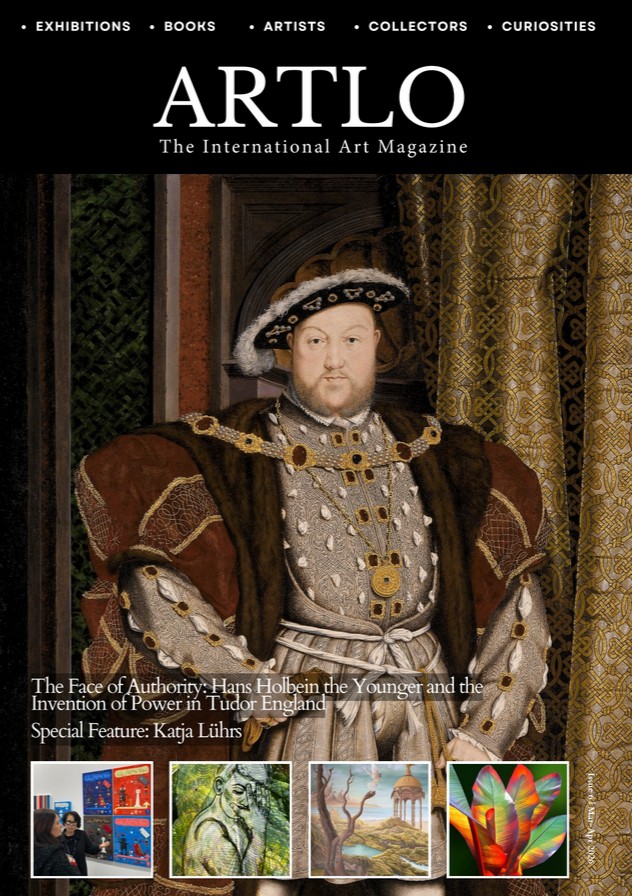
The outstanding and beautiful International Art Lovers Magazine (ARTLO), published in Spain, in its March-April issue N° 6, 2026, offers a two page feature article on Franco Belgian painter engraver and historian Karel Vereycken.
ARTLO identifies itself as « a group of people who are passionate about art – true art lovers who are enthusiastic about everything we do in the creative world. We love discovering emerging artists and being part of a community where art is a way of life ».
ARTLO Magazine clearly offers rich in depth articles allowing a remarkably high level and much needed debate on both « classical » and « modern » art.
You can order, in the coming days, your own print copy, via this link.
Karel Vereycken featured in Art Star Magazine
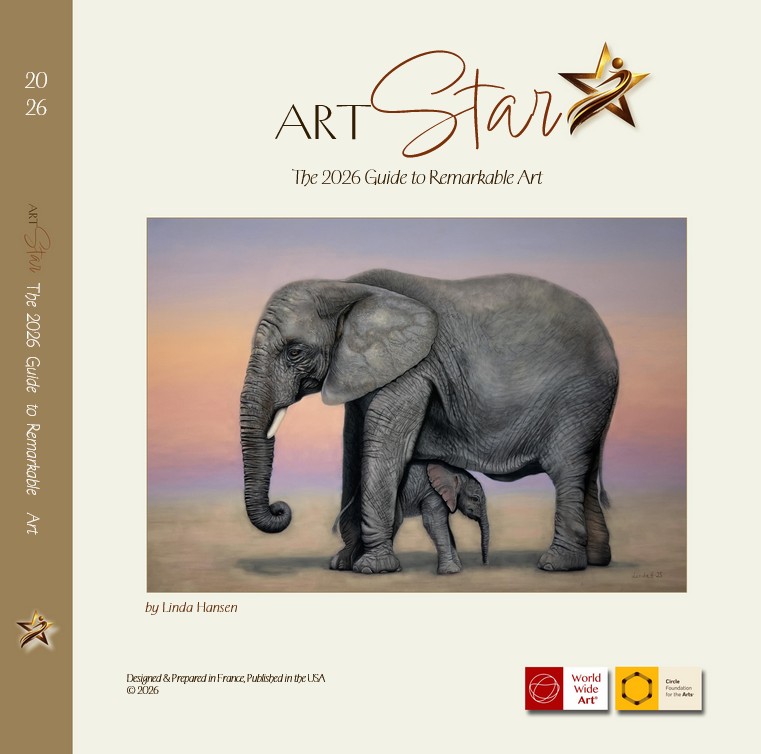
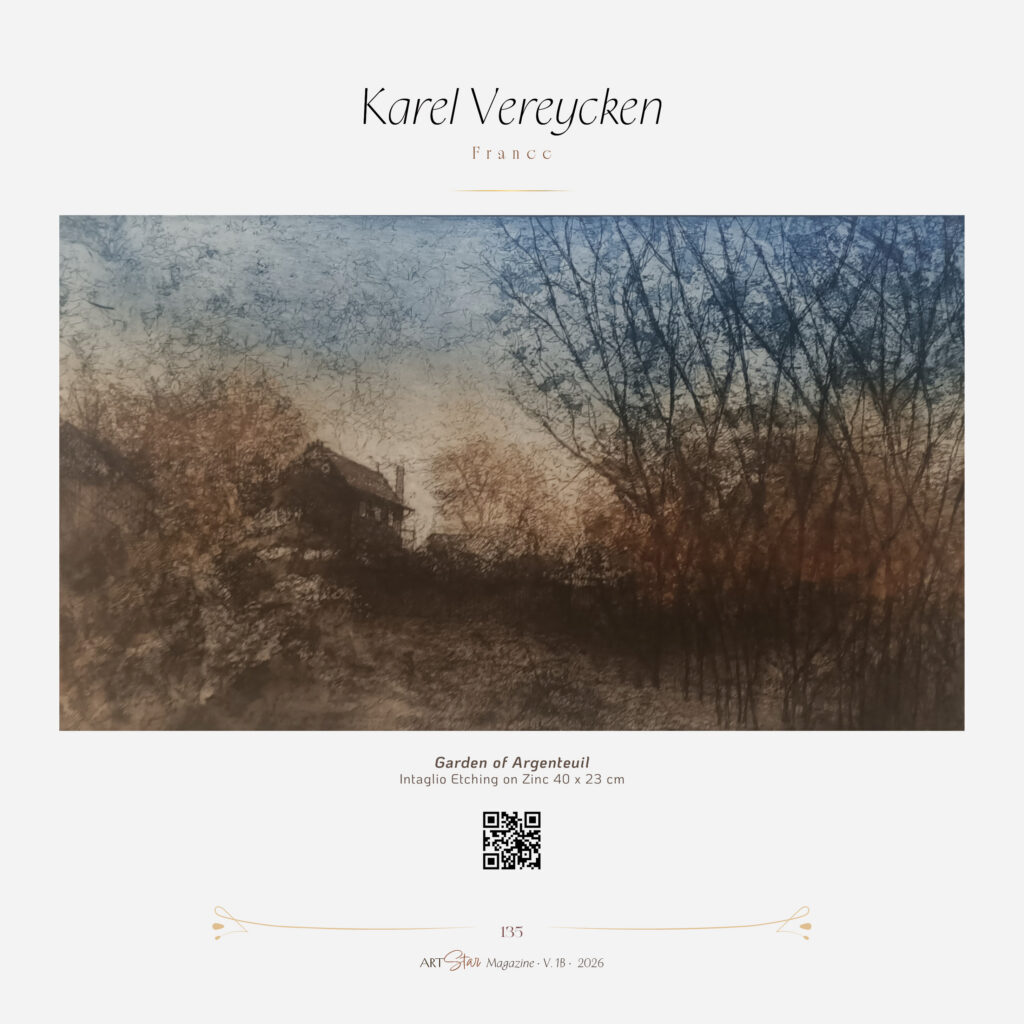
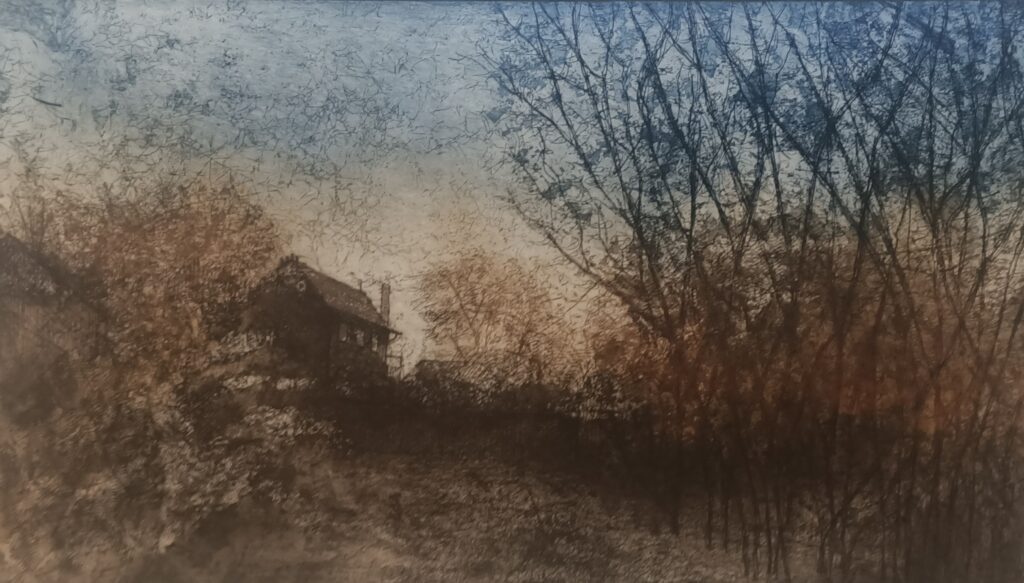
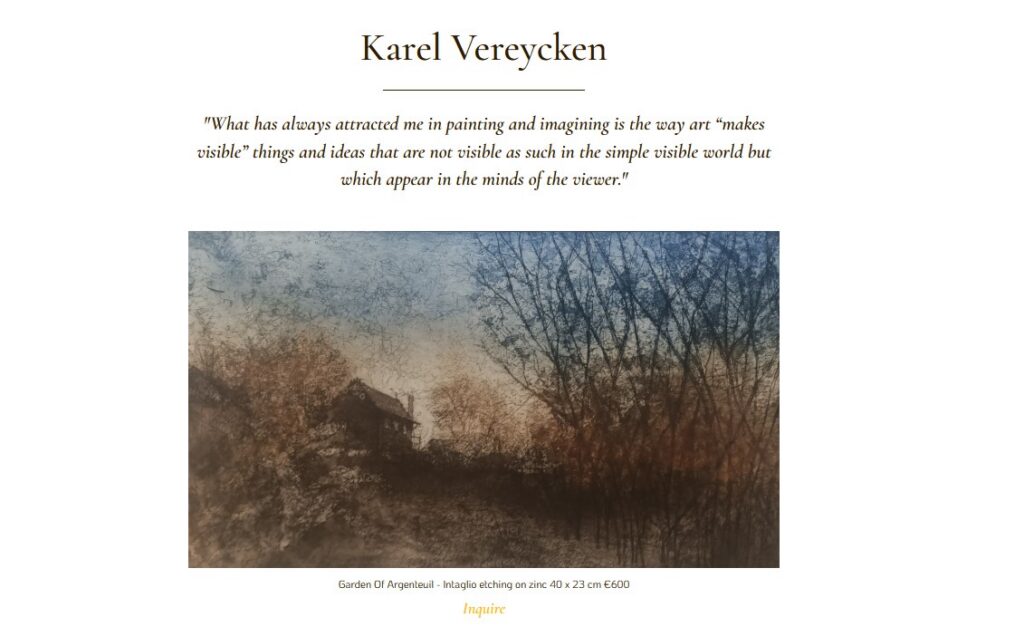
Garden of Argenteuil, a color engraving of Karel Vereycken, is featured in the March issue of ART STAR Magazine, The 2026 Guide to Remarkable Art (V. 1B, 2026).