The Light of Dunhuang – Culture and Beauty of the Silk Road
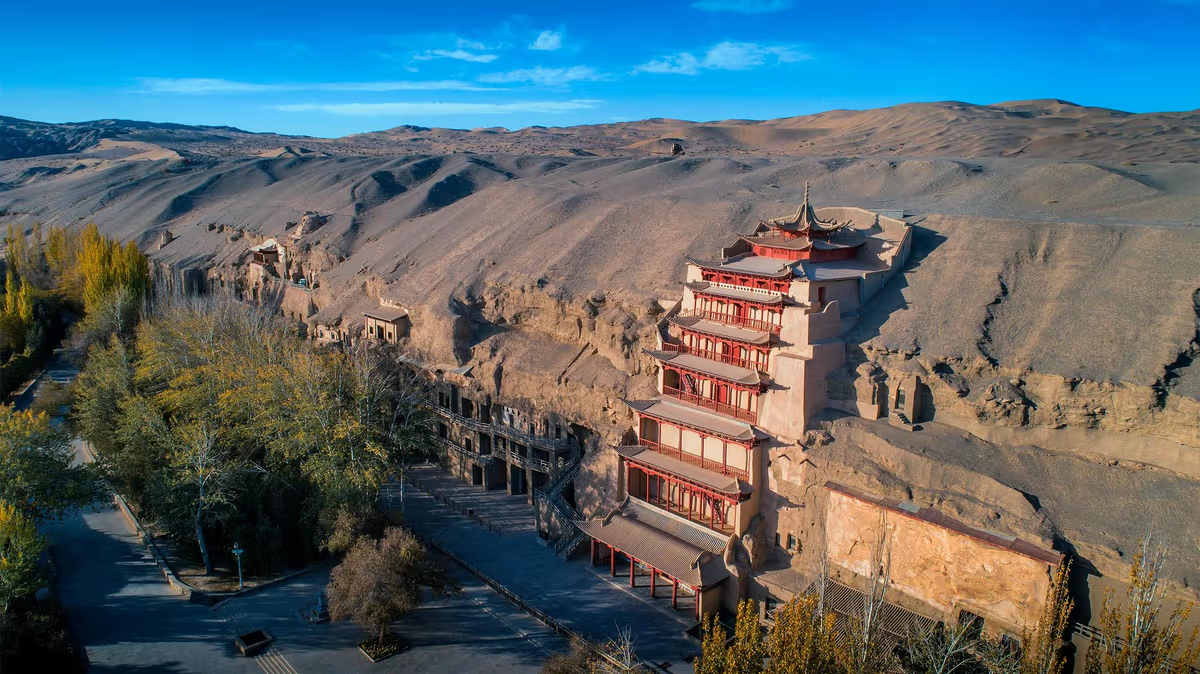
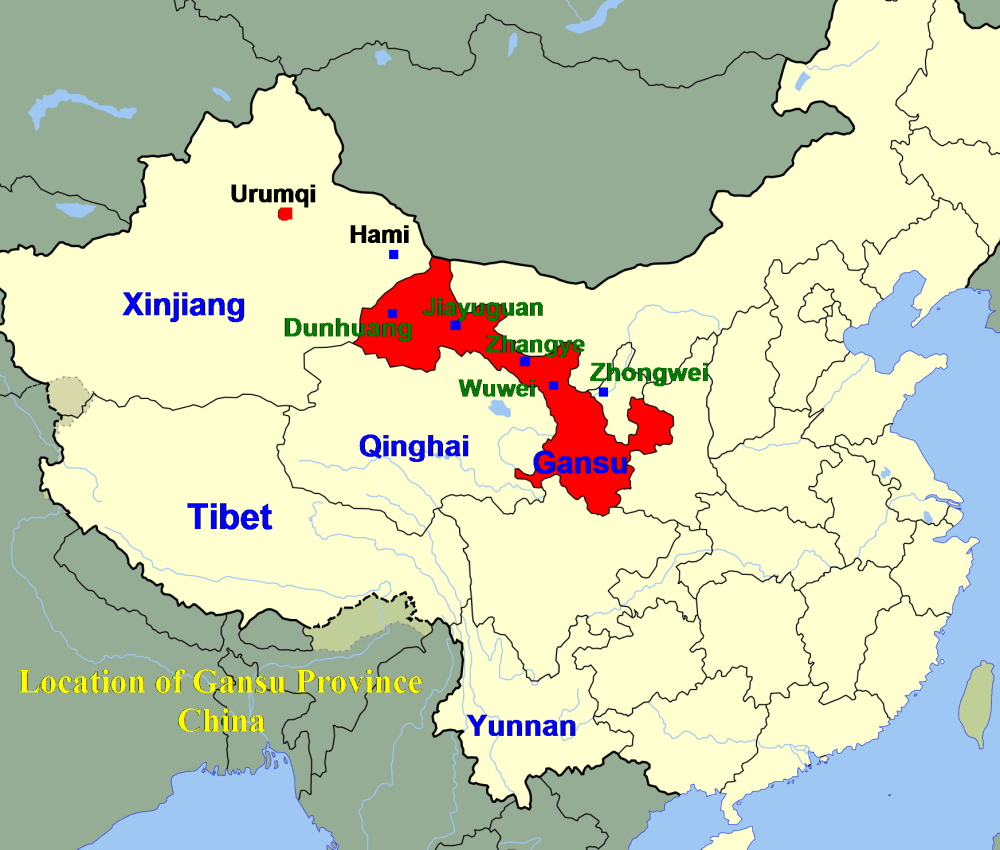
History will remember for a long time the outstanding cultural events that shined early November 2026 in the city of Dunhuang, historically a major hub on the ancient Silk Road in the North-Western Province of Gansu, China.
Dunhuang owes its role to its geography and the relief of its location. The Province of Gansu, about the size of California or 82% of France’s territory, coincides roughly with that of the “Hexi Corridor”, a 40 to 100 km large passage in China over approximately 1,000 kilometers that is dotted with a string of oasis-towns.
Nestled between the inhospitable climates of the Taklamakan desert to the West, the Gobi Desert to the North, and the mountains of the Tibetan Plateau to the south, this corridor, from Lanzhou to Dunhuang, was the only viable overland route from Central Asia into China for over a thousand years.
Dunhuang consequently became a gateway between East and West, and a channel through which many different people, as well as goods, ideas, and technology, traveled.
As the Chinese scholar Ji Xianlin has it,
“There are four major cultural systems in the world featuring long-standing history, a vast territory, a self-contained system and far-reaching influence: China, India, Greece and Islam, and there is no fifth. There is only one place where these four cultural systems merge into one, that is China’s Dunhuang.”
Witness a this 1600 year old heritage are the hundreds of painted devotional Buddhist caves in Mogao, carved out in a cliff of “singing” sand dunes and decorated with hundreds of intriguing frescoes and painted sculptures created over a thousand-year period starting in the 4th century.
Cultural Expo
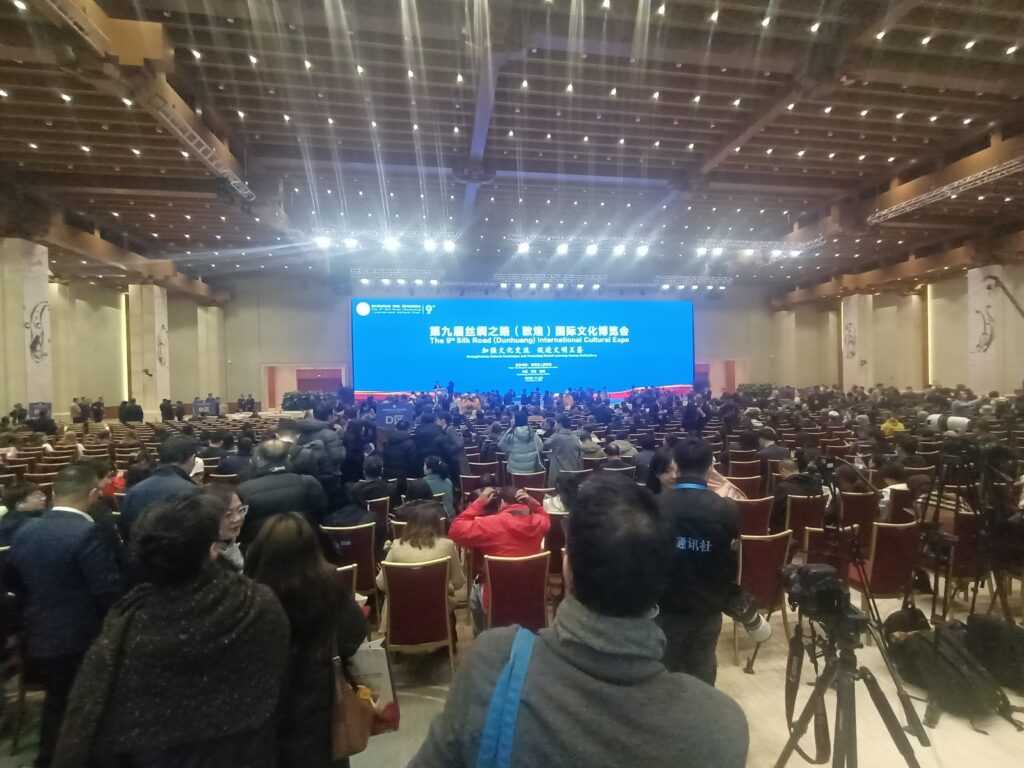
First, from November 2 to 4, took place the “9th Silk Road (Dunhuang) International Cultural Expo” under the theme of « Strengthening Cultural Exchanges and Promoting Mutual Learning Among Civilizations, » hosted by the Gansu Provincial People’s Government.
To foreigners arriving, with the airport and the entire city decorated with festive banners and lampoons, the event nearly appeared as a national holiday. With a total exhibition area of approximately 18,000 square meters, this flagship national-level expo brought together roughly 1,200 delegates, scholars, and officials from 58 countries, regions and organizations, with more than 360 overseas guests in total. Among these where representatives of the Hong Kong and Macao Special Administrative Regions, the Consul General of Malaysia in Xi’an as well as senior representatives from the Asian Infrastructure Investment Bank (AIIB) and the World Bank.
At the opening session on Tuesday morning, several key attendees and high-profile domestic and foreign representatives shortly addressed a giant room packed with over 1,000 people:
- Wu Xiaojun, Secretary of the CPC Gansu Provincial Committee;
- Kong Shaoxun,Governor of Gansu;
- Jiang Hui, Vice Minister of the Publicity Department of the CPC Central Committee;
- Daren Tang, Director General of the World Intellectual Property Organization (WIPO), who addressed the 2026 International Copyright Forum during the expo;
- Shahbaz Khan, Director and Representative of the UNESCO Regional Office for East Asia, who praised China’s leading role on heritage conservation;
- Huot Hak, Cambodia’s Minister of Tourism, emphasizing tourism ties between the Mogao Caves and the Theravada Buddhist site of Angkor Wat;
- Sun Weidong, Secretary-General of the China–Central Asia Mechanism;
In the following days, at the Expo itself, Russian scholar Nadezhda Zamyatina presented urban planning studies in partnership with Tianjin University, while Vietnamese businessman Luong The Vinh showcased regional products as a grassroots exhibitor. American fiddler Kyle Dillingham, who has visited China more than a dozen times, attended the expo with his folk band Horseshoe Road. He said he hoped the event would create new opportunities for people-to-people exchanges between Oklahoma and Gansu, which celebrated the 40th anniversary of their sister-state relationship in 2025.
As China’s premier national-level international cultural exchange event aligned with the Belt and Road Initiative (BRI), the expo was organized under the direct supervision of multiple key government bodies, notably the Ministry of Culture and Tourism of China, the National Radio and Television Administration, the China Council for the Promotion of International Trade, and the local state leadership of the Gansu Provincial People’s Government.
Symposium
Among the sub-forums with international participation was the “International Academic Symposium on Dunhuang Studies,” a high-level scholarly forum convened regularly as part of major international cultural and research gatherings. The Symposium was co-hosted by the Cultural Relics Bureau of the Gansu Province and the “Dunhuang Academy,” a highly respected and very prestigious institution that has been battling for decades to maintain, restore, digitize and research all the various aspects of the Mogao Caves.
Among the 130 scholars, thinkers and experts invited, mostly from China but also from Japan, Germany, the UK, France, Belgium and Afghanistan, a delegation of the Schiller Institute, represented by its founder Helga Zepp-LaRouche and painter-engraver and historian Karel Vereycken from France.
Helga Zepp-LaRouche: Unity in Diversity
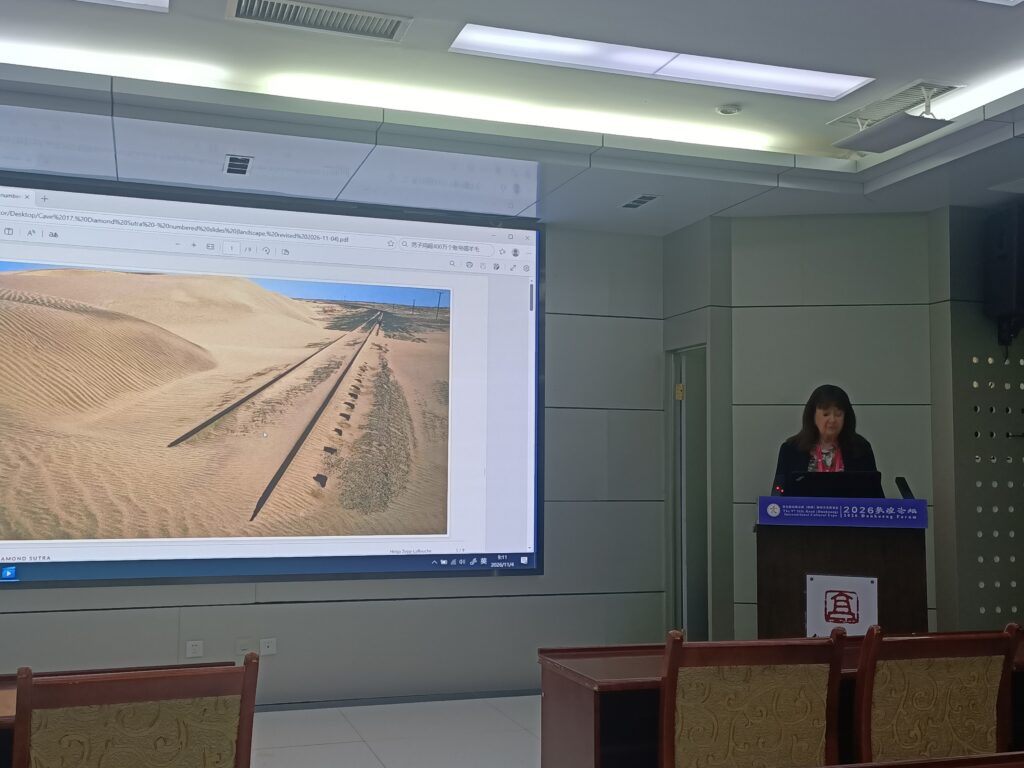
Mrs LaRouche was invited to keynote an important research seminar on the second day. During her intervention, “The Dunhuang Mogao Grottoes: Unity in Diversity” (published in full in the Collected Papers and Abstracts, Volume II, pp. 324-328.), she underscored that the Mogao caves “represent a Rosetta Stone of cultural history.”
In 1900, the Taoist monk Wang Yuanlu discovered behind a wall of Cave 16 a hidden cache, known today as “Cave 17”, that had been sealed for 900 years, with over 50,000 manuscripts, most of them in Chinese but also in dozens of other languages including Tibetan, Sanskrit, Khotanese, Tangut, Kochean (Tokarian B), Mongolian, Uighur, Sogdian, Pakrit and even Hebrew.
“From it, she said, we can gain a scientifically precise conception of the winding paths along which universal history has advanced up to our present. Alongside all diversity and historical specificity, however, we also recognize the universality of the truly great questions that have again and again moved the societies of the various epochs and civilizations.”
From that, she concluded, it “also follows that humanity not only has this common, interconnected past, in which each element occupies, as in a gigantic dynamic puzzle, its necessary place that was decisive for the overall development, but also that these findings help us in the present to understand the cooperation on the New Silk Road as the necessary next step in the evolution of humanity, and above all to understand and welcome President Xi Jinping’s conception of community with a shared future for mankind, as a necessity of universal history.”
Seen the importance of these manuscripts, of which a large number were acquired for a very low price by British and French archaeologists in the years following their discovery, she argued, “it would be time to return the finds back to China as a part of the ‘Major Historical and Cultural Sites Protected at the National Level.’ ”
Karel Vereycken: Dunhang, a “second Gandhara”
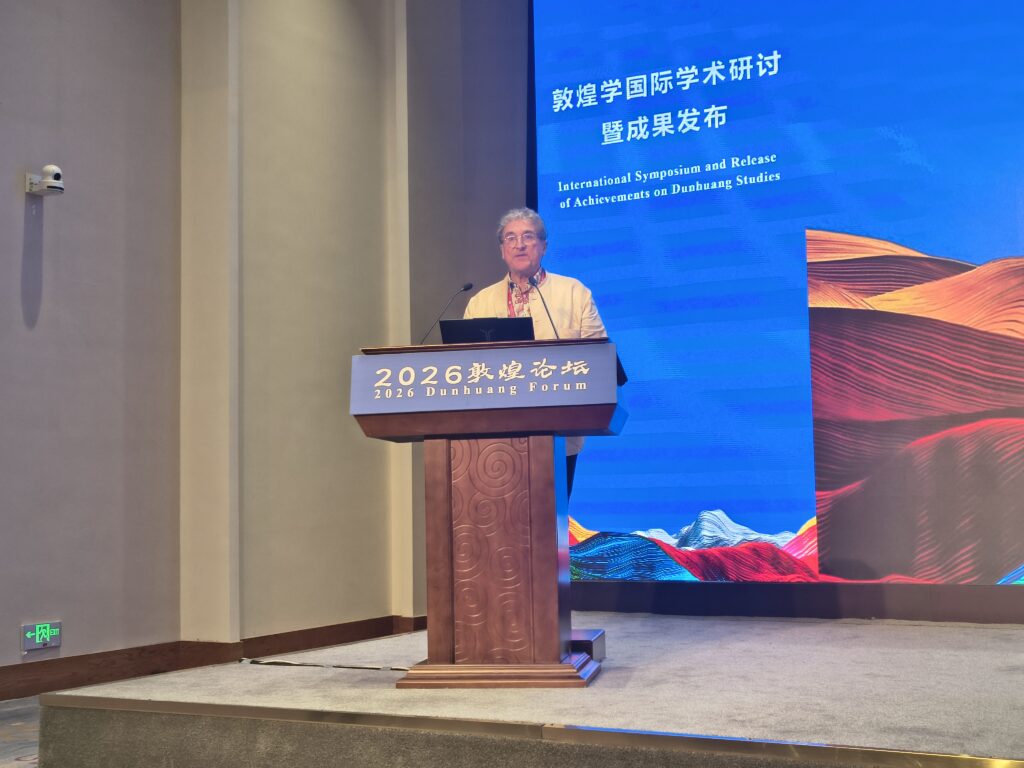
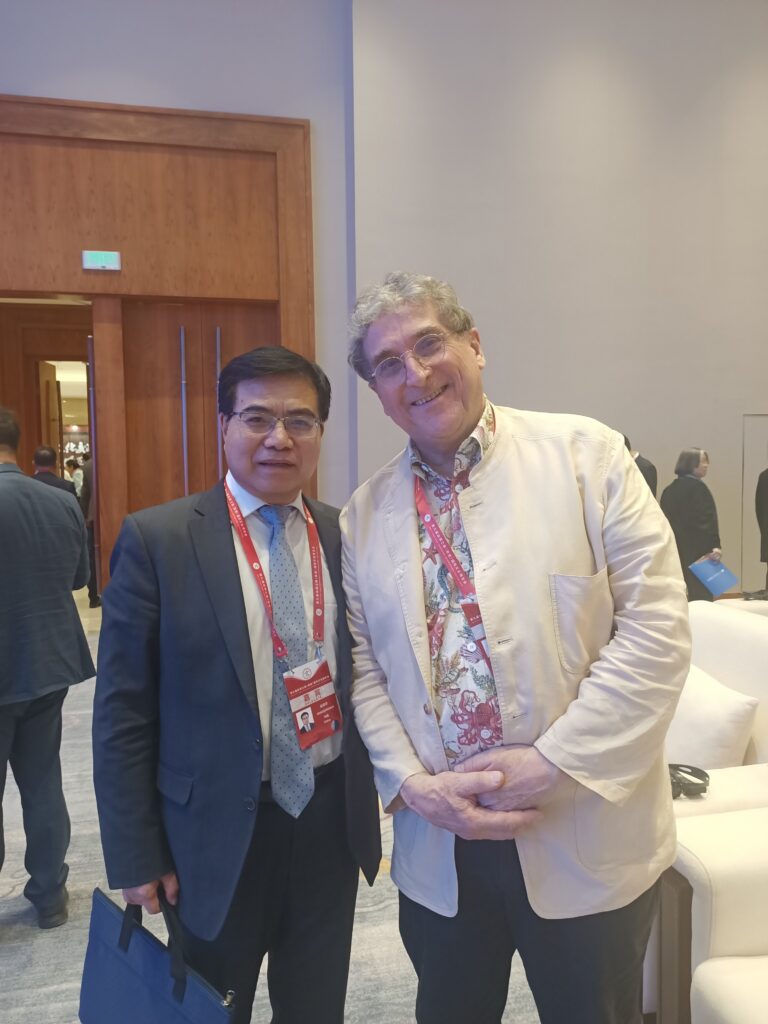
As one of the keynote speakers of the first day, Schiller Institute’s representative Vereycken got offered a seat on the first row on the right hand of Ge Jiantuan, deputy governor of the People’s Government of Gansu Province, who warmly thanked Vereycken for his presence and contribution.
Vereycken’s lecture, titled “From Gandhara to Dunhuang, The Silk Road as a “Living Corridor of World Art” was also selected and published in full in the proceedings (Published in full in the Collected Papers and Abstracts, Vol. II, pp. 149-158).
After a short introduction summarizing the birth and rise of Buddhism during the Mauryan and Kushan Empires, Vereycken, who presented himself as an “archaeologist of ideas,” underscored the importance of the “Miracle of Gandhara” (a region comprising today a large part of Afghanistan and the Western part of Pakistan). While Buddhism was initially an-iconic and symbolic, it
“suddenly morphed into anthropomorphic art taking the shapes of humans using the canons and naturalistic proportions of the classical Greek period.”
Gandhara art not only celebrated Buddha, but also “mass-produced” beautiful sculptures of Bodhisattva, “well intended empathetic humans on the road to Nirvana, but living first their life and totally committed to set others free from suffering,” a key feature of Mahayana Buddhism that emerged precisely during that period. Today, with over 50% of the total, Mahayana Buddhism, while it went through many transformations, remains the largest branch of Buddhism, practiced widely in China, Japan, South Korea, Taiwan, Singapore, and Vietnam.
And from Gandhara, “Buddhist Art with Greek characteristics” spread to Central Asian Oasis Cities like Khotan before reaching the Chinese Oasis city of Dunhuang and spreading over China and beyond.
Several aspects reveal that Gandharan inspiration in the Mogao frescoes:
- Most early caves use the lapis lazuli blue pigments exclusively originating from Afghanistan.
- Cave 275 (4th century) shows a Buddha Maitreya seated with legs crossed and surrounded by two lions, a clear imitation of Kushan iconography.
- The North wall of cave 323 (7th century), visualizes a (mythological) narrative cycle taken from the Collected Record of Miracles Relating to the Three Jewels in China, a 7th-century collection of Buddhist miracle tales compiled by the prominent Tang dynasty scholar-monk Daoxuan in 664 AD. It depicts Emperor Wu (156–87 BC) of the Western Han Dynasty discovering two large gold statues he acquired after a war with the Huns. In order to find out what they represented, Wu sent his best diplomat Zhang Qian (d. 113 BC) to the Western region and Central Asia to find out. On the left upper corner of the fresco, we see Zhang on route to a walled city with at its center a Buddhist temple (stupa).
The accompanying cartouche identifies the city as Da Xia (the kingdom of Bactria, today’s northern Afghanistan). It is there that Zhang discovers that the two “golden men” were statues of the Buddha. Once back home, Zhang told Wu that the Han Empire could prosper greatly by initiating trade relations with the rich Central Asian kingdoms he had visited. And in effect, while some trade relations existed way earlier, it was the Han Dynasty that initiated the Silk Road, a policy that reached its peak during the Tang Dynasty. The fresco’s representation of groups of people interchanging with each shows perspectives and landscapes, nearly as expressive as some of Bruegel’s paintings in the 16th century!
Finally Vereycken also presented the interesting hypothesis presented in 2019 by professor Osmund Bopearchchi, who drew parallels between certain fresco’s of Mogao and the famous “Laocoon Group”, a Greek statue discussed by the German art critic Gotthold Ephraim Lessing showing an agonizing Trojan priest trying to save his children from snakes sent by Zeus to punish their father from disobeying him.
Manuscripts and Books
The Mogao caves and Dunhuang itself truly appear as a “Treasure Trove” witnessing the “Living Silk Road of world art”.
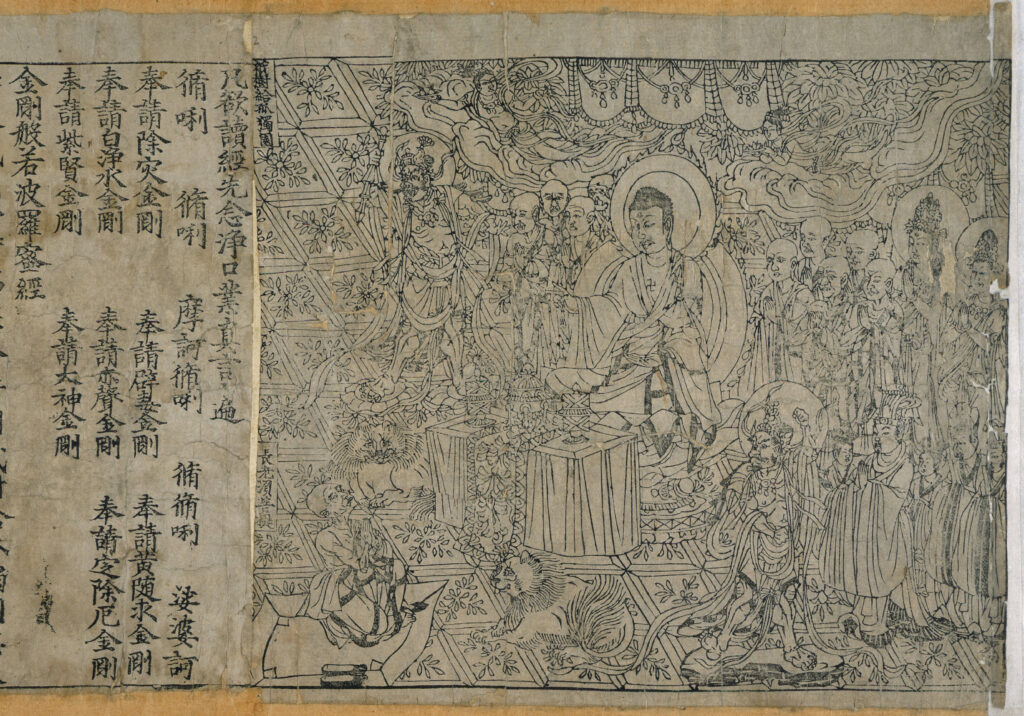
Among the marvels discovered in the “Library Cave”, the most remarkable is the “Diamond Sutra”, a 5 meter long horizontal scroll made of seven sheets of yellow-dyed paper, featuring a woodblock printed text and ornate frontispiece. Printed on May 11, 868 AD, it is the world earliest known complete printed book !
The incredible linguistic diversity revealed by the manuscripts, stated Vereycken,
“testifies to centuries of translation efforts and intercultural dialogue. Besides Confucian and Taoist temples, the Tang capital Chang’an (today’s Xi’an) and the major ports, were open to foreign devotional practices, be it christian Nestorians, Muslims or Manicheists and Zoroastrians. That was also the case in Dunhuang.”
A Bodhisattva painted on silk, found in the Library Cave, is depicted with two Nestorian (christian) crosses, indicating the existence of a christian community in Dunhuang.
Another major find, the “Dunhuang Star Atlas”, with over 1,300 stars described, stands out as the earliest known graphical depiction of the night sky in ancient Chinese astronomy dating to the Tang dynasty (618–907).
“Here in Dunhuang,” Vereycken concluded, “we Mankind, inspired by the accomplishments of Gandhara art and other contributions from the Silk Road, as a “living corridor”, explored a little further the creative essence of humanity, after all the real mission of Art ! Many aspects of this cultural cross-fertilization are now duly documented. The cautious underground mining of the copper reserve and the excavation and preservation of the Buddhist monasteries of Mes Anyak in Afghanistan, we hope, will undoubtedly bring even more treasures of cultural finds for all. Let us work together to make this cultural beauty known to the world.”
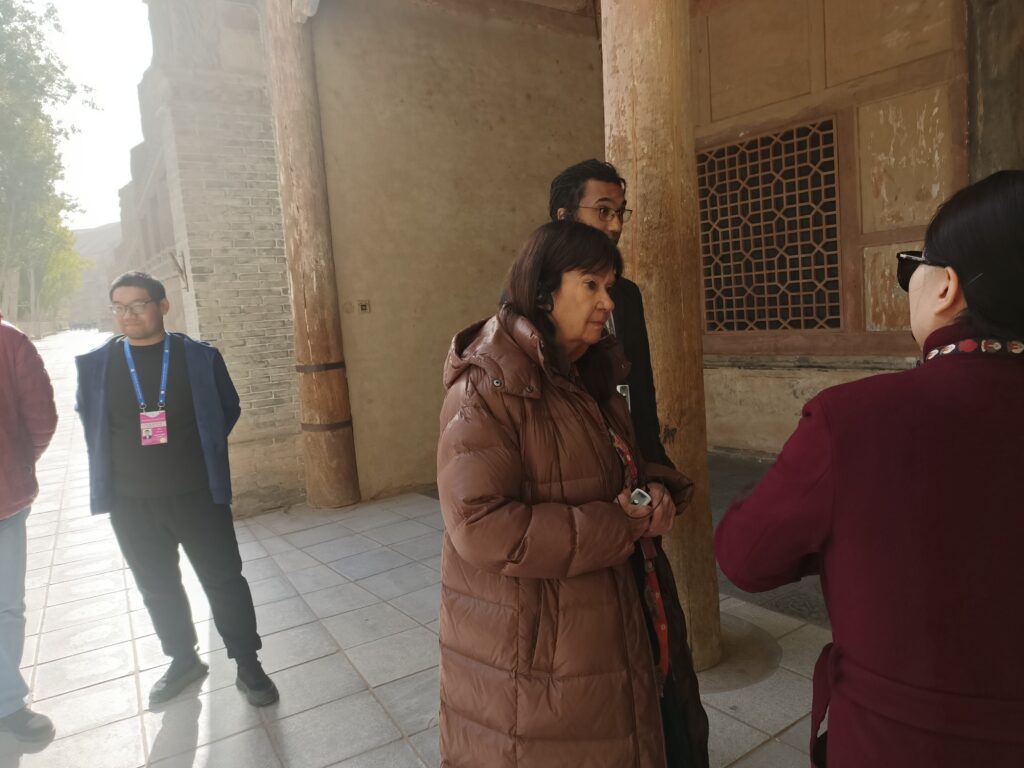
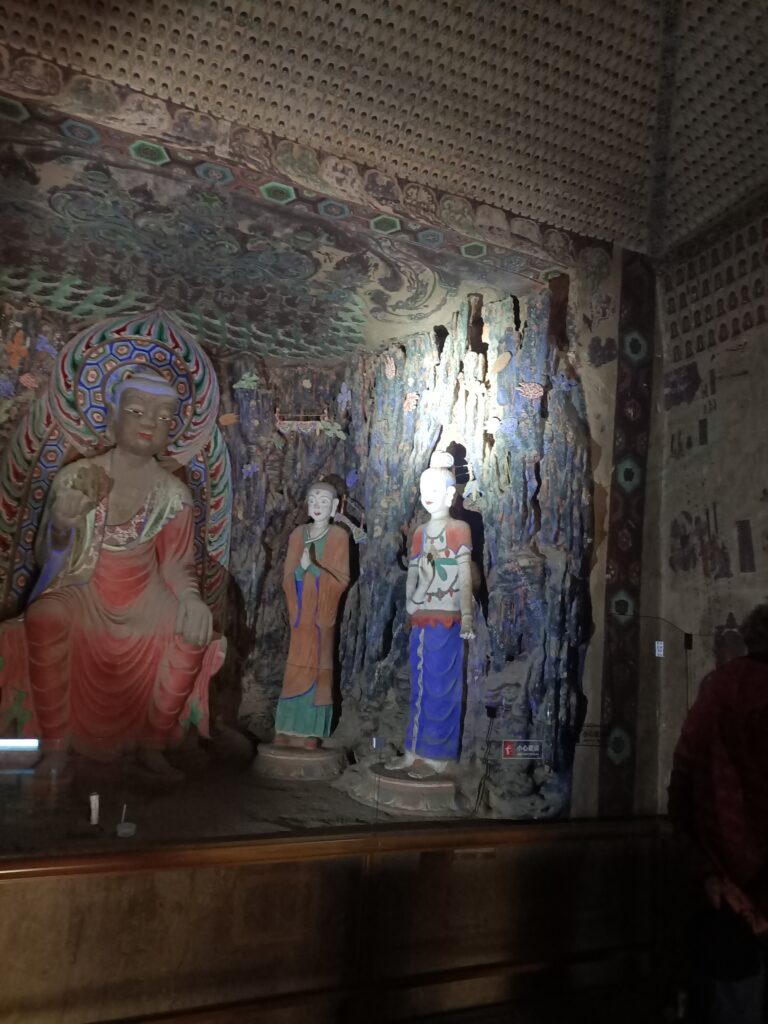
To conclude the Symposium, in the late afternoon of Nov. 4, together with other speakers, Helga Zepp-LaRouche and Karel Vereycken were offered a private guided tour of the Mogao Caves. Preservation conditions obliges the Museum to limit the number of visitors and the number of caves per day.
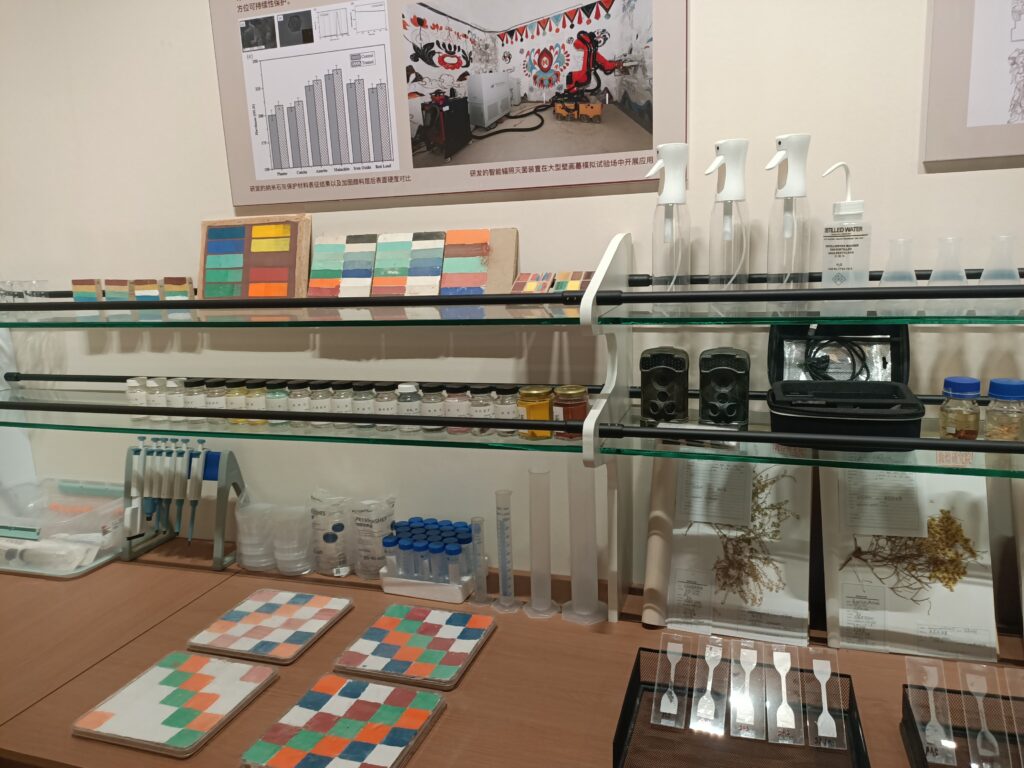
But to get a better picture, a special museum near the site offers visitors, in the form of a virtual reconstruction and physical reconstruction of several caves, to get a better view, both of the caves and their decorations and also the advanced technological methods developed by the Dunhuang Academy to preserve them, be it the frescoes, the statues or the manuscripts.
All of this historical, cultural, scientific and human expertise is ready and waiting to be called on to serve similar undertakings in other countries willing to accept the open hand of China.
French Scholar:
Dunhuang’s Culture and Beauty Help Build a Better World
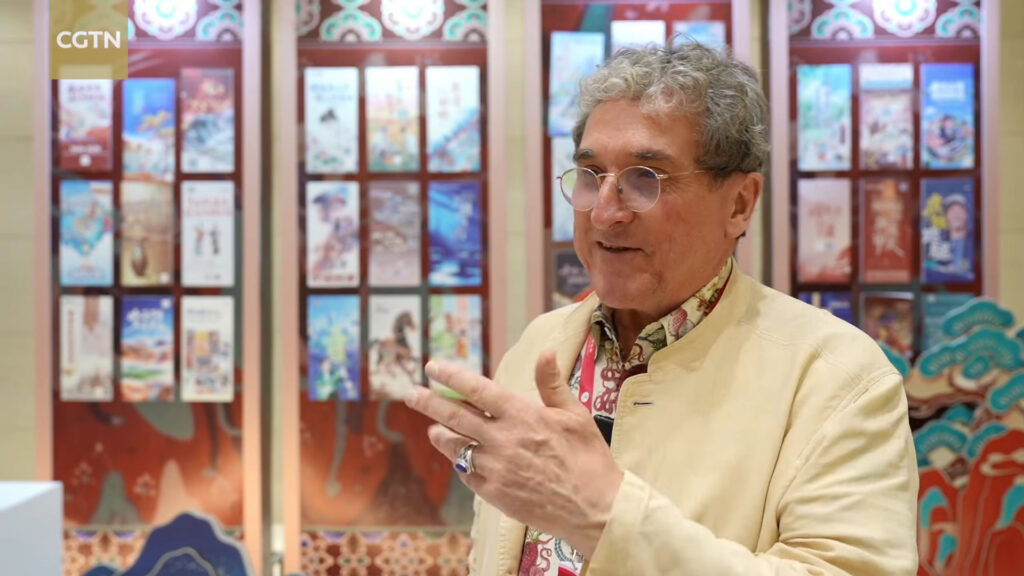
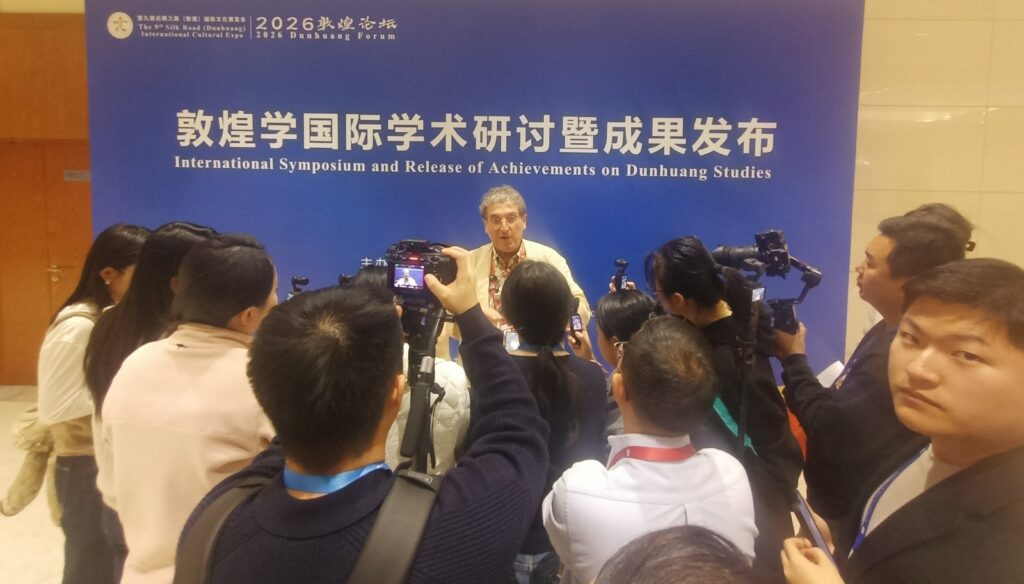
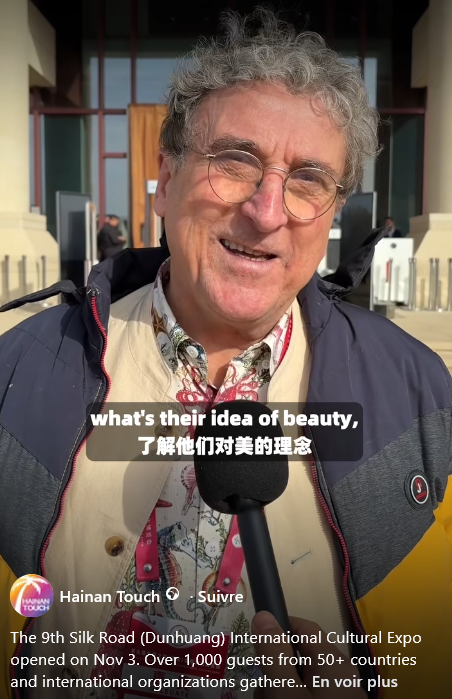
Before as well as after his intervention, Vereycken was overwhelmed by young journalists eager to have a view from abroad on the event. Several Chinese English language media (Hainan Touch, China in Lens, CGTN, CCTV, etc.) prominently aired the Schiller Institute’s delegate statements on the universal importance of Dunhuang and its inspiration.
HAINAN TOUCH
https://www.facebook.com/reel/1092312987200904
CHINA IN LENS:
https://www.youtube.com/shorts/geXSBfivdTU
CCTV,
https://english.cctv.com/2026/11/04/VIDEip5jLovp52OvRR5KIE7R261104.shtml
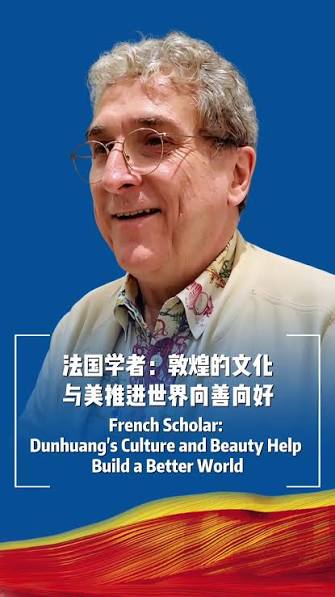
Transcription of Nov. 4 short clip of CCTV:
Vereycken: “You have 1,000 years of international cooperation here in Dunhuang through the grottoes. It can really wake up the people and maybe avoid even a World War, you know. Because right now, the leading powers, they want to divide and rule. They tell the Americans the Chinese are the devil. The divide people. First the division starts in the mind. And culture and beauty is the only thing which can unify, which goes to the essence of human beings. I’m myself a painter, an engraver and an historian. I always say I’m an archaeologist of ideas. I look to the history of ideas and how they transform the world for the better. And that’s the message.”
Comments are Closed