Étiquette : Helga Zepp-LaRouche
The Light of Dunhuang – Culture and Beauty of the Silk Road
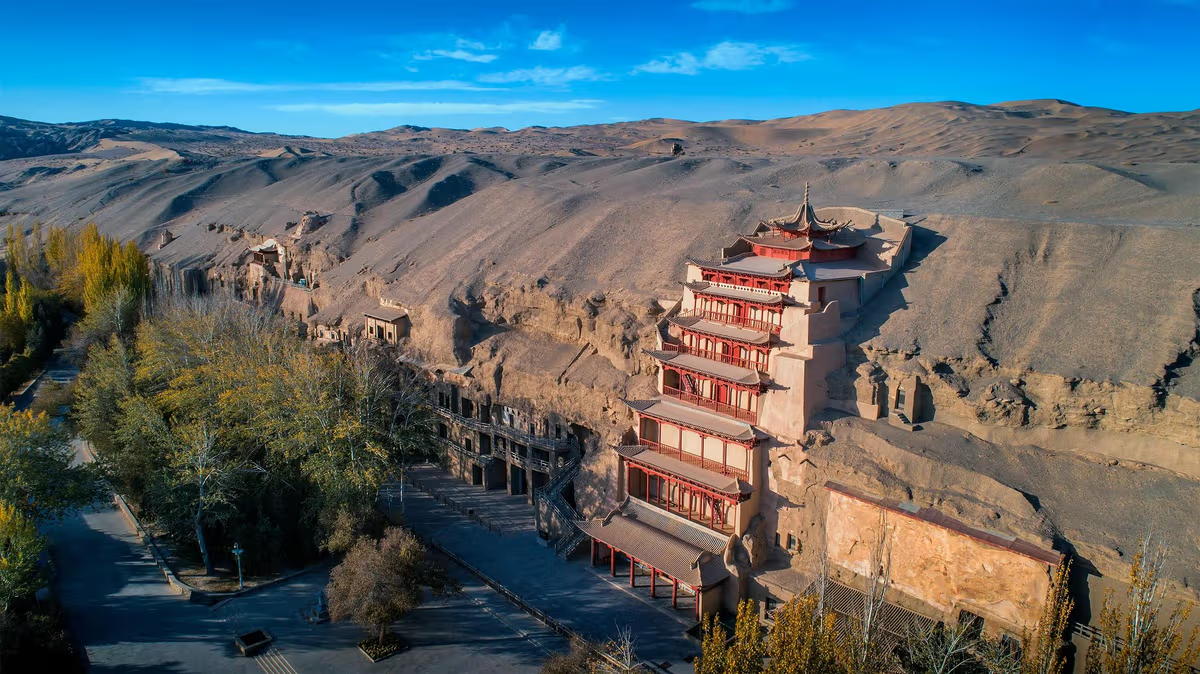
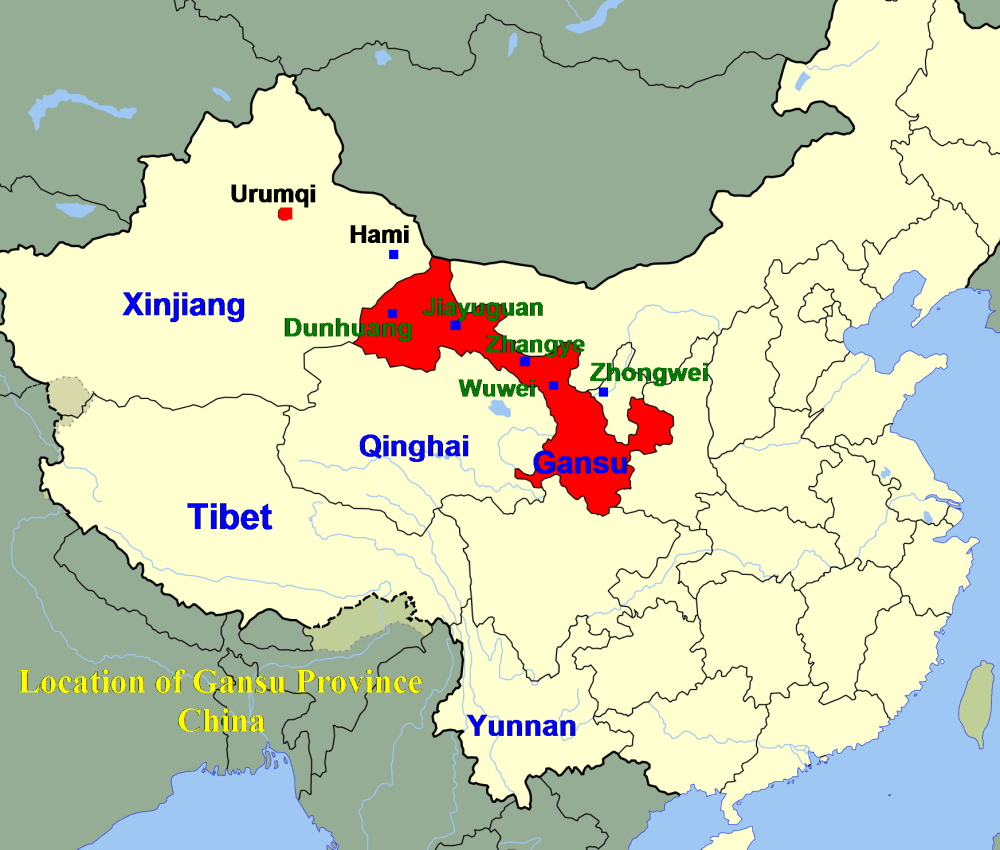
History will remember for a long time the outstanding cultural events that shined early November 2026 in the city of Dunhuang, historically a major hub on the ancient Silk Road in the North-Western Province of Gansu, China.
Dunhuang owes its role to its geography and the relief of its location. The Province of Gansu, about the size of California or 82% of France’s territory, coincides roughly with that of the “Hexi Corridor”, a 40 to 100 km large passage in China over approximately 1,000 kilometers that is dotted with a string of oasis-towns.
Nestled between the inhospitable climates of the Taklamakan desert to the West, the Gobi Desert to the North, and the mountains of the Tibetan Plateau to the south, this corridor, from Lanzhou to Dunhuang, was the only viable overland route from Central Asia into China for over a thousand years.
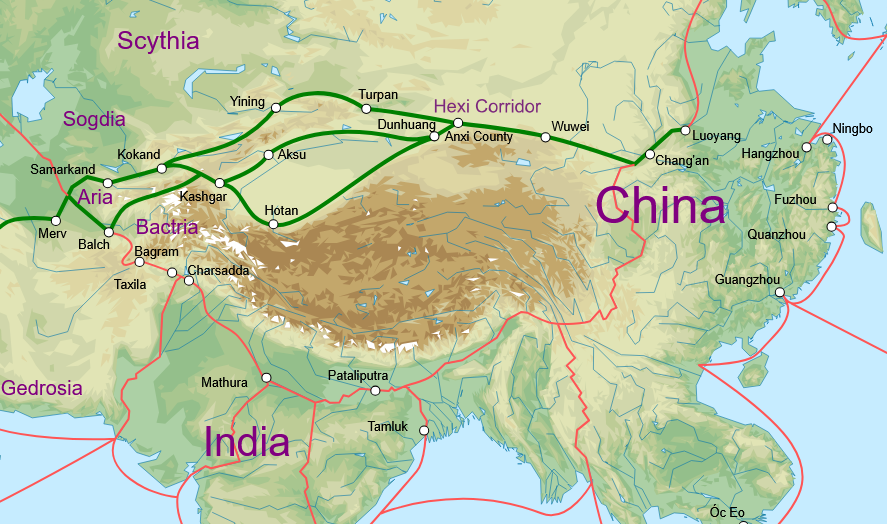
Dunhuang consequently became a gateway between East and West, and a channel through which many different people, as well as goods, ideas, and technology, traveled.
As the Chinese scholar Ji Xianlin has it,
“There are four major cultural systems in the world featuring long-standing history, a vast territory, a self-contained system and far-reaching influence: China, India, Greece and Islam, and there is no fifth. There is only one place where these four cultural systems merge into one, that is China’s Dunhuang.”
Witness a this 1600 year old heritage are the hundreds of painted devotional Buddhist caves in Mogao, carved out in a cliff of “singing” sand dunes and decorated with hundreds of intriguing frescoes and painted sculptures created over a thousand-year period starting in the 4th century.
Cultural Expo
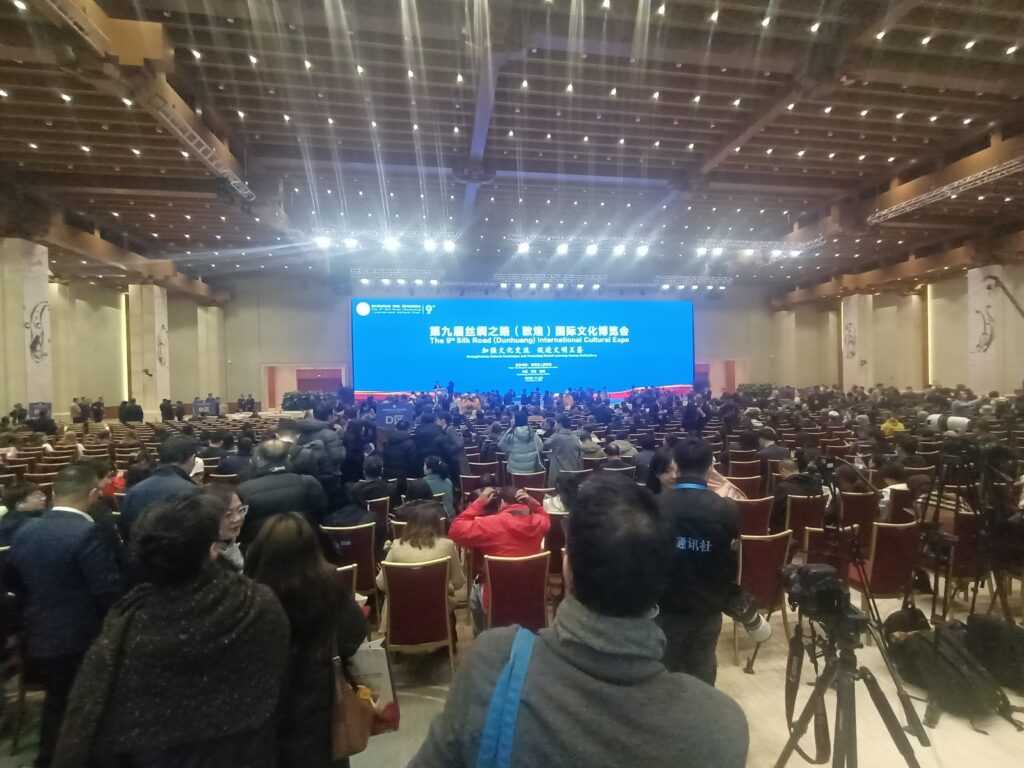
First, from November 2 to 4, took place the “9th Silk Road (Dunhuang) International Cultural Expo” under the theme of « Strengthening Cultural Exchanges and Promoting Mutual Learning Among Civilizations, » hosted by the Gansu Provincial People’s Government.
To foreigners arriving, with the airport and the entire city decorated with festive banners and lampoons, the event nearly appeared as a national holiday. With a total exhibition area of approximately 18,000 square meters, this flagship national-level expo brought together roughly 1,200 delegates, scholars, and officials from 58 countries, regions and organizations, with more than 360 overseas guests in total. Among these where representatives of the Hong Kong and Macao Special Administrative Regions, the Consul General of Malaysia in Xi’an as well as senior representatives from the Asian Infrastructure Investment Bank (AIIB) and the World Bank.
At the opening session on Tuesday morning, several key attendees and high-profile domestic and foreign representatives shortly addressed a giant room packed with over 1,000 people:
- Wu Xiaojun, Secretary of the CPC Gansu Provincial Committee;
- Kong Shaoxun,Governor of Gansu;
- Jiang Hui, Vice Minister of the Publicity Department of the CPC Central Committee;
- Daren Tang, Director General of the World Intellectual Property Organization (WIPO), who addressed the 2026 International Copyright Forum during the expo;
- Shahbaz Khan, Director and Representative of the UNESCO Regional Office for East Asia, who praised China’s leading role on heritage conservation;
- Huot Hak, Cambodia’s Minister of Tourism, emphasizing tourism ties between the Mogao Caves and the Theravada Buddhist site of Angkor Wat;
- Sun Weidong, Secretary-General of the China–Central Asia Mechanism;
In the following days, at the Expo itself, Russian scholar Nadezhda Zamyatina presented urban planning studies in partnership with Tianjin University, while Vietnamese businessman Luong The Vinh showcased regional products as a grassroots exhibitor. American fiddler Kyle Dillingham, who has visited China more than a dozen times, attended the expo with his folk band Horseshoe Road. He said he hoped the event would create new opportunities for people-to-people exchanges between Oklahoma and Gansu, which celebrated the 40th anniversary of their sister-state relationship in 2025.
As China’s premier national-level international cultural exchange event aligned with the Belt and Road Initiative (BRI), the expo was organized under the direct supervision of multiple key government bodies, notably the Ministry of Culture and Tourism of China, the National Radio and Television Administration, the China Council for the Promotion of International Trade, and the local state leadership of the Gansu Provincial People’s Government.
Symposium
Among the sub-forums with international participation was the “International Academic Symposium on Dunhuang Studies,” a high-level scholarly forum convened regularly as part of major international cultural and research gatherings. The Symposium was co-hosted by the Cultural Relics Bureau of the Gansu Province and the “Dunhuang Academy,” a highly respected and very prestigious institution that has been battling for decades to maintain, restore, digitize and research all the various aspects of the Mogao Caves.
Among the 130 scholars, thinkers and experts invited, mostly from China but also from Japan, Germany, the UK, France, Belgium and Afghanistan, a delegation of the Schiller Institute, represented by its founder Helga Zepp-LaRouche and painter-engraver and historian Karel Vereycken from France.
Helga Zepp-LaRouche: Unity in Diversity
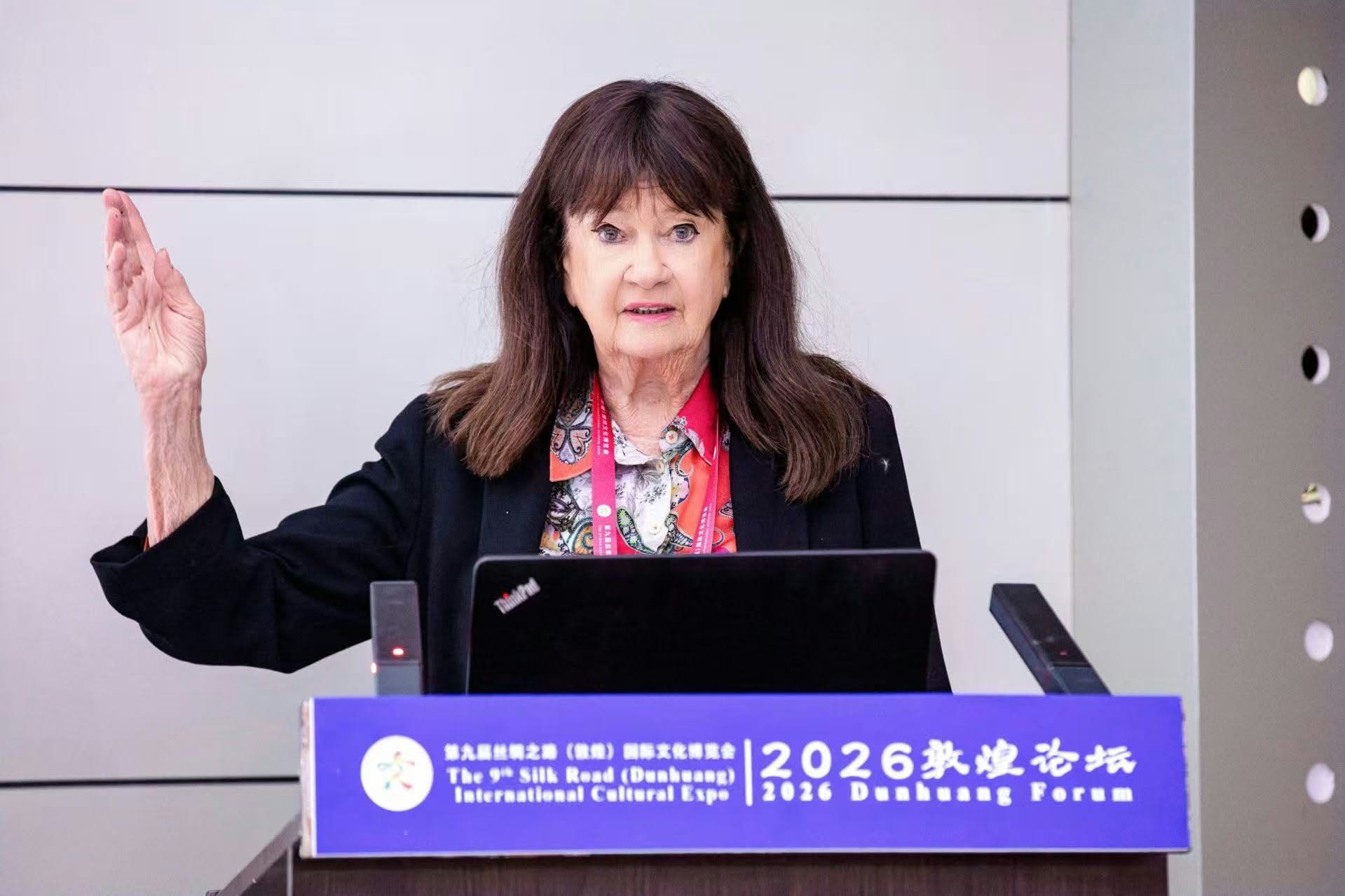
(Copyright: Courtesy Dunhuang Academy).
Mrs LaRouche was invited to keynote an important research seminar on the second day. During her intervention, “The Dunhuang Mogao Grottoes: Unity in Diversity” (published in full in the Collected Papers and Abstracts, Volume II, pp. 324-328.), she underscored that the Mogao caves “represent a Rosetta Stone of cultural history.”
In 1900, the Taoist monk Wang Yuanlu discovered behind a wall of Cave 16 a hidden cache, known today as “Cave 17”, that had been sealed for 900 years, with over 50,000 manuscripts, most of them in Chinese but also in dozens of other languages including Tibetan, Sanskrit, Khotanese, Tangut, Kochean (Tokarian B), Mongolian, Uighur, Sogdian, Pakrit and even Hebrew.
“From it, she said, we can gain a scientifically precise conception of the winding paths along which universal history has advanced up to our present. Alongside all diversity and historical specificity, however, we also recognize the universality of the truly great questions that have again and again moved the societies of the various epochs and civilizations.”
From that, she concluded, it “also follows that humanity not only has this common, interconnected past, in which each element occupies, as in a gigantic dynamic puzzle, its necessary place that was decisive for the overall development, but also that these findings help us in the present to understand the cooperation on the New Silk Road as the necessary next step in the evolution of humanity, and above all to understand and welcome President Xi Jinping’s conception of community with a shared future for mankind, as a necessity of universal history.”
Seen the importance of these manuscripts, of which a large number were acquired for a very low price by British and French archaeologists in the years following their discovery, she argued, “it would be time to return the finds back to China as a part of the ‘Major Historical and Cultural Sites Protected at the National Level.’ ”
Karel Vereycken: Dunhang, a “second Gandhara”
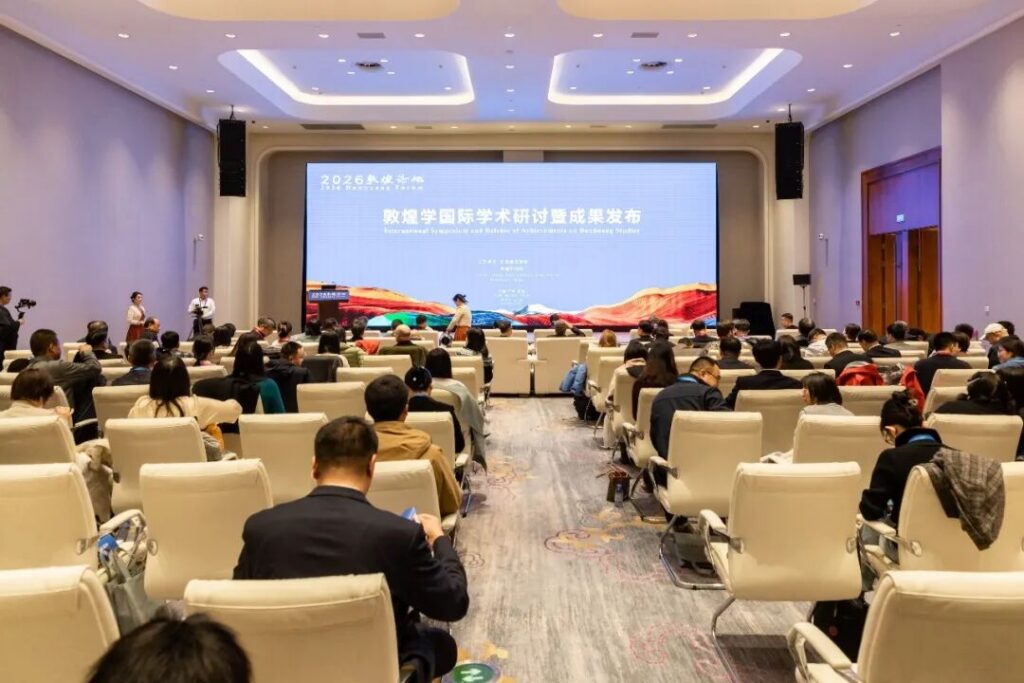
Copyright: Courtesy of Dunhuang Academy.
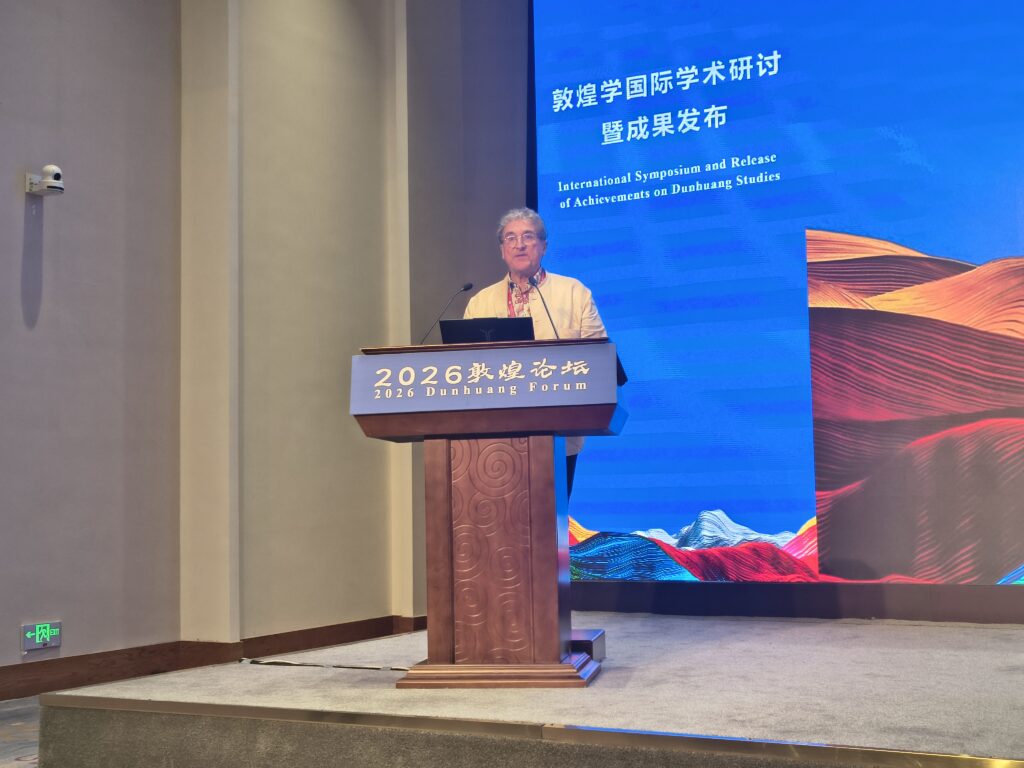
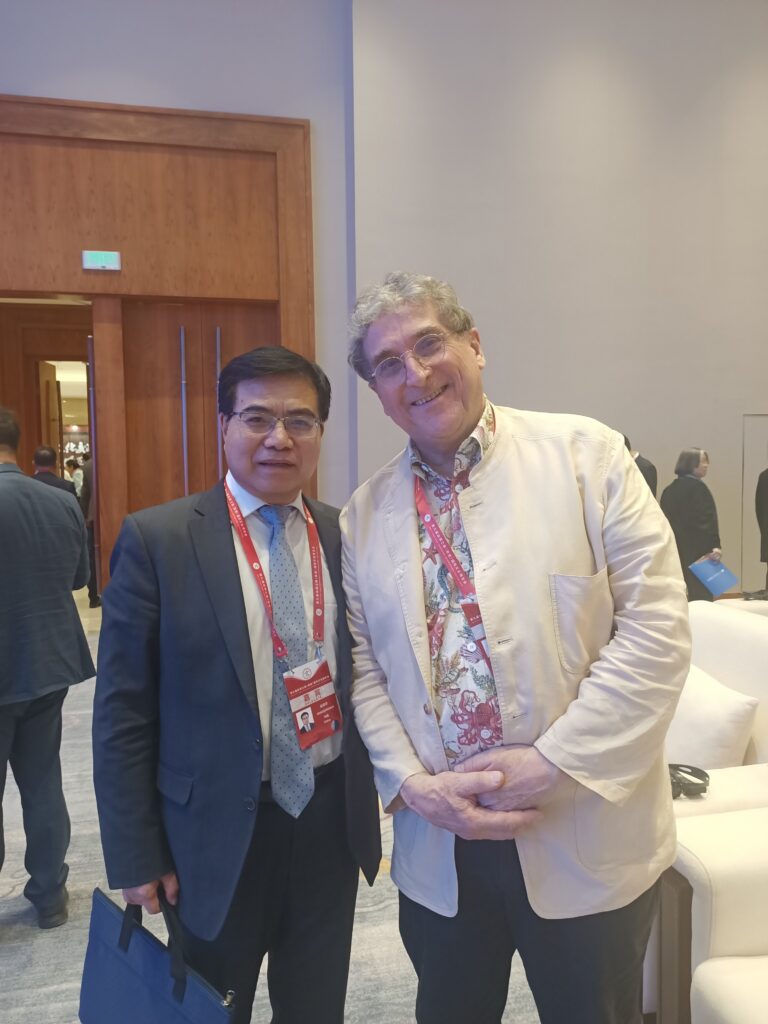
As one of the keynote speakers of the first day, Schiller Institute’s representative Vereycken got offered a seat on the first row on the right hand of Ge Jiantuan, deputy governor of the People’s Government of Gansu Province, who warmly thanked Vereycken for his presence and contribution.
Vereycken’s lecture, titled “From Gandhara to Dunhuang, The Silk Road as a “Living Corridor of World Art” was also selected and published in full in the proceedings (Published in full in the Collected Papers and Abstracts, Vol. II, pp. 149-158).
After a short introduction summarizing the birth and rise of Buddhism during the Mauryan and Kushan Empires, Vereycken, who presented himself as an “archaeologist of ideas,” underscored the importance of the “Miracle of Gandhara” (a region comprising today a large part of Afghanistan and the Western part of Pakistan). While Buddhism was initially an-iconic and symbolic, it
“suddenly morphed into anthropomorphic art taking the shapes of humans using the canons and naturalistic proportions of the classical Greek period.”
Gandhara art not only celebrated Buddha, but also “mass-produced” beautiful sculptures of Bodhisattva, “well intended empathetic humans on the road to Nirvana, but living first their life and totally committed to set others free from suffering,” a key feature of Mahayana Buddhism that emerged precisely during that period. Today, with over 50% of the total, Mahayana Buddhism, while it went through many transformations, remains the largest branch of Buddhism, practiced widely in China, Japan, South Korea, Taiwan, Singapore, and Vietnam.
And from Gandhara, “Buddhist Art with Greek characteristics” spread to Central Asian Oasis Cities like Khotan before reaching the Chinese Oasis city of Dunhuang and spreading over China and beyond.
Several aspects reveal that Gandharan inspiration in the Mogao frescoes:
- Most early caves use the lapis lazuli blue pigments exclusively originating from Afghanistan.
- Cave 275 (4th century) shows a Buddha Maitreya seated with legs crossed and surrounded by two lions, a clear imitation of Kushan iconography.
- The North wall of cave 323 (7th century), visualizes a (mythological) narrative cycle taken from the Collected Record of Miracles Relating to the Three Jewels in China, a 7th-century collection of Buddhist miracle tales compiled by the prominent Tang dynasty scholar-monk Daoxuan in 664 AD. It depicts Emperor Wu (156–87 BC) of the Western Han Dynasty discovering two large gold statues he acquired after a war with the Huns. In order to find out what they represented, Wu sent his best diplomat Zhang Qian (d. 113 BC) to the Western region and Central Asia to find out. On the left upper corner of the fresco, we see Zhang on route to a walled city with at its center a Buddhist temple (stupa).
The accompanying cartouche identifies the city as Da Xia (the kingdom of Bactria, today’s northern Afghanistan). It is there that Zhang discovers that the two “golden men” were statues of the Buddha. Once back home, Zhang told Wu that the Han Empire could prosper greatly by initiating trade relations with the rich Central Asian kingdoms he had visited. And in effect, while some trade relations existed way earlier, it was the Han Dynasty that initiated the Silk Road, a policy that reached its peak during the Tang Dynasty. The fresco’s representation of groups of people interchanging with each shows perspectives and landscapes, nearly as expressive as some of Bruegel’s paintings in the 16th century!
Finally Vereycken also presented the interesting hypothesis presented in 2019 by professor Osmund Bopearchchi, who drew parallels between certain fresco’s of Mogao and the famous “Laocoon Group”, a Greek statue discussed by the German art critic Gotthold Ephraim Lessing showing an agonizing Trojan priest trying to save his children from snakes sent by Zeus to punish their father from disobeying him.
Manuscripts and Books
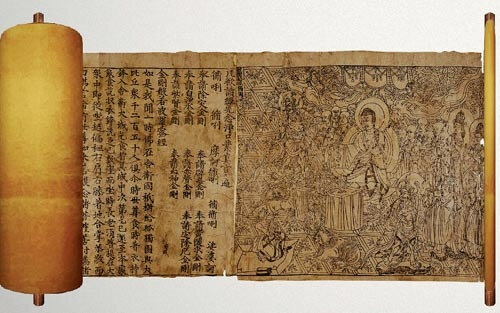
The Mogao caves and Dunhuang itself truly appear as a “Treasure Trove” witnessing the “Living Silk Road of world art”.
Among the marvels discovered in the “Library Cave”, the most remarkable is the “Diamond Sutra”, a 5 meter long horizontal scroll made of seven sheets of yellow-dyed paper, featuring a woodblock printed text and ornate frontispiece. Printed on May 11, 868 AD, it is the world earliest known complete printed book !
The incredible linguistic diversity revealed by the manuscripts, stated Vereycken,
“testifies to centuries of translation efforts and intercultural dialogue. Besides Confucian and Taoist temples, the Tang capital Chang’an (today’s Xi’an) and the major ports, were open to foreign devotional practices, be it christian Nestorians, Muslims or Manicheists and Zoroastrians. That was also the case in Dunhuang.”
A Bodhisattva painted on silk, found in the Library Cave, is depicted with two Nestorian (christian) crosses, indicating the existence of a christian community in Dunhuang.
Another major find, the “Dunhuang Star Atlas”, with over 1,300 stars described, stands out as the earliest known graphical depiction of the night sky in ancient Chinese astronomy dating to the Tang dynasty (618–907).
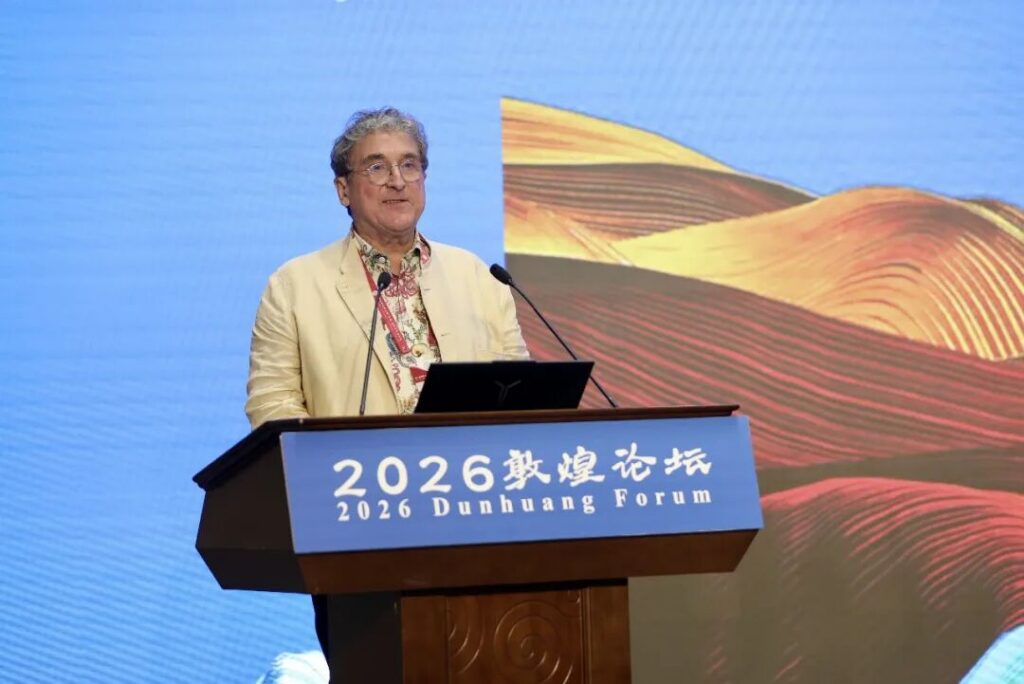
“Here in Dunhuang,” Vereycken concluded, “we Mankind, inspired by the accomplishments of Gandhara art and other contributions from the Silk Road, as a “living corridor”, explored a little further the creative essence of humanity, after all the real mission of Art ! Many aspects of this cultural cross-fertilization are now duly documented. The cautious underground mining of the copper reserve and the excavation and preservation of the Buddhist monasteries of Mes Aynak in Afghanistan, we hope, will undoubtedly bring even more treasures of cultural finds for all. Let us work together to make this cultural beauty known to the world.”
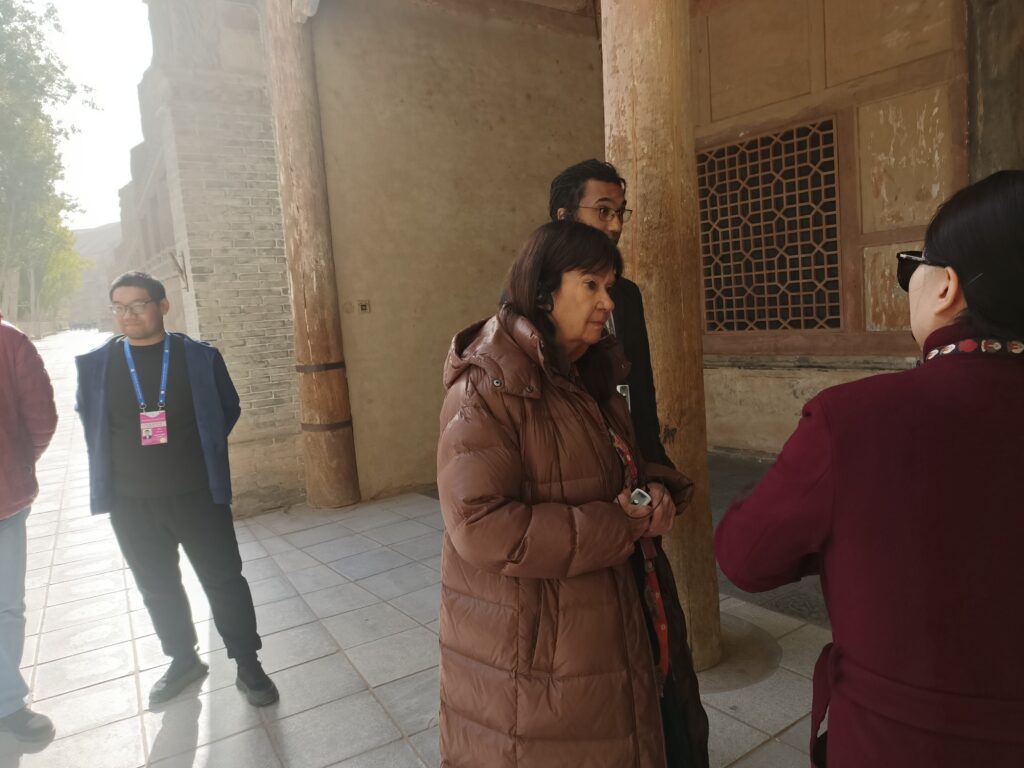
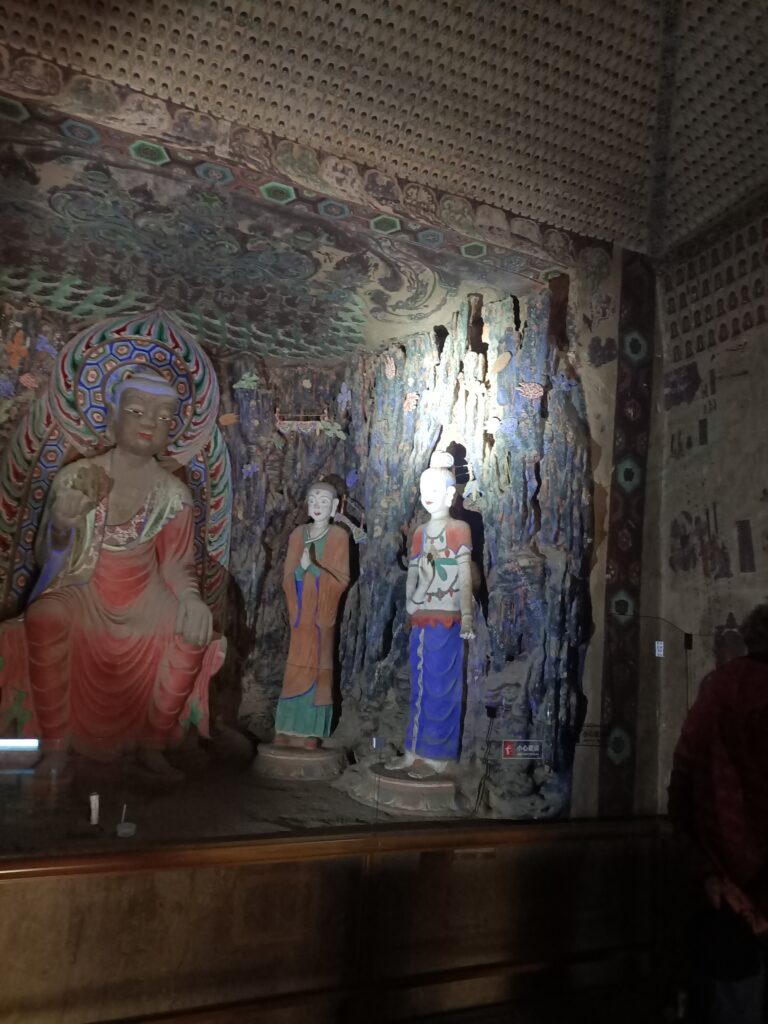
To conclude the Symposium, in the late afternoon of Nov. 4, together with other speakers, Helga Zepp-LaRouche and Karel Vereycken were offered a private guided tour of the Mogao Caves. Preservation conditions obliges the Museum to limit the number of visitors and the number of caves per day.
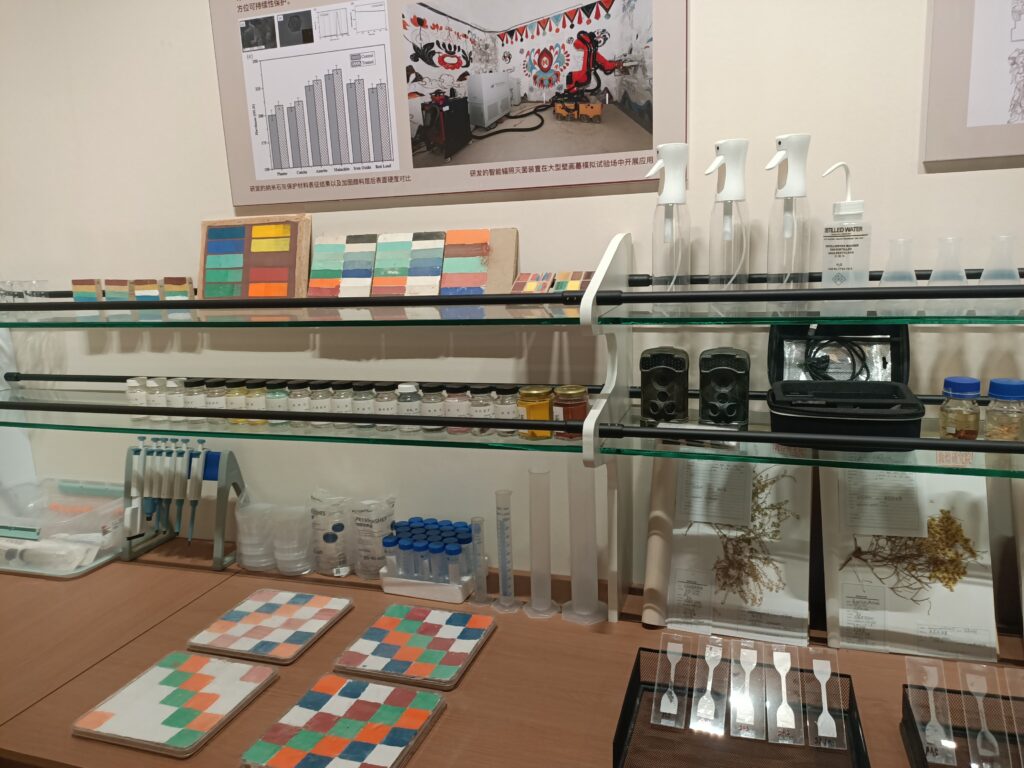
But to get a better picture, a special museum near the site offers visitors, in the form of a virtual reconstruction and physical reconstruction of several caves, to get a better view, both of the caves and their decorations and also the advanced technological methods developed by the Dunhuang Academy to preserve them, be it the frescoes, the statues or the manuscripts.
All of this historical, cultural, scientific and human expertise is ready and waiting to be called on to serve similar undertakings in other countries willing to accept the open hand of China.
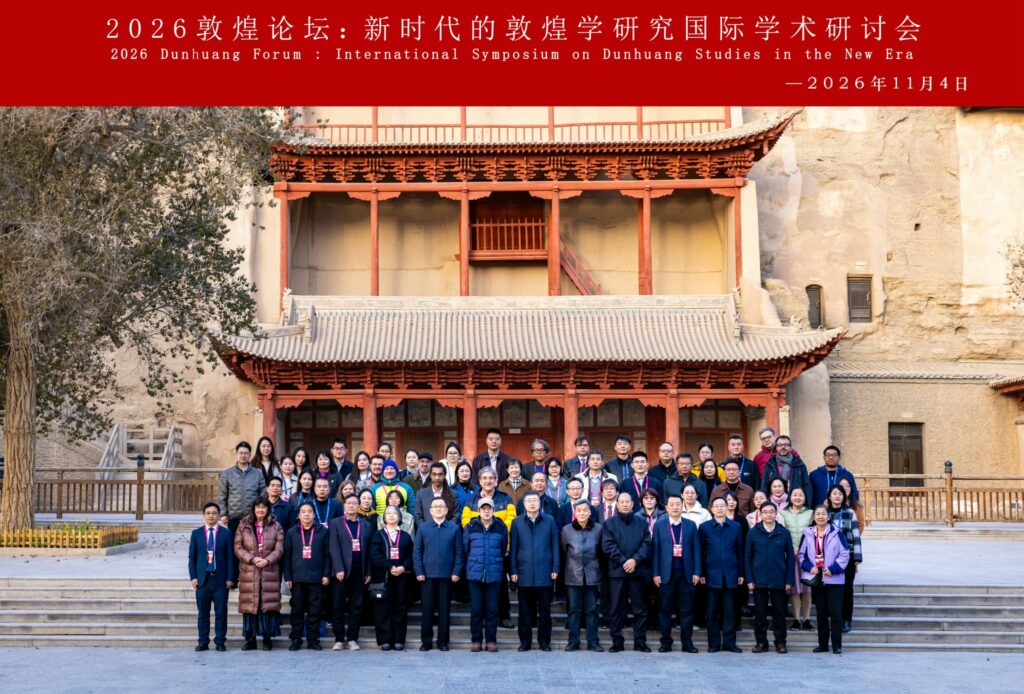
(Copyright: courtesy of the Dunhuang Academy).
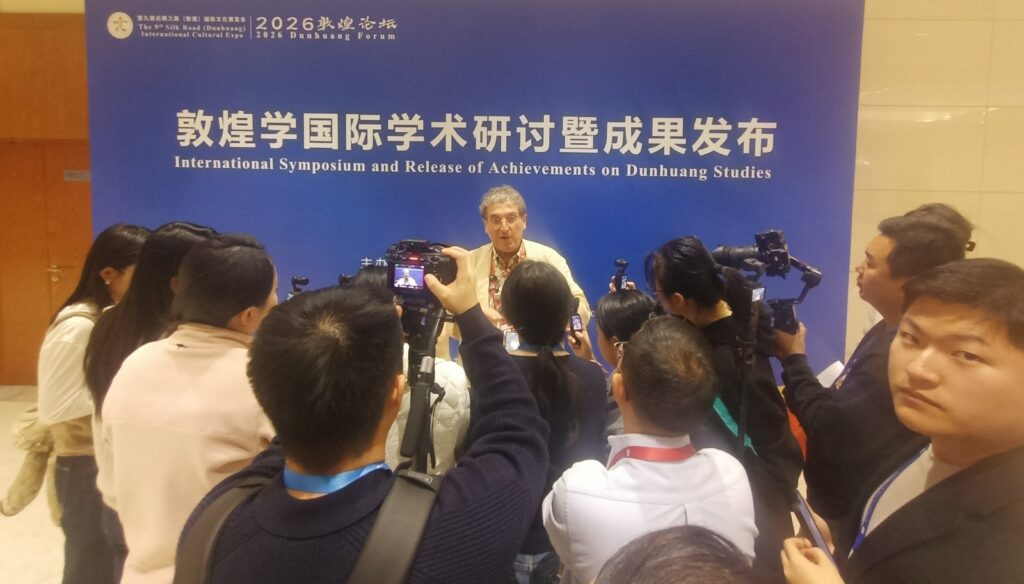
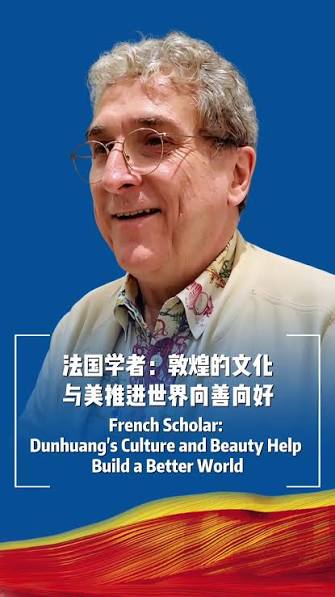
French Scholar:
Dunhuang’s Culture and Beauty Help Build a Better World
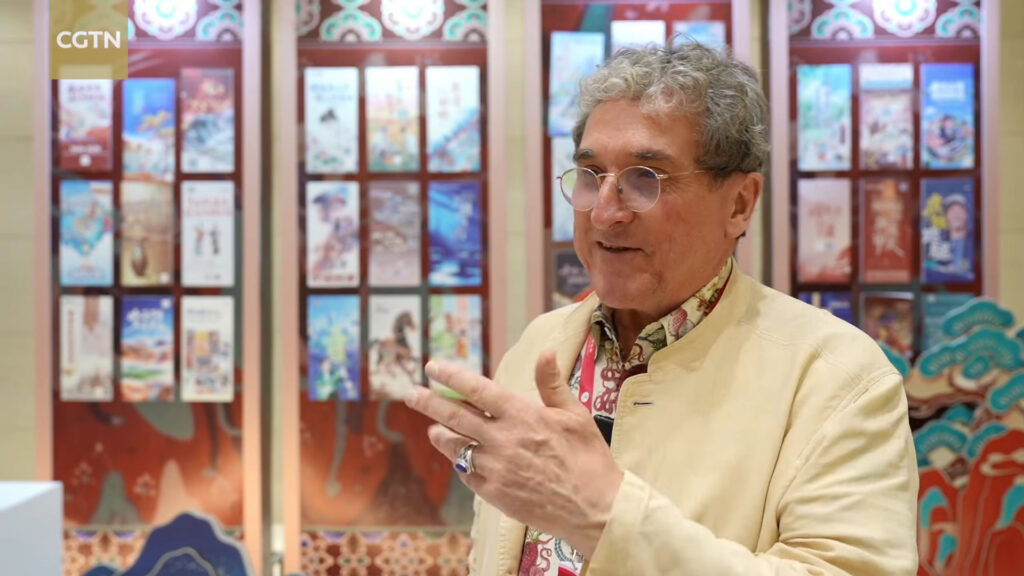
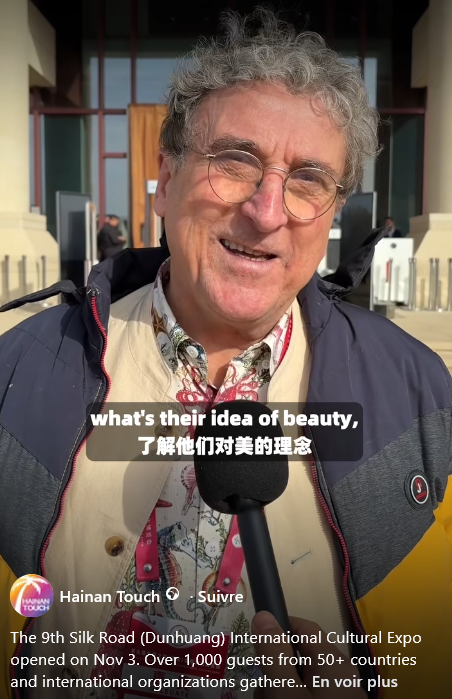
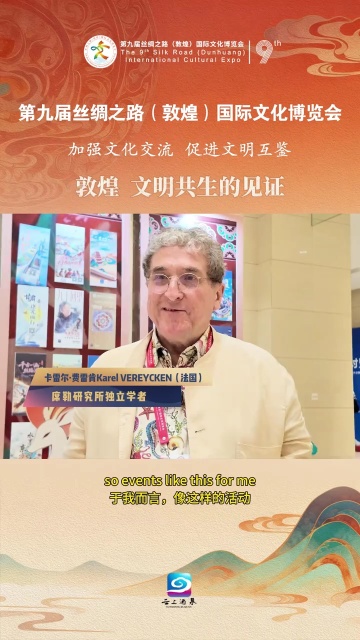
Before as well as after his intervention, Vereycken was overwhelmed by young journalists eager to have a view from abroad on the event. Several Chinese English language media (Hainan Touch, China in Lens, CGTN, CCTV, etc.) prominently aired the Schiller Institute’s delegate statements on the universal importance of Dunhuang and its inspiration.
HAINAN TOUCH
https://www.facebook.com/reel/1092312987200904
CHINA IN LENS:
https://www.youtube.com/shorts/geXSBfivdTU
CCTV:
https://english.cctv.com/2026/11/04/VIDEip5jLovp52OvRR5KIE7R261104.shtml
Transcription of Nov. 4 short clip of CCTV:
Vereycken: “You have 1,000 years of international cooperation here in Dunhuang through the grottoes. It can really wake up the people and maybe avoid even a World War, you know. Because right now, the leading powers, they want to divide and rule. They tell the Americans the Chinese are the devil. The divide people. First the division starts in the mind. And culture and beauty is the only thing which can unify, which goes to the essence of human beings. I’m myself a painter, an engraver and an historian. I always say I’m an archaeologist of ideas. I look to the history of ideas and how they transform the world for the better. And that’s the message.”
Omar Merzoug: Avicenne ou l’islam des lumières

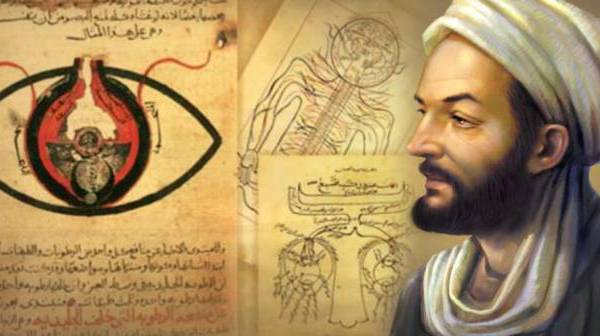
En avril 2022, Karel Vereycken s’est entretenu avec Omar Merzoug, docteur en philosophie et spécialiste de la pensée au Moyen Âge. Il a publié en 2018 Existe-t-il une philosophie islamique ? (Cahiers de l’Islam). Pendant sept ans, il a enseigné la philosophie et la civilisation islamique à l’Institut Al-Ghazâli de la Grande Mosquée de Paris.
This interview in EN (pdf)
Karel Vereycken : Monsieur Merzoug, bonjour. Après sept ans de recherches, d’études et de vérification de documents historiques, vous venez de publier en 2021, chez Flammarion, une biographie enthousiaste et fouillée d’Avicenne (980-1037). Qui était ce personnage et pourquoi avoir publié ce livre maintenant ?
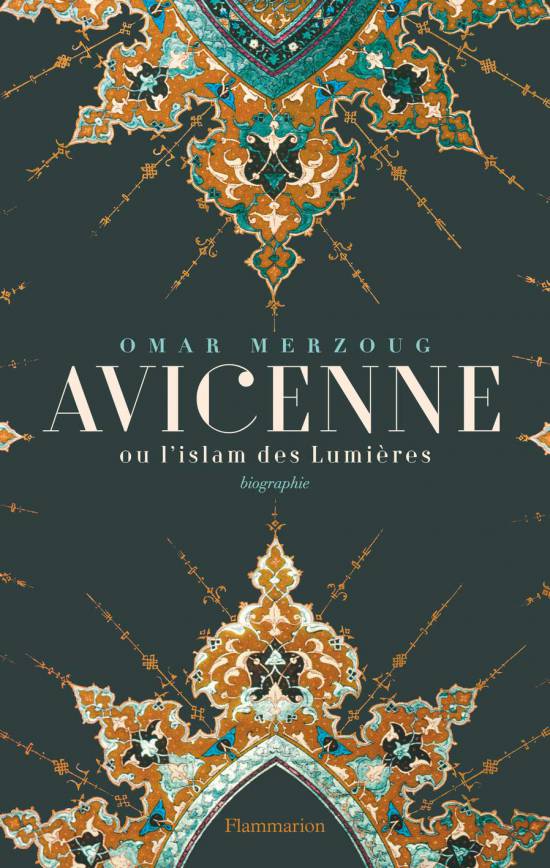
Omar Merzoug : Il s’agit de l’illustre Ali Ibn Sînâ (que l’Occident nomme Avicenne), savant, médecin, philosophe et homme d’Etat, qui a eu une vie passionnante et fort mouvementée, et dont l’influence sur les penseurs chrétiens du Moyen Âge, de l’avis même des spécialistes les plus autorisés, fut considérable. Ce ne fut pas, comme on a tendance à le croire, un commentateur, mais c’était un penseur qui a créé tout un système s’inspirant d’Aristote, mais qui l’enrichit, le contredit.
Un penseur indépendant, par conséquent. Il fut lu comme philosophe jusqu’au XVIIe siècle et l’on retrouve dans les écrits des philosophes des Temps modernes, Malebranche, Leibniz et Spinoza, des échos de son œuvre. Comme médecin, ses travaux furent longtemps au programme des universités européennes. C’est donc une figure fort intéressante en tant que savant, mais aussi en tant qu’homme.
Publier ce livre maintenant, c’est d’abord saluer cette figure éminente du monde musulman à l’heure où, il faut bien le dire, l’islam n’a pas bonne presse. Le rationalisme d’Avicenne, sa curiosité intellectuelle, sa capacité à assimiler toutes sortes de savoir, son esprit encyclopédique et son inventivité philosophique sont autant de traits qui pourraient contribuer à une renaissance de la véritable culture philosophique dans le monde musulman, culture philosophique qui est bien malmenée aujourd’hui.
De père afghan, né en Ouzbékistan et d’éducation perse, de nombreux pays (qui n’existaient pas à son époque dans leurs frontières actuelles) se réclament les héritiers de sa gloire. Qui a raison ?
On ne prête qu’aux riches. Plus sérieusement, Avicenne est un persan d’Ouzbékistan. Tout l’indique, mais cela ne saurait empêcher Turcs, Arabes et Européens de se réclamer de lui, de le lire et même de le critiquer, et c’est d’ailleurs ce qui s’est produit.
La deuxième partie du titre de votre livre, L’islam des lumières, sous-entend qu’il y aurait plusieurs islams…
Il n’y a certes pas plusieurs islams, mais il y a des lectures et des approches différentes, et même contradictoires, de l’islam. Et cela ne date pas d’aujourd’hui. Il y a, pour résumer, une lecture littérale des textes fondamentaux de l’islam et il y a des lectures plus subtiles, plus soucieuses de faire prévaloir l’esprit sur la lettre. Au reste, le Coran lui-même autorise cette disparité des lectures (Sourate III, verset 7).
Comment Avicenne a-t-il concilié théologie et philosophie ?
Comme tous les grands penseurs du Moyen Âge et même des Temps modernes, Avicenne s’est attaqué à ce problème essentiel et inévitable du rapport entre la théologie et la philosophie. Il ne s’est pas tant agi de concilier la raison avec la foi, mais plutôt la Loi religieuse et la raison. Sur ce point, Avicenne présente notamment sa théorie de l’émanation comme la seule interprétation véritable de la création. Partant du principe qu’il ne faut pas prendre à la lettre les récits, les allégories, les métaphores et toute la symbolique du Coran, il conclut qu’il faut l’interpréter à l’aune des principes de la raison. C’est en définitive la raison qui garde la primauté en matière d’interprétation des textes religieux.
A son époque, Avicenne était-il apprécié pour son travail en médecine ou pour ses idées philosophiques ?
Sur ce point, les spécialistes d’Avicenne ne sont pas tous d’accord. En Orient on l’estime beaucoup plus comme médecin que comme philosophe. En Occident, on a plutôt tendance à le considérer comme philosophe, d’autant que sa médecine n’a plus, compte tenu des progrès de la science, qu’un intérêt historique.
Néo-platoniciens, aristotéliciens et thomistes se prétendent souvent disciples d’Avicenne, mais en le lisant, on constate que ce dernier n’entre dans aucune case. Quelle qualité faut-il donc avoir pour pouvoir se dire disciple d’Avicenne ?
Être disciple d’Avicenne aujourd’hui voudrait signifier être rationaliste, pas au sens d’une sorte d’agnosticisme ou d’athéisme, mais au sens où la raison a qualité pour examiner toutes choses, que peu de domaines sont soustraits à son empire. Bien entendu, dans sa mystique qui est intellectualiste, Avicenne ménage une transition vers un au-delà de la raison, qui ne peut être atteint que par une sorte d’illumination. C’est bien la raison pour laquelle certains penseurs chrétiens du Moyen Âge ont pu établir un lien entre saint Augustin et Avicenne.
Sans avoir vécu à Bagdad et né après la grande période des Abbassides, sous Al-Mamoun et ses Maisons de la sagesse réunissant penseurs arabes, juifs et chrétiens nestoriens pour traduire l’héritage grec et syriaque, voyez-vous en Avicenne un héritier de la démarche mutazilite qui fit la grandeur de Bagdad ?
Avicenne est certainement plus proche des Mu’tazila que des partisans de l’approche littéraliste et anthropomorphiste. Les Mu’tazila combattaient pour la liberté de l’esprit et c’est, à peu de chose près, le combat d’Avicenne, convaincu que tout outrage à ce principe serait catastrophique. S’il n’y a pas de débat, de controverse, de libre dialogue et de recherche indépendante, il ne saurait y avoir au bout du compte qu’un recul de la pensée. La grandeur de la civilisation de Bagdad a été précisément, sous Al-Ma’mûn et ses successeurs immédiats, de permettre, par une politique délibérée et réfléchie, ce bouillonnement culturel, cette effervescence intellectuelle extraordinaire qu’on n’a pas revue depuis dans le monde musulman.
En lisant votre biographie d’Avicenne, qui nous introduit à lui en partant de sa vie quotidienne, on découvre qu’il n’avait rien d’un intellectuel de salon. Activement engagé pour le bien commun et la santé de tous, sa vie est loin d’être une sinécure et on le voit souvent contraint de s’exiler. Pourquoi ?
Se situant dans la tradition platonicienne qui voulait que les philosophes gouvernent les Etats parce qu’ils sont les plus savants, Avicenne a directement exercé les responsabilités du pouvoir. A deux reprises, il a géré un Etat et cela a failli lui coûter la vie. Introduisant les réformes indispensables et luttant contre les privilèges qu’il estimait indus de l’armée, il a déclenché une mutinerie des prétoriens. Oui, s’engager dans la cité pour des causes méritoires, c’est être d’une certaine manière avicennien. Comme Platon, il a échoué dans son entreprise, mais elle méritait d’être tentée, comme elle le mérite toujours.
Pourquoi le Canon de la médecine d’Avicenne a-t-il permis tant de progrès en médecine ?
C’est un livre fort intéressant sous plusieurs angles. C’est une somme du savoir médical, qui a d’ailleurs, en tant que telle, une postérité exceptionnelle. Dans cet ouvrage, il y a plusieurs avancées intéressantes. C’est un livre fort bien composé et qui est fondé de part en part sur les règles et les principes de la logique. Il a été de surcroît conçu dans une perspective pédagogique. Des fragments entiers du Canon sont rédigés sous forme d’abrégés pour permettre une assimilation plus rapide du savoir médical.
Avicenne estime qu’on ne saurait comprendre la maladie et donc lui trouver un remède que si on établit des liens de causalité. Reprenant la théorie des quatre causes d’Aristote, il les adapte à sa recherche médicale et juge qu’on n’atteint la pleine connaissance d’une maladie que si on en recherche les causes, écartant ainsi une approche strictement empirique.
A ses yeux, il y a une unité entre les organes et les fonctions du corps, de la même manière qu’il établit un rapport entre l’organisme et le monde extérieur. C’est d’ailleurs pour cela qu’il accordait, en tant que médecin, une importance essentielle aux mesures prophylactiques et à l’environnement.
Autre chose à signaler, Avicenne fut certainement le premier à proposer une approche de l’anatomie de l’œil, à émettre le diagnostic de la pleurésie et de la pneumonie, à distinguer la méningite infectieuse des autres infections aiguës.
D’autre part, il accordait une importance primordiale aux exercices physiques. C’est sans doute le premier, dix siècles avant Freud, à avoir insisté sur l’importance de la sexualité et de son rôle dans l’équilibre psychologique de la personne. Enfin, il fut sans doute l’un des pionniers de la médecine psychosomatique. En témoigne le cas de l’amoureux transi que je rapporte dans ma biographie.
Estimant sa personnalité hors du commun capable d’inspirer le meilleur de la civilisation islamique, Mme Helga Zepp-LaRouche, la fondatrice de l’Institut Schiller, a lancé une grande « initiative Ibn Sînâ » pour reconstruire l’Afghanistan et de son système de santé. Comment voyez-vous cette démarche ?
C’est sans doute une initiative extrêmement louable qui réintègre Avicenne dans son milieu (son père était afghan) et qui, sous deux perspectives, la santé et la grandeur de sa gloire, lui rend hommage.
Les raisons du succès de votre livre ?
C’est toujours délicat pour un auteur de dire quelles sont les raisons qui expliquent le succès, relatif dans mon cas, d’un livre. Je l’attribue d’abord au genre biographique qui s’apparente un peu au roman – au reste, la vie d’Avicenne est très romanesque. Ensuite, à l’effort pédagogique qui rend accessible la présentation de cette éminente figure du savoir, et peut-être aussi, à un style littéraire agréable et délié.
On connaît bien, d’Avicenne, ses travaux en médecine et maintenant, grâce à votre biographie, sa vie. A quand un nouveau livre dédié plus spécifiquement à ses idées philosophiques ?
Il n’existe pas sur le marché d’exposé systématique de la pensée d’Avicenne. Ce qui existe, fruit du travail de certains universitaires travaillant dans le champ avicennien, ce sont des monographies sur des thèmes ou des concepts avicenniens.
C’est de toute façon un travail d’une tout autre nature que la biographie et pour un tout autre public, plus restreint. Je me laisserai peut-être tenté par un tel projet, qui sait ?