Étiquette : Consulta
Leo Spaepen deciphers Bruegel’s code
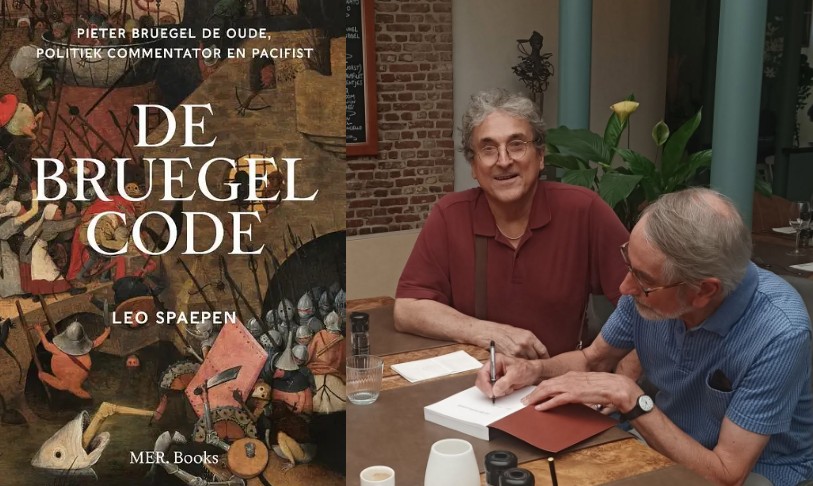
On Saturday, July 11, Karel Vereycken spoke with Leo Spaepen, classicist and retired art history teacher, author of the book De Bruegel Code. Pieter Bruegel the Elder, political commentator and pacifist. (In Dutch, published by MER Books, 2025, ISBN 9789493410732, €39.90).
Karel Vereycken contributed with some footnotes.
Interview: « Bruegel painted history! »
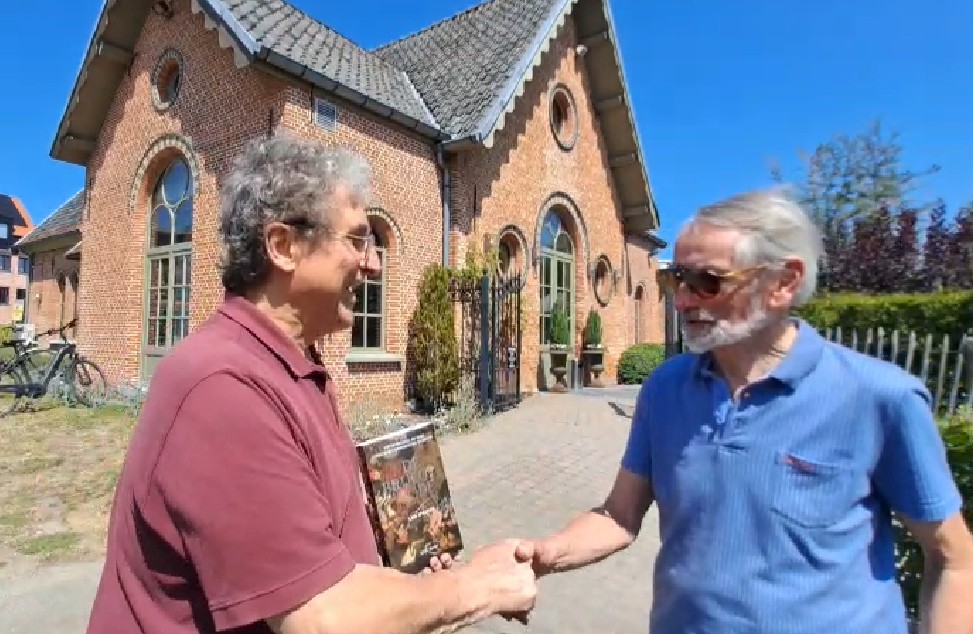
Karel Vereycken: Dear Leo, you have written a wonderful book: The Bruegel Code. We are standing here at a historic location in the center of Wijnegem: the old inn De Swaen, which is depicted in its former shape in a painting by Bruegel, The Census at Bethlehem (1566, Royal Museums of Fine Arts, Brussels). Based on that discovery, after much study, you have developed a completely new perspective on Bruegel and his work. Can you tell us something about the origins of your book?
Leo Spaepen: That is a long history, going back to my childhood years. After all, I have always had a sentimental connection to this little building, because I grew up in the neighborhood. Moreover, as a young municipal councilor, I fought to save this piece of heritage from demolition. But back then, I had no idea that it had anything to do with Bruegel.
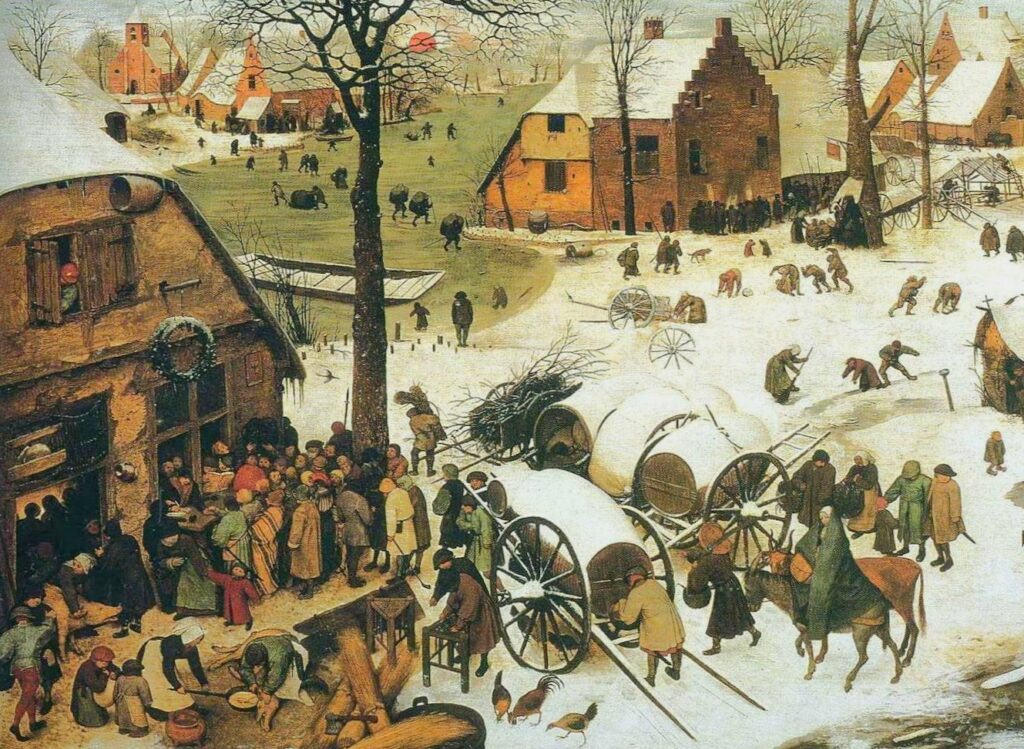
Right: Pieter Bruegel the Elder, The Census at Bethlehem , detail (KMSK Brussels).
Are people being counted here or taxes collected?
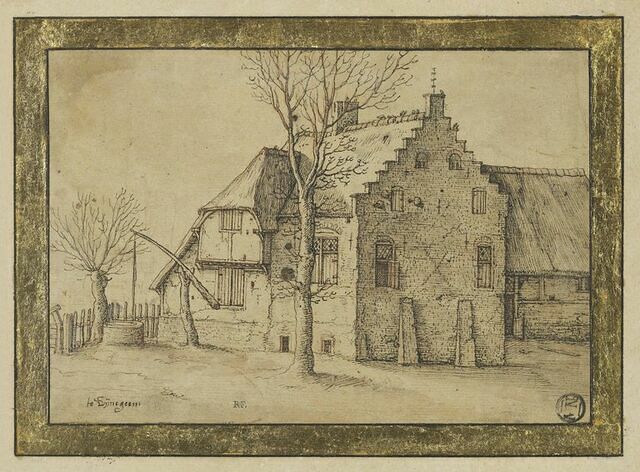
This only became clear in 2004, when a historian from Wijnegem discovered that the inn De Swaen stands in the center of Bruegel’s painting The Census at Bethlehem. An identical building appears in a drawing from the Louvre, which was attributed to Pieter Bruegel the Elder (circa 1525-1569). Below that sketch, written in pencil, one can read: ‘At Wijnegem.’
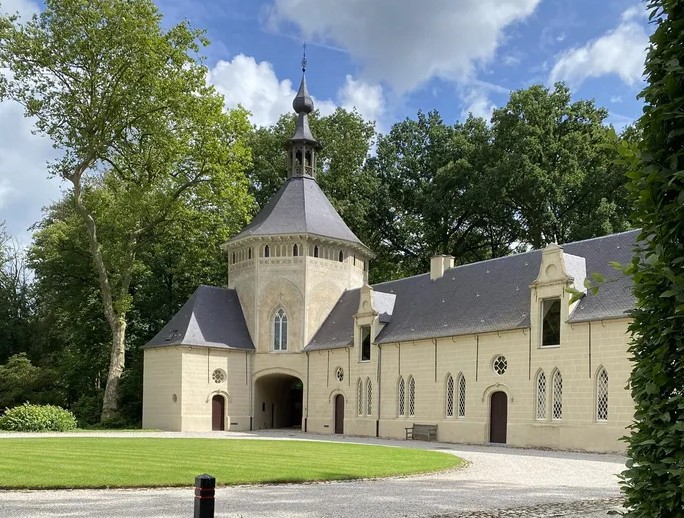
From that, we could already deduce that the painting itself might also have had something to do with Wijnegem. A further step came with the research by Tine Meganck, who worked for the Brussels museum in 2018.
She established the connection with the sixteenth-century lord of Wijnegem, Jan Vleminck (1527-1568)1 , on whose domain the inn stood and who was therefore the owner thereof.
According to Meganck, it was this Jan Vleminck who commissioned the painting from Breugel to immortalize his appointment as Lord of Wijnegem and his right to collect taxes there.2
At first glance, that painting deals with only a Biblical subject, specifically a census during the time of Emperor Augustus. But if we look a little closer, we see the « double bottom. » The people in the painting are not only registering themselves, but they are also paying dues and taxes owed to the new lord of Wijnegem!
KV: So they go to Bethlehem to be counted, but their journey ends in Wijnegem, where they suddenly have to pay taxes…
LS: Yes, it is a bit surreal. Bruegel actually mixes two stories together here: a biblical one and a contemporary one. We could put it differently as a joke: the painting actually shows that Jesus Christ was not born in Bethlehem, but in Wijnegem in Belgium!
After reading the work of Tine Meganck, I started thinking about this way of composing. So Bruegel was working with two layers of meaning here: a superficial and a deeper meaning. I wondered: if he blended two stories in The Census, did he perhaps not apply the same process in other paintings as well?
Thorough research revealed that this was indeed the case. The discovery of that consistent pattern was a surprise and represented a major breakthrough in Bruegel studies, as many well-known paintings that had never been properly understood suddenly received a simple and, moreover, coherent explanation.
KV: So that’s where the name ‘The Bruegel Code’ comes from, a kind of key you found to understand his work?
LS: Certainly, and that key is actually very simple. Bruegel made comparisons: narrative A is reminiscent of narrative B. The payment of taxes to Jan Vleminck reminded him of the census in the time of Augustus, because in both cases people flocked somewhere to have themselves registered. Based on this associative connection, he thus made two stories into one painting with an ambiguous meaning.
KV: In that way, Bruegel could therefore actually comment on the political events of his time.
LS: Yes, and The Census at Bethlehem is merely an innocent example. But if we look at other paintings by Bruegel, we see that this technique of the double meaning is not so innocent. After all, the deeper layer of meaning usually has to do with the bitter political and religious conflict of that time: the struggle of the Catholic rulers against the rising Protestantism.
Those in power were King Philip II of Spain at the top, and locally the Regent of the Netherlands, Margaret of Parma, and her advisor Cardinal Granvelle, who had to act as a watchdog to ensure that she properly followed the instructions of the big boss.
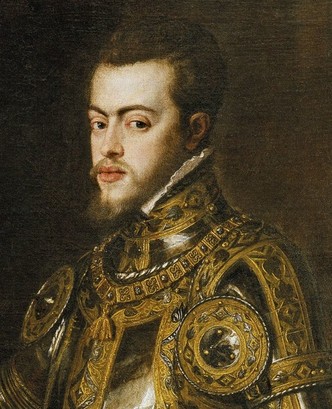
Philip II of Spain
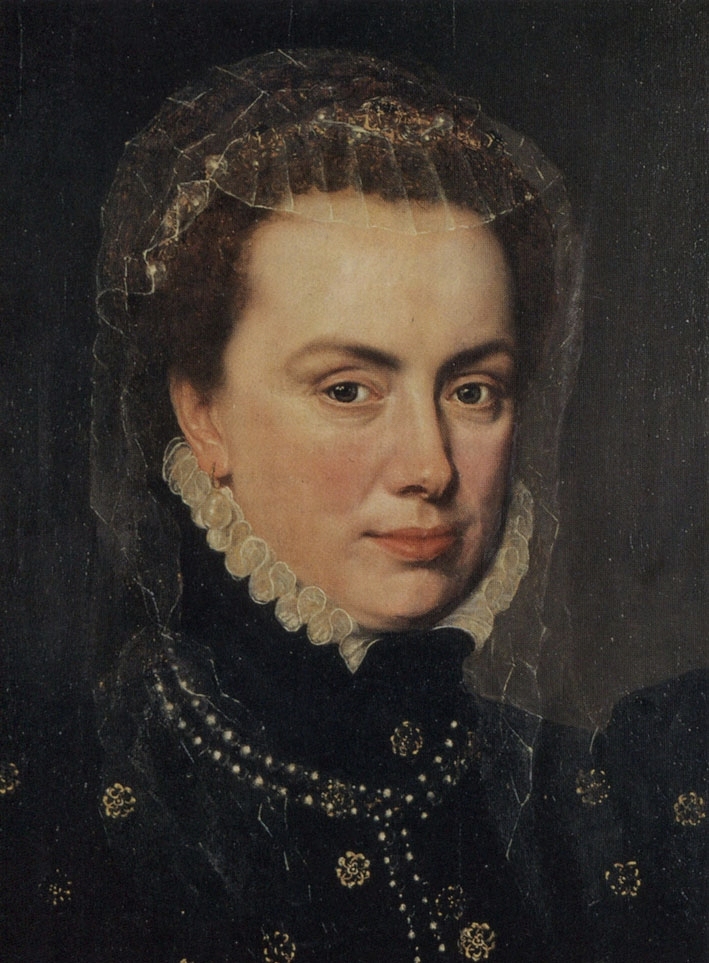
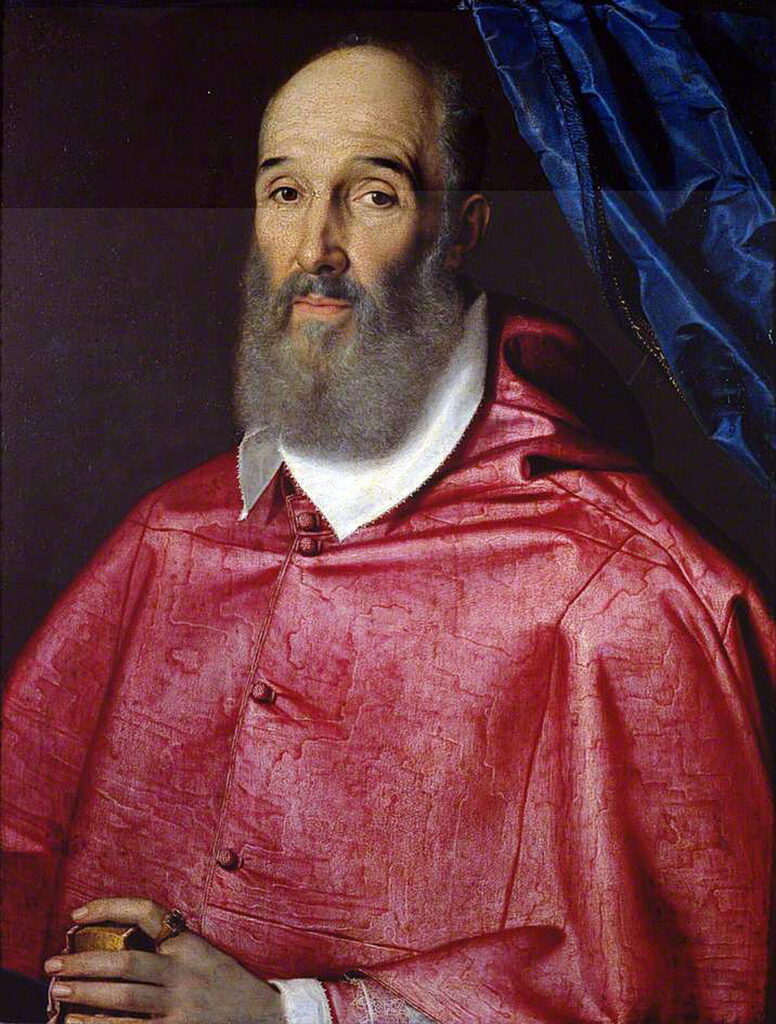
KV: Together with the other members of the ‘Secret Council.’3
LS: Indeed. There was no such thing as democracy or freedom of speech back then, so social criticism was always dangerous. Bruegel therefore had to hide his commentaries under a thick outer layer. This allowed him, for example, to adopt pacifist positions that could not be seen if one looked only superficially at the biblical story.
The Massacre of the Innocents in Bethlehem
In the same year as The Census at Bethlehem (1566), he painted The Massacre of the Innocents at Bethlehem, in which he clearly spoke out against the violence of the iconoclasts.4
He hid the A-narrative, about the destruction of works of art by religious fanatics, under the B-narrative about innocent children who were killed by the soldiers of King Herod.
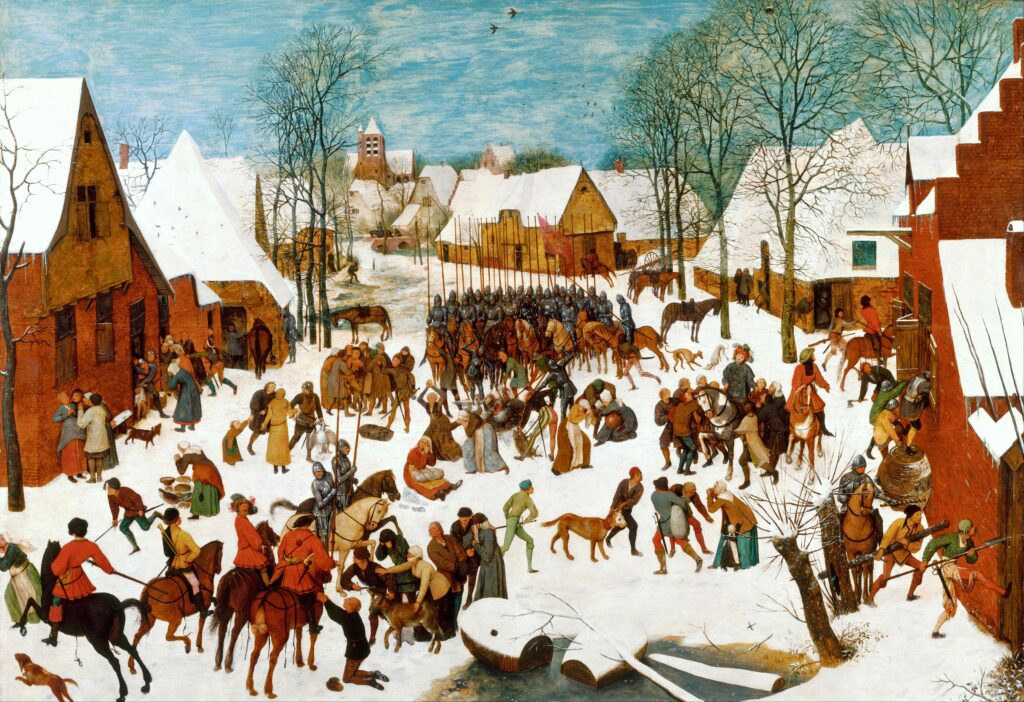
Is this a brutal massacre or grievous vandalism?
KV: Thanks to that method, the painter was also able to escape prosecution himself.
LS: Yes, because he himself was strongly influenced by a German « guru » with unorthodox religious views.5 He therefore had to be doubly careful when he targeted the Catholic rulers in his paintings, which were sometimes genuine political cartoons, for he could easily be accused of sympathizing with heresy. Not without reason, by the way.
Dulle Griet
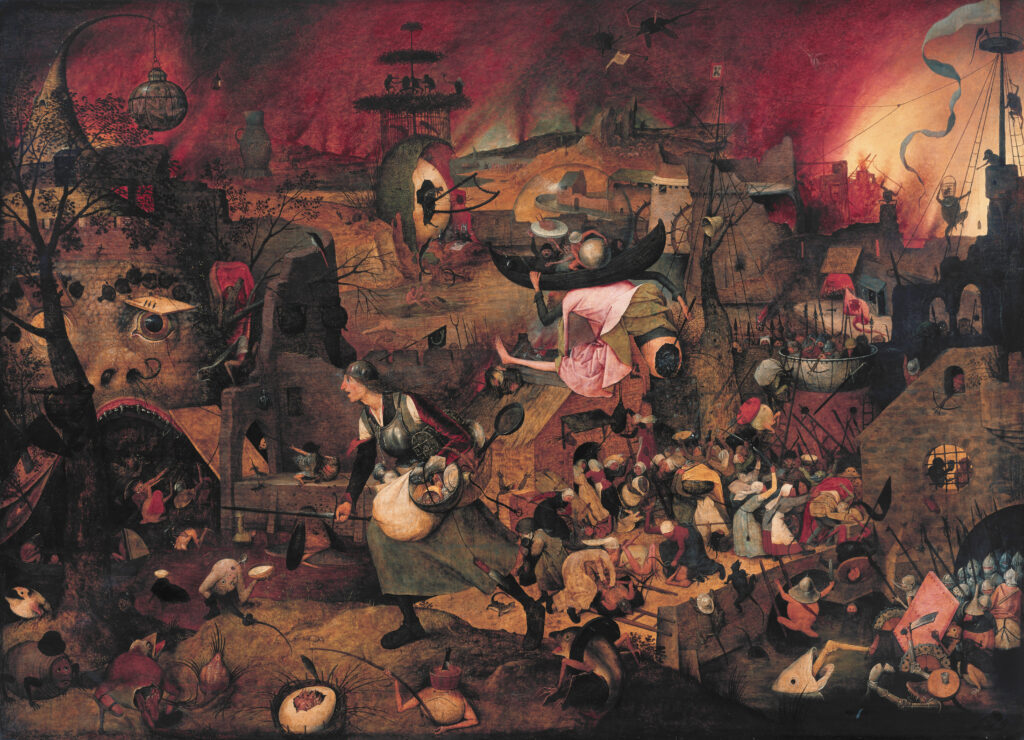
KV: Criticism of the ruling elite is certainly present in De Dulle Griet (also known as Mad Meg —1563, Museum Mayer van den Bergh, Antwerp), perhaps the most difficult and least understood painting ever created in the Low Countries. Your book provides us with a new and surprising interpretation of this work.
LS: I only had to apply the formula I discovered in The Census to that painting. But that took some effort, because both the A and B narratives of Dulle Griet were unknown. But not in those days! Back then, everyone knew the story of the woman who was so audacious that she dared to commit a robbery under the nose of the devil in hell. That character comes from a rhetorician’s farce that has now been lost. Reconstructing that story was a greater challenge than finding the political story behind it. For I soon realized that ‘Griet’ is nothing other than the shortened, popular first name of Margaret of Parma. And who that central figure with his rose-red cloak is also quickly became clear to me: Granvelle, the bishop, cardinal, and advisor to Margaret of Parma.
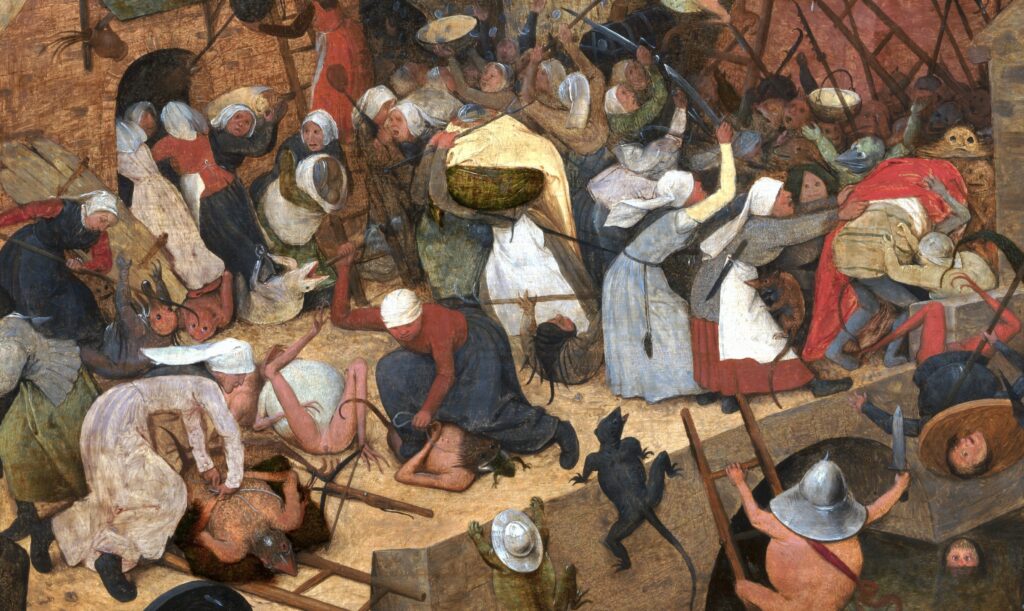
Are women fighting men here, or Catholics fighting heretics?
KV: Why is the cardinal in the painting scattering money from his rear-end over the women?
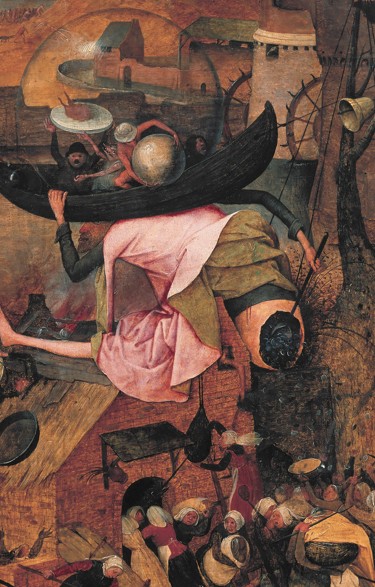
LS: That dangerous detail refers to the fact that Granvelle paid citizens to denounce the Protestants to the Inquisition. In narrative B, that giant was normally supposed to throw stones, but because stones and money didn’t go together, Bruegel had to choose and used the ‘safe’ version with the stones in a model drawing that he for all security preserved in his workshop. The drawing, which is now part of the collection of the Kunstpalast in Düsseldorf, implicitly confirms the correctness of the discovered code of interpretation.
There is also that basket of valuable household goods and jewels that Griet holds under her arm. This refers to the robbery committed in hell in narrative B, but also to the confiscation of the possessions of the condemned heretics in narrative A. Those heretics were first stripped of their goods before being sent to the stake. And that stake is, of course, hell, into which Griet drives them with her sword.
We can therefore interpret all the details of the painting in two ways. In the same way, we can separate the two stories: on the one hand, the struggle between lazy men and angry women, and on the other, the struggle between ‘bad’ heretics and ‘good’ Catholics. Everything is ambiguous. A magnificent puzzle!
KV: You write in your introduction that Bruegel as a political commentator and a pacifist is not new, but that this view of the painter is certainly not universally accepted.
LS: In Belgium, the ‘deniers’ are still very dominant, as I have experienced firsthand. For instance, articles on political interpretations of Bruegel are rejected under all sorts of pretexts. Abroad, however, the question of whether there are political messages in Bruegel’s work has actually been investigated for quite some time. However, this always concerned only one, two, or at most three paintings, and never yielded convincing results.
In Maastricht, for example, an exhibition ran in 2021 titled: Art as Hidden Resistance?6 With a Question Mark. It concerned the painting The Procession to Calvary, but the question mark and the doubt could not be removed. Art historians in Germany and America have also been engaged in this research for some time, consistently resulting in vague guessing.
To my great surprise, however, no one had ever systematically searched for connections between Bruegel’s paintings and the current events of the time. I therefore arranged not two or three, but all the allegorical paintings chronologically myself, and then confronted them with the events of the 1560s as described in chronicles, letters, and history books. That research confirmed, based on numerous clues, that Pieter Bruegel the Elder closely followed the political-religious conflict of his time in at least fifteen paintings, up to and including the first battles of the Eighty Years’ War (1568-1648).
So my book is not just about art, but also about history, and especially about the connection between the two. Bruegel painted history!
KV: Thanks again for this fascinating work, which I believe is an important step towards a better understanding of Bruegel and our cultural history.
(Message to the viewer:) So buy this book, and above all: read it!
FOOTNOTES:
- The Vleminck family settled in Antwerp, where she played an important role in international trade. Jan Vleminck married Isabella Schetz on July 21, 1561, daughter of banker Gaspar Schetz (1513-1580). Together with Balthazar and Melchior, Gaspar was one of the three sons of Emperor Charles’s Antwerp banker Erasmus Schetz, who was also a friend and financier of Erasmus. Melchior Schetz was the Prince of the Antwerp rhetoric chamber De Violieren and, in that capacity, together with external mayor Anthonis Van Straelen, a key figure in the organization of the glorious Antwerp Landjuweel of 1561. ↩︎
- Tine Luk Meganck, ‘Census at Bethlehem. Winter of a Golden Age’ in: Bruegel’s Winter Scenes. Historians and Art Historians in Dialogue, eds. Tine Luk Meganck and Sabine van Sprang, 2018, pp. 85-127. ↩︎
- Charles de Berlaymont (1510-1578), Antoine Perrenot de Granvelle (1517-1582) and Viglius van Aytta (1507-1577) were the three leading figures of the Privy Council (consulta), established by Emperor Charles V, in Bruegel’s time. ↩︎
- The Iconoclasm was a large-scale destruction of statues of saints and other objects at Catholic religious sites in the Low Countries, which took place in 1566. ↩︎
- More precise, the German mystic Hendrik Niclaes (1501–1580), founder in 1539 of the Familia Caritatis (‘House of Love’), an almost secret group that held great appeal for intellectuals, merchants, and artists. Niclaes called for an individual sense of God and believed that different views could be brought into harmony on a deeper level. It was a contemplative, tolerant attitude to life that largely appeared to be reserved for educated people. A philosopher like Socrates, who relativized all authority and worldly knowledge, enjoyed great popularity in these circles. Associated with the House of Love (without necessarily being a member thereof): printers Christoffel Plantijn, John Gailliart, the humanists Abraham Ortelius, Justus Lipsius, Andreas Masius, Goropius Becanus, Benito Arias Montano, the poets Peeter Heyns, Jan van der Noot, Lucas d’Heere, the painters Pieter Bruegel the Elder, Filips Galle, Joris Hoefnagel, the theologian Hubert Duifhuis, the writer Dirck Volkertsz. Coornhert, ‘familists’ Daniel van Bombergen, Emanuel van Meteren, Johan Radermacher and the Antwerp merchants Marcus Perez and Ferdinando Ximines. ↩︎
- Bonnefanten Museum, Maastricht. Catalogue: Bruegel and Contemporaries, Art as Hidden Resistance?, Lars Hendrikman and Dorien Tamis, Waanders Publishers, 2021. ↩︎