Étiquette : Protestants
Leo Spaepen déchiffre le code de Bruegel
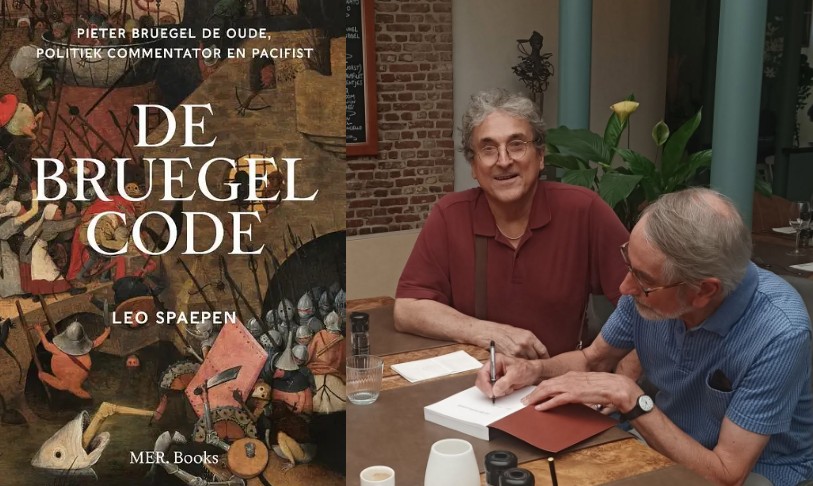
Le samedi 11 juillet, Karel Vereycken s’est entretenu avec Leo Spaepen, classiciste et ancien professeur d’histoire de l’art, auteur du livre De Bruegel Code. Pieter Bruegel l’Ancien, commentateur politique et pacifiste (En néerlandais, MER Books, 2025, ISBN 9789493410732, 39,90 €).
Accompagné de quelques notes de bas de page de Karel Vereycken.
Interview : « Bruegel peint l’histoire ! »
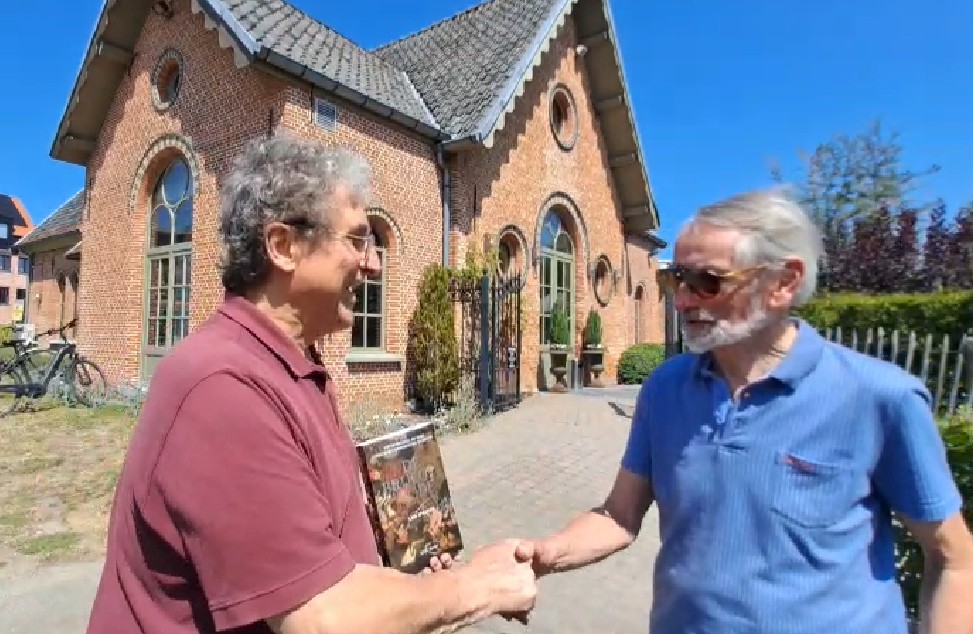
Karel Vereycken : Cher Leo, vous avez écrit un livre remarquable : Le Code Bruegel. Nous nous trouvons ici, dans un lieu historique au cœur de Wijnegem : l’ancienne auberge De Swaen (Le cygne), représentée dans son état d’origine dans un tableau de Bruegel, Le dénombrement de Bethléem (1566, Musées royaux des Beaux-Arts, Bruxelles). À partir de cette découverte, après de nombreuses recherches, vous avez développé un regard assez nouveau sur Bruegel et son œuvre. Pouvez-vous nous parler des origines de votre livre ?
Leo Spaepen : C’est une longue histoire, qui remonte à mon enfance. Après tout, j’ai toujours eu un lien affectif avec ce petit bâtiment, car j’ai grandi dans le quartier. De plus, en tant que jeune conseiller municipal, je me suis battu pour sauver ce joyau du patrimoine de la démolition. Mais à l’époque, j’ignorais tout de son lien avec Bruegel.
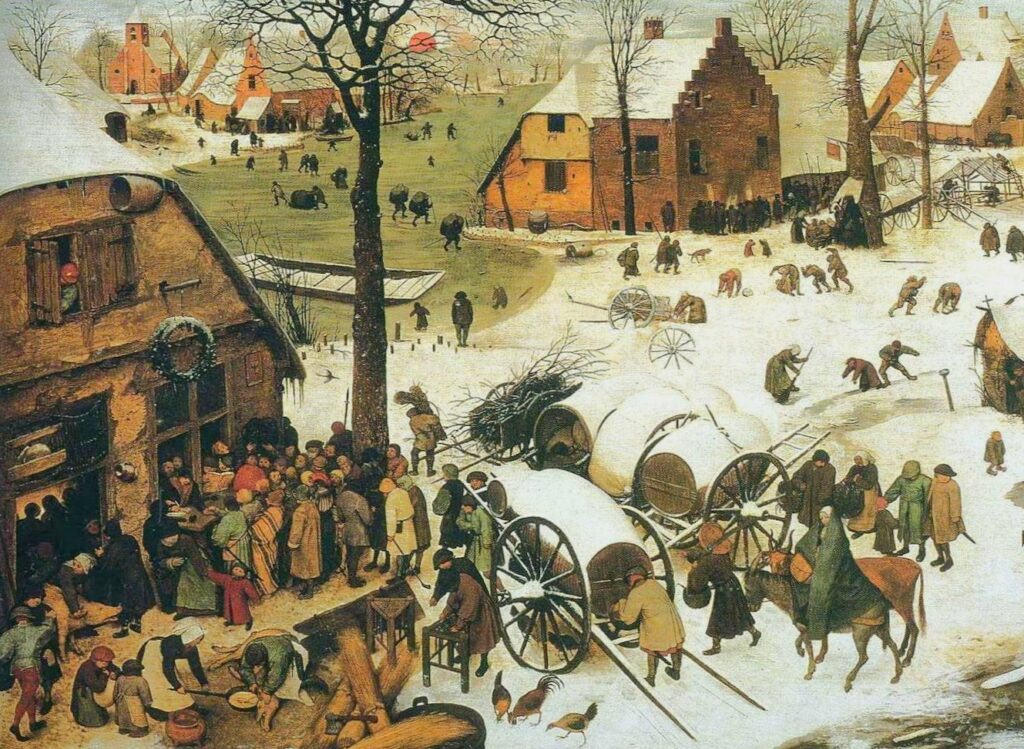
À droite : Pieter Bruegel l’Ancien, Le dénombrement à Bethléem, détail (KMSK Bruxelles).
S’agit-il ici de recenser les personnes ou de percevoir des impôts ?
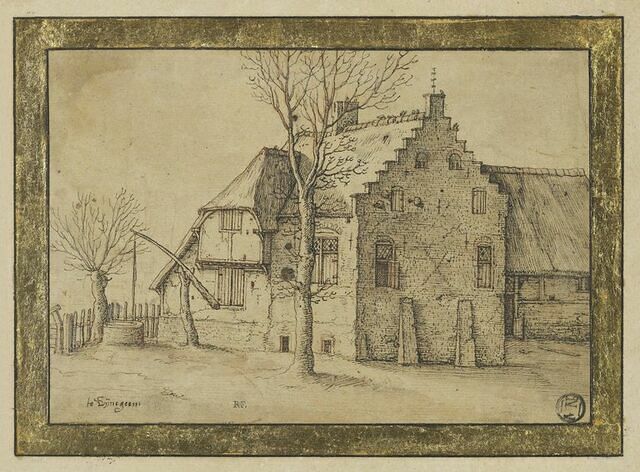
Ce n’est qu’en 2004, lorsqu’un historien de Wijnegem découvrit que l’auberge De Swaen figurait au centre du tableau de Bruegel, Le dénombrement de Bethléem, que cela devint évident. Un bâtiment identique apparaît dans un dessin du Louvre, attribué à Pieter Bruegel l’Ancien (vers 1525-1569). Sous ce dessin, une inscription au crayon disant : « À Wijnegem ».
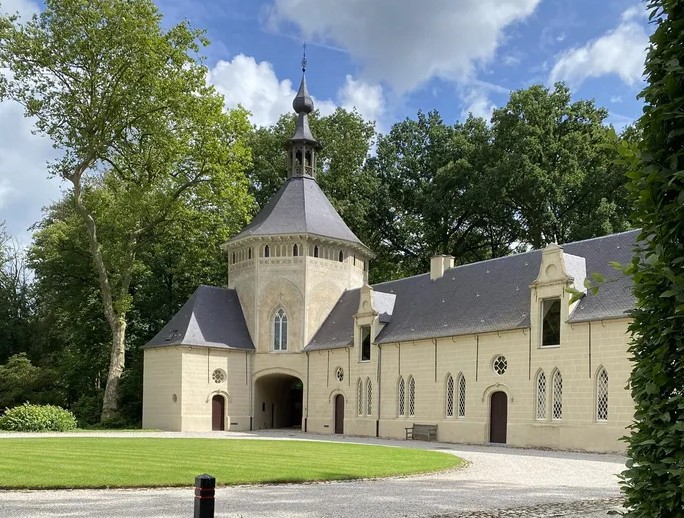
On pouvait déjà en déduire que le tableau lui-même avait probablement un lien avec Wijnegem. Une étape supplémentaire a été franchie grâce aux recherches de Tine Meganck, qui a travaillé pour le musée de Bruxelles en 2018.
Elle a établi le lien avec le seigneur de Wijnegem du XVIe siècle, Jan Vleminck (1527-1568) 1, sur le domaine duquel se trouvait l’auberge et qui en était donc le propriétaire.
Selon Meganck, c’est ce Jan Vleminck qui commanda le tableau à Brueghel pour immortaliser sa nomination comme seigneur de Wijnegem et son droit d’y percevoir les impôts. 2
À première vue, ce tableau ne traite que d’un sujet biblique, plus précisément d’un recensement sous l’empereur Auguste. Cependant, en y regardant de plus près, on découvre un « double fond ». Les personnes représentées ne se contentent pas de s’enregistrer ; elles s’acquittent également des taxes et impôts dus au nouveau seigneur de Wijnegem !
KV : Ils se rendent donc à Bethléem pour être recensés, mais leur voyage s’achève à Wijnegem, où ils doivent soudainement payer des impôts…
LS : Oui, c’est un peu surréaliste. Bruegel mélange en fait deux histoires : une biblique et une contemporaine. On pourrait le dire autrement, sur le ton de la plaisanterie : le tableau montre en réalité que Jésus-Christ n’est pas né à Bethléem, mais à Wijnegem !
Après avoir lu les travaux de Tine Meganck, j’ai commencé à réfléchir. Bruegel travaillait donc ici avec deux niveaux de signification : un sens superficiel et un sens plus profond. Je me suis demandé : s’il a entremêlé deux histoires dans Le dénombrement, n’a-t-il pas éventuellement appliqué le même procédé dans d’autres tableaux ?
Des recherches approfondies ont confirmé cette hypothèse. La découverte de cette régularité dans la façon de procéder fut une surprise et constitua une avancée majeure dans les études sur Bruegel, car de nombreux tableaux célèbres, restés jusque-là inexpliqués, trouvèrent soudain une explication simple et, de surcroît, cohérente.
KV : C’est donc de là que vient le nom « Le Code Bruegel », une sorte de clé que vous avez trouvée pour comprendre son œuvre ?
LS : Absolument, et la clé est en réalité très simple. Bruegel a établi des comparaisons : le narratif A rappelle le narratif B. Le paiement des impôts à Jan Vleminck lui évoquait le recensement sous Auguste, car dans les deux cas, les gens se rassemblaient pour se faire recenser. À partir de cette association, il a ainsi fusionné deux histoires en un seul tableau au sens ambigu.
KV : De cette manière, Bruegel pouvait donc commenter les événements politiques de son époque.
LS : Oui, car Le dénombrement de Bethléem n’est qu’un exemple anodin. Mais si l’on observe d’autres tableaux de Bruegel, on constate que cette technique du double sens est loin d’être innocente. En effet, le sens plus profond est généralement lié au conflit politique et religieux virulent de l’époque : la lutte des autorités catholiques contre la montée du protestantisme.
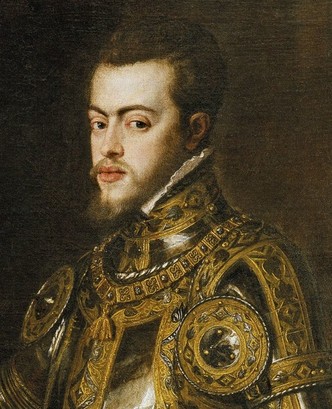
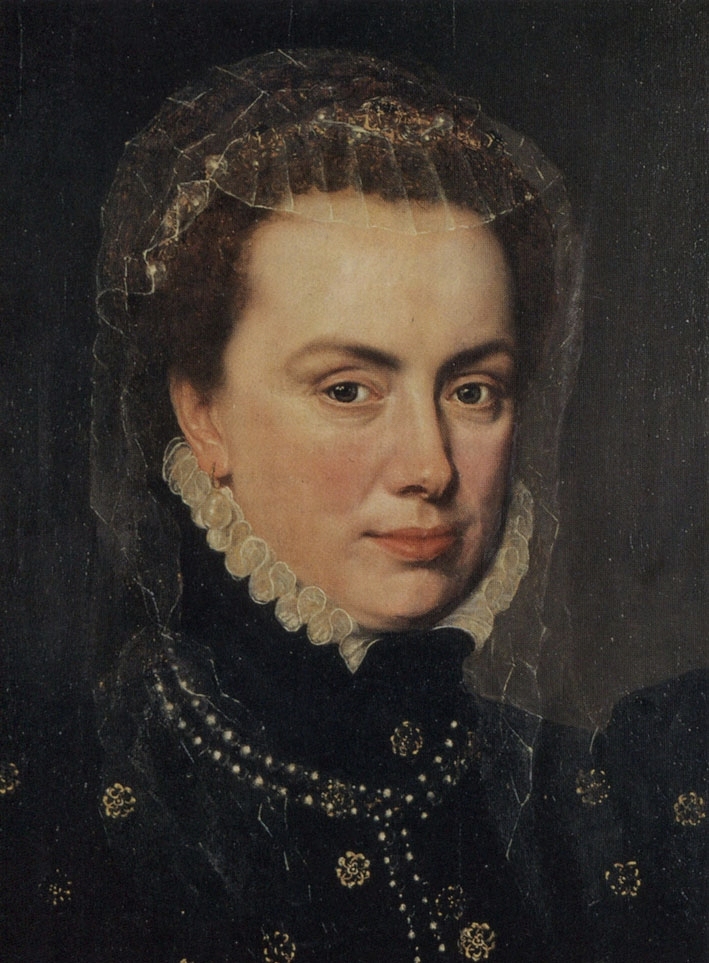
Au sommet de la hiérarchie se trouvait le roi Philippe II d’Espagne, et localement la régente des Pays-Bas , Marguerite de Parme , et son conseiller, le cardinal Granvelle , qui devait jouer le rôle de chien de garde pour s’assurer qu’elle suivait correctement les instructions du grand patron.
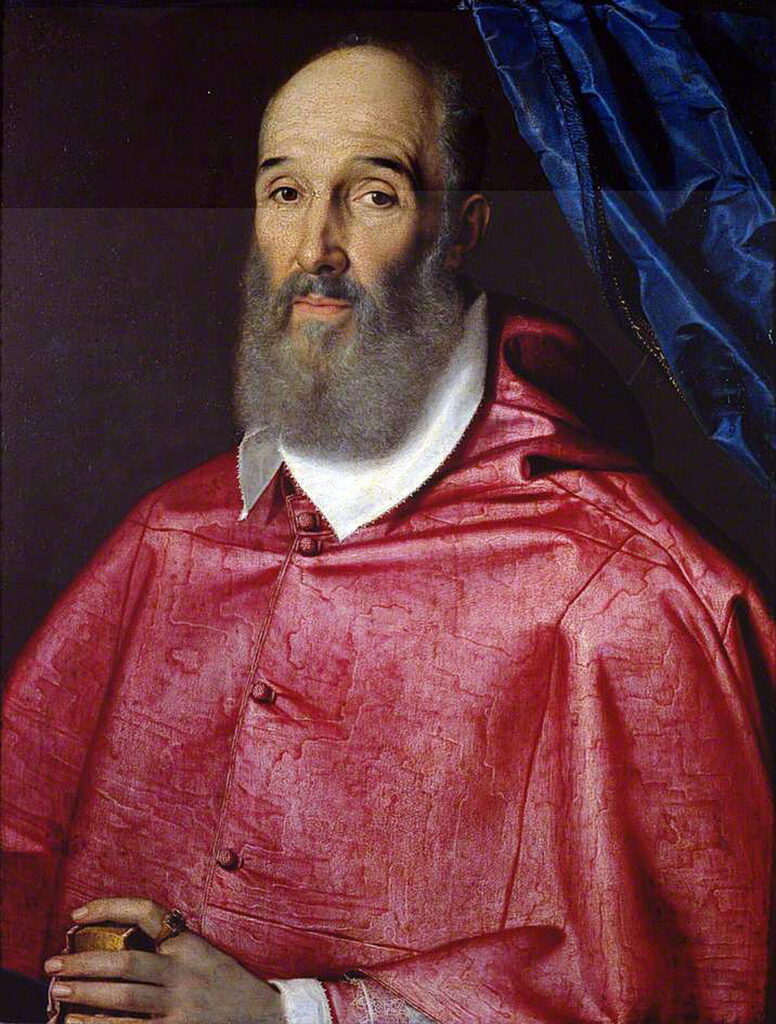
KV : Avec les autres membres du « conseil secret ». 3
LS : En effet. À cette époque, la démocratie et la liberté d’expression n’existaient pas, et la critique sociale était donc toujours dangereuse. Bruegel devait par conséquent dissimuler ses commentaires sous une épaisse couche de non-dits. Cela lui permettait, par exemple, d’adopter des positions pacifistes qui restaient imperceptibles à une lecture superficielle du récit biblique.
Le massacre des Innocents à Bethléem
La même année (1566) que Le dénombrement de Bethléem, il peignit Le Massacre des Innocents à Bethléem, dans lequel il dénonça clairement la violence des iconoclastes. 4
Il a dissimulé l’histoire principale, celle de la destruction d’œuvres d’art par des fanatiques religieux, sous le narratif officiel concernant des enfants innocents tués par les soldats du roi Hérode.
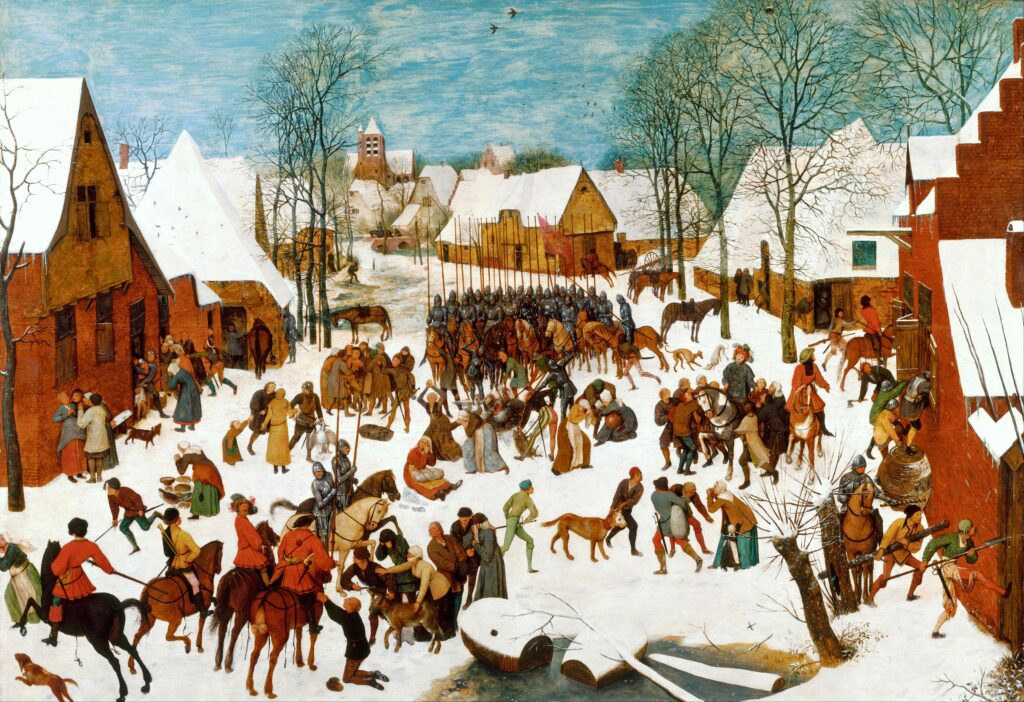
KV : Grâce à cette méthode, le peintre a lui aussi pu échapper aux poursuites.
LS : Oui, car il était lui-même fortement influencé par un « gourou » allemand aux convictions religieuses peu orthodoxes. 5
Il devait donc redoubler de prudence lorsqu’il s’en prenait aux dirigeants catholiques dans ses peintures, qui étaient parfois de véritables caricatures politiques, car il pouvait facilement être accusé de sympathiser avec l’hérésie. Ce qui n’était d’ailleurs pas sans raison.
Dulle Griet
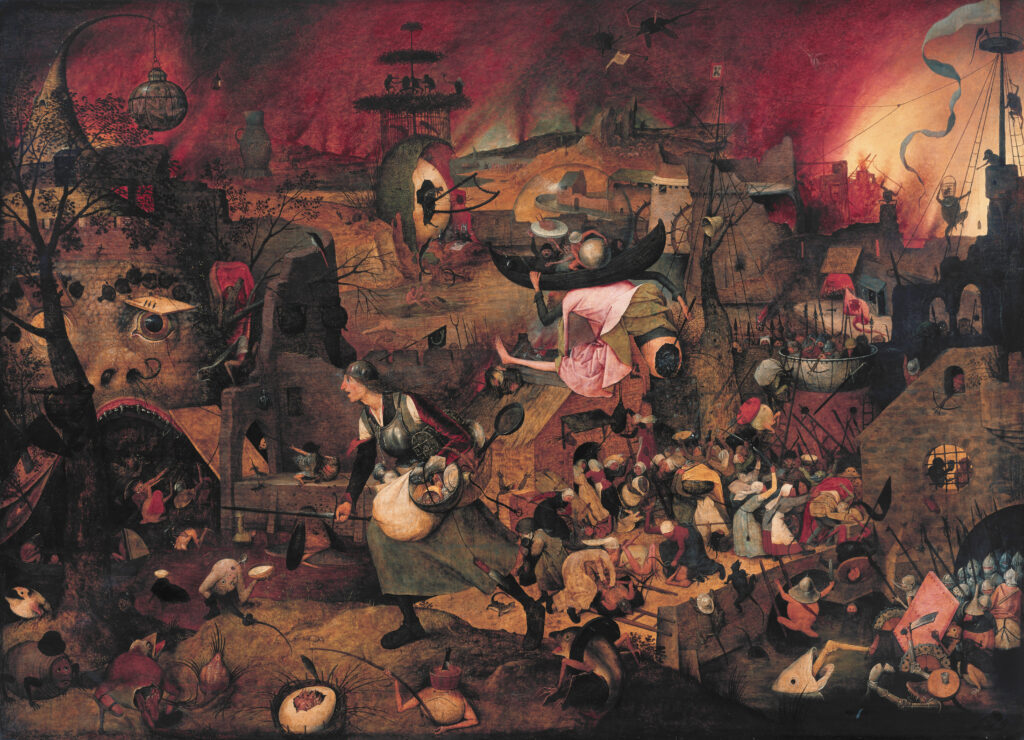
KV : La critique de cette politique est indéniablement présente dans De Dulle Griet (Egalement connue sous le nom « Margot la folle » — 1563, Musée Mayer van den Bergh, Anvers), sans doute le tableau le plus difficile et le moins compris jamais réalisé aux Pays-Bas. Votre ouvrage nous offre une interprétation nouvelle et surprenante de cette œuvre.
LS : Il m’a suffi d’appliquer à ce tableau la formule que j’avais découverte dans Le dénombrement. Mais cela a demandé des efforts, car les deux narratifs de Dulle Griet étaient inconnues. Mais ce n’était pas le cas à l’époque ! Tout le monde connaissait alors l’histoire de cette femme si audacieuse qu’elle aurait pu voler au nez du diable dans l’enfer. Ce personnage est issu d’une farce rhétorique aujourd’hui perdue. Reconstituer cette histoire s’est avéré plus complexe que de retrouver le contexte politique sous-jacent. Car j’ai vite compris que « Griet » n’était autre que le prénom abrégé et familier de Marguerite de Parme. Et l’identité de ce personnage central au manteau rouge rosé m’est également apparue rapidement : Granvelle, l’évêque, cardinal et conseiller de Marguerite de Parme.
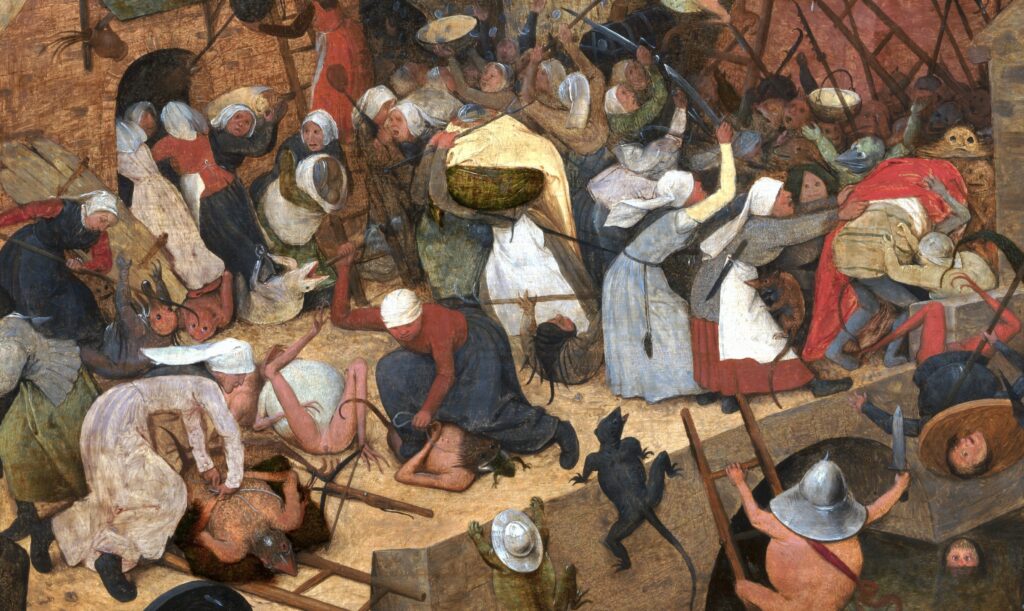
S’agit-il ici de femmes qui combattent des hommes, ou de catholiques qui luttent contre des hérétiques ?
KV : Pourquoi le cardinal, dans le tableau, défèque-t-il des pièces d’argent sur les femmes ?
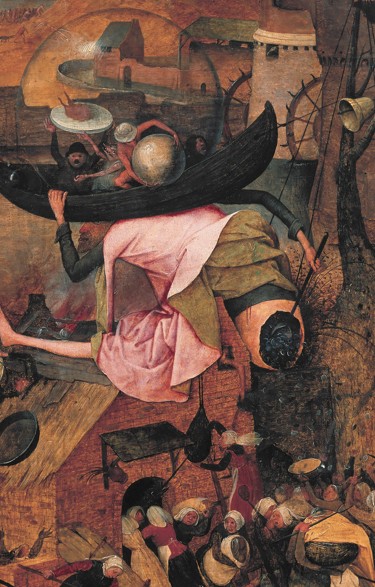
LS : Ce détail troublant fait référence au fait que Granvelle payait des gens pour dénoncer les protestants à l’Inquisition. Dans le narratif B, ce géant était censé lancer des pierres, mais comme pierres et argent étaient incompatibles, Bruegel dut opter pour la version « sans risque » avec les pierres, comme on le voit dans un dessin préparatoire… conservé aujourd’hui. Ce dessin, dans la collections du Kunstpalast de Düsseldorf, confirme implicitement l’exactitude du code découvert.
Il y a aussi ce panier rempli d’objets de valeur et de bijoux que Griet tient sous son bras. Cela fait référence au vol commis en enfer dans le narratif B, mais aussi à la confiscation des biens des hérétiques condamnés dans le narratif A. Ces hérétiques furent dépouillés de leurs biens avant d’être envoyés au bûcher. Et ce bûcher, c’est bien sûr l’enfer, où Griet les précipite à la pointe de son épée.
On peut donc interpréter tous les détails du tableau de deux manières. De même, on peut distinguer les deux récits : d’une part, la lutte entre hommes paresseux et femmes en colère, et d’autre part, la lutte entre « mauvais » hérétiques et « bons » catholiques. Tout est ambigu. Un magnifique puzzle !
KV : Vous écrivez dans votre introduction que l’idée de Bruegel comme commentateur politique n’est pas nouvelle, mais que cette vision du peintre n’est certainement pas universellement acceptée.
LS : En Belgique, les « négationnistes » restent très influents, comme j’ai pu le constater personnellement. Par exemple, les articles portant sur les interprétations politiques de Bruegel sont rejetés sous toutes sortes de prétextes. À l’étranger, en revanche, la question de la présence de messages politiques dans l’œuvre de Bruegel a fait l’objet de recherches depuis un certain temps. Cependant, ces recherches se sont toujours limitées à une, deux, voire trois toiles au maximum, et n’ont jamais abouti à des résultats convaincants.
À Maastricht, par exemple, une exposition intitulée « L’art comme résistance cachée ? » 6 –avec un point d’interrogation– s’est tenue en 2021. Elle portait sur le tableau « Le Chemin de Croix », mais le point d’interrogation et le doute persistaient. Des historiens de l’art en Allemagne et aux États-Unis se penchent également sur cette question depuis un certain temps, aboutissant invariablement à des suppositions vagues.
À ma grande surprise, personne n’avait jamais entrepris de recherche systématique de liens entre les tableaux de Bruegel et l’actualité de son époque. J’ai donc classé chronologiquement non pas deux ou trois, mais l’ensemble des peintures allégoriques, puis je les ai confrontées aux événements des années 1560 tels que relatés dans les chroniques, les lettres et les ouvrages historiques. Ces recherches ont confirmé, grâce à de nombreux indices, que Pieter Bruegel l’Ancien a suivi de près le conflit politico-religieux de son temps dans au moins quinze tableaux, jusqu’aux premières batailles de la guerre de Quatre-Vingts Ans (1568-1648) incluses.
Mon livre ne parle donc pas seulement d’art, mais aussi d’histoire, et surtout du lien entre les deux. Bruegel a peint l’histoire !
KV : Merci encore pour cet ouvrage passionnant, qui représente à mon avis une étape importante vers une meilleure compréhension de Bruegel et de notre histoire culturelle. (Message au spectateur 🙂 Alors, achetez ce livre, et surtout : lisez-le !
NOTES:
- La famille Vleminck s’installa à Anvers, où elle joua un rôle important dans le commerce international. Jan Vleminck épousa Isabella Schetz le 21 juillet 1561, fille du banquier Gaspar Schetz (1513-1580). Avec Balthazar et Melchior, Gaspar était l’un des trois fils d’Erasmus Schetz, banquier anversois de l’empereur Charles Quint. Mais Erasmus Schetz était également un ami et protecteur financier de l’humaniste Erasme de Rotterdam. Pour sa part, Melchior Schetz était prince de la chambre rhétorique anversoise De Violieren et, à ce titre, avec le maire d’Anvers Anthonis Van Straelen, une figure clé de l’organisation du glorieux Landjuweel d’Anvers de 1561. ↩︎
- Tine Luk Meganck, « Dénombrement à Bethléem. Hiver d’un âge d’or » dans : Scènes d’hiver de Bruegel. Editions Historiens et historiens de l’art en dialogue, Tine Luk Meganck et Sabine van Sprang, 2018, pp. 85-127. ↩︎
- A l’époque de Bruegel, Charles de Berlaymont (1510-1578), Antoine Perrenot de Granvelle (1517-1582) et Viglius van Aytta (1507-1577) étaient les trois figures principales du Conseil privé (consulta), établi par l’empereur Charles Quint. ↩︎
- L’iconoclasme fut une destruction à grande échelle de statues de saints et d’autres objets sur des sites religieux catholiques des Pays-Bas, qui eut lieu en 1566. ↩︎
- Il s’agit du mystique allemand Hendrik Niclaes (1501-1580), fondateur en 1539 de la Familia Caritatis (« Maison de la Charité »), un groupe quasi secret qui exerçait une grande influence auprès des intellectuels, des marchands et des artistes. Niclaes prônait une expérience individuelle avec Dieu et croyait à l’harmonisation des différentes opinions à un niveau plus profond. Il s’agissait d’une attitude contemplative et tolérante face à la vie, qui semblait généralement réservée aux personnes instruites. Un philosophe comme Socrate, qui relativisait toute autorité et tout savoir profane, jouissait d’une grande popularité dans ces milieux. Associés à la Maison de la Charité (sans nécessairement en être membre) : les imprimeurs Christoffel Plantijn, John Gailliart, les humanistes Abraham Ortelius, Justus Lipsius, Andreas Masius, Goropius Becanus, Benito Arias Montano, les poètes Peeter Heyns, Jan van der Noot, Lucas d’Heere, les peintres Pieter Bruegel l’Ancien, Filips Galle, Joris Hoefnagel, le théologien Hubert Duifhuis, l’ écrivain Dirck Volkertsz. Coornhert, les « familistes » Daniel van Bombergen, Emanuel van Meteren, Johan Radermacher et les marchands anversois Marcus Perez et Ferdinando Ximines. ↩︎
- Musée Bonnefanten, Maastricht. Catalogue : Bruegel et ses contemporains, L’art comme résistance cachée ?, Lars Hendrikman et Dorien Tamis, Editions Waanders, 2021. ↩︎
Leo Spaepen deciphers Bruegel’s code
On Saturday, July 11, Karel Vereycken spoke with Leo Spaepen, classicist and retired art history teacher, author of the book De Bruegel Code. Pieter Bruegel the Elder, political commentator and pacifist. (In Dutch, published by MER Books, 2025, ISBN 9789493410732, €39.90).
Karel Vereycken contributed with some footnotes.
Interview: « Bruegel painted history! »
Karel Vereycken: Dear Leo, you have written a wonderful book: The Bruegel Code. We are standing here at a historic location in the center of Wijnegem: the old inn De Swaen, which is depicted in its former shape in a painting by Bruegel, The Census at Bethlehem (1566, Royal Museums of Fine Arts, Brussels). Based on that discovery, after much study, you have developed a completely new perspective on Bruegel and his work. Can you tell us something about the origins of your book?
Leo Spaepen: That is a long history, going back to my childhood years. After all, I have always had a sentimental connection to this little building, because I grew up in the neighborhood. Moreover, as a young municipal councilor, I fought to save this piece of heritage from demolition. But back then, I had no idea that it had anything to do with Bruegel.
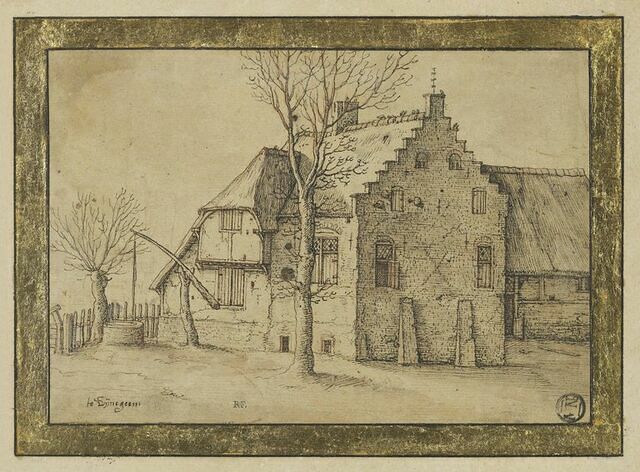
Right: Pieter Bruegel the Elder, The Census at Bethlehem , detail (KMSK Brussels).
Are people being counted here or taxes collected?
This only became clear in 2004, when a historian from Wijnegem discovered that the inn De Swaen stands in the center of Bruegel’s painting The Census at Bethlehem. An identical building appears in a drawing from the Louvre, which was attributed to Pieter Bruegel the Elder (circa 1525-1569). Below that sketch, written in pencil, one can read: ‘At Wijnegem.’
From that, we could already deduce that the painting itself might also have had something to do with Wijnegem. A further step came with the research by Tine Meganck, who worked for the Brussels museum in 2018.
She established the connection with the sixteenth-century lord of Wijnegem, Jan Vleminck (1527-1568)1 , on whose domain the inn stood and who was therefore the owner thereof.
According to Meganck, it was this Jan Vleminck who commissioned the painting from Breugel to immortalize his appointment as Lord of Wijnegem and his right to collect taxes there.2
At first glance, that painting deals with only a Biblical subject, specifically a census during the time of Emperor Augustus. But if we look a little closer, we see the « double bottom. » The people in the painting are not only registering themselves, but they are also paying dues and taxes owed to the new lord of Wijnegem!
KV: So they go to Bethlehem to be counted, but their journey ends in Wijnegem, where they suddenly have to pay taxes…
LS: Yes, it is a bit surreal. Bruegel actually mixes two stories together here: a biblical one and a contemporary one. We could put it differently as a joke: the painting actually shows that Jesus Christ was not born in Bethlehem, but in Wijnegem in Belgium!
After reading the work of Tine Meganck, I started thinking about this way of composing. So Bruegel was working with two layers of meaning here: a superficial and a deeper meaning. I wondered: if he blended two stories in The Census, did he perhaps not apply the same process in other paintings as well?
Thorough research revealed that this was indeed the case. The discovery of that consistent pattern was a surprise and represented a major breakthrough in Bruegel studies, as many well-known paintings that had never been properly understood suddenly received a simple and, moreover, coherent explanation.
KV: So that’s where the name ‘The Bruegel Code’ comes from, a kind of key you found to understand his work?
LS: Certainly, and that key is actually very simple. Bruegel made comparisons: narrative A is reminiscent of narrative B. The payment of taxes to Jan Vleminck reminded him of the census in the time of Augustus, because in both cases people flocked somewhere to have themselves registered. Based on this associative connection, he thus made two stories into one painting with an ambiguous meaning.
KV: In that way, Bruegel could therefore actually comment on the political events of his time.
LS: Yes, and The Census at Bethlehem is merely an innocent example. But if we look at other paintings by Bruegel, we see that this technique of the double meaning is not so innocent. After all, the deeper layer of meaning usually has to do with the bitter political and religious conflict of that time: the struggle of the Catholic rulers against the rising Protestantism.
Those in power were King Philip II of Spain at the top, and locally the Regent of the Netherlands, Margaret of Parma, and her advisor Cardinal Granvelle, who had to act as a watchdog to ensure that she properly followed the instructions of the big boss.
Philip II of Spain
KV: Together with the other members of the ‘Secret Council.’3
LS: Indeed. There was no such thing as democracy or freedom of speech back then, so social criticism was always dangerous. Bruegel therefore had to hide his commentaries under a thick outer layer. This allowed him, for example, to adopt pacifist positions that could not be seen if one looked only superficially at the biblical story.
The Massacre of the Innocents in Bethlehem
In the same year as The Census at Bethlehem (1566), he painted The Massacre of the Innocents at Bethlehem, in which he clearly spoke out against the violence of the iconoclasts.4
He hid the A-narrative, about the destruction of works of art by religious fanatics, under the B-narrative about innocent children who were killed by the soldiers of King Herod.
Is this a brutal massacre or grievous vandalism?
KV: Thanks to that method, the painter was also able to escape prosecution himself.
LS: Yes, because he himself was strongly influenced by a German « guru » with unorthodox religious views.5 He therefore had to be doubly careful when he targeted the Catholic rulers in his paintings, which were sometimes genuine political cartoons, for he could easily be accused of sympathizing with heresy. Not without reason, by the way.
Dulle Griet
KV: Criticism of the ruling elite is certainly present in De Dulle Griet (also known as Mad Meg —1563, Museum Mayer van den Bergh, Antwerp), perhaps the most difficult and least understood painting ever created in the Low Countries. Your book provides us with a new and surprising interpretation of this work.
LS: I only had to apply the formula I discovered in The Census to that painting. But that took some effort, because both the A and B narratives of Dulle Griet were unknown. But not in those days! Back then, everyone knew the story of the woman who was so audacious that she dared to commit a robbery under the nose of the devil in hell. That character comes from a rhetorician’s farce that has now been lost. Reconstructing that story was a greater challenge than finding the political story behind it. For I soon realized that ‘Griet’ is nothing other than the shortened, popular first name of Margaret of Parma. And who that central figure with his rose-red cloak is also quickly became clear to me: Granvelle, the bishop, cardinal, and advisor to Margaret of Parma.
Are women fighting men here, or Catholics fighting heretics?
KV: Why is the cardinal in the painting scattering money from his rear-end over the women?
LS: That dangerous detail refers to the fact that Granvelle paid citizens to denounce the Protestants to the Inquisition. In narrative B, that giant was normally supposed to throw stones, but because stones and money didn’t go together, Bruegel had to choose and used the ‘safe’ version with the stones in a model drawing that he for all security preserved in his workshop. The drawing, which is now part of the collection of the Kunstpalast in Düsseldorf, implicitly confirms the correctness of the discovered code of interpretation.
There is also that basket of valuable household goods and jewels that Griet holds under her arm. This refers to the robbery committed in hell in narrative B, but also to the confiscation of the possessions of the condemned heretics in narrative A. Those heretics were first stripped of their goods before being sent to the stake. And that stake is, of course, hell, into which Griet drives them with her sword.
We can therefore interpret all the details of the painting in two ways. In the same way, we can separate the two stories: on the one hand, the struggle between lazy men and angry women, and on the other, the struggle between ‘bad’ heretics and ‘good’ Catholics. Everything is ambiguous. A magnificent puzzle!
KV: You write in your introduction that Bruegel as a political commentator and a pacifist is not new, but that this view of the painter is certainly not universally accepted.
LS: In Belgium, the ‘deniers’ are still very dominant, as I have experienced firsthand. For instance, articles on political interpretations of Bruegel are rejected under all sorts of pretexts. Abroad, however, the question of whether there are political messages in Bruegel’s work has actually been investigated for quite some time. However, this always concerned only one, two, or at most three paintings, and never yielded convincing results.
In Maastricht, for example, an exhibition ran in 2021 titled: Art as Hidden Resistance?6 With a Question Mark. It concerned the painting The Procession to Calvary, but the question mark and the doubt could not be removed. Art historians in Germany and America have also been engaged in this research for some time, consistently resulting in vague guessing.
To my great surprise, however, no one had ever systematically searched for connections between Bruegel’s paintings and the current events of the time. I therefore arranged not two or three, but all the allegorical paintings chronologically myself, and then confronted them with the events of the 1560s as described in chronicles, letters, and history books. That research confirmed, based on numerous clues, that Pieter Bruegel the Elder closely followed the political-religious conflict of his time in at least fifteen paintings, up to and including the first battles of the Eighty Years’ War (1568-1648).
So my book is not just about art, but also about history, and especially about the connection between the two. Bruegel painted history!
KV: Thanks again for this fascinating work, which I believe is an important step towards a better understanding of Bruegel and our cultural history.
(Message to the viewer:) So buy this book, and above all: read it!
FOOTNOTES:
- The Vleminck family settled in Antwerp, where she played an important role in international trade. Jan Vleminck married Isabella Schetz on July 21, 1561, daughter of banker Gaspar Schetz (1513-1580). Together with Balthazar and Melchior, Gaspar was one of the three sons of Emperor Charles’s Antwerp banker Erasmus Schetz, who was also a friend and financier of Erasmus. Melchior Schetz was the Prince of the Antwerp rhetoric chamber De Violieren and, in that capacity, together with external mayor Anthonis Van Straelen, a key figure in the organization of the glorious Antwerp Landjuweel of 1561. ↩︎
- Tine Luk Meganck, ‘Census at Bethlehem. Winter of a Golden Age’ in: Bruegel’s Winter Scenes. Historians and Art Historians in Dialogue, eds. Tine Luk Meganck and Sabine van Sprang, 2018, pp. 85-127. ↩︎
- Charles de Berlaymont (1510-1578), Antoine Perrenot de Granvelle (1517-1582) and Viglius van Aytta (1507-1577) were the three leading figures of the Privy Council (consulta), established by Emperor Charles V, in Bruegel’s time. ↩︎
- The Iconoclasm was a large-scale destruction of statues of saints and other objects at Catholic religious sites in the Low Countries, which took place in 1566. ↩︎
- More precise, the German mystic Hendrik Niclaes (1501–1580), founder in 1539 of the Familia Caritatis (‘House of Love’), an almost secret group that held great appeal for intellectuals, merchants, and artists. Niclaes called for an individual sense of God and believed that different views could be brought into harmony on a deeper level. It was a contemplative, tolerant attitude to life that largely appeared to be reserved for educated people. A philosopher like Socrates, who relativized all authority and worldly knowledge, enjoyed great popularity in these circles. Associated with the House of Love (without necessarily being a member thereof): printers Christoffel Plantijn, John Gailliart, the humanists Abraham Ortelius, Justus Lipsius, Andreas Masius, Goropius Becanus, Benito Arias Montano, the poets Peeter Heyns, Jan van der Noot, Lucas d’Heere, the painters Pieter Bruegel the Elder, Filips Galle, Joris Hoefnagel, the theologian Hubert Duifhuis, the writer Dirck Volkertsz. Coornhert, ‘familists’ Daniel van Bombergen, Emanuel van Meteren, Johan Radermacher and the Antwerp merchants Marcus Perez and Ferdinando Ximines. ↩︎
- Bonnefanten Museum, Maastricht. Catalogue: Bruegel and Contemporaries, Art as Hidden Resistance?, Lars Hendrikman and Dorien Tamis, Waanders Publishers, 2021. ↩︎
ARTKAREL AUDIO GUIDE: Why Vermeer was hiding his convictions (Paris)

Listen:
To the audio on this website
Read:
La paix de Westphalie, une réorganisation financière mondiale

par Karel Vereycken, Paris, France.
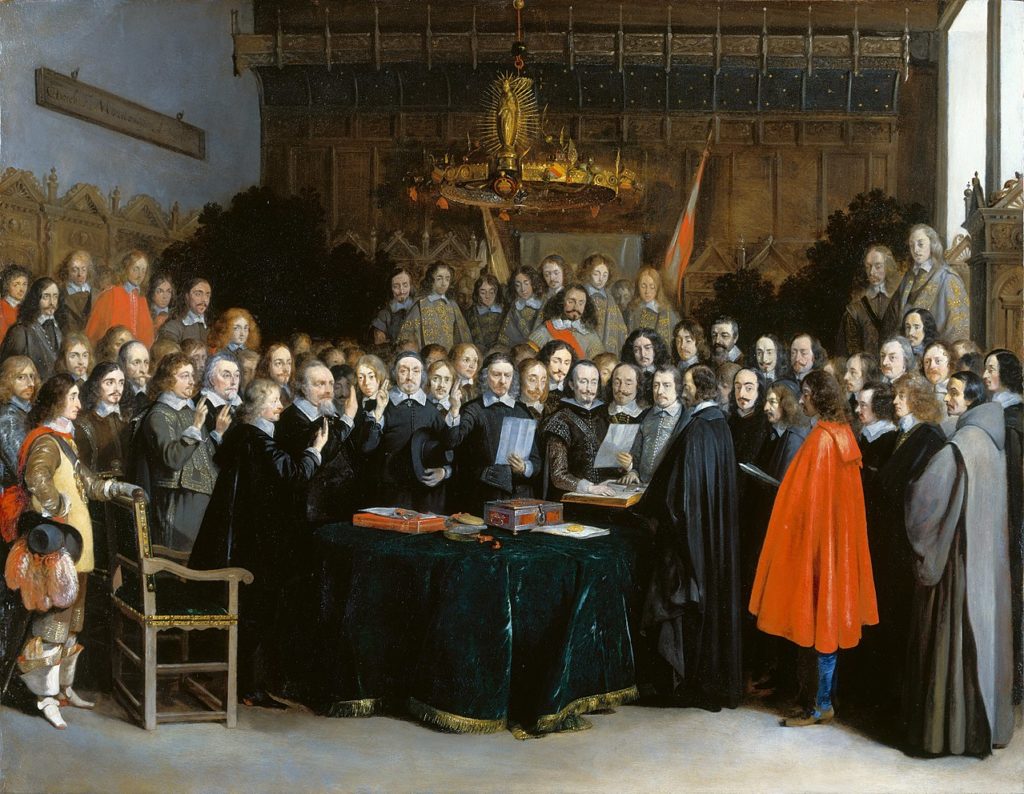
En 1648, après cinq ans de négociations, conduites notamment par le diplomate français Abel Servien sur les instructions du Cardinal Mazarin, était signée la « Paix de Westphalie » mettant fin à la guerre de Trente Ans. Bien avant la charte de l’ONU, 1648 fera de la souveraineté nationale, du respect mutuel et du principe de non-ingérence les fondements du droit international. La République des Pays-Bas et la Confédération helvétique sont reconnues et de nombreux traités bilatéraux de paix mettent fin aux conflits.
Mais ce n’est pas tout. Un lecteur attentif de ces traités de paix découvre que l’engagement de chacune des parties, qui consiste à prendre en considération « l’avantage d’autrui » autant, sinon plus, que le sien, se traduit par des actes concrets jetant les bases d’un nouvel ordre financier et économique international.
L’article 1 énonce le principe philosophique fondamental sur lequel repose la paix :
Qu’il y ait une paix chrétienne et universelle, et une amitié perpétuelle, vraie et sincère, entre [liste des parties renonçant au combat] ; et que cette paix et cette amitié soient observées et promues avec une telle sincérité et un tel zèle, que chaque partie s’efforce de procurer le bénéfice, l’honneur et l’avantage d’autrui ; et qu’ainsi, de tous côtés, ils puissent voir cette paix et cette amitié dans l’Empire romain, et le Royaume de France prospérer, en entretenant un bon et fidèle voisinage.
L’article 2 décrit ensuite le type de « réinitialisation » dont nous avons si urgemment besoin aujourd’hui :
Il y aura d’un côté et de l’autre un oubli, une amnistie ou un pardon perpétuel de tout ce qui a été commis depuis le début de ces troubles, en quelque lieu ou de quelque manière que les hostilités aient été pratiquées, de telle sorte qu’aucun acteur, sous quelque prétexte que ce soit, ne puisse pratiquer aucun acte d’hostilité, entretenir aucune inimitié ou causer aucun trouble ; (…) tout ce qui s’est passé d’un côté et de l’autre, aussi bien avant que pendant la guerre, en paroles, écrits et actions outrageantes, en violences, hostilités, dommages et dépenses, sans aucun respect pour les personnes ou les choses, sera entièrement aboli de telle sorte que tout ce qui pourrait être exigé ou prétendu par l’un et l’autre à ce sujet sera enseveli dans un oubli éternel.
Pendant des décennies, la plupart des belligérants de la guerre de Trente Ans se sont mutuellement infligés des dommages inouïs, essentiellement pour pouvoir rembourser leurs dettes avec le butin de leurs pillages et de leurs conquêtes, afin de satisfaire une minuscule oligarchie financière qui prêtait aussi généreusement aux uns qu’aux autres. C’est cet asservissement par la dette que le traité propose d’« ensevelir dans un oubli éternel ».
Ainsi, avant même de régler les disputes et les revendications territoriales, le traité s’attelle à créer les conditions mettant fin à la ruine financière dans laquelle tous se trouvaient plongés.
Les dettes, intérêts, obligations, rentes et créances financières impayables, insoutenables et illégitimes, explicitement identifiés comme alimentant une dynamique de guerre perpétuelle, sont examinés, triés et réorganisés, le plus souvent par l’annulation des dettes (articles 13 et 35, 37, 38 et 39), par des moratoires ou un rééchelonnement selon des échéanciers précis (article 69).
L’article 40 conclut que ces annulations s’appliqueront « à la réserve toutefois des sommes de deniers, qui durant la guerre ont été fournies de bon cœur et à bonne intention pour d’autres, afin de détourner les plus grands périls et dommages dont ils étoient menacez. » (Impliquant que ces dettes devront être honorées.)
Enfin, regardant vers l’avenir et pour faire en sorte que « le commerce refleurisse », le traité abolit de nombreux péages et octrois « inusités » et « privés », obstacles aux échanges des biens physiques et des savoirs-faire et donc du développement mutuel. (Art. 69).
Dans le texte :
- Art. 13 : « Le Seigneur Électeur de Bavière renoncera entièrement pour lui, ses héritiers et successeurs à la dette de treize millions, et à toute prétention sur la haute Autriche, et incontinent après la publication de la paix donnera à sa Majesté Impériale les actes obtenus sur cela pour être cassez et annullez. »
- Art. 35 : « La pension annuelle que le bas Marquisat avoit accoutumé de payer au haut Marquisat, soit en vertu du présent Traité entièrement supprimée, abolie et annullée, sans que doresnavant on puisse prétendre ou exiger pour ce sujet aucune chose, ni pour le passé, ni pour l’avenir. »
- Art. 37 : « Que les contracts, échanges, transactions, obligations, et promesses illicitement extorquez par force ou par menaces des États ou des sujets, (…) comme aussi les actions rachetées et cédées soient abolies et annullées ; en sorte qu’il ne sera permis à personne d’intenter aucun procès ou actions pour ce sujet. »
- Art. 38 : « Que si les débiteurs ont extorqué des créanciers par force ou par crainte les actes de leurs obligations, tous ces actes seront restituez, les actions sur ce demeurant en leur entier. »
- Art. 39 : « Que si l’une ou l’autre des parties qui sont en guerre, ont extorqué par violence, en haine des créanciers, des dettes causées pour achat, pour vente, pour revenus annuels, ou pour quelqu’autre cause que ce soit, il ne sera décerné aucune exécution contre les débiteurs qui allégueront, et s’offriront de prouver qu’on leur aura véritablement fait violence, et qu’ils ont payé réellement et de fait, si non après que ces exceptions auront été décidées en pleine connoissance de cause. Que le procès qui sera sur ce commencé, sera fini dans l’espace de deux ans à compter dez la publication de la paix, faute de quoi il sera imposé perpétuel silence aux débiteurs contumax. »
- Art. 40 : « Mais les procès qui ont été jusques-ici intentés contre eux de cette sorte ; ensemble les transactions, et les promesses faites pour la restitution future des créanciers, seront abolies et annullez ; à la réserve toutefois des sommes de deniers, qui durant la guerre ont été fournies de bon cœur et à bonne intention pour d’autres, afin de détourner les plus grands périls et dommages dont ils étoient menacez. »
- Art. 68 : « Quant à la recherche d’un moyen équitable et convenable, par lequel la poursuite des actions contre les débiteurs ruinez par les calamitez de la guerre, ou chargez d’un trop grand amas d’intérêts, puisse être terminée avec modération, pour obvier à de plus grans inconveniens qui en pourroient naître, et qui seroient nuisibles à la tranquillité publique, Sa Majesté Imperiale aura soin (…) »
- Art. 69 : « Et d’autant qu’il importe au public que la paix étant faite, le commerce refleurisse de toutes parts on est convenu à cette fin que les tributs, et péages, comme aussi les abus de la bulle Brabantine et les représailles et arrêts qui s’en seront ensuivis, avec les certifications étrangères, les exactions, les détentions, de même les frais excessifs des postes, et toutes autres charges, et empêchemens inusitez du commerce et de la navigation qui ont été nouvellement introduits à son préjudice et contre l’utilité publique çà et là dans l’Empire, à l’occasion de la guerre, par une authorité privée, contre tous droits et privilèges, sans le consentement de l’Empereur et des Électeurs de l’Empire, seront tout-à-fait ôtez ; en sorte que l’ancienne sûreté, la jurisdiction et l’usage tels qu’ils ont été longtemps avant ces guerres, y soient rétablis et inviolablement conservez aux Provinces, aux ports et aux rivières. »