Étiquette : Tine Meganck
Leo Spaepen déchiffre le code de Bruegel
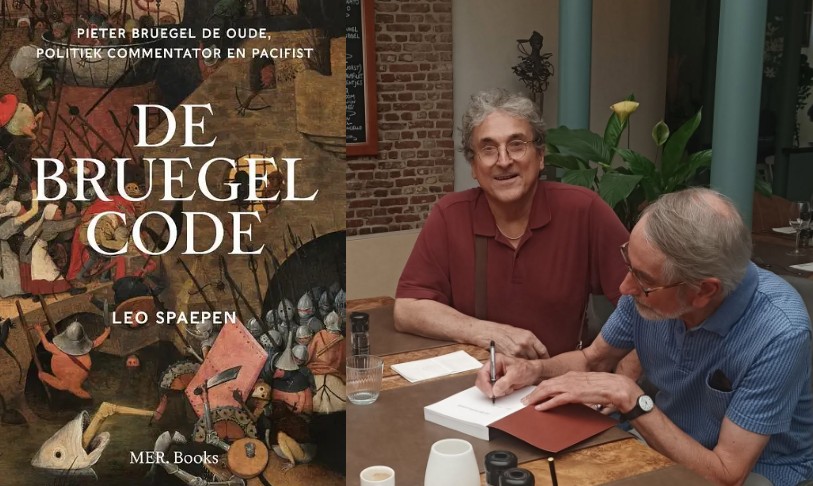
Le samedi 11 juillet, Karel Vereycken s’est entretenu avec Leo Spaepen, classiciste et ancien professeur d’histoire de l’art, auteur du livre De Bruegel Code. Pieter Bruegel l’Ancien, commentateur politique et pacifiste (En néerlandais, MER Books, 2025, ISBN 9789493410732, 39,90 €).
Accompagné de quelques notes de bas de page de Karel Vereycken.
Interview : « Bruegel peint l’histoire ! »
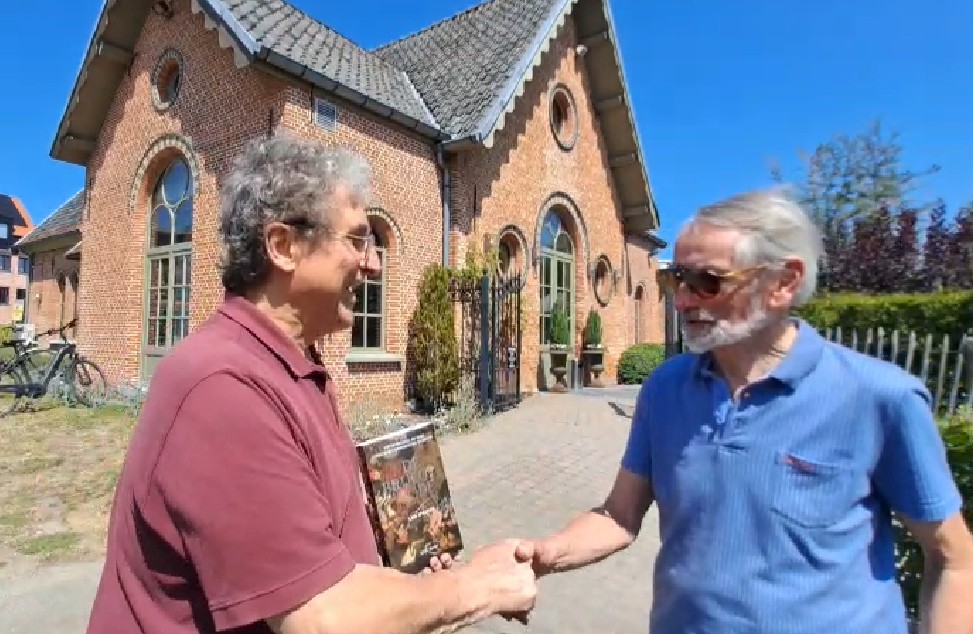
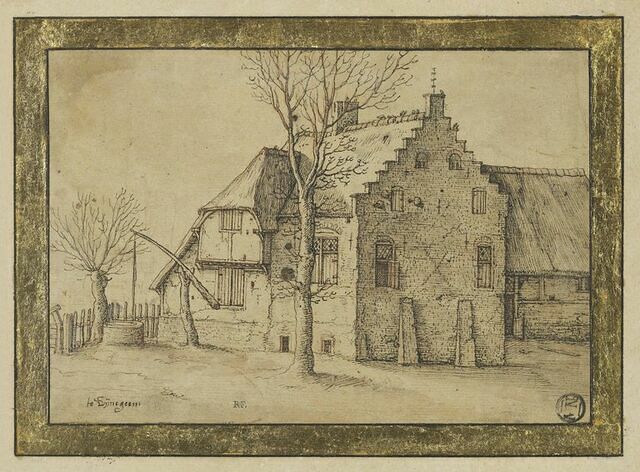
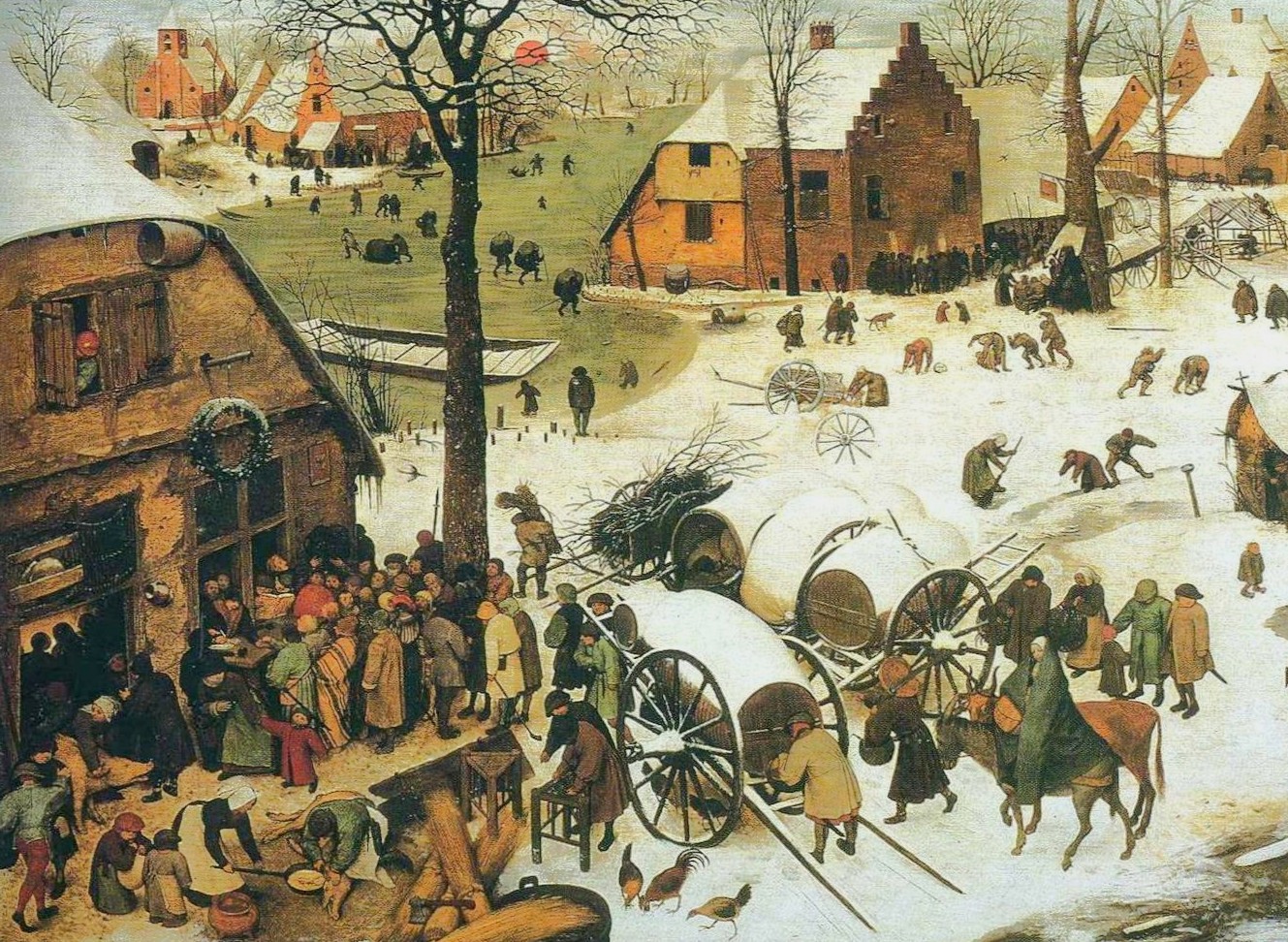
Karel Vereycken : Cher Leo, vous avez écrit un livre remarquable : Le Code Bruegel. Nous nous trouvons ici, dans un lieu historique au cœur de Wijnegem : l’ancienne auberge De Swaen (Le cygne), représentée dans son état d’origine dans un tableau de Bruegel, Le dénombrement de Bethléem (1566, Musées royaux des Beaux-Arts, Bruxelles). À partir de cette découverte, après de nombreuses recherches, vous avez développé un regard assez nouveau sur Bruegel et son œuvre. Pouvez-vous nous parler des origines de votre livre ?
Leo Spaepen : C’est une longue histoire, qui remonte à mon enfance. Après tout, j’ai toujours eu un lien affectif avec ce petit bâtiment, car j’ai grandi dans le quartier. De plus, en tant que jeune conseiller municipal, je me suis battu pour sauver ce joyau du patrimoine de la démolition. Mais à l’époque, j’ignorais tout de son lien avec Bruegel.
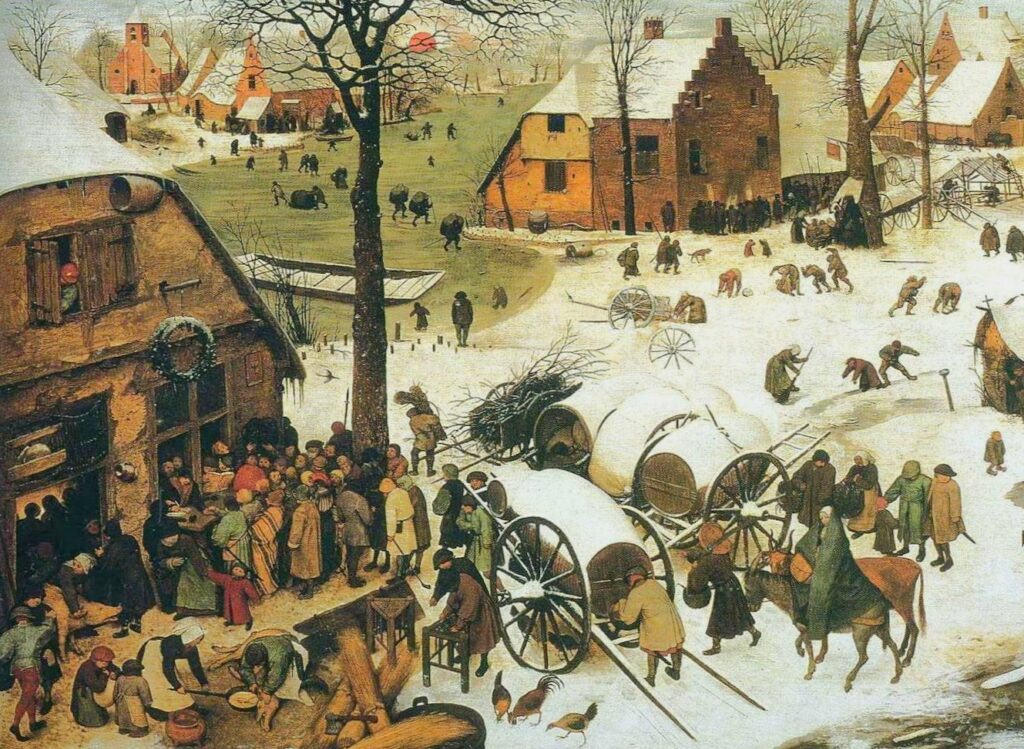
À droite : Pieter Bruegel l’Ancien, Le dénombrement à Bethléem, détail (KMSK Bruxelles).
S’agit-il ici de recenser les personnes ou de percevoir des impôts ?
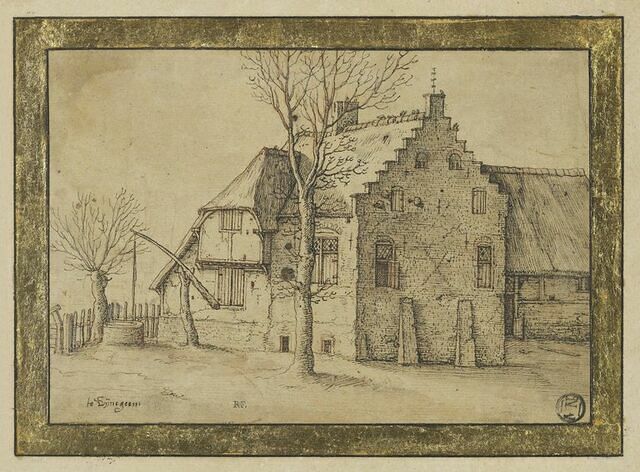
Ce n’est qu’en 2004, lorsqu’un historien de Wijnegem découvrit que l’auberge De Swaen figurait au centre du tableau de Bruegel, Le dénombrement de Bethléem, que cela devint évident. Un bâtiment identique apparaît dans un dessin du Louvre, attribué à Pieter Bruegel l’Ancien (vers 1525-1569). Sous ce dessin, une inscription au crayon disant : « À Wijnegem ».
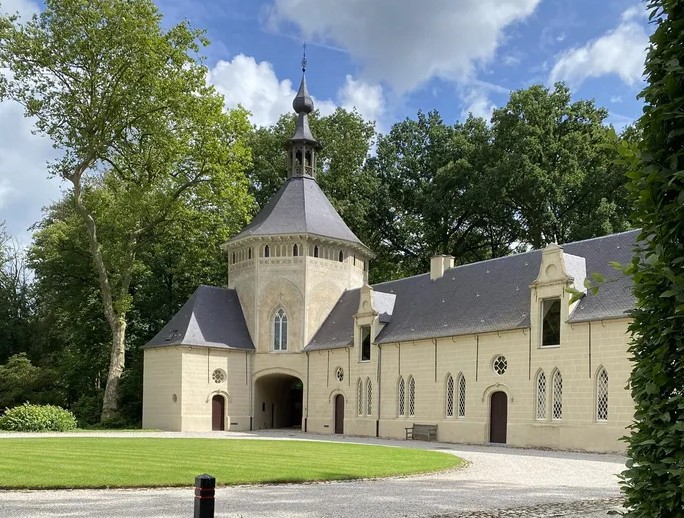
On pouvait déjà en déduire que le tableau lui-même avait probablement un lien avec Wijnegem. Une étape supplémentaire a été franchie grâce aux recherches de Tine Meganck, qui a travaillé pour le musée de Bruxelles en 2018.
Elle a établi le lien avec le seigneur de Wijnegem du XVIe siècle, Jan Vleminck (1527-1568) 1, sur le domaine duquel se trouvait l’auberge et qui en était donc le propriétaire.
Selon Meganck, c’est ce Jan Vleminck qui commanda le tableau à Brueghel pour immortaliser sa nomination comme seigneur de Wijnegem et son droit d’y percevoir les impôts. 2
À première vue, ce tableau ne traite que d’un sujet biblique, plus précisément d’un recensement sous l’empereur Auguste. Cependant, en y regardant de plus près, on découvre un « double fond ». Les personnes représentées ne se contentent pas de s’enregistrer ; elles s’acquittent également des taxes et impôts dus au nouveau seigneur de Wijnegem !
KV : Ils se rendent donc à Bethléem pour être recensés, mais leur voyage s’achève à Wijnegem, où ils doivent soudainement payer des impôts…
LS : Oui, c’est un peu surréaliste. Bruegel mélange en fait deux histoires : une biblique et une contemporaine. On pourrait le dire autrement, sur le ton de la plaisanterie : le tableau montre en réalité que Jésus-Christ n’est pas né à Bethléem, mais à Wijnegem !
Après avoir lu les travaux de Tine Meganck, j’ai commencé à réfléchir. Bruegel travaillait donc ici avec deux niveaux de signification : un sens superficiel et un sens plus profond. Je me suis demandé : s’il a entremêlé deux histoires dans Le dénombrement, n’a-t-il pas éventuellement appliqué le même procédé dans d’autres tableaux ?
Des recherches approfondies ont confirmé cette hypothèse. La découverte de cette régularité dans la façon de procéder fut une surprise et constitua une avancée majeure dans les études sur Bruegel, car de nombreux tableaux célèbres, restés jusque-là inexpliqués, trouvèrent soudain une explication simple et, de surcroît, cohérente.
KV : C’est donc de là que vient le nom « Le Code Bruegel », une sorte de clé que vous avez trouvée pour comprendre son œuvre ?
LS : Absolument, et la clé est en réalité très simple. Bruegel a établi des comparaisons : le narratif A rappelle le narratif B. Le paiement des impôts à Jan Vleminck lui évoquait le recensement sous Auguste, car dans les deux cas, les gens se rassemblaient pour se faire recenser. À partir de cette association, il a ainsi fusionné deux histoires en un seul tableau au sens ambigu.
KV : De cette manière, Bruegel pouvait donc commenter les événements politiques de son époque.
LS : Oui, car Le dénombrement de Bethléem n’est qu’un exemple anodin. Mais si l’on observe d’autres tableaux de Bruegel, on constate que cette technique du double sens est loin d’être innocente. En effet, le sens plus profond est généralement lié au conflit politique et religieux virulent de l’époque : la lutte des autorités catholiques contre la montée du protestantisme.
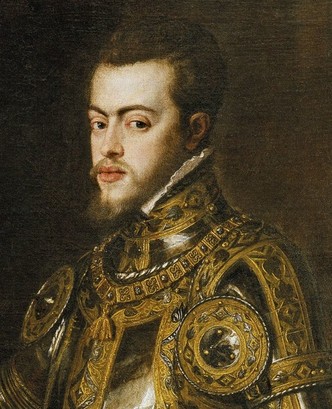
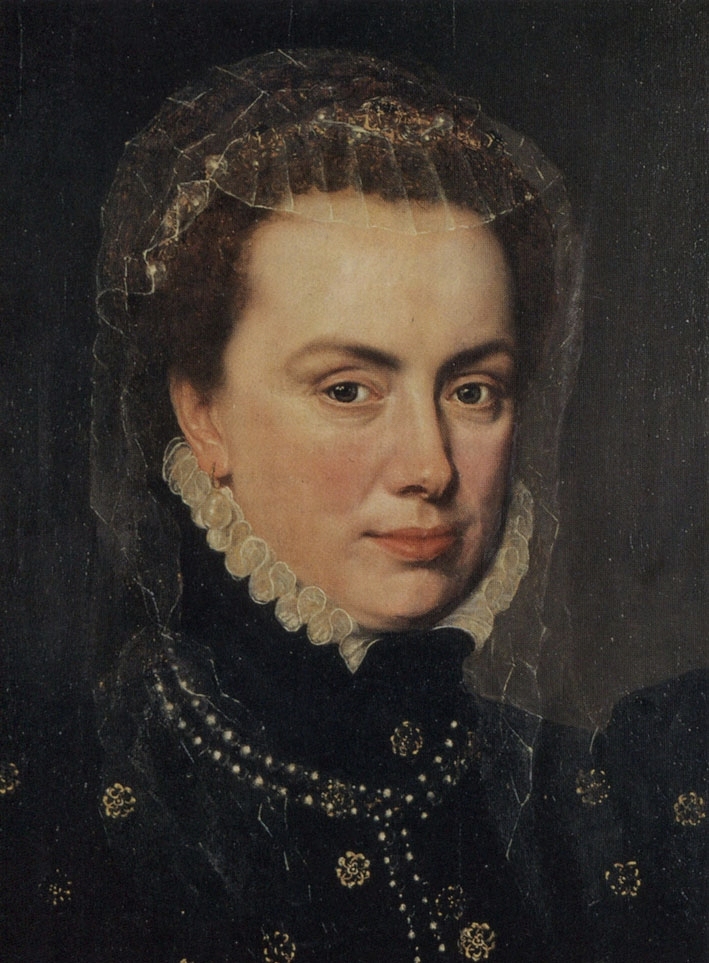
Au sommet de la hiérarchie se trouvait le roi Philippe II d’Espagne, et localement la régente des Pays-Bas , Marguerite de Parme , et son conseiller, le cardinal Granvelle , qui devait jouer le rôle de chien de garde pour s’assurer qu’elle suivait correctement les instructions du grand patron.
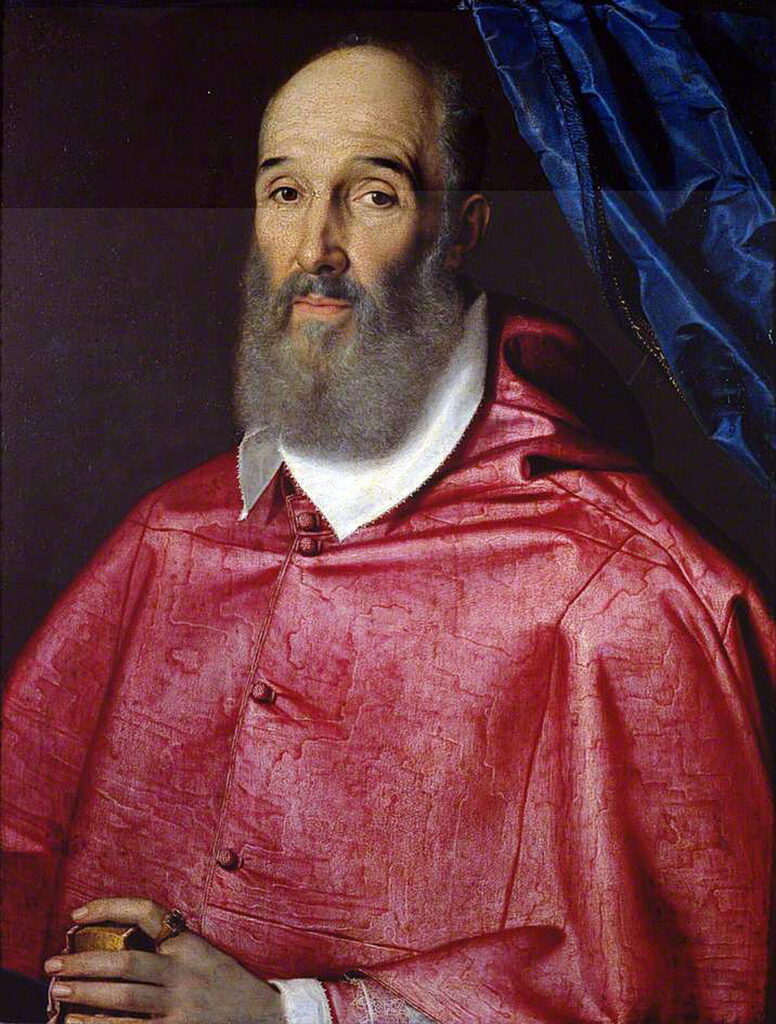
KV : Avec les autres membres du « conseil secret ». 3
LS : En effet. À cette époque, la démocratie et la liberté d’expression n’existaient pas, et la critique sociale était donc toujours dangereuse. Bruegel devait par conséquent dissimuler ses commentaires sous une épaisse couche de non-dits. Cela lui permettait, par exemple, d’adopter des positions pacifistes qui restaient imperceptibles à une lecture superficielle du récit biblique.
Le massacre des Innocents à Bethléem
La même année (1566) que Le dénombrement de Bethléem, il peignit Le Massacre des Innocents à Bethléem, dans lequel il dénonça clairement la violence des iconoclastes. 4
Il a dissimulé l’histoire principale, celle de la destruction d’œuvres d’art par des fanatiques religieux, sous le narratif officiel concernant des enfants innocents tués par les soldats du roi Hérode.
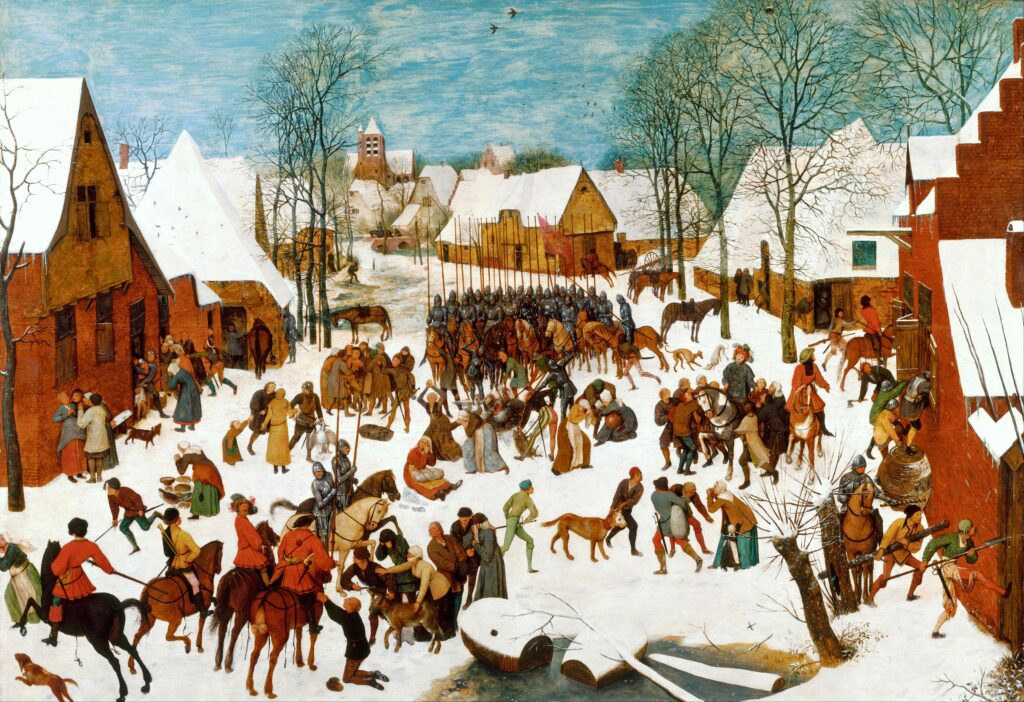
KV : Grâce à cette méthode, le peintre a lui aussi pu échapper aux poursuites.
LS : Oui, car il était lui-même fortement influencé par un « gourou » allemand aux convictions religieuses peu orthodoxes. 5
Il devait donc redoubler de prudence lorsqu’il s’en prenait aux dirigeants catholiques dans ses peintures, qui étaient parfois de véritables caricatures politiques, car il pouvait facilement être accusé de sympathiser avec l’hérésie. Ce qui n’était d’ailleurs pas sans raison.
Dulle Griet
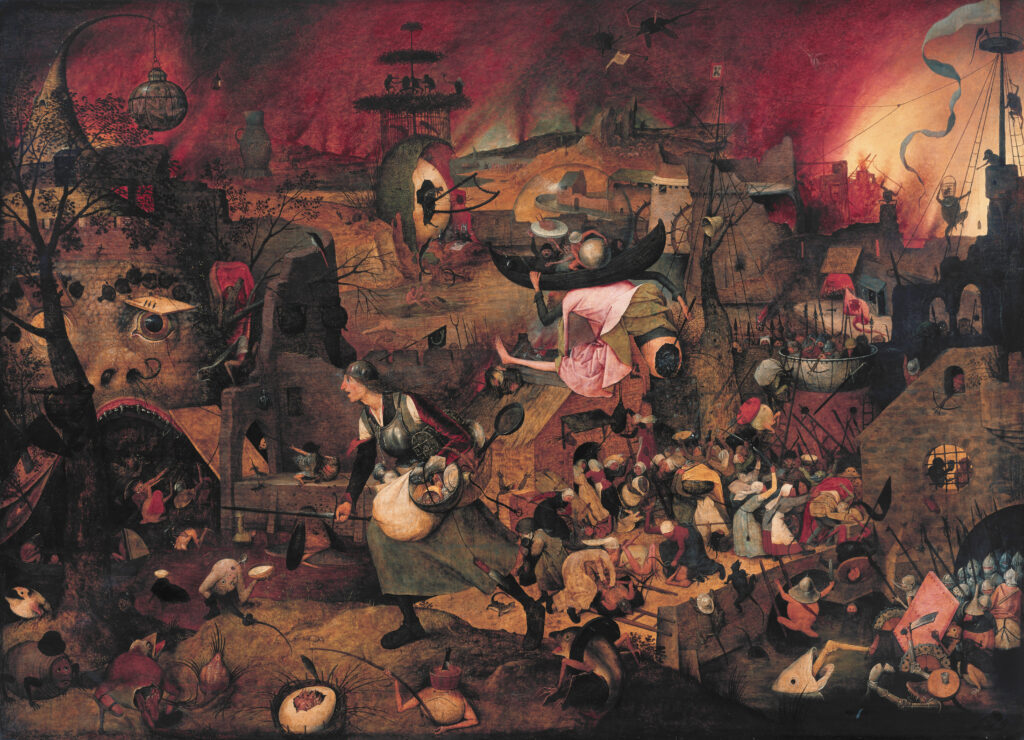
KV : La critique de cette politique est indéniablement présente dans De Dulle Griet (Egalement connue sous le nom « Margot la folle » — 1563, Musée Mayer van den Bergh, Anvers), sans doute le tableau le plus difficile et le moins compris jamais réalisé aux Pays-Bas. Votre ouvrage nous offre une interprétation nouvelle et surprenante de cette œuvre.
LS : Il m’a suffi d’appliquer à ce tableau la formule que j’avais découverte dans Le dénombrement. Mais cela a demandé des efforts, car les deux narratifs de Dulle Griet étaient inconnues. Mais ce n’était pas le cas à l’époque ! Tout le monde connaissait alors l’histoire de cette femme si audacieuse qu’elle aurait pu voler au nez du diable dans l’enfer. Ce personnage est issu d’une farce rhétorique aujourd’hui perdue. Reconstituer cette histoire s’est avéré plus complexe que de retrouver le contexte politique sous-jacent. Car j’ai vite compris que « Griet » n’était autre que le prénom abrégé et familier de Marguerite de Parme. Et l’identité de ce personnage central au manteau rouge rosé m’est également apparue rapidement : Granvelle, l’évêque, cardinal et conseiller de Marguerite de Parme.
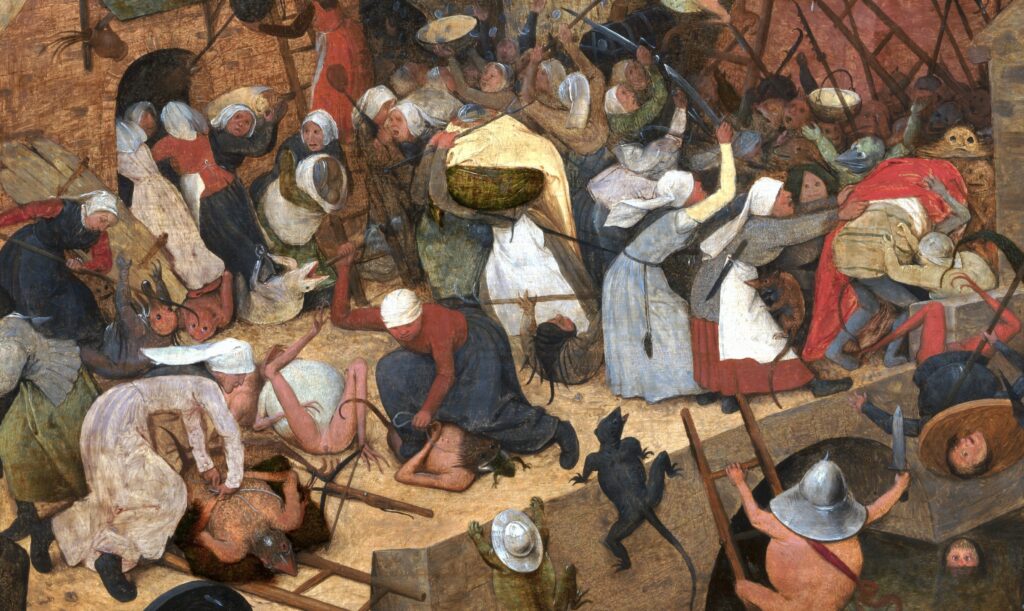
S’agit-il ici de femmes qui combattent des hommes, ou de catholiques qui luttent contre des hérétiques ?
KV : Pourquoi le cardinal, dans le tableau, défèque-t-il des pièces d’argent sur les femmes ?
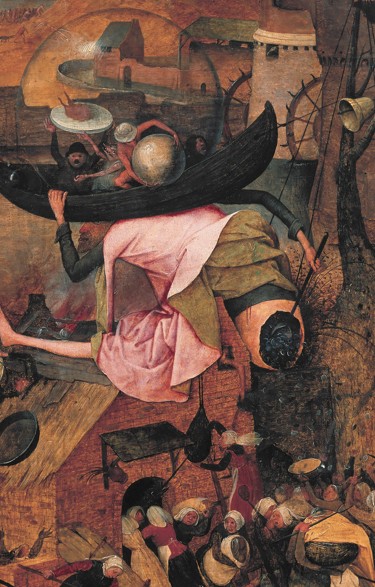
LS : Ce détail troublant fait référence au fait que Granvelle payait des gens pour dénoncer les protestants à l’Inquisition. Dans le narratif B, ce géant était censé lancer des pierres, mais comme pierres et argent étaient incompatibles, Bruegel dut opter pour la version « sans risque » avec les pierres, comme on le voit dans un dessin préparatoire… conservé aujourd’hui. Ce dessin, dans la collections du Kunstpalast de Düsseldorf, confirme implicitement l’exactitude du code découvert.
Il y a aussi ce panier rempli d’objets de valeur et de bijoux que Griet tient sous son bras. Cela fait référence au vol commis en enfer dans le narratif B, mais aussi à la confiscation des biens des hérétiques condamnés dans le narratif A. Ces hérétiques furent dépouillés de leurs biens avant d’être envoyés au bûcher. Et ce bûcher, c’est bien sûr l’enfer, où Griet les précipite à la pointe de son épée.
On peut donc interpréter tous les détails du tableau de deux manières. De même, on peut distinguer les deux récits : d’une part, la lutte entre hommes paresseux et femmes en colère, et d’autre part, la lutte entre « mauvais » hérétiques et « bons » catholiques. Tout est ambigu. Un magnifique puzzle !
KV : Vous écrivez dans votre introduction que l’idée de Bruegel comme commentateur politique n’est pas nouvelle, mais que cette vision du peintre n’est certainement pas universellement acceptée.
LS : En Belgique, les « négationnistes » restent très influents, comme j’ai pu le constater personnellement. Par exemple, les articles portant sur les interprétations politiques de Bruegel sont rejetés sous toutes sortes de prétextes. À l’étranger, en revanche, la question de la présence de messages politiques dans l’œuvre de Bruegel a fait l’objet de recherches depuis un certain temps. Cependant, ces recherches se sont toujours limitées à une, deux, voire trois toiles au maximum, et n’ont jamais abouti à des résultats convaincants.
À Maastricht, par exemple, une exposition intitulée « L’art comme résistance cachée ? » 6 –avec un point d’interrogation– s’est tenue en 2021. Elle portait sur le tableau « Le Chemin de Croix », mais le point d’interrogation et le doute persistaient. Des historiens de l’art en Allemagne et aux États-Unis se penchent également sur cette question depuis un certain temps, aboutissant invariablement à des suppositions vagues.
À ma grande surprise, personne n’avait jamais entrepris de recherche systématique de liens entre les tableaux de Bruegel et l’actualité de son époque. J’ai donc classé chronologiquement non pas deux ou trois, mais l’ensemble des peintures allégoriques, puis je les ai confrontées aux événements des années 1560 tels que relatés dans les chroniques, les lettres et les ouvrages historiques. Ces recherches ont confirmé, grâce à de nombreux indices, que Pieter Bruegel l’Ancien a suivi de près le conflit politico-religieux de son temps dans au moins quinze tableaux, jusqu’aux premières batailles de la guerre de Quatre-Vingts Ans (1568-1648) incluses.
Mon livre ne parle donc pas seulement d’art, mais aussi d’histoire, et surtout du lien entre les deux. Bruegel a peint l’histoire !
KV : Merci encore pour cet ouvrage passionnant, qui représente à mon avis une étape importante vers une meilleure compréhension de Bruegel et de notre histoire culturelle. (Message au spectateur 🙂 Alors, achetez ce livre, et surtout : lisez-le !
NOTES:
- La famille Vleminck s’installa à Anvers, où elle joua un rôle important dans le commerce international. Jan Vleminck épousa Isabella Schetz le 21 juillet 1561, fille du banquier Gaspar Schetz (1513-1580). Avec Balthazar et Melchior, Gaspar était l’un des trois fils d’Erasmus Schetz, banquier anversois de l’empereur Charles Quint. Mais Erasmus Schetz était également un ami et protecteur financier de l’humaniste Erasme de Rotterdam. Pour sa part, Melchior Schetz était prince de la chambre rhétorique anversoise De Violieren et, à ce titre, avec le maire d’Anvers Anthonis Van Straelen, une figure clé de l’organisation du glorieux Landjuweel d’Anvers de 1561. ↩︎
- Tine Luk Meganck, « Dénombrement à Bethléem. Hiver d’un âge d’or » dans : Scènes d’hiver de Bruegel. Editions Historiens et historiens de l’art en dialogue, Tine Luk Meganck et Sabine van Sprang, 2018, pp. 85-127. ↩︎
- A l’époque de Bruegel, Charles de Berlaymont (1510-1578), Antoine Perrenot de Granvelle (1517-1582) et Viglius van Aytta (1507-1577) étaient les trois figures principales du Conseil privé (consulta), établi par l’empereur Charles Quint. ↩︎
- L’iconoclasme fut une destruction à grande échelle de statues de saints et d’autres objets sur des sites religieux catholiques des Pays-Bas, qui eut lieu en 1566. ↩︎
- Il s’agit du mystique allemand Hendrik Niclaes (1501-1580), fondateur en 1539 de la Familia Caritatis (« Maison de la Charité »), un groupe quasi secret qui exerçait une grande influence auprès des intellectuels, des marchands et des artistes. Niclaes prônait une expérience individuelle avec Dieu et croyait à l’harmonisation des différentes opinions à un niveau plus profond. Il s’agissait d’une attitude contemplative et tolérante face à la vie, qui semblait généralement réservée aux personnes instruites. Un philosophe comme Socrate, qui relativisait toute autorité et tout savoir profane, jouissait d’une grande popularité dans ces milieux. Associés à la Maison de la Charité (sans nécessairement en être membre) : les imprimeurs Christoffel Plantijn, John Gailliart, les humanistes Abraham Ortelius, Justus Lipsius, Andreas Masius, Goropius Becanus, Benito Arias Montano, les poètes Peeter Heyns, Jan van der Noot, Lucas d’Heere, les peintres Pieter Bruegel l’Ancien, Filips Galle, Joris Hoefnagel, le théologien Hubert Duifhuis, l’ écrivain Dirck Volkertsz. Coornhert, les « familistes » Daniel van Bombergen, Emanuel van Meteren, Johan Radermacher et les marchands anversois Marcus Perez et Ferdinando Ximines. ↩︎
- Musée Bonnefanten, Maastricht. Catalogue : Bruegel et ses contemporains, L’art comme résistance cachée ?, Lars Hendrikman et Dorien Tamis, Editions Waanders, 2021. ↩︎
Leo Spaepen deciphers Bruegel’s code
On Saturday, July 11, Karel Vereycken spoke with Leo Spaepen, classicist and retired art history teacher, author of the book De Bruegel Code. Pieter Bruegel the Elder, political commentator and pacifist. (In Dutch, published by MER Books, 2025, ISBN 9789493410732, €39.90).
Karel Vereycken contributed with some footnotes.
Interview: « Bruegel painted history! »
Karel Vereycken: Dear Leo, you have written a wonderful book: The Bruegel Code. We are standing here at a historic location in the center of Wijnegem: the old inn De Swaen, which is depicted in its former shape in a painting by Bruegel, The Census at Bethlehem (1566, Royal Museums of Fine Arts, Brussels). Based on that discovery, after much study, you have developed a completely new perspective on Bruegel and his work. Can you tell us something about the origins of your book?
Leo Spaepen: That is a long history, going back to my childhood years. After all, I have always had a sentimental connection to this little building, because I grew up in the neighborhood. Moreover, as a young municipal councilor, I fought to save this piece of heritage from demolition. But back then, I had no idea that it had anything to do with Bruegel.
Right: Pieter Bruegel the Elder, The Census at Bethlehem , detail (KMSK Brussels).
Are people being counted here or taxes collected?
This only became clear in 2004, when a historian from Wijnegem discovered that the inn De Swaen stands in the center of Bruegel’s painting The Census at Bethlehem. An identical building appears in a drawing from the Louvre, which was attributed to Pieter Bruegel the Elder (circa 1525-1569). Below that sketch, written in pencil, one can read: ‘At Wijnegem.’
From that, we could already deduce that the painting itself might also have had something to do with Wijnegem. A further step came with the research by Tine Meganck, who worked for the Brussels museum in 2018.
She established the connection with the sixteenth-century lord of Wijnegem, Jan Vleminck (1527-1568)1 , on whose domain the inn stood and who was therefore the owner thereof.
According to Meganck, it was this Jan Vleminck who commissioned the painting from Breugel to immortalize his appointment as Lord of Wijnegem and his right to collect taxes there.2
At first glance, that painting deals with only a Biblical subject, specifically a census during the time of Emperor Augustus. But if we look a little closer, we see the « double bottom. » The people in the painting are not only registering themselves, but they are also paying dues and taxes owed to the new lord of Wijnegem!
KV: So they go to Bethlehem to be counted, but their journey ends in Wijnegem, where they suddenly have to pay taxes…
LS: Yes, it is a bit surreal. Bruegel actually mixes two stories together here: a biblical one and a contemporary one. We could put it differently as a joke: the painting actually shows that Jesus Christ was not born in Bethlehem, but in Wijnegem in Belgium!
After reading the work of Tine Meganck, I started thinking about this way of composing. So Bruegel was working with two layers of meaning here: a superficial and a deeper meaning. I wondered: if he blended two stories in The Census, did he perhaps not apply the same process in other paintings as well?
Thorough research revealed that this was indeed the case. The discovery of that consistent pattern was a surprise and represented a major breakthrough in Bruegel studies, as many well-known paintings that had never been properly understood suddenly received a simple and, moreover, coherent explanation.
KV: So that’s where the name ‘The Bruegel Code’ comes from, a kind of key you found to understand his work?
LS: Certainly, and that key is actually very simple. Bruegel made comparisons: narrative A is reminiscent of narrative B. The payment of taxes to Jan Vleminck reminded him of the census in the time of Augustus, because in both cases people flocked somewhere to have themselves registered. Based on this associative connection, he thus made two stories into one painting with an ambiguous meaning.
KV: In that way, Bruegel could therefore actually comment on the political events of his time.
LS: Yes, and The Census at Bethlehem is merely an innocent example. But if we look at other paintings by Bruegel, we see that this technique of the double meaning is not so innocent. After all, the deeper layer of meaning usually has to do with the bitter political and religious conflict of that time: the struggle of the Catholic rulers against the rising Protestantism.
Those in power were King Philip II of Spain at the top, and locally the Regent of the Netherlands, Margaret of Parma, and her advisor Cardinal Granvelle, who had to act as a watchdog to ensure that she properly followed the instructions of the big boss.
Philip II of Spain
KV: Together with the other members of the ‘Secret Council.’3
LS: Indeed. There was no such thing as democracy or freedom of speech back then, so social criticism was always dangerous. Bruegel therefore had to hide his commentaries under a thick outer layer. This allowed him, for example, to adopt pacifist positions that could not be seen if one looked only superficially at the biblical story.
The Massacre of the Innocents in Bethlehem
In the same year as The Census at Bethlehem (1566), he painted The Massacre of the Innocents at Bethlehem, in which he clearly spoke out against the violence of the iconoclasts.4
He hid the A-narrative, about the destruction of works of art by religious fanatics, under the B-narrative about innocent children who were killed by the soldiers of King Herod.
Is this a brutal massacre or grievous vandalism?
KV: Thanks to that method, the painter was also able to escape prosecution himself.
LS: Yes, because he himself was strongly influenced by a German « guru » with unorthodox religious views.5 He therefore had to be doubly careful when he targeted the Catholic rulers in his paintings, which were sometimes genuine political cartoons, for he could easily be accused of sympathizing with heresy. Not without reason, by the way.
Dulle Griet
KV: Criticism of the ruling elite is certainly present in De Dulle Griet (also known as Mad Meg —1563, Museum Mayer van den Bergh, Antwerp), perhaps the most difficult and least understood painting ever created in the Low Countries. Your book provides us with a new and surprising interpretation of this work.
LS: I only had to apply the formula I discovered in The Census to that painting. But that took some effort, because both the A and B narratives of Dulle Griet were unknown. But not in those days! Back then, everyone knew the story of the woman who was so audacious that she dared to commit a robbery under the nose of the devil in hell. That character comes from a rhetorician’s farce that has now been lost. Reconstructing that story was a greater challenge than finding the political story behind it. For I soon realized that ‘Griet’ is nothing other than the shortened, popular first name of Margaret of Parma. And who that central figure with his rose-red cloak is also quickly became clear to me: Granvelle, the bishop, cardinal, and advisor to Margaret of Parma.
Are women fighting men here, or Catholics fighting heretics?
KV: Why is the cardinal in the painting scattering money from his rear-end over the women?
LS: That dangerous detail refers to the fact that Granvelle paid citizens to denounce the Protestants to the Inquisition. In narrative B, that giant was normally supposed to throw stones, but because stones and money didn’t go together, Bruegel had to choose and used the ‘safe’ version with the stones in a model drawing that he for all security preserved in his workshop. The drawing, which is now part of the collection of the Kunstpalast in Düsseldorf, implicitly confirms the correctness of the discovered code of interpretation.
There is also that basket of valuable household goods and jewels that Griet holds under her arm. This refers to the robbery committed in hell in narrative B, but also to the confiscation of the possessions of the condemned heretics in narrative A. Those heretics were first stripped of their goods before being sent to the stake. And that stake is, of course, hell, into which Griet drives them with her sword.
We can therefore interpret all the details of the painting in two ways. In the same way, we can separate the two stories: on the one hand, the struggle between lazy men and angry women, and on the other, the struggle between ‘bad’ heretics and ‘good’ Catholics. Everything is ambiguous. A magnificent puzzle!
KV: You write in your introduction that Bruegel as a political commentator and a pacifist is not new, but that this view of the painter is certainly not universally accepted.
LS: In Belgium, the ‘deniers’ are still very dominant, as I have experienced firsthand. For instance, articles on political interpretations of Bruegel are rejected under all sorts of pretexts. Abroad, however, the question of whether there are political messages in Bruegel’s work has actually been investigated for quite some time. However, this always concerned only one, two, or at most three paintings, and never yielded convincing results.
In Maastricht, for example, an exhibition ran in 2021 titled: Art as Hidden Resistance?6 With a Question Mark. It concerned the painting The Procession to Calvary, but the question mark and the doubt could not be removed. Art historians in Germany and America have also been engaged in this research for some time, consistently resulting in vague guessing.
To my great surprise, however, no one had ever systematically searched for connections between Bruegel’s paintings and the current events of the time. I therefore arranged not two or three, but all the allegorical paintings chronologically myself, and then confronted them with the events of the 1560s as described in chronicles, letters, and history books. That research confirmed, based on numerous clues, that Pieter Bruegel the Elder closely followed the political-religious conflict of his time in at least fifteen paintings, up to and including the first battles of the Eighty Years’ War (1568-1648).
So my book is not just about art, but also about history, and especially about the connection between the two. Bruegel painted history!
KV: Thanks again for this fascinating work, which I believe is an important step towards a better understanding of Bruegel and our cultural history.
(Message to the viewer:) So buy this book, and above all: read it!
FOOTNOTES:
- The Vleminck family settled in Antwerp, where she played an important role in international trade. Jan Vleminck married Isabella Schetz on July 21, 1561, daughter of banker Gaspar Schetz (1513-1580). Together with Balthazar and Melchior, Gaspar was one of the three sons of Emperor Charles’s Antwerp banker Erasmus Schetz, who was also a friend and financier of Erasmus. Melchior Schetz was the Prince of the Antwerp rhetoric chamber De Violieren and, in that capacity, together with external mayor Anthonis Van Straelen, a key figure in the organization of the glorious Antwerp Landjuweel of 1561. ↩︎
- Tine Luk Meganck, ‘Census at Bethlehem. Winter of a Golden Age’ in: Bruegel’s Winter Scenes. Historians and Art Historians in Dialogue, eds. Tine Luk Meganck and Sabine van Sprang, 2018, pp. 85-127. ↩︎
- Charles de Berlaymont (1510-1578), Antoine Perrenot de Granvelle (1517-1582) and Viglius van Aytta (1507-1577) were the three leading figures of the Privy Council (consulta), established by Emperor Charles V, in Bruegel’s time. ↩︎
- The Iconoclasm was a large-scale destruction of statues of saints and other objects at Catholic religious sites in the Low Countries, which took place in 1566. ↩︎
- More precise, the German mystic Hendrik Niclaes (1501–1580), founder in 1539 of the Familia Caritatis (‘House of Love’), an almost secret group that held great appeal for intellectuals, merchants, and artists. Niclaes called for an individual sense of God and believed that different views could be brought into harmony on a deeper level. It was a contemplative, tolerant attitude to life that largely appeared to be reserved for educated people. A philosopher like Socrates, who relativized all authority and worldly knowledge, enjoyed great popularity in these circles. Associated with the House of Love (without necessarily being a member thereof): printers Christoffel Plantijn, John Gailliart, the humanists Abraham Ortelius, Justus Lipsius, Andreas Masius, Goropius Becanus, Benito Arias Montano, the poets Peeter Heyns, Jan van der Noot, Lucas d’Heere, the painters Pieter Bruegel the Elder, Filips Galle, Joris Hoefnagel, the theologian Hubert Duifhuis, the writer Dirck Volkertsz. Coornhert, ‘familists’ Daniel van Bombergen, Emanuel van Meteren, Johan Radermacher and the Antwerp merchants Marcus Perez and Ferdinando Ximines. ↩︎
- Bonnefanten Museum, Maastricht. Catalogue: Bruegel and Contemporaries, Art as Hidden Resistance?, Lars Hendrikman and Dorien Tamis, Waanders Publishers, 2021. ↩︎
Leo Spaepen oncijfert de code van Bruegel
Op zaterdag 11 juli sprak Karel Vereycken met Leo Spaepen, classicus en voormalig docent kunstgeschiedenis, auteur van het boek De Bruegel Code. Pieter Bruegel de Oude, politiek commentator en pacifist. (Uitgeverij MER Books, 2025, ISBN 9789493410732, 39,90 €).
Met enkele voetnoten van Karel Vereycken.
Interview: « Bruegel schilderde geschiedenis ! »
Karel Vereycken: Beste Leo, je hebt een prachtig boek geschreven: De Bruegel Code. We staan hier op een historische locatie in het centrum van Wijnegem: de oude herberg De Swaen, die in zijn vroegere vorm is afgebeeld op een schilderij van Bruegel, De volkstelling te Bethlehem (1566, Koninklijke Musea voor Schone Kunsten, Brussel). Vanuit die vondst heb je na veel studie een heel nieuwe kijk ontwikkeld op Bruegel en zijn werk. Kan je iets zeggen over het ontstaan van je boek?
Leo Spaepen: Dat is een lange geschiedenis, die al teruggaat tot mijn jeugdjaren. Ik heb immers altijd al een sentimentele band gehad met dit gebouwtje, want ik ben in de buurt opgegroeid. Bovendien heb ik er als jong gemeenteraadslid mee voor gestreden om dit stuk erfgoed voor afbraak te behoeden. Maar toen wist ik nog helemaal niet dat het iets met Bruegel te maken had.
Rechts: Pieter Bruegel de Oude, De volkstelling te Bethlehem, detail (KMSK Brussel).
Worden hier mensen geteld of belastingen ontvangen?
Dat is pas duidelijk geworden in 2004, toen een Wijnegemse historicus ontdekte dat de herberg De Swaen centraal staat op het schilderij van Bruegel De volkstelling te Bethlehem. Identiek hetzelfde gebouw staat namelijk op een tekening uit het Louvre, die werd toegeschreven aan Pieter Bruegel de Oude (circa 1525-1569). Onder die schets is met potlood geschreven: ‘Te Wijnegem’.
Daaruit konden we al afleiden dat ook het schilderij zelf misschien wel iets met Wijnegem heeft te maken gehad. Een verdere stap kwam er met het onderzoek van Tine Meganck, die in 2018 werkte voor het museum van Brussel.
Zij heeft het verband gelegd met de zestiende-eeuwse heer van Wijnegem Jan Vleminck (1527-1568) 1, op wiens domein de herberg stond en die er dus de eigenaar van was.
Volgens Meganck was het deze Jan Vleminck die bij Breugel het schilderij heeft besteld, om er zijn aanstelling tot heer van Wijnegem mee te vereeuwigen, en zijn recht om daar belastingen te innen.2
Op het eerste gezicht behandelt dat schilderij alleen maar een Bijbels onderwerp, met name een volkstelling ten tijde van keizer Augustus. Maar als we een beetje beter kijken, dan zien we de dubbele bodem. De mensen op het schilderij laten zich niet alleen registreren, maar ze betalen ook cijnzen en belastingen die ze verschuldigd zijn aan de nieuwe heer van Wijnegem!
KV: Ze gaan dus naar Bethlehem om zich te laten tellen, maar hun reis eindigt in Wijnegem, waar ze plotseling belasting moeten betalen…
LS: Ja, het is een beetje surrealistisch. Bruegel gooit hier eigenlijk twee verhalen door elkaar: een Bijbels en een eigentijds. We zouden het met een grapje nog anders kunnen zeggen: uit het schilderij blijkt eigenlijk dat Jezus Christus niet in Bethlehem is geboren, maar in Wijnegem!
Na het werk van Tine Meganck gelezen te hebben, begon ik daarover na te denken. Bruegel werkte hier dus met twee betekenislagen: een oppervlakkige en een diepere betekenis. Ik vroeg me af: als hij in De volkstelling twee verhalen met elkaar heeft vermengd, heeft hij hetzelfde procedé dan misschien ook niet in andere schilderijen toegepast?
Grondig onderzoek bracht aan het licht dat dit inderdaad het geval was. De ontdekking van dat vaste patroon was een verrassing en betekende een grote doorbraak in de Bruegelstudie, want vele bekende schilderijen die nooit goed werden begrepen, kregen nu plots een simpele en bovendien samenhangende verklaring.
KV: dus vandaar de naam ‘De Bruegel Code’, een soort sleutel die je hebt gevonden om zijn werk te begrijpen?
LS: Zeker, en die sleutel is eigenlijk heel eenvoudig. Bruegel maakte vergelijkingen: verhaal A doet denken aan verhaal B. De betaling van belastingen aan Jan Vleminck deed hem denken aan de telling van de bevolking in de tijd van Augustus, want in de twee gevallen stroomden de mensen ergens toe om zich laten opschrijven. Op basis van dit associatieve verband maakte hij dus van twee verhalen één schilderij met een dubbelzinnige betekenis.
KV: Op die manier kon Bruegel dus eigenlijk commentaar geven op de politieke gebeurtenissen van zijn tijd.
LS: Ja, want De volkstelling te Bethlehem is slechts een onschuldig voorbeeld. Maar als we andere schilderijen van Bruegel bekijken, dan zien we dat die techniek van de dubbele bodem niet zo onschuldig is. De diepere betekenislaag heeft immers meestal te maken met het bittere politieke en religieuze conflict van die tijd: de strijd van de katholieke machthebbers tegen het opkomende protestantisme.
Die machthebbers, dat waren koning Filips II van Spanje bovenaan, en ter plaatse de landvoogdes van de Nederlanden Margaretha van Parma, en haar adviseur kardinaal Granvelle, die er als waakhond moest op letten dat zij de instructies van de grote baas goed opvolgde.
KV: Samen met de andere leden van de ‘geheime raad’.3
LS: Inderdaad. Van democratie en van vrije meningsuiting was toen nog geen sprake, en maatschappijkritiek was dus altijd gevaarlijk. Bruegel moest zijn commentaren daarom verstoppen onder een dikke bovenlaag. Zo kon hij bijvoorbeeld pacifistische standpunten innemen, die men niet kon zien als men oppervlakkig enkel naar het Bijbelverhaal keek.
De kindermoord te Bethlehem
In hetzelfde jaar als De volkstelling te Bethlehem (1566) schilderde hij De kindermoord te Bethlehem, ook bekend als De moord op de onnozele kinderen, waarin hij zich duidelijk uitsprak tegen het geweld van de beeldenstormers. 4
Het A-verhaal, over het vernielen van kunstwerken door godsdienstfanaten, verstopte hij onder het B-verhaal over onschuldige kinderen die werden gedood door de soldaten van koning Herodes.
Is dit een brutale moordpartij of zwaar vandalisme?
KV: Dankzij die methode kon de schilder ook zelf ontsnappen aan vervolging.
LS: Ja, want hij was zelf sterk beïnvloed door een Duitse ‘goeroe’ met onorthodoxe religieuze opvattingen. 5 Hij moest dus dubbel voorzichtig zijn wanneer hij in zijn schilderijen, die soms echte politieke cartoons waren, de katholieke machthebbers op de korrel nam, want daarmee kon hij gemakkelijk worden beschuldigd van sympathie voor de ketterij. Niet onterecht trouwens.
De Dulle Griet
KV: Kritiek op het beleid zit zeker in De Dulle Griet (1563, Museum Mayer van den Bergh, Antwerpen), misschien wel het moeilijkste en het minst begrepen schilderij dat ooit in de Lage Landen is gemaakt. Je boek levert ons een nieuwe en verrassende interpretatie van dit werk.
LS: Ik hoefde enkel de formule, die ik ontdekt heb in De volkstelling, toe te passen op dat schilderij. Maar dat kostte wel wat moeite, want zowel het A- als het B-verhaal van De Dulle Griet waren onbekend. Maar niet in die tijd! Toen kende iedereen het verhaal over de vrouw die zo vermetel was dat zij een roof durfde te plegen voor de hel. Die figuur komt uit een rederijkersklucht, die nu is verloren gegaan. Dat verhaal reconstrueren was een grotere uitdaging dan het vinden van het politieke verhaal dat erachter zit. Want ik kwam al snel tot het besef dat ‘Griet’ niets anders is dan de verkorte, volkse voornaam van Margaretha van Parma. En wie die centrale figuur is met zijn rozerode mantel, was voor mij ook vlug duidelijk: Granvelle, de bisschop, kardinaal en raadgever van Margaretha van Parma.
Vechten hier vrouwen tegen mannen of katholieken tegen ketters?
KV: Waarom strooit de kardinaal, in het schilderij, geld uit zijn achterwerk uit over de vrouwen?
LS: Dat gevaarlijke detail verwijst naar het feit dat Granvelle burgers betaalde om de protestanten te verklikken aan de inquisitie. In het B-verhaal had die reus normaal met stenen moeten gooien, maar omdat stenen en geld niet samengingen, moest Bruegel kiezen en heeft hij de ‘veilige’ versie met de stenen gebruikt in een modeltekening, die hij voor alle zekerheid zorgvuldig in zijn atelier bewaarde. De tekening, die zich vandaag in het Kunstpalast van Düsseldorf bevindt, bevestigt impliciet de juistheid van de gevonden code.
Zo is er ook die mand met kostbare huisraad en juwelen, die Griet onder haar arm houdt. Die verwijst naar het plegen van een roof voor de hel in het B-verhaal, maar ook naar de inbeslagname van de bezittingen van de veroordeelde ketters in het A-verhaal. Die ketters werden eerst van hun goederen beroofd, vooraleer ze naar de brandstapel werden verwezen. En die brandstapel is dan natuurlijk de hel, waarin Griet hen met haar zwaard drijft.
Alle details van het schilderij kunnen we dus op twee manieren uitleggen. Zo kunnen we ook de twee verhalen uit elkaar halen: enerzijds de strijd tussen luie mannen en boze vrouwen, en anderzijds de strijd tussen ‘slechte’ ketters en ‘goede’ katholieken. Alles is dubbelzinnig. Een schitterende puzzel!
KV: Je schrijft in je inleiding dat Bruegel als politiek commentator niet nieuw is, maar dat die kijk op de schilder zeker niet algemeen wordt aanvaard.
LS: In België zijn de ‘negationisten’ nog heel dominant, zoals ik zelf heb kunnen ondervinden. Zo worden artikels over politieke interpretaties van Bruegel onder allerlei voorwendsels geweigerd. In het buitenland daarentegen is de vraag of er politieke boodschappen zitten in Bruegels werk wél al langer onderzocht. Het ging daarbij echter altijd maar over één, twee of hooguit drie schilderijen, en nooit leverde het overtuigende resultaten op.
In Maastricht liep bijvoorbeeld in 2021 een expositie met als titel: Kunst als verborgen verzet? 6 Met vraagteken. Het ging over het schilderij De kruisgang van Christus, maar het vraagteken en de twijfel kreeg men niet weg. Ook in Duitsland en in Amerika zijn kunsthistorici al langer met dat onderzoek bezig, steeds met vage vermoedens als resultaat.
Tot mijn grote verwondering had echter nog nooit iemand systematisch gezocht naar verbanden tussen Bruegels schilderijen en de actualiteit van toen. Zelf heb ik daarom niet twee of drie, maar alle allegorische schilderijen chronologisch geordend en dan geconfronteerd met de gebeurtenissen van de jaren 1560, zoals die beschreven zijn in kronieken, brieven en geschiedenisboeken. Dat onderzoek bevestigde, aan de hand van talrijke aanwijzingen, dat Pieter Bruegel de Oude in minstens een vijftiental schilderijen het politiek-religieuze conflict van zijn tijd op de voet volgde, tot en met de eerste veldslagen van de Tachtigjarige Oorlog (1568-1648).
Mijn boek gaat dus niet enkel over kunst, maar ook over geschiedenis, en vooral over het verband tussen beide. Bruegel schilderde geschiedenis!
KV: Nogmaals bedankt voor dit boeiende werk, dat volgens mij een belangrijke stap is naar een beter begrip van Bruegel en van onze cultuurgeschiedenis. (Bericht aan de kijker:) Koop dus dit boek, en vooral: lees het!
VOETNOTEN:
- De familie Vleminck vestigde zich in Antwerpen waar zij een belangrijke rol speelde in de internationale handel. Jan Vleminck huwde op 21 juli 1561 met Isabella Schetz, dochter van bankier Gaspar Schetz (1513-1580). Samen met Balthazar en Melchior, was Gaspar één van de drie zonen van Keizer Karels Antwerpse bankier Erasmus Schetz, ook een vriend en geldschieter van Erasmus. Melchior Schetz was de Prins van de antwerpse rederijkerskamer De Violieren en in die functie, samen met buitenburgemeester Anthonis Van Straelen, een hoofdfiguur voor de organisatie van het roemrijke Antwerpse Landjuweel van 1561. ↩︎
- Tine Luk Meganck, ‘Volkstelling te Bethlehem. Winter van een gouden tijdperk’ in: Bruegels wintertaferelen. Historici en kunsthistorici in dialoog, eds. Tine Luk Meganck en Sabine van Sprang, 2018, p. 85-127. ↩︎
- Charles de Berlaymont (1510-1578), Antoine Perrenot de Granvelle (1517-1582) et Viglius van Aytta (1507-1577) waren in de tijd van Bruegel de drie kopstukken van de Geheime raad (consulta), opgericht door Keizer Karel. ↩︎
- De Beeldenstorm was een vernieling op grote schaal van heiligenbeelden en andere objecten van katholieke religieuze plaatsen in de Lage Landen, die plaatsvond in 1566. ↩︎
- Met name, de Duitse mysticus Hendrik Niclaes (1501-1580), oprichter in 1539 van de Familia Caritatis (‘Huis der Liefde.’) een bijna geheime groep die een grote aantrekkingskracht had op intellectuelen, kooplieden en kunstenaars. Niclaes riep op tot een individueel godsbesef en dacht dat verschillende opvattingen op een dieper niveau tot harmonie gebracht konden worden. Het was een contemplatieve, tolerante levenshouding die veelal bleek voorbehouden aan ontwikkelde mensen. Een wijsgeer als Socrates, die alle gezag en wereldlijke kennis relativeerde, genoot grote populariteit in deze kringen. Worden in verband gebracht met het Huis der Liefde (zonder noodzakelijk lidmaatschap daarvan) : drukkers Christoffel Plantijn, John Gailliart, de humanisten Abraham Ortelius, Justus Lipsius, Andreas Masius, Goropius Becanus, Benito Arias Montano, de dichters Peeter Heyns, Jan van der Noot, Lucas d’Heere, de kunstschilders Pieter Bruegel de Oude, Filips Galle, Joris Hoefnagel, de theoloog Hubert Duifhuis, de schrijver Dirck Volkertsz. Coornhert, ‘familisten’ Daniel van Bombergen, Emanuel van Meteren, Johan Radermacher en de Antwerpse kooplieden Marcus Perez en Ferdinando Ximines. ↩︎
- Bonnefanten Museum, Maastricht. Catalogus: Bruegel en tijdgenoten, Kunst als verborgen verzet?, Lars Hendrikman et Dorien Tamis, Uitgeverij Waanders, 2021. ↩︎
Pieter Bruegel the Elder, political commentator and pacifist
Five centuries after his birth, the publication of new research seems (finally) to do justice to the great Flemish painter « Pieter Bruegel the Jolly » , known as the Elder (1525-1569).
Until now, it was all too common to hear him described as « an unclassifiable figure. » In 2024, art historian Mónica Ann Walker Vadillo did not hesitate to write in the History section of the newspaper Le Monde that, since Bruegel painted peasant feasts and weddings, art critics « came to regard him as an unrefined man and disdainfully nicknamed him ‘Bruegel the Peasant,' » while expressing surprise that so many « academics, humanists, and wealthy businessmen—who appreciated his work and collected his paintings » associated with him.
Fall of the Rebel Angels
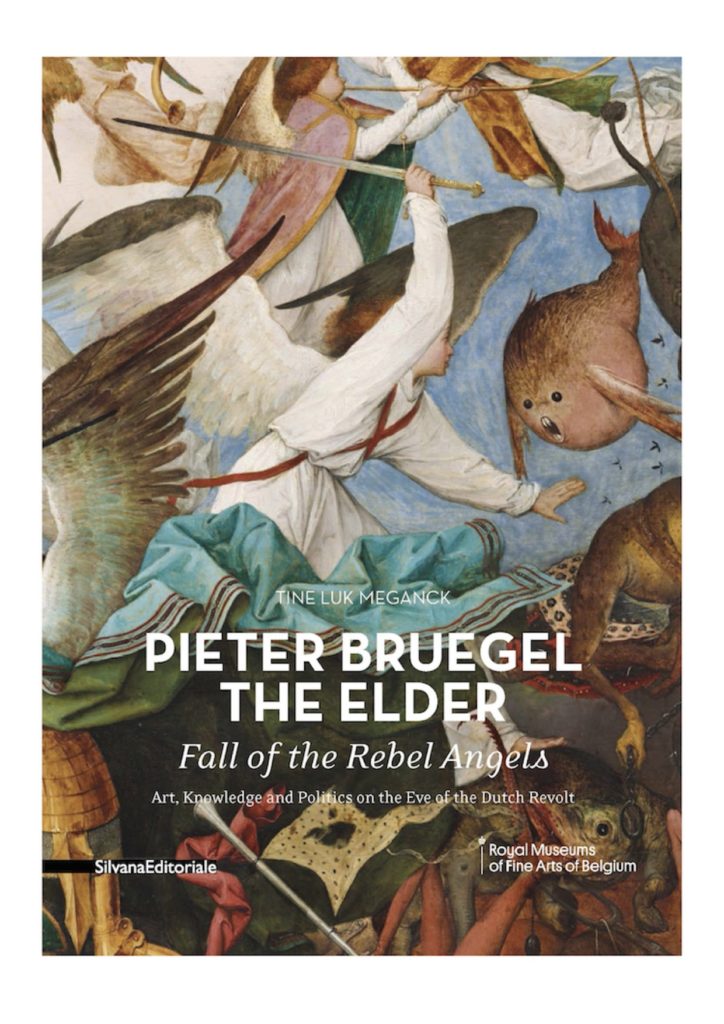
In 2014, Tine Luk Meganck ‘s book, « Pieter Bruegel the Elder. Fall of the Rebel Angels. Art, knowledge and Politics on the Eve of the Dutch Revolt », especially with the last sentence of her title, had nevertheless reopened the debate on the political dimension of his work.
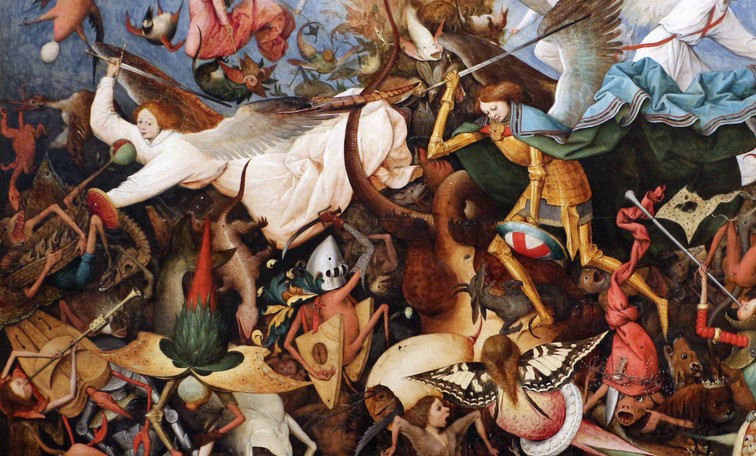
Meganck ventured a highly improbable hypothesis regarding the painting The Fall of the Rebel Angels (1562, Brussels Museum): the jealous angels, whom God punishes for conspiring against him, are supposed to represent the alliance of nobles, the middle classes, and the common people, led by William the Silent against the rule of the Spanish Empire. Consequently, the commissioner of the work, according to the expert, was most likely the famous Cardinal Antoine Perrenot de Granvelle, one of the advisors to the regent Margaret of Parma and a fervent supporter of the persecution of heretics.
We have documented in an article why this interpretation seems unacceptable to us, as Cardinal Granvelle, a member of the « secret government, » was universally hated by the humanists of the time for his blind zeal in endorsing all the crimes of his masters.
Furthermore, no tangible proof exists that he commissioned any work from Bruegel. Certainly, he owned some, but apart from a « Flight into Egypt » (1563), a work devoid of any controversy, and a « View of the Bay of Naples, » a beautiful study inspired by drawings made during Bruegel’s trip to Italy, Granvelle was far from being « one of the greatest collectors » of Bruegel’s works, as is often repeated.
Landjuweel
That being said, the important contribution of Meganck’s book, let’s acknowledge it, was the recognition of the decisive influence of the Chambers of Rhetoric and the Antwerp Landjuweel of 1561, for understanding Bruegel’s visual language.
My friend, the late American art critic Michael Frances Gibson, had mentioned this possibility to me during an interview this author conducted with him.
He discusses this in his book The Carrying of the Cross (Editions Noêsis, Paris 1996), which was used in 2011 for the quite innovative film « Bruegel, the Mill and the Cross ».
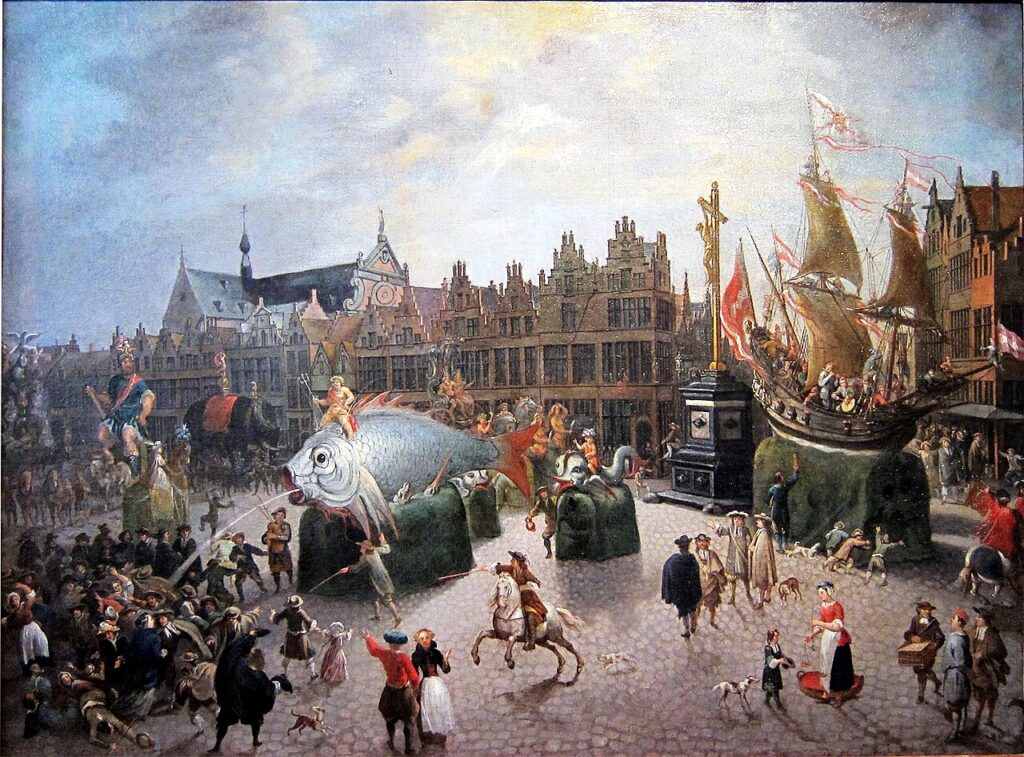
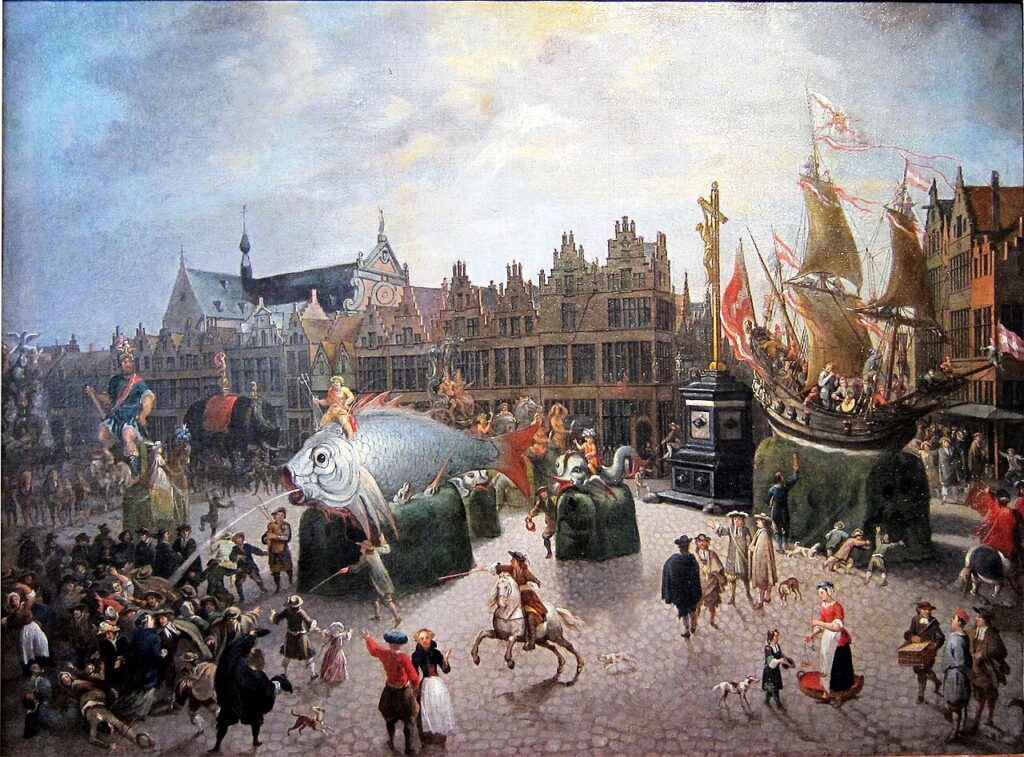
In August 1561, Antwerp, where Bruegel resided, hosted an exceptional celebration, the Landjuweel, or national competition of the Chambers of Rhetoric.
In practice, the Antwerp Chamber « De Violieren« , in charge of organizing a festival that cost the city one hundred thousand crowns, operated as the literary division of the Guild of Saint Luke, the corporation that brought together painters, engravers, illustrators, architects, sculptors, cartographers, goldsmiths and printers.
It was there that people read in Flemish as well as in Latin or French, Plato, Homer, Petrarch, Erasmus and Rabelais, both during private gatherings and often, in public.
The first Bible in French? Printed in Antwerp in 1535 by the French humanist Jacques Lefèvre d’Etaples (1450-1536), who published the first translations of the complete works of Nicholas of Cusa in Paris in 1514, three years before the publication, in the French capital, of the first edition of Erasmus‘s In Praise of Folly.
The Landjuweel of Antwerp stands historically as one of the most remarkable cultural renaissance events in European history. 2000 rhetoricians on horseback, from 10 cities, passed under 40 triumphal arches to the strident sounds of fifes, entering a city in full celebration. For a whole month, orators and poets, songwriters and actors competed without pausing for breath. Citizen’s were invited on every streetcorner to participate in polyphonic madrigals and chorusses. 5000 artists entertained close to a 100,000 viewers !
Bruegel had to follow them all the more since his dear friend Hans Frankaert (1520-1584), his friend and master Peeter Baltens (1527-1584), very well connected with the great local financiers who preferred commerce to war, as well as his first patron, the engraver Hieronymus Cock (1518-1570), were all involved in the organization of this event whose theme was peace and, two centuries before Kant and Schiller, this burning philosophical question: « What leads man most towards the arts? » This, then, was the bubbling cauldron of urban culture in which Bruegel was immersed from his beginnings.
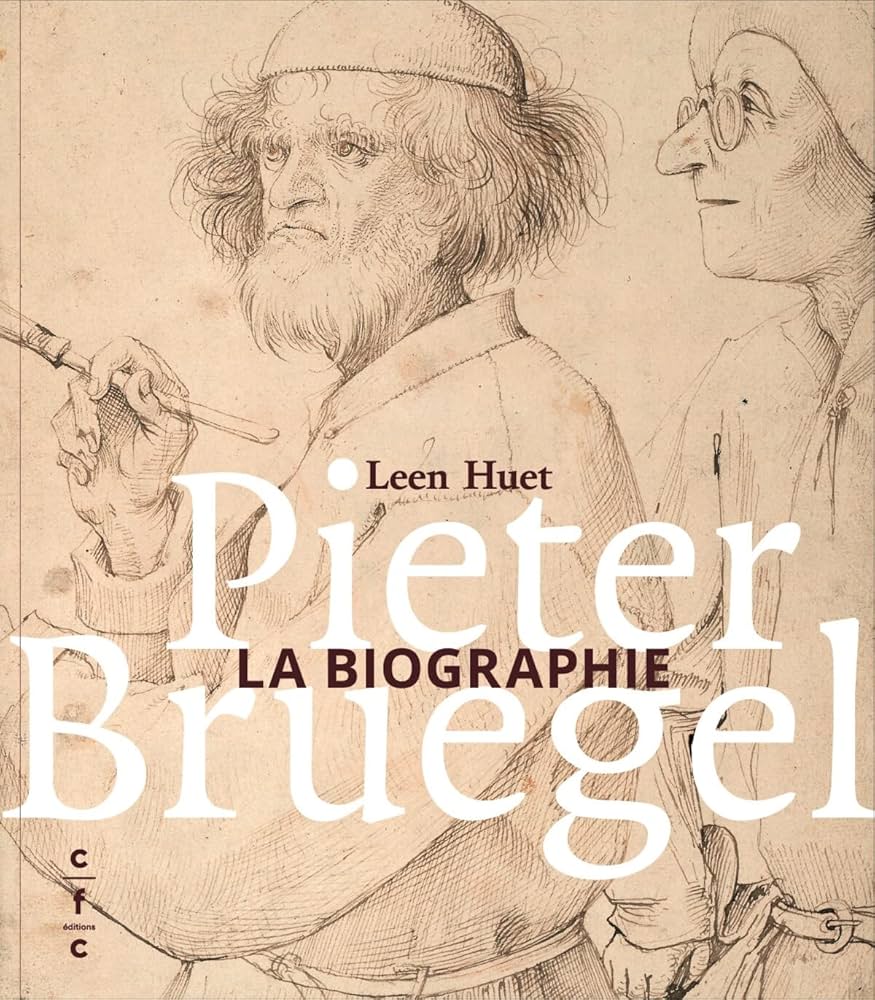
Moreover, as Belgian historian Leen Huet details in her sumptuous biography of the artist (first published in Dutch in 2016 by Polis, then in French by CFC in Brussels in 2021), when he crossed the Alps, Bruegel was probably accompanied by the painter Maarten de Vos (1532-1603) and the cartographer Abraham Ortelius (1527-1598), a close friend of Christophe Plantin, the head of the largest printing house in Antwerp, the team having thousands of addresses of collectors in connection with the printing house Les Quatre Vents of Jérôme Cock, in Antwerp.
The « Bruegel Code »
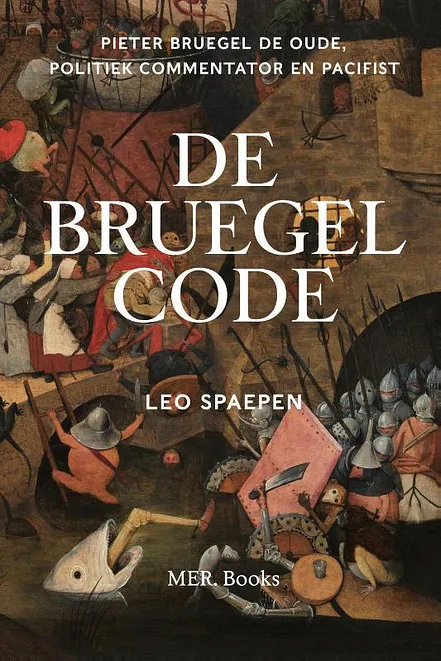
The image of Bruegel as a political commentator, deliberately obfuscating his message to thwart the regime’s Gestapo agents who were lying in wait for him, and embracing the Erasmian philosophy of the Landjuweel to defend peace and mutual understanding, is further developed by the classical historian Leo Spaepen, whose recent book, Pieter Bruegel de oude, politiek commentator en pacifist. De Bruegel Code (published in Dutch by MER Books, 2025), has stirred enthusiasm.
A good pedagogue, Spaepen establishes a kind of code for deciphering, or at least fruitfully approaching, Bruegel’s visual language. Escaping the Aristotelian confines, the aim is to immediately discard formal and symbolic representations in favor of what I would call a metaphorical approach.
Narrative A and B
Each painting contains a « narrative A » and a « narrative B. » The former typically reflects a concern shared by the humanist and Erasmian community regarding the socio-political events of the time, where corruption and violent Spanish repression brought the Hispano-Burgundian Netherlands to the brink of revolt. The « narrative B » often depicts a scene from the Bible or scripture.
As with any metaphor, the paradox arising from the analogy between narrative A and B brings forth, not on the canvas but in the viewer’s mind, a range of clues allowing them to grasp where the painter intends to lead them.
Spaepen, whose courage, rigor, and audacity deserve high praise, has sufficiently delved into the political and cultural history of Bruegel’s era to formulate compelling hypotheses that illuminate his major works. By testing this cognitive approach, painting by painting, the author generates not a scholarly compendium of facts or evidence, but an extremely interesting « gestalt » of the painter, whose true genius has often been denied recognition. It is therefore impossible, in a simple article like this, to reproduce the full richness of this approach.
« Mad Meg »
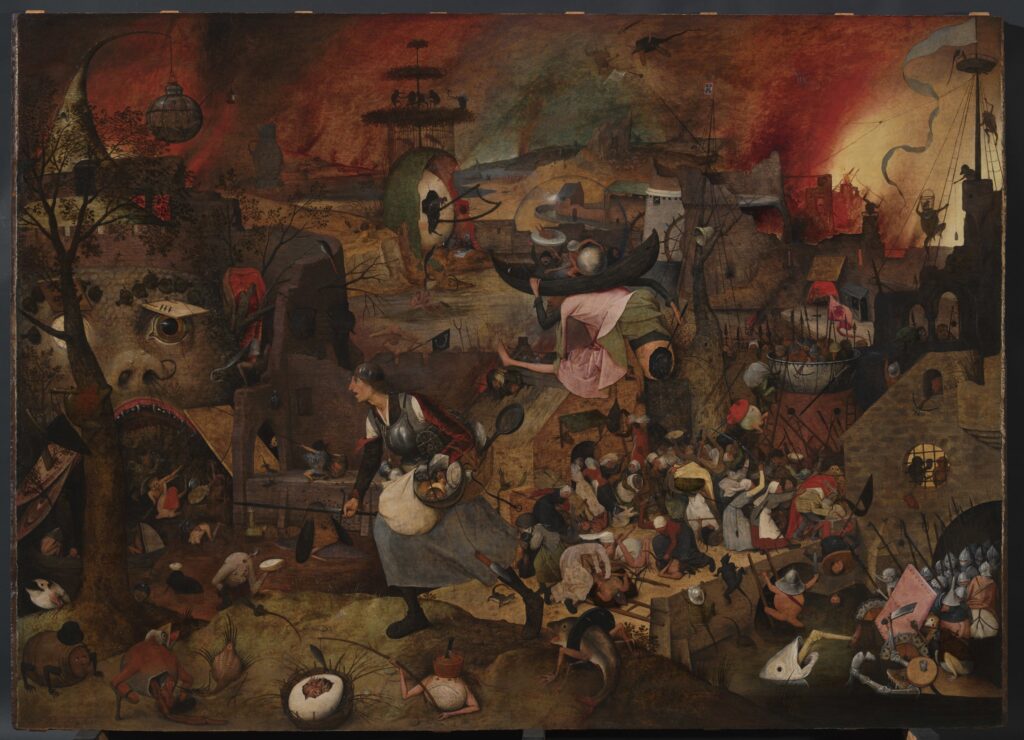
Let us nevertheless look at an emblematic work by Bruegel, known by its nickname, Dulle Griet (« Margot the Enraged » or « Mad Meg » ), a work painted in 1563, not to please a patron, but to provoke discussions with his relatives during meals at his home, as was the custom at the time.
The painting is striking in its contradictions. In the foreground, against a backdrop of burning cityscapes, a woman, mad with rage, sword in hand, carries a basket filled with jewels and precious metalwork. Behind her, a cohort of unarmed women bravely strives to subdue and repel an army of monsters and devils.
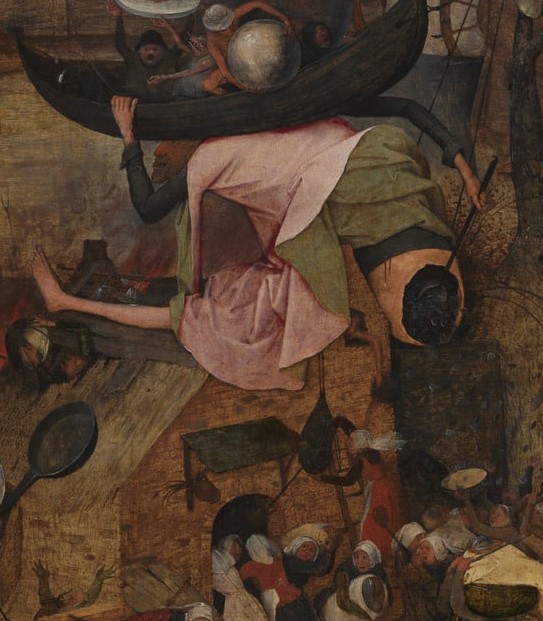
Finally, at the intersection of the painting’s diagonals, a strange creature appears, reminiscent of Hieronymus Bosch ‘s Garden of Earthly Delights. A man carrying a large bubble on his back shakes his backside, from which silver coins fall, which some women hastily gather up.
As for narrative B, we find roughly the image that Bruegel had developed in a drawing used for a 1557 engraving representing one of the deadly sins, here rage ( Ira in Latin), again represented by a giant woman, with the subtitle: « Rage swells the lips and sours the character. It troubles the mind and blackens the blood. »
Spaepen also picks up on (p. 131) a great find by Leen Huet. The historian discovered that during the Landjuweel of Antwerp in 1561, the chamber of rhetoric of Mechelen had mentioned a « Griete die den roof haelt voor den helle » (a girl who goes to plunder hell), a figure perhaps taken from a play that is now lost.
Huet also mentions (p. 35) the Flemish proverb that says of an old harpy that she « could go and plunder hell and come back safe and sound. » At the same time, Huet notes (p. 48), the author Sartorius , in a collection of adages inspired by Erasmus, states a saying similar in spirit to the Dulle Griet sign:
« One woman alone makes a racket, two women cause much trouble, three women gather only to trade for an annual market, four women lead to strife, five women form an army, and against six women, Satan himself has no weapon to fight them. »
In reality, the status of urban women from the 15th century onwards in Flanders, with the beguinages, and especially in Brabant in the 16th century, was one of the most advanced in Europe1, probably explaining in part the concerns of some members of the male gender in the face of the growing power of women.
Granvelle
But Spaepen, a good observer, exonerates Bruegel from this kind of masculinist reaction by bringing back the reality of narrative A, the current political situation.
The painter, Spaepen believes, is denouncing here Cardinal Granvelle , zealous advisor to the regent Margaret of Parma, a woman torn between the general interest and submission to the tyranny of the Catholic Church, whose dogmas were instrumentalized by Madrid to plunder the country in order to repay the colossal debt of Charles V and Philip II to the Fugger bankers.
Personally, I thought for a moment that Bruegel had invented for the occasion an 8th deadly sin, « incitement to war » (Oorlogstokerij), but I am probably too much in the present.
In August 1561, disregarding Granvelle’s advice, Margaret had authorized the Guild of Saint Luke and the Violieren to organize the Antwerp Landjuweel to promote peace and mutual understanding. But immediately afterward, she yielded to pressure from Madrid by forbidding the publication of the proceedings of the Chambers of Rhetoric, which were accused of having united the entire country against the Emperor.
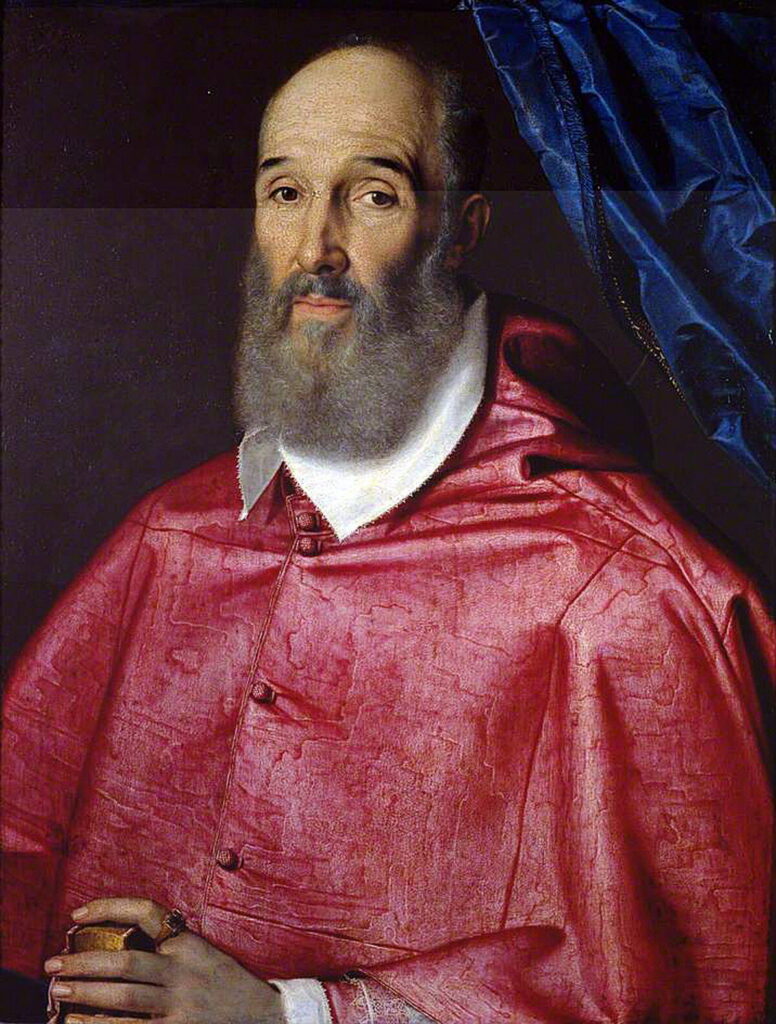
In 1563, the year Bruegel painted his Dulle Griet, the Council of Trent decided to curb polyphonic art by restoring the primacy of the sung text in music and prohibiting any ambiguity in a painting, linked to a role of propaganda, exactly as Granvelle wished.
In the painting « Mad Meg, » the strange creature in the center, draped in a red cloak, could very well be Cardinal Granvelle himself.
As Spaepen reminds us, Granvelle had just established a vast network of informants to hunt down heretics « even in the toilets. »
This targeted all those—Lutherans, Calvinists, Erasmians, or Anabaptists—who challenged the predatory grip of the regime. And yet, the money « shat out » by Granvelle is being recovered by women ready to plunder hell! Bruegel, not exactly kind to Mad Meg (Marguerite of Parma), could therefore be expressing his horror at this regent who has lost her mind, and especially at the idea that Flemish women, who had become so free and educated, could end up as informers for a totalitarian regime!
Familia Caritatis
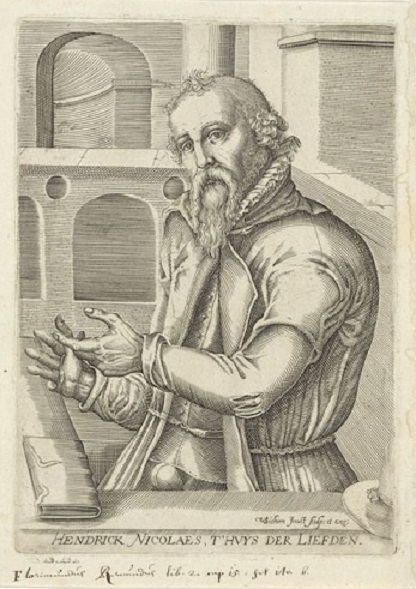
Spaepen (p. 194) documents the strong influence exerted on Bruegel (who was not necessarily a member of the group) by the Familia Caritatis (Family of Charity), a philosophical and religious movement founded and led by Hendrik Niclaes (1502-1570), a prophetic and charismatic figure advocating peace and tolerance about whom little is known but who undoubtedly appeared to many, without reaching his wisdom and erudition, as a kind of successor to Erasmus.
Many humanists and a number of Bruegel’s acquaintances were in contact with this movement which, passing through England, would dissolve into the Quaker revolt against the Anglican Church.2
Plantin, considered the official printer of the Spanish regime, had the Familia Caritatis booklets (deemed heretical by the regime) printed (at night), with initial financial assistance for his printing press from Niclaes, himself a merchant. Niclaes’s major work, Terra Pacis, denounces the « Blind leading the Blind, » a theme also found in the work of Quinten Matsys‘s son (who fled the persecution), and later in Bruegel.
Niclaes draws upon Socrates and the philosophy of the Brethren of the Common Life , for whom selfless love (agape or caritas) should be the driving force of humankind. Another conviction he holds is that life is « a pilgrimage of the soul. »
As in the landscapes of Joachim Patinir, Homo Viator must constantly detach himself from earthly matters and move on. Through his free he must seek union with God by resisting earthly temptations. Inner peace—with oneself, with one’s conscience, and with the divine will—is the foundation of peace on Earth, an ideal that also clearly inspired the painter.
This is the true story, that of a great political commentator and resistance fighter of his time, a painter intellectually and spiritually committed to peace.
NOTES:
- See on this subject Myriam Greilsammer, L’envers du tableau : Mariage et maternité en Flandre médiévale , Armand Colin, 1990, as well as this author’s article on the Landjuweel. ↩︎
- These included the printers Christoffel Plantin and John Gailliart; the humanists Abraham Ortelius, Justus Lipsius, Andreas Masius, Goropius Becanus, and Benito Arias Montano; the poets Peeter Heyns, Jan van der Noot, Lucas d’Heere, Filips Galle, and Joris Hoefnagel; the theologian Hubert Duifhuis; the writer Dirck Volkertsz; Coornhert (right-hand man of William the Silent); the « familists » Daniel van Bombergen, Emanuel van Meteren, and Johan Radermacher; and the Antwerp merchants Marcus Perez and Ferdinando Ximines. ↩︎
Pieter Bruegel l’ancien, commentateur politique et pacifiste
Cinq siècles après sa naissance, la publication de nouvelles recherches semblent (enfin) rendre justice au grand peintre flamand « Pierre Bruegel le drôle », dit l’ancien (1525-1569).
Jusqu’ici, on entendait trop souvent dire de lui qu’il « apparaît comme une figure inclassable ». En 2024, l’historienne de l’art Mónica Ann Walker Vadillo n’hésite pas à écrire dans les pages Histoire du quotidien Le Monde que, vu que Bruegel a peint des fêtes paysannes, les critiques d’art « en sont arrivés à le considérer comme un homme peu raffiné et l’ont surnommé avec dédain ‘Bruegel le Paysan’ », tout en s’étonnant qu’il ait fréquenté bon nombre « d’universitaires, d’humanistes et des hommes d’affaires fortunés – qui appréciaient son œuvre et collectionnaient ses tableaux ».
Chute des anges rebelles
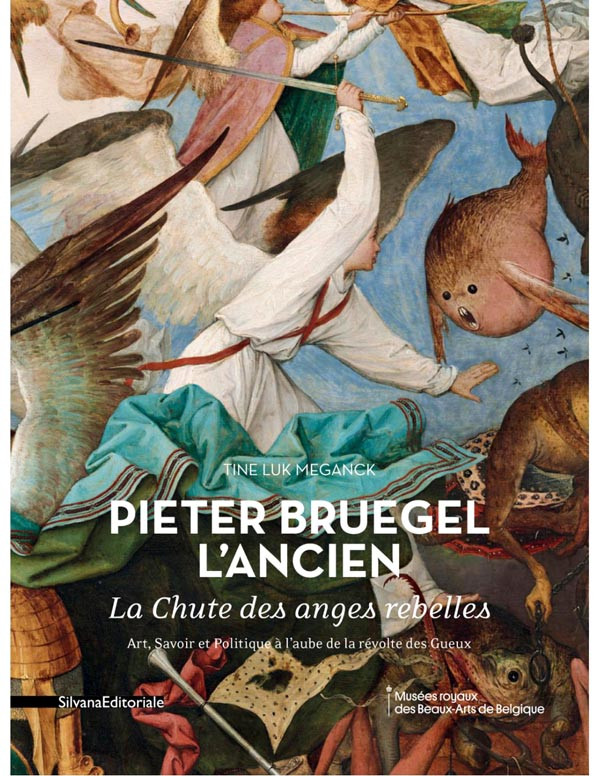
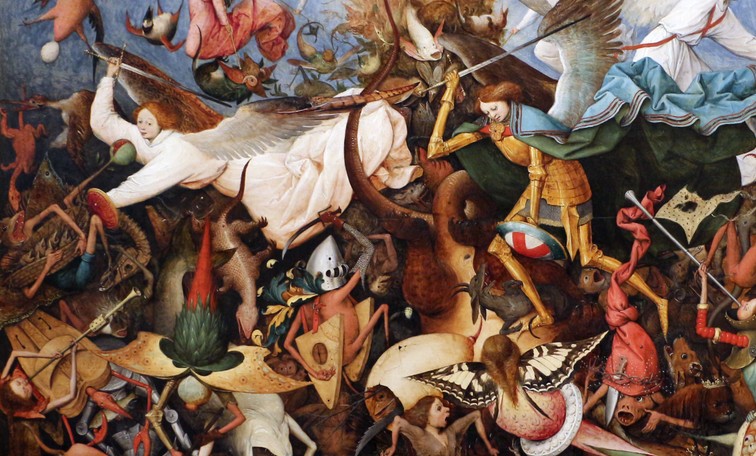
En 2014, le livre de Tine Luk Meganck, « Pieter Bruegel, la chute des anges rebelles. Art, savoir et politique à l’aube de la révolte des Gueux », surtout avec la dernière phrase de son titre, avait néanmoins rouvert le débat sur la dimension politique de son œuvre.
Meganck s’y risquait à une hypothèse hautement improbable à propos du tableau La chute des anges rebelles (1562, Musée de Bruxelles) : les anges jaloux, que Dieu punit pour avoir conspiré contre lui, représenteraient l’alliance des nobles, des classes moyennes et du peuple, menée par Guillaume le Taciturne contre la férule de l’Empire espagnol.
Du coup, le commanditaire de l’œuvre, toujours selon l’experte, serait probablement le fameux cardinal Antoine Perrenot de Granvelle, un des conseillers de la régente Marguerite de Parme et fervent partisan de la chasse aux hérétiques.
Nous avons documenté dans un autre article pourquoi cette interprétation nous semble irrecevable, le cardinal de Granvelle, un des membres du « gouvernement secret », étant universellement détesté par les humanistes de l’époque pour son zèle aveugle endossant tous les crimes de ses maîtres.
De plus, aucune preuve tangible n’existe qu’il ait commandité une quelconque œuvre à Bruegel. Certes il en possédait, mais, à part une « Fuite en Egypte » (1563), œuvre dépourvue de la moindre polémique, et une « Vue sur la baie de Naples », belle étude inspirée des dessins réalisés lors de son voyage en Italie, Granvelle était loin d’être « un des plus grands collectionneurs » d’œuvres de Bruegel, comme on le répète un peu partout.
Landjuweel
Ceci étant dit, l’apport nouveau et important du livre de Meganck, c’est (on l’avait oublié) la reconnaissance de l’influence déterminante, pour comprendre le langage visuel de Bruegel, des Chambres de rhétorique et du Landjuweel d’Anvers de 1561.
Mon ami le regretté critique d’art américain Michael Gibson m’avait parlé de cette piste lors d’un entretien que j’avais réalisé avec lui. Il l’évoque dans son livre Le portement de croix (Editions Noêsis, Paris 1996), qui servira en 2011 à la réalisation du film « Bruegel, le moulin et la croix ».
En 1561, Anvers, où Bruegel résidait, se fit le siège d’une réjouissance exceptionnelle, le Landjuweel, ou concours national des Chambres de rhétorique.
Or, la Chambre anversoise « La Giroflée » (De Violieren), chargée de l’organisation d’une fête qui coûta cent mille couronnes à la ville, était en quelque sorte la division littéraire de la Guilde de Saint-Luc, qui regroupait les peintres, graveurs, sculpteurs, cartographes, orfèvres et imprimeurs.
C’est là qu’on lisait en flamand aussi bien qu’en latin ou en français, Platon, Homère, Pétrarque, Erasme et Rabelais. La première Bible en français ? Imprimée à Anvers en 1535 par Jacques Lefèvre d’Etaples, qui publia les premières traductions de l’œuvre complète de Nicolas de Cues à Paris en 1514, trois ans avant la parution, dans la même ville, de la première édition de L’éloge de la folie d’Erasme.
Le Landjuweel d’Anvers fut une fête grandiose. Venus de dix cités, deux mille rhétoriciens à cheval, passant par quarante arcs de triomphe, aux stridences des fifres, pénétrèrent dans une ville en fête. Tout un mois durant, orateurs et poètes, chansonniers et acteurs concoururent sans reprendre haleine.
Bruegel dut les suivre d’autant plus que son cher ami Hans Frankert, son ami et maître Peeter Baltens, très introduit auprès des grands financiers locaux qui préféraient le commerce à la guerre, ainsi que son premier patron, le graveur Jérôme Cock, furent tous impliqués dans l’organisation de cet événement dont le thème était la paix et, deux siècles avant Kant et Schiller, cette brûlante interrogation philosophique : « Qu’est-ce qui conduit le plus l’homme vers les arts ? » Voilà donc la marmite bouillonnante de culture citadine dans laquelle Bruegel fut plongé dès ses débuts.
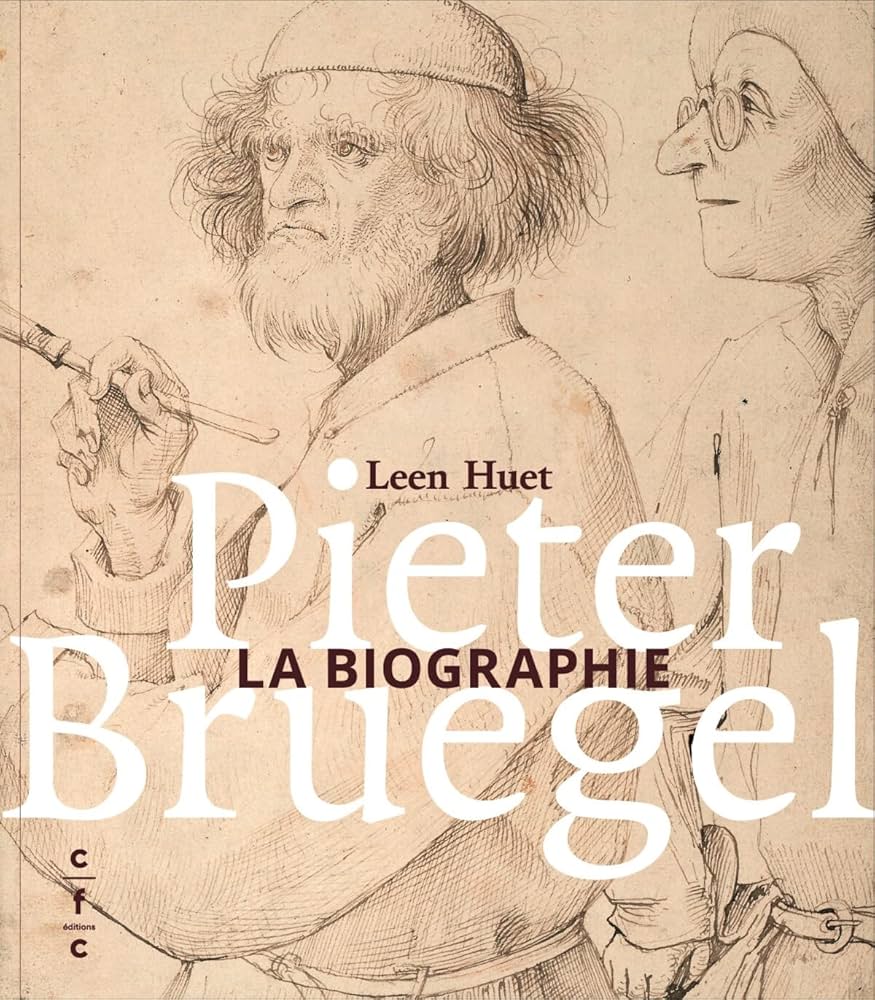
Par ailleurs, comme le détaille l’historienne Leen Huet, dans sa somptueuse biographie de l’artiste (parue d’abord en néerlandais en 2016 chez Polis, puis en français chez CFC à Bruxelles en 2021), lorsqu’il traversa les Alpes, Bruegel était probablement accompagné par le peintre Maarten de Vos et le cartographe Abraham Ortelius, ami proche de Christophe Plantin, le patron de la plus grande imprimerie d’Anvers, l’équipe disposant de milliers d’adresses de collectionneurs en relation avec l’imprimerie Les Quatre Vents de Jérôme Cock, à Anvers.
Le « Bruegel code »
L’image d’un Bruegel commentateur politique, brouillant volontairement son message pour déjouer les gestapistes du régime qui le guettaient, s’inscrivant dans la philosophie toute érasmienne du Landjuweel pour défendre la paix et la compréhension mutuelle, est encore plus étoffée par l’historien Leo Spaepen, dont le livre récent, Pieter Bruegel de oude, politiek commentator en pacifist. De Bruegel Code (publié en néerlandais chez MER Books, 2025), fait sensation.
Bon pédagogue, Spaepen y établit une sorte de code permettant de déchiffrer, ou du moins d’aborder fructueusement, le langage visuel bruegélien. S’échappant du bocal aristotélicien, il s’agit d’écarter d’emblée les représentations formelles et symboliques au bénéfice d’une approche que je qualifierais de métaphorique.
Narratif A et B
Dans chaque tableau, il y a un « narratif A » et un « narratif B ». Le premier traduit généralement une préoccupation partagée par la communauté humaniste et érasmienne face aux événements socio-politiques de l’époque, où la corruption et la violente répression espagnole conduisent les Pays-Bas hispano-bourguignons au bord de la révolte. Le « narratif B » évoque souvent une scène tirée de la Bible ou des écritures.
Comme dans toute métaphore, le paradoxe résultant de la mise en analogie du narratif A avec le B fait émerger, non pas sur le tableau mais dans l’esprit du spectateur, une palette d’indications lui permettant de saisir vers quoi le peintre veut le conduire.
Spaepen, dont il faut saluer le courage, la rigueur et la témérité, a suffisamment approfondi l’histoire politique et culturelle de l’époque de Bruegel pour émettre des hypothèses probantes éclairant ses principales œuvres. En mettant à l’épreuve, dans un tableau après l’autre, cette approche cognitive, l’auteur génère non pas une somme savante de faits ou de preuves, mais une « gestalt » extrêmement intéressante du peintre, dont on a souvent refusé d’identifier le vrai génie. Impossible donc dans un simple article comme celui-ci de reproduire toute la richesse de la démarche.
Margot l’enragée
Regardons tout de même une œuvre emblématique de Bruegel, connue par son surnom, Dulle Griet (« Margot l’enragée » ou « Margot la folle »), une œuvre peinte en 1563, non pas pour satisfaire un commanditaire, mais pour susciter des discussions avec ses proches lors de repas chez lui, comme cela se faisait à l’époque.
Le tableau frappe par ses contradictions. Au premier plan, devant un paysage urbain en flammes, une femme folle de rage, l’épée à la main, emportant avec elle un panier rempli de bijoux et d’orfèvrerie. Derrière elle, une cohorte de femmes sans armes s’acharne courageusement à maîtriser et repousser une armée de monstres et de diables.
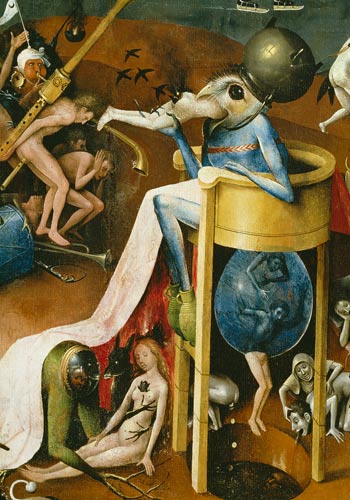
Enfin, à l’intersection des diagonales de l’œuvre, une étrange créature reprise du Jardin des délices de Jérôme Bosch. Un homme portant sur le dos une vaste bulle, touille son derrière d’où tombent des pièces d’argent que certaines femmes s’empressent de ramasser.
Pour ce qui est du narratif B, on retrouve en gros l’image que Bruegel avait élaborée dans un dessin ayant servi à une gravure de 1557 représentant l’un des péchés capitaux, ici la rage (Ira en latin), représentée là encore par une femme géante, avec pour sous-titre : « La rage bouffit les lèvres et aigrit le caractère. Elle trouble l’esprit et noircit le sang. »
Spaepen rebondit également (p. 131) sur une belle trouvaille de Leen Huet. L’historienne a découvert que lors du Landjuweel d’Anvers de 1561, la chambre de rhétorique de Malines avait évoqué une « Griete die den roof haelt voor den helle » (une fille qui va piller l’enfer), figure peut-être tirée d’une pièce de théâtre aujourd’hui perdue.
Huet évoque également (p. 35) le proverbe flamand disant d’une vieille harpie qu’elle « pourrait aller piller l’enfer et en revenir saine et sauve ». A la même époque, constate Huet (p. 48), l’auteur Sartorius, dans un recueil d’adages inspiré d’Erasme, énonce un dicton proche, dans son esprit, du panneau Dulle Griet :
« Une femme seule fait du boucan, deux femmes causent beaucoup de difficultés, trois femmes se rassemblent uniquement pour faire du commerce pour un marché annuel, quatre femmes mènent à la dispute, cinq femmes forment une armée et pour lutter contre six femmes, Satan lui-même n’a pas une arme pour les combattre. »
En réalité, le statut des femmes citadines dès le XVe siècle en Flandres, avec les béguinages, et surtout au Brabant au XVIe siècle, était l’un des plus avancés d’Europe1, expliquant sans doute en partie les inquiétudes de certains membres de la gent masculine face au pouvoir grandissant des femmes.
Granvelle petit esprit
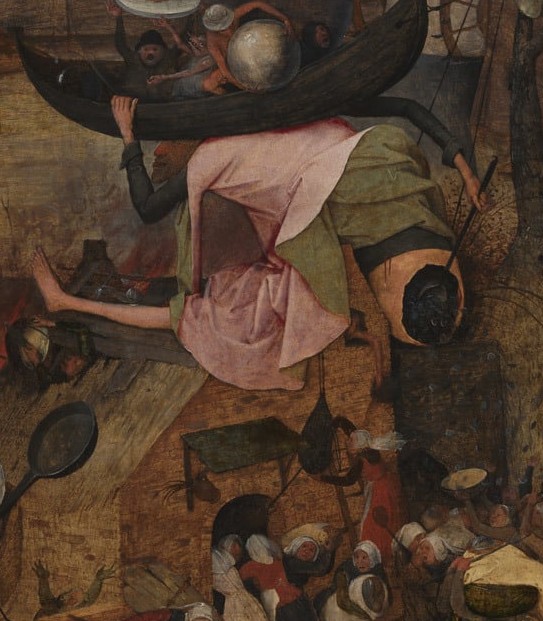
Mais Spaepen, bon observateur, dédouane Bruegel de ce genre de réaction masculiniste en ramenant la réalité du narratif A, l’actualité politique du moment.
Le peintre, pense Spaepen, dénonce ici le cardinal de Granvelle, zélé conseiller de la régente Marguerite de Parme, une femme tiraillée entre l’intérêt général et la soumission à la tyrannie de l’Église catholique, dont les dogmes furent instrumentalisés par Madrid pour piller le pays afin de rembourser la dette colossale de Charles V et Philippe II envers les banquiers Fugger.
Personnellement, j’ai pensé un moment que Bruegel avait inventé pour l’occasion un 8e péché capital, « l’incitation à la guerre » (Oorlogstokerij), mais je suis sans doute trop dans le présent.
En août 1561, faisant fi de l’avis de Granvelle, Marguerite avait autorisé la Guilde de Saint-Luc et les Violieren à organiser le Landjuweel d’Anvers pour promouvoir la paix et la compréhension mutuelle. Mais immédiatement après, elle céda à la pression de Madrid en interdisant la publication des comptes-rendus des Chambres de rhétorique, accusées d’avoir coalisé tout le pays contre l’Empereur.
En 1563, année où Bruegel peint sa Margot, le Concile de Trente décide de brider l’art polyphonique en rétablissant dans la musique la primauté du texte chanté et en interdisant toute ambiguïté dans une peinture, reliée à un rôle de propagande, exactement comme le souhaitait Granvelle.
Dans le tableau « Margot l’enragée », l’étrange créature au centre, drapée d’un manteau rouge, pourrait donc bien être le cardinal de Granvelle en personne.
Comme le rappelle Spaepen, ce dernier venait d’instaurer un vaste système d’informateurs afin de traquer les hérétiques « jusque dans les toilettes ».
Cela visait tous ceux, luthériens, calvinistes, érasmiens ou anabaptistes, qui contestaient la mainmise prédatrice du régime.
Or, l’argent « chié » par Granvelle est récupéré par des femmes prêtes à aller piller l’enfer ! Pas tendre pour Margot l’enragée (Marguerite de Parme), Bruegel pourrait donc exprimer ici son effroi devant cette régente ayant perdu la tête, et surtout à l’idée que les Flamandes, devenues si libres et éduquées, puissent finir comme indics d’un régime totalitaire !
Familia Caritatis
Spaepen (p. 194) rend plausible, s’il n’y adhère pas explicitement, la forte influence exercée sur Bruegel par la Familia Caritatis (Famille de la charité), un courant philosophique et religieux fondé et dirigé par Hendrik Niclaes (1502-1570), figure prophétique et charismatique prônant la paix et la tolérance dont on sait assez peu mais apparaissant sans doute pour beaucoup, sans atteindre sa sagessse et son érudition, comme une sorte de successeur d’Erasme.
De nombreux humanistes et bon nombre des fréquentations de Bruegel étaient en contact avec ce courant qui, en passant par l’Angleterre, se dissoudra dans la révolte Quaker contre l’Église anglicane.2
Plantin, considéré comme l’imprimeur officiel du régime espagnol, faisait imprimer (de nuit) les livrets (qualifiés d’hérétiques par le régime) de la Familia Caritatis, moyennant une aide financière pour son imprimerie de la part de Niclaes. L’œuvre majeure de Niclaes, la Terra Pacis, dénonce les « aveugles guidant les aveugles », thème que l’on retrouve chez le fils de Quinten Matsys, puis chez Bruegel.
Niclaes reprend Socrate et la philosophie des Frères de la vie commune, pour qui c’est l’amour désintéressé (agape ou caritas) qui doit animer les hommes. Autre conviction : la vie est « un pèlerinage de l’âme ». Comme dans les paysages de Joachim Patinir, l’Homo Viator doit constamment, par son libre arbitre, pérégriner et chercher à s’unir à Dieu en se soustrayant aux tentations terrestres. La paix intérieure, avec soi-même, avec sa conscience et avec la volonté divine, est le fondement de la paix sur Terre, un idéal qui animait aussi très clairement le peintre.
Voici donc la véritable histoire, celle d’un grand commentateur politique et résistant de son temps, un peintre engagé intellectuellement et spirituellement pour la paix.
NOTES:
- Voir à ce sujet Myriam Greilsammer, L’envers du tableau : Mariage et maternité en Flandre médiévale, Armand Colin, 1990. ↩︎
- Il s’agit notamment des imprimeurs Christoffel Plantin, John Gailliart, des humanistes Abraham Ortelius, Justus Lipsius, Andreas Masius, Goropius Becanus, Benito Arias Montano, des poètes Peeter Heyns, Jan van der Noot, Lucas d’Heere, Filips Galle, Joris Hoefnagel, du théologien Hubert Duifhuis, de l’écrivain Dirck Volkertsz. Coornhert (bras droit de Guillaume le Taciturne), des « familistes » Daniel van Bombergen, Emanuel van Meteren, Johan Radermacher et des marchands anversois Marcus Perez et Ferdinando Ximines. ↩︎