Étiquette : Jeanne d’Albret
The Cenacle of Meaux and Christian Humanism in the Renaissance
“Everything that happens daily in this country stems from a government that calls itself ‘Christian.’ For weeks, not only Jews but also thousands of faithful Catholics in Germany—and I think throughout the world—have been waiting and hoping that the Church of Christ [the Roman Catholic Church] will raise its voice to put an end to this abuse of Christ’s name. Is not this idolatry of race and state power, hammered into the masses daily by radio, a blatant heresy? Is not all of this in total contradiction with the attitude of our Lord and Savior, who, even on the cross, prayed for those who persecuted him?” 1
This quote is similar in many ways to what many Christians feel today in the face of the abuse of « religion » to justify rapacious and bloody wars presented as « just wars, » especially by prominent members of the Trump Administration, notably its Secretary of War, Pete Hegseth.
History tragically repeats itself, for this quote is not new. It comes from a letter sent to the Pope in 1933 by Edith Stein, a philosopher of Jewish origin who became a Carmelite nun, when German Catholics, a minority in this Protestant country, signed a Concordat with Hitler. The common enemy to be fought was now Bolshevism. In exchange for their silence in the face of Nazi barbarity, Hitler offered them his gracious protection.
In France, at the same time, big business, Europeanists before their time, were proclaiming: « Better Hitler than the Popular Front! »
Our good fortune today is to have a pope who raises his voice for peace and justice for all. And one can hope that his voice can give everyone the courage to stop the mad march towards war.
On Palm Sunday, Leo XIV forcefully reiterated that no one can justify war in the name of the Lord:
God « does not listen to the prayers of those who wage war. » « On the contrary, he who has turned his back on the living God, making himself and his own power a mute, blind, and deaf idol, is enslaved to death. »
In addition to the thirst for power, there is also the thirst for money, which was denounced during his trip to the Principality of Monaco.
During his first year as Pope, he repeatedly called for a reconciliation that was « disarmed and disarming. » To the « warlords » who make their power « a mute, blind, and deaf idol, » he contrasted listening to a « melody greater than ourselves » —a harmony to which we can dance when the world seems to forget even « the light. »
The arrival of Pope Leo XIV in France
In a statement published on May 6, the president of the Conference of Bishops of France confirmed what many had been hoping for for a year: although it remains to be confirmed, Leo XIV could come to France at the end of September 2026, stopping in Paris and Lourdes.
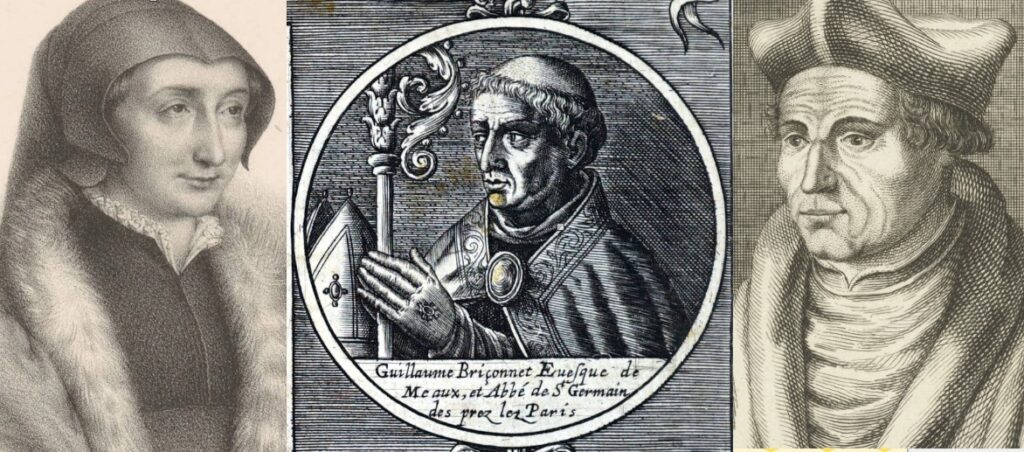
This is an opportunity for us to evoke one of the most luminous upsurges of our country, which reached its peak in 1521, with the creation of the Cenacle of Meaux by the philosopher-theologian Jacques Lefèvre d’Etaples (1450-1537) , at the request of his student Bishop Guillaume Briçonnet (1472-1534) .
It was not a philosophical or prayer circle. Its primary purpose was to read, study, translate, and print the Gospel in French and to train clergymen in preaching. The approach was so simple, honest, and innovative that it deeply disturbed the established political and religious powers. The Cenacle was closed after only four years, its leaders were persecuted, and forced into exile. It was only thanks to the protection of Marguerite of Navarre (1492–1549) (also known as Marguerite of Angoulême or Marguerite of Valois-Angoulême), sister of king Francis I, who embraced this movement, that its leading figures were able to escape the flames of the stake.
Renaissance Evangelicalism
For Guillaume d’Alonge, Jacques Lefèvre d’Etaples is
« The intellectual leader and founder of French evangelicalism, a reform movement that developed in the early decades of the 16th century, in parallel with the Protestant Reformation, with which it had important points of contact. » 2
What some call « Renaissance evangelicalism » (not to be confused with American messianic evangelicalism, a current that animates today’s warmongers) corresponds to a movement of ideas characterized by the valorization of biblical exegesis.
Unlike evangelicalism in the most common sense of the term, it does not necessarily relate to the Protestant Reformation. On the contrary, many humanists who did not wish to break with the papacy but nevertheless declared themselves hostile to ecclesiastical abuses, such as Erasmus of Rotterdam and François Rabelais, were driven by a desire for reform without schism.
While Catholics sought to eradicate them by ignoring them, Protestants have always claimed that they were one of their own.
Like Erasmus, Jacques Lefèvre d’Étaples was certainly a reformer, but he never considered breaking with the Roman Catholic Church, as demanded by Luther, Calvin, and other figures of the Protestant Reformation. The Christian humanists of the Renaissance believed, perhaps naively, that by appealing to reason, the Roman Curia would eventually yield to their demands and agree to eradicate the corruption and abuses that severely plagued the institution.
Humanism
It was in Italy, with Petrarch (1304-1374) , that humanism was born. The poet began by collecting inscriptions on the old stones of Rome and continued his quest for the Ancients in manuscripts.
With his friend Boccaccio , he brought Byzantine scholars to Italy to revive the study of Greek and Latin. While the term humanist then referred to someone who, through the study of Greek and Latin , « cultivated the humanities » ( studia humanitatis ), Renaissance humanist thinkers did not renounce their Christian faith but rather sought to reconcile the two.
A very clear break with scholastic pessimism then took place. Conceiving of himself as « created in the living image of the Creator, » the Renaissance man, uomo universale, endowed with reason and free will, no longer blamed the devil. It was he who had to strive to overcome his evil inclinations. And if he fully developed his creative potential, it was above all to please the Creator by placing his life at the service of the public good rather than his personal glory.
In Northern Europe, the movement of the Brethren and Sisters of the Common Life and that of the Beguines stemmed from the conviction that the contemplative life and the active life should complement each other and not oppose each other. Each person should live « in imitation of Christ. » It was in Deventer, among the Brethren of the Common Life , that Erasmus, inspired by teachers like Rudolph Agricola , discovered Christian humanism and the « good literature . «
Greek and the Greeks
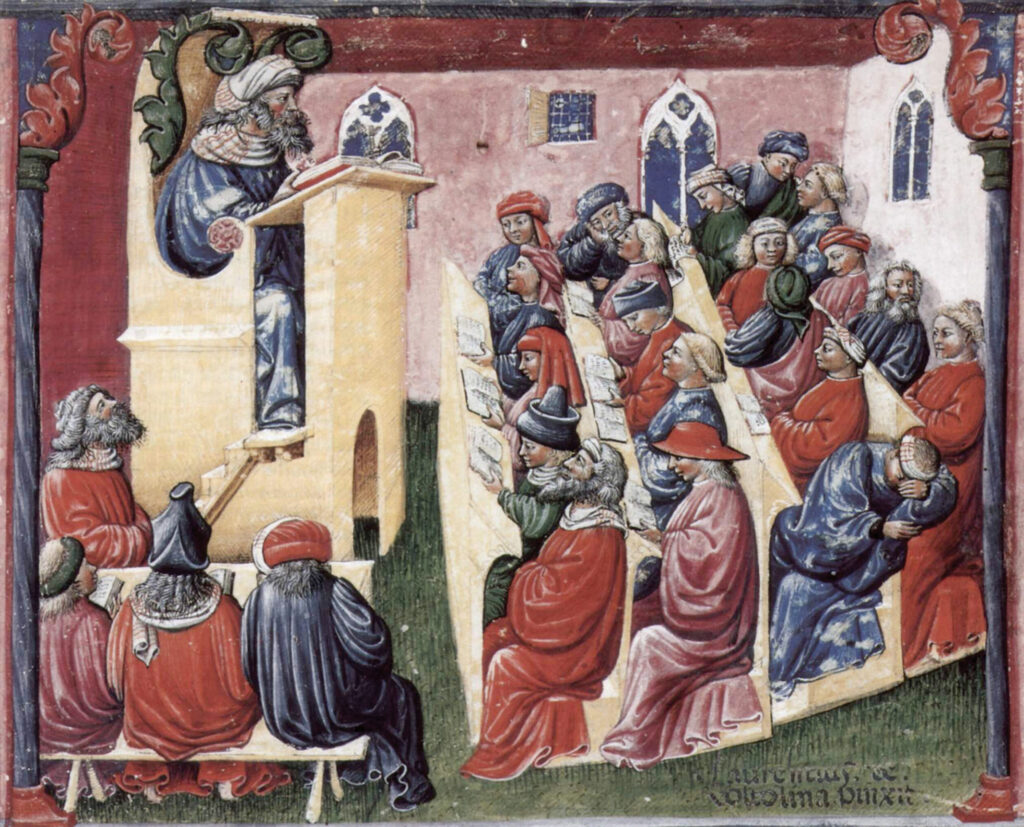
While the study of Greek penetrated Italy and the Netherlands from the beginning of the 15th century, in France, young elites jostled to attend, from 1476 onwards, the courses of a Greek exile, Georges Hermonyme of Sparta, a poor pedagogue, rapacious and with little mastery of his own language.
But, as Jacqueline de Romilly points out:
“Hermonymus had only one merit: that of being the first. The fact is that he had as students, (…) or simply through his advice, all those who were to become the glory of nascent humanism: Reuchlin was his student, Lefèvre d’Étaples said he benefited from his advice, Erasmus asked him for lessons, as did Beatus Rhenanus – and above all our patron saint, Guillaume Budé.” 4
Two other Greeks played a major role in the revival of Hellenic studies.
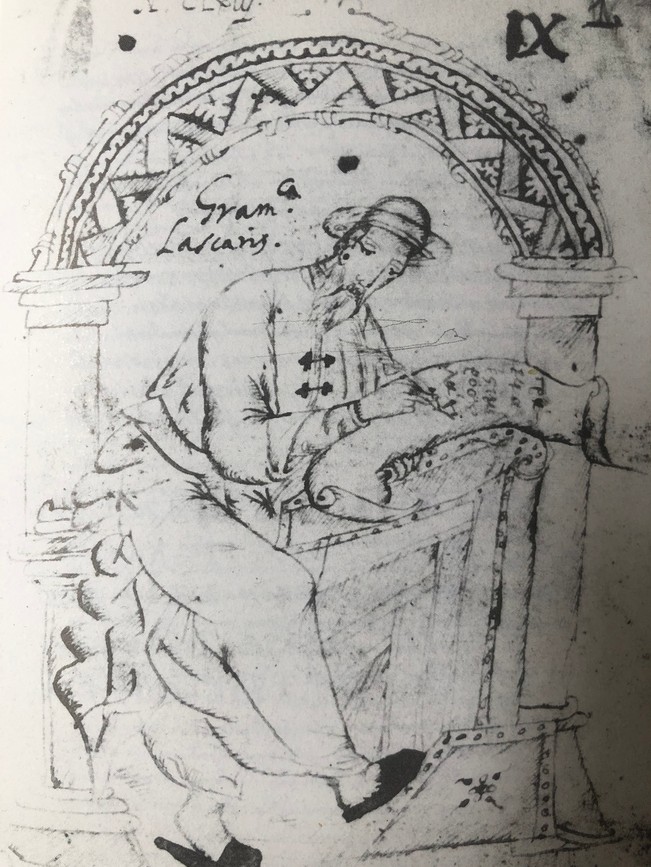
And first of all , Constantin Lascaris (1434-1501). A student of Jean Argyropoulos between 1444 and 1553, he arrived in the West around 1460, after being taken prisoner during the Turkish occupation of Constantinople in 1453.
After a few short stays between the Greek islands, he became tutor to Francesco Sforza’s daughter in Milan, where he began writing his grammar, the Erotemata .
An essential tool for learning Greek, the work was first printed in Milan, then published twice by Aldus Manutius in Venice.
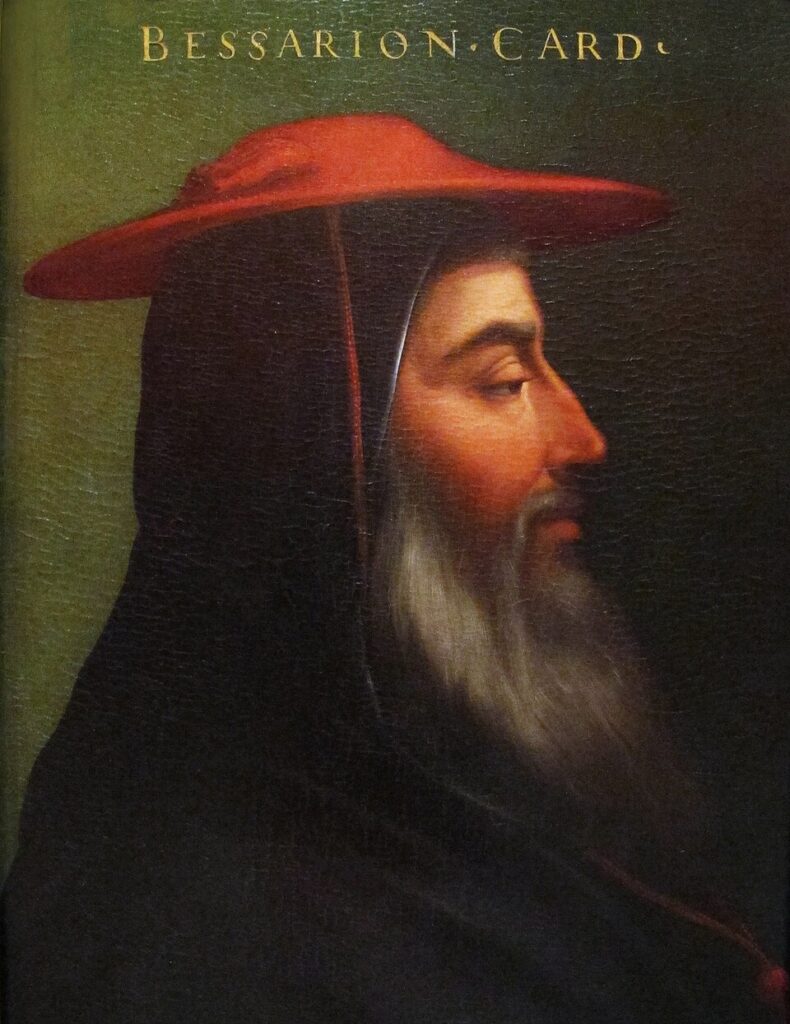
Constantin Lascaris then went to Rome where he met the greatest protector of Greek scholars in the West and of Byzantine humanism within the clergy, Cardinal Jean Bessarion (1403-1472), Latin Patriarch of Constantinople from 1463.
Bessarion was a friend of Cardinal Nicholas of Cusa (1401-1464), with whom he collaborated in particular during the Ecumenical Council of Ferrara/Florence, convened to end the schism between the Eastern and Western Churches.
Jean Lascaris
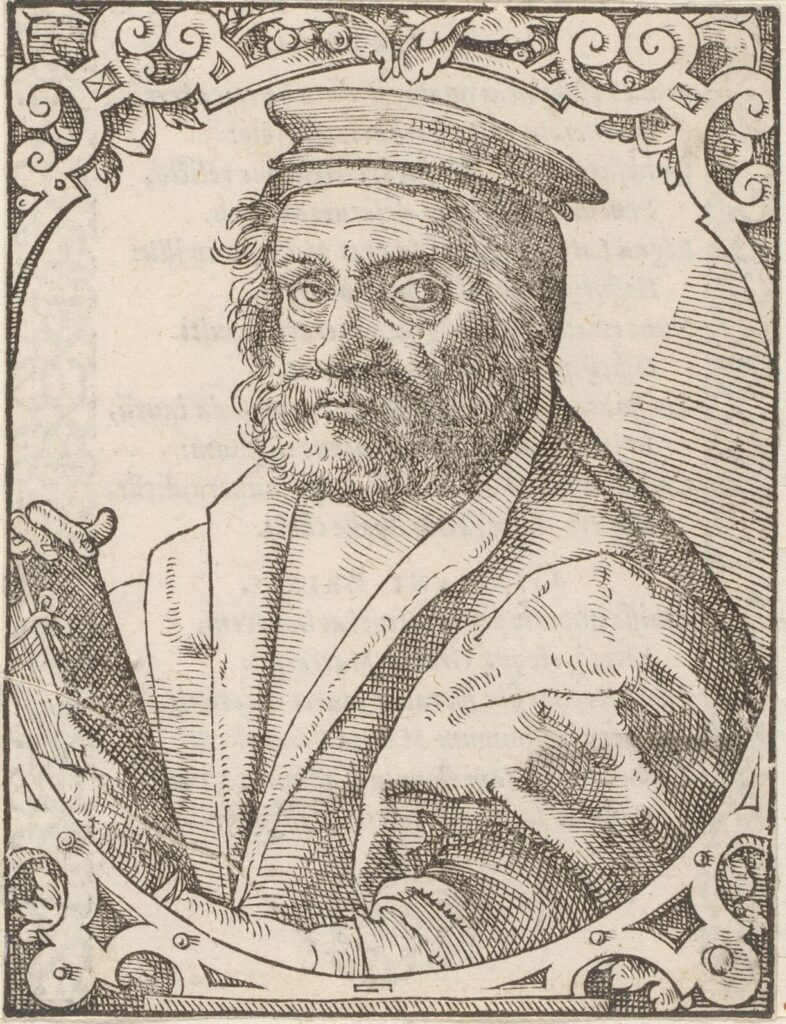
The other Greek scholar (unrelated to the first) is Jean (Janus) Lascaris (1445-1535) , also a protégé of Cardinal Jean Bessarion who entrusted him with numerous missions, notably bringing back precious manuscripts from Mount Athos in 1492.
Although born in Asia Minor and frequenting the great figures of Italy, Lascaris entered the service of France as Louis XII ‘s ambassador to Venice between 1503 and 1508. There he joined the academy of the printer Alde Manutius (1449-1515) where scholars from the East and West met to discuss and edit the classics.
When Erasmus went to Venice to the printer Alde Manutius to publish his Adages, a masterful work aimed at popularizing all ancient wisdom, Lascaris not only offered to welcome him into his home, but also contributed to the work himself.
Erasmus, writes the Belgian historian Yvonne Charlier, feverishly composed his Adages there.
« with the help of a host of distinguished scholars, including Jean-Baptiste Egnazio, a member of the Aldine Academy, and Jean Lascaris, a Greek refugee, passionate about manuscripts and ambassador of Louis XII to Venice. »
He also worked with Lascaris, the young French student Germain de Brie.
A few years later, when Erasmus and Thomas More published Utopia in 1516, a fictional account of a people (the Utopians) who attempt to create an ideal society based on the principles defined by Plato in his Republic, they argue that they must be of Greek origin, since Lascaris « was their only grammarian ».
It was in Venice that Jean Lascaris and Erasmus together conceived the idea of a College of Languages. Being able to compare the translations of the Gospel into Hebrew and Greek was the essential condition for achieving a proper understanding of its content.
Lascaris ended his life in Rome with Pope Leo X , who in 1514 commissioned him to found the « Greek College of the Quirinal. » Erasmus, against all odds, and especially against the theologians of the Brabant university town of Leuven, opened the Trilingual College there in 1517.
Lascaris also took care of the Royal Library, which was established in Blois in 1501 by Louis XII, then moved to Fontainebleau with Guillaume Budé under Francis I.
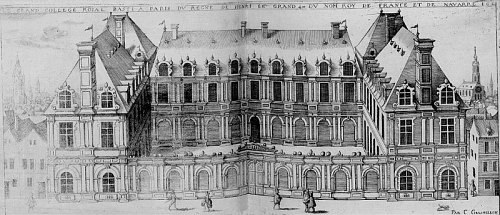
Subsequently, at Budé’s insistence, François I created in 1530, under royal patronage, the « Collège des Lecteurs royaux, » allowing the study of Greek and all subjects rejected by the Sorbonne.
Lascaris’s close relationship with Lefèvre d’Étaples may have led to the writing that the work of the great French scholars, Budé, Scaliger, Casaubon, Lambin, Cujas, Estienne, appeared
« To be a continuation of the schools of Byzantium and Alexandria, rather than an emanation of currents coming from Italy. » 5
Hidden from Europeans for centuries, this immense heritage – one could say a vast civilization that was being rediscovered – thus made its way to the kingdom of France thanks to men such as Lascaris, whose disciples like Lefèvre took over.
Jacques Lefèvre d’Etaples
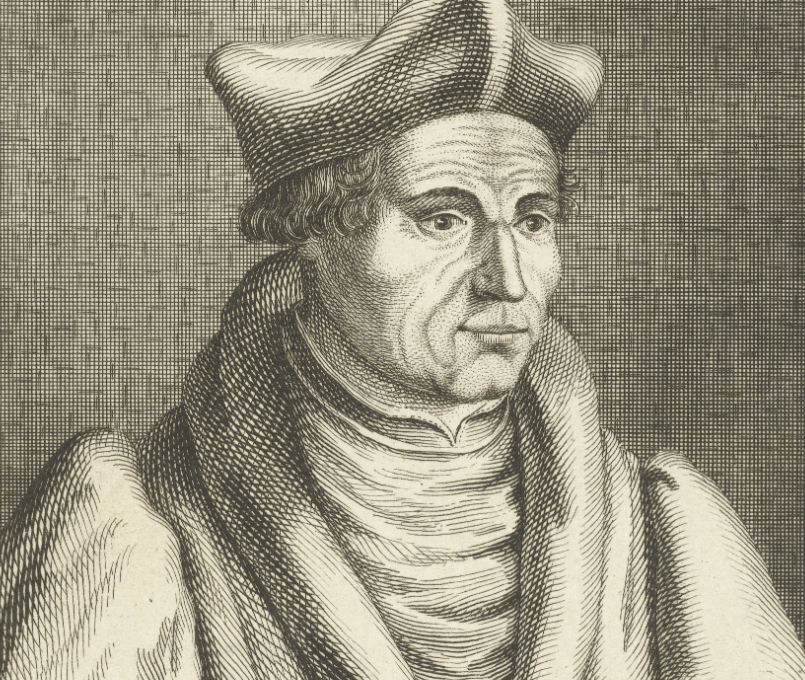
Philosopher, mathematician, musicologist and theologian, Jacques Lefèvre was born around 1450 in Étaples, Picardy, and died in 1536 in Nérac (Lot-et-Garonne). He Latinized his name to Jacobus Faber Stupulensis, hence the nickname « Fabritists » given to those who adhere to his doctrine.
He studied in Paris, where he earned a bachelor’s degree and a master’s degree in arts. He then entered the clergy and became a priest, though it is unknown whether he actually served in this capacity. Gentle and timid by nature, of delicate constitution, and possessing a selflessness that led him to bequeath his inheritance to his brothers and nephews in order to devote himself more freely to his studies, Jacques Lefèvre primarily studied literature and philosophy.
After completing his studies and teaching literature for a time, he developed a taste for travel. He explored parts of Europe, and it is even said that his desire to broaden his knowledge led him to Asia and Africa. Drawn by the winds of renewal that the Renaissance was sweeping across Europe, Lefèvre traveled to Italy at least twice, spending extended periods in Pavia, Padua, Venice, Rome, and Florence.
With his translation of Plato and Aristotle, Leonardo Bruni (1370-1444) provided Italy, and with it the scholarly world, with a philosophical framework. Italian humanism sided with Plato.
Aristotle was attacked for « his metaphysics which puts the particular before the general, his theology which substitutes an inactive god for Plato’s creator God, his psychology which does not dare to resolutely affirm the immortality of the soul, his morality which locates virtue not in goodness, but in the golden mean between good and evil. » 6
In 1492, Lefèvre met and discussed with Florentine Platonists and Neo-Platonists, grouped around Marsilio Ficino, his student Giovanni Pico della Mirandola, Poliziano and Ermolao Barbaro.
Starting with Hermes Trismegistus, Plotinus, Iamblichus, and Cicero, this school of thought emphasized the supposed complementarity between Plato and Aristotle rather than their opposition, hoping to reconcile the doctrines of the two philosophers. Positioning himself above both camps, Giovanni Pico della Mirandola was preparing a major work, which death prevented him from completing: the Concordia Platonis et Aristoteles , which aimed to reduce all philosophies and religions to a single wisdom, naturally under the tutelage of the Vatican. Florentine Neoplatonism then exerted a significant influence on an entire generation of prelates and clergymen.
Later, in 1509, under the warrior Pope Julius II, his Neoplatonists advisors dictated to Raphael the content of the frescoes in the Stanza della Segnatura, where Pico della Mirandola features prominently. In his treatise The Ciceronians, Erasmus denounced these Neoplatonists who, instead of Christianizing Plato, used ancient philosophy to reduce Christianity to pagan barbarity.
Returning to Paris in 1495, Lefèvre became a professor at the Cardinal Lemoine college where he taught, until 1507, according to the fashion of the time, philosophy, geometry, arithmetic, grammar, geography, cosmography and music.
His first works were commentaries on Aristotle, a Greek philosopher who was often quoted but rarely read. Somewhat surprisingly, it was only after his encounter with the Florentine Neoplatonists that he decided to publish Aristotle’s writings, in the versions of the Quattrocento humanists, accompanied by commentaries aimed at restoring the philosopher’s sound understanding . Ambitious, Lefèvre conceived his Aristotelian corpus as a reaction against scholastic teaching, against which he had no words harsh enough in his prefaces.
Using the partial or incomplete translations provided by Boethius and Bessarion, he attempts to rid them of what François Rabelais called « the so filthy glosses. » At the time, he still hoped to reconcile Aristotle’s thought with the message of the Gospel.
But Lefèvre did not forget Plato . In 1499, he published the works of Pseudo-Dionysius the Areopagite, a 6th-century Neoplatonist thinker who was mistakenly considered one of Christ’s disciples. He then turned his attention to John of Damascus, Nicholas of Cusa, and the Spanish mystic Raymond Lull : authors who nourished the spiritual reflection of French Christians throughout the century. Lefèvre, the mathematician, found himself aligned with the approach of Nicholas of Cusa, for whom, as for Pythagoras, mathematics was simply the science of divine proportions.
Paradoxically, it was after reading Pseudo-Dionysius that he rejected what he had once adored, and his subsequent commentaries reveal a profound distrust of Platonism. In 1506, following his Politics, he published a summary of the Republic and the Laws , entitled Hecatonomies , the margins of which are frequently annotated with « stultitia » (foolishness) or « semistultitia » (half-foolishness). In this treatise, he grouped together the Platonic principles he approved of and those he condemned.
Briçonnet
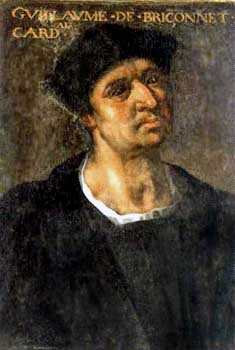
At one point, Jacques Lefèvre d’Etaples got the attention of the powerful Briçonnet family.
It was a true dynasty of diplomats, builders and great servants of the Kingdom.
Guillaume Briçonnet (1445-1514) was a French royal officer and later a clergyman, known as the Cardinal of Saint-Malo. Initially a financier, he served as the general of finances for Languedoc under Louis XI.
After his wife’s death, he entered the clergy. Recommended by Louis XI to his successor, he was appointed Secretary of the Treasury. He served as Minister of State under Charles VIII and was created a cardinal by the Pope in 1495. On May 27, 1498, he crowned Louis XII in Reims.
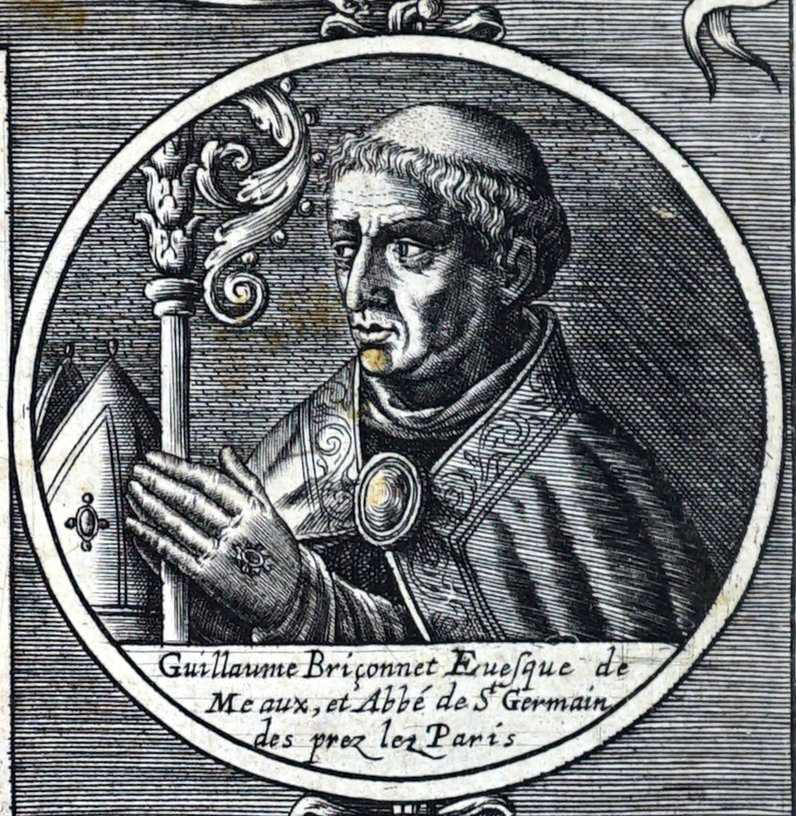
Guillaume Briçonnet (the elder) had a son of the same name, born in 1470. In 1489, while a student in Paris at the Collège de Navarre (he was only 19 years old at the time), Guillaume Briçonnet (the younger) was appointed Bishop of Lodève in Southern France. He also became Abbot of Saint-Guilhem-le-Désert in 1493, a monastry built by one of the lieutenants of Charlemagne. .
He continued to reside in Paris for a time to complete his education, under the tutelage of flemish theologian Josse Clichtove, through whom he met Lefèvre d’Étaples and his circle. In 1495, succeeding his uncle Robert, Archbishop of Reims, Guillaume Briçonnet became one of the two presidents of the Chamber of Accounts in Paris, a position he held until 1507. Having been made a canon of the Church of Paris in 1503, he had a magnificent residence built for himself in the cloister of Notre-Dame.
Appointed abbot of Saint-Germain-des-Prés in 1507, he summoned Lefebvre to his side to promote a reform of the monks’ morals. For Lefebvre, this was a moment of truth. What becomes strikingly clear is that he never practiced philosophy to distance himself from religion; on the contrary, his quest for truth was merely a step in his journey toward God. Prudent in examining the doctrines of others, he avoided taking sides while pursuing his own reflections. Far more than from Aristotle or Plato, it was from the Gospels that Lefebvre drew his inspiration. For him, the study of Holy Scripture was to be the culmination of his work, its natural endpoint.
“In the distance,” he wrote, “such a brilliant light struck my eyes that human doctrines seemed like darkness compared to divine studies, while the latter appeared to exhale a fragrance whose sweetness is unmatched on Earth.” 8
Lefèvre wanted to draw closer to the light he saw in the distance. It could be said that he was going through a « mystical crisis. » The list of « mystical » authors whose works Lefèvre published is long. From the one he considered the most ancient of all, Dionysius the Areopagite, it extends to the most recent, Nicholas of Cusa, passing through Heraclitus, Hermes Trismegistus, John Damascene, Raymond Lull, Richard of Saint Victor, and Ruysbroeck the Admirable .
In 1509, Lefèvre published a Psalter in five languages. The choice to focus first on the Psalter was primarily pastoral in nature: he wanted to offer monks an effective tool to fully understand the content of their prayers, but also to emphasize the centrality of the direct relationship between the faithful and God.
In 1511, while passing through Paris, Erasmus met Lefèvre. Although they may have criticized each other, they deeply respected one another and shared a common commitment throughout their lives.
Lefèvre continued his offensive by publishing the Epistles of Paul (1512), which we know constituted one of the battlegrounds for the Reformation in general and for Luther in particular (« faith and works » or « faith alone » as the path to salvation).
One important point clearly aligns Lefèvre with Erasmus and distinctly separates him from Luther: his interpretation of free will. For the Picard theologian, despite the state of misery and powerlessness into which original sin has plunged humanity, we retain the capacity, however diminished, to receive the gift of grace, to open ourselves to salvation, to reject evil, and to choose good. From this stems a more optimistic and serene vision of the salvation process, truly open and accessible to all, in contrast to the somber and anguished interpretation of salvation that the Reformers reserved for a select few.
Lefèvre, publisher of Nicholas of Cusa
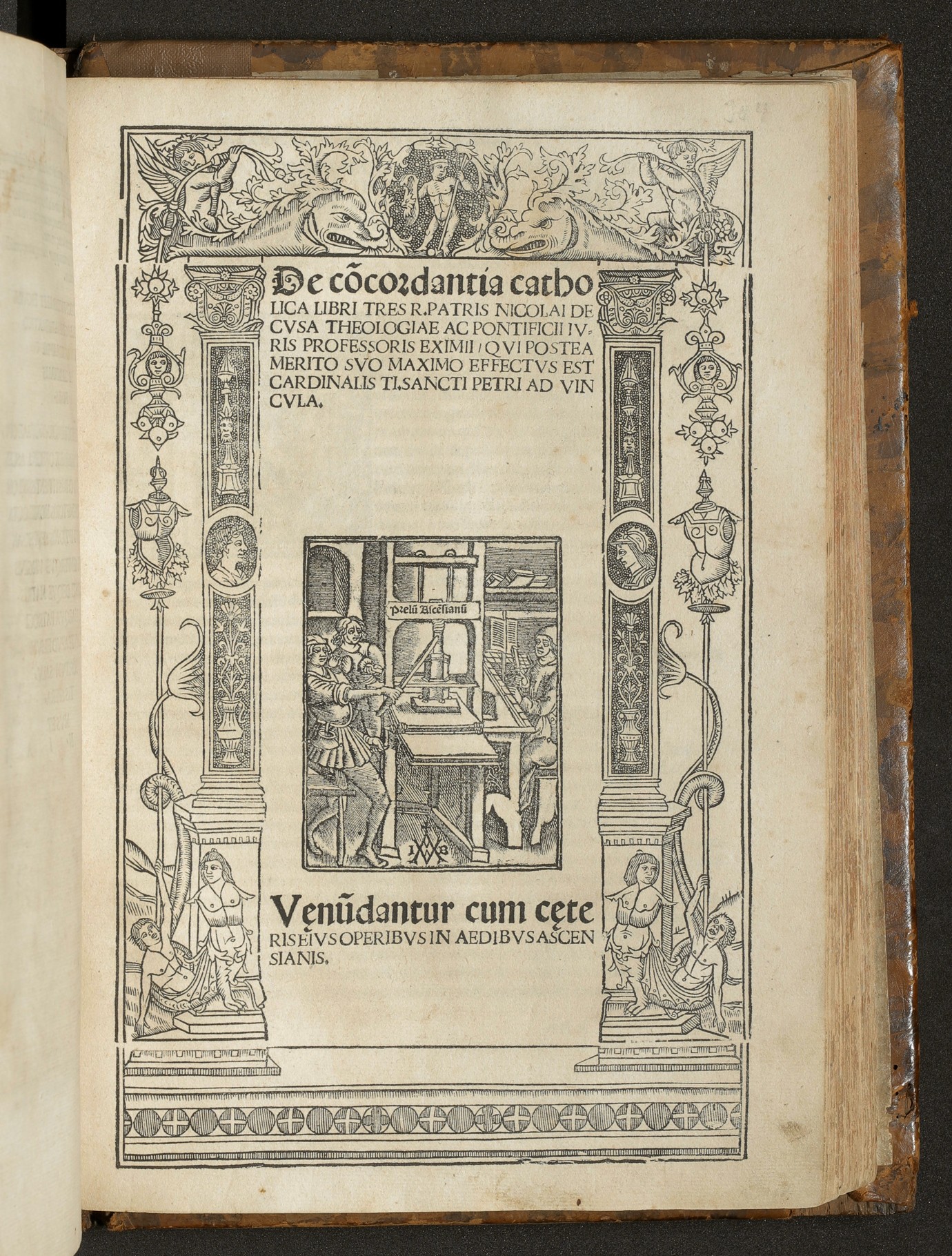
in the 1514 edition by Jacques Lefèvre d’Etaples at Josse Bade in Paris.
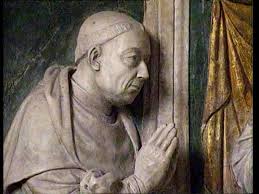
Lefèvre shared his « mystical » passion with the Briçonnet family, and later with Marguerite de Navarre.
And when, in 1514, Lefèvre had the complete works of Nicholas of Cusa printed in Paris, until then only published twice in Germany, he addressed his dedicatory epistle to William’s brother, Denys Briçonnet, bishop of Toulon.
According to Noëlle Balley ,
« The most remarkable example of this cooperation between scholars is the edition of the works of Nicholas of Cusa, directed by Lefèvre, for which he had manuscripts searched for and copied by all his correspondents, thus creating a truly international collective edition. » 9
His printer was Josse Bade, a passionate Fleming from Ghent, trained by printers in Lyon. Not always rigorous, he published many humanists, including Sebastian Brant (The Ship of Fools), Erasmus (In Praise of Folly), Guillaume Budé, etc.
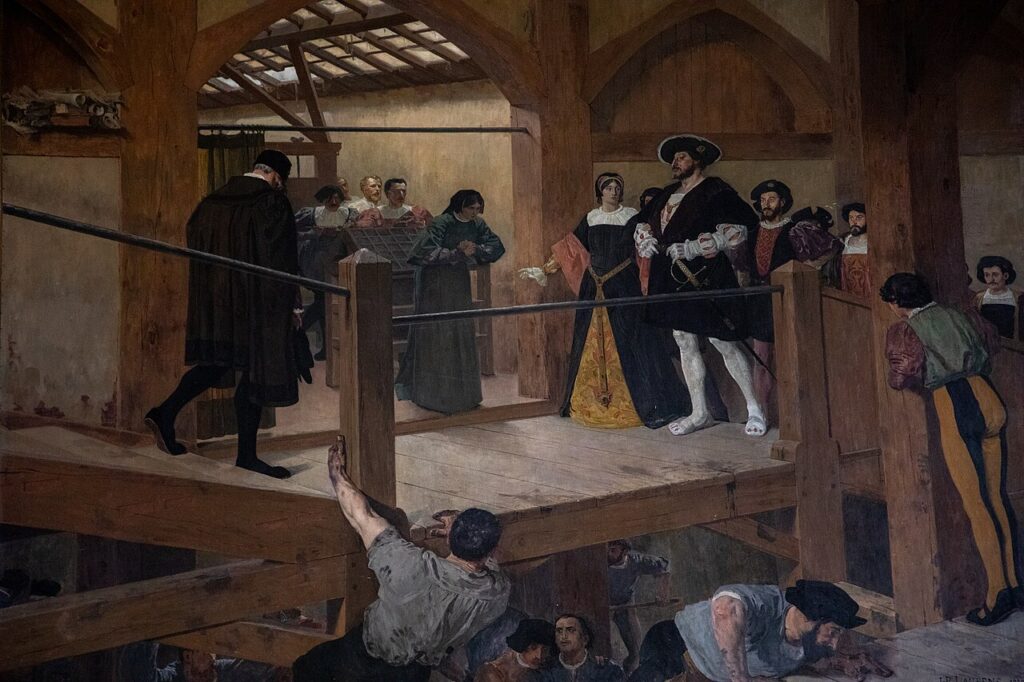
His son-in-law was the humanist and scholarly printer Robert Estienne (1503-1559), son of the great printer Henri Estienne (1460-1520) (the elder). Francis I appointed him, before 1539, royal printer for Hebrew and Latin, as well as for Greek from 1544.
Cenacle of Meaux
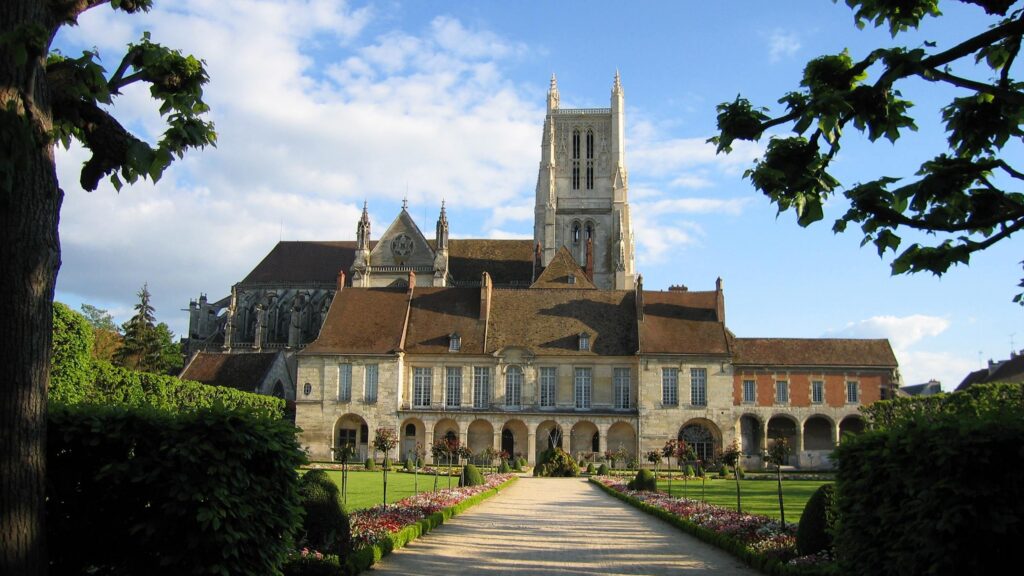
From 1518 onwards, Lefèvre’s patron, Guillaume Briçonnet, decided to take up residence in his new diocese, Meaux, 41 km from Paris. There he intended to implement a pastoral reform inspired by the theological approach outlined by the Picard humanist. At the heart of this project lay the desire, shared by humanists, to bring the essential message of the Gospel to all people, even the simplest and least educated, and thus facilitate access to the mysteries of faith, with the conviction that the intervention of the Holy Spirit could inspire the minds and hearts of the faithful.
A friend and disciple of Lefèvre, Guillaume Briçonnet resolved to promote his moral ideas in his diocese. And, unusually for that time, he abandoned court life to live there.
At Briçonnet’s request, Lefèvre then founded in 1521 the Cenacle of Meaux, a center for reflection and reform of the Church of Meaux. The aim was to return to the sources of Christianity, to the original teachings of Christ, by spreading the New Testament in French: the Gospel texts were « de-Latinized. »
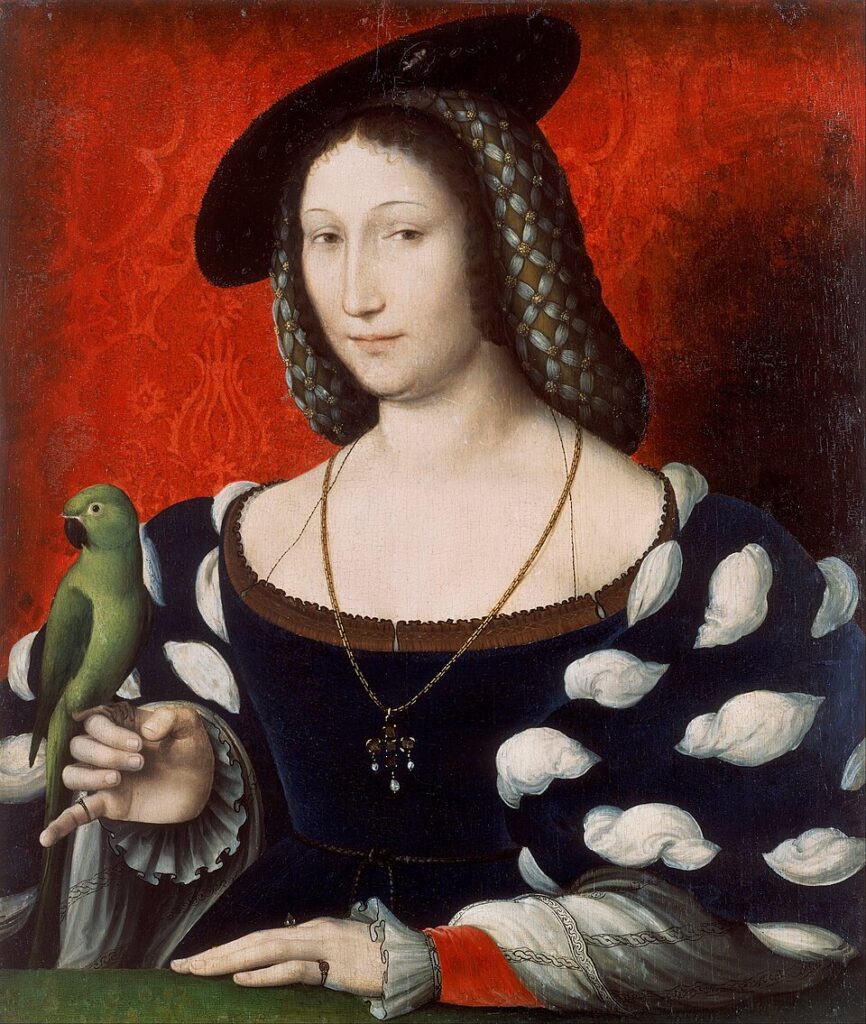
Oil on canvas, attributed to Jean Clouet.
Appointed in 1520 as vicar to Guillaume Briçonnet, who had become Bishop of Meaux, Lefèvre settled in that city. In 1521, Briçonnet became the spiritual director of the sister of the King of France, Marguerite de Navarre, who was committed to the cause.
That same year, Briçonnet and Lefèvre attracted several theologians and preachers to their circle, including the future Reformed philosopher Guillaume Farel, the tireless Gérard Roussel , the Flemish theologian Josse Clichtove, the Hebraist François Vatable, the eloquent Martial Mazurier, the intrepid Michel d’Arande, the renowned preacher Pierre Caroli , and Jean Lecomte de Lacroix.
Then others joined, expanding their circle: Pierre de Sébiville, Aimé Mégret , the Franciscan friar and friend of Rabelais, Pierre Amy, and Jacques Groslot , bailiff of Orléans. Their simple motto was also that of Marguerite de Navarre:
« To know the Gospel, to follow the Gospel, and to make the Gospel known everywhere. »
Marguerite of Navarre was close to Leonardo da Vinci during the last three years of his life (1516-1519) at the Château du Clos Lucé in Amboise. Marguerite had lived there with her husband, Charles IV of Alençon, in 1509. Subsequently, she stayed there regularly with her mother, Louise of Savoy, and her brother, Francis I, in the immediate vicinity of Leonardo da Vinci.
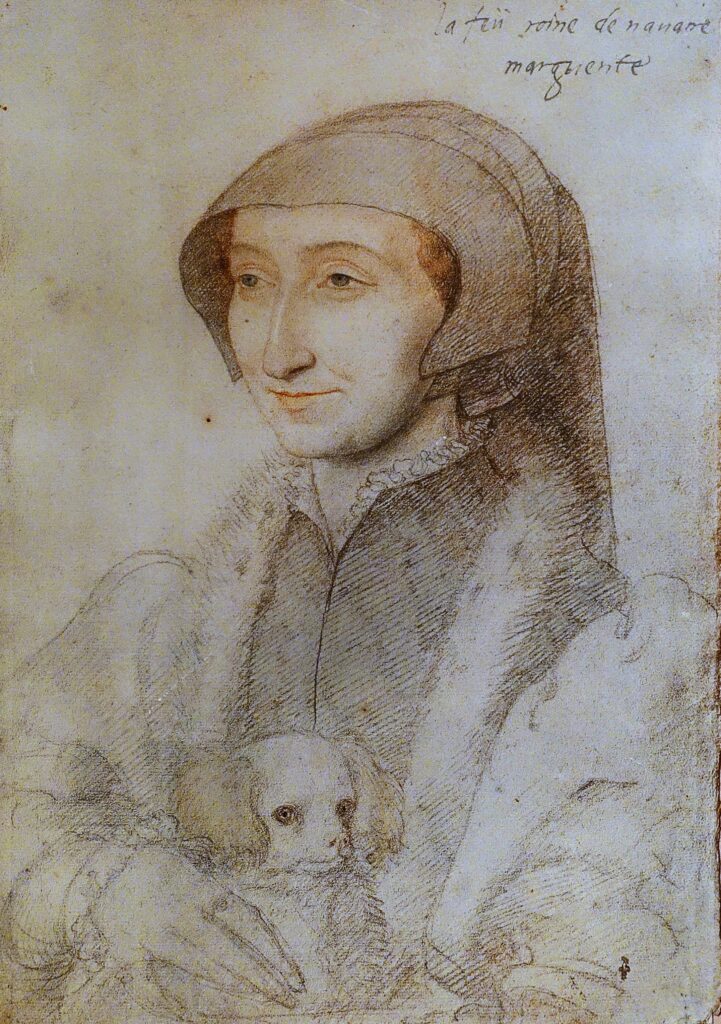
She was an influential patron of the arts, while Leonardo was the king’s « first painter. » In 1546, Rabelais paid tribute to her by dedicating his Third Book to her.
A recent thesis by Jonathan Reid has shown that Marguerite was already at the heart of a vast network including more than two hundred members of the court, diplomats, prelates, and men of letters. Extending well beyond Paris and Meaux, this network also encompassed Alençon, Lyon, Grenoble, Bourges, Poitiers, and Mâcon.
Printers, including Augereau and Du Bois, but also Simon de Colines, who was operating clandestinely in Lyon, were among them. In total, according to Reid, 450 editions of 200 « evangelical » works were printed in France thanks to Marguerite’s protection. 10
On the ground
After visiting his entire diocese, Briçonnet observed that most priests did not reside in their parishes and that the assistant priests had little to no theological training. Furthermore, they lacked the time to teach their parishioners because they had to work, as all parish income went to the priests. The only educated preachers were the Franciscan friars (aka Cordeliers), who often limited themselves to promising hell to wicked Christians.
As early as 1518, Briçonnet undertook to combat moral depravity and the laxity of ecclesiastical discipline by thoroughly reforming his diocese. He simplified worship, abolished the veneration of images and relics, and encouraged preaching to revive the faith. He considered his diocese a mission field and divided it into 26 stations of nine parishes each. But, year after year, he observed the inadequacy of these measures: more than half of the priests were incapable of properly carrying out their assigned duties. He decided to expel the 53 most unfit priests and to train new ones. The Cordeliers were forbidden from preaching.
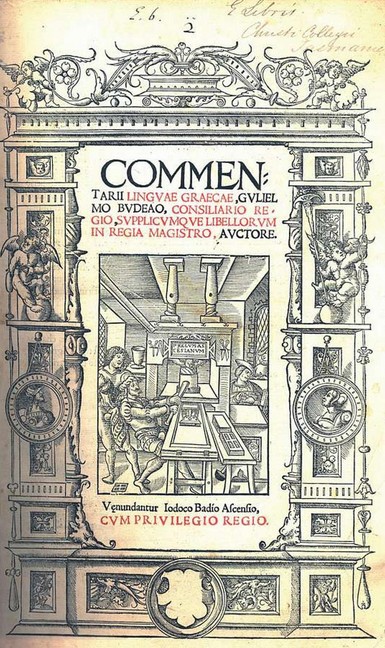
In Meaux, the Cenacle ran a printing press to publish, among others, the works of Lefèvre d’Étaples: Commentary on the four gospels (in Latin) in 1522, Old Testament (in French), Homilies, Epistles, Gospels, Acts of the Apostles (1523) and Psalms (1524).
The main instruments of religious renewal were greater attention to the selection and education of the priestly body, the restoration of the bishop’s authority over competing religious orders, the control of pulpits entrusted to preachers faithful to Christocentric doctrine and firmly convinced of the principle of justification by faith alone, on which Lefèvre had insisted for years in his writings, as well as the printing and distribution of numerous writings and works intended for clerics and laity: these were devotional texts focused mainly on mental prayer and on the invitation to simplify and purify traditional rituals, as well as Latin and especially French versions of the Holy Scriptures.
Stripped of unnecessary glosses, the texts were read aloud to small groups of people with some education. Prayers in simple language were printed for the common people, as well as popular works beginning in 1525.
The sermons, which changed (no more threats of hell, no more collections at the end), were successful. Neighboring Picardy, the Thiérache region, and the monastery of Livry-en-Aulnoy followed the Fabrist approach.
Meaux served as a laboratory for other dioceses in the kingdom, where bishops close to the evangelical network attempted to implement the model of pastoral renewal developed by Lefèvre and his followers. But if evangelicalism did indeed become an influential and respected movement during the reign of Francis I, it was thanks to the support of a segment of the court which, as we have mentioned, referred to Marguerite. The political, economic, and diplomatic support of the king’s sister and her network allowed the Fabrists to have direct access to the court and to influence the crown’s decisions regarding the policy of tolerance toward « heresy » and the appointment of bishops and abbots.
The reaction
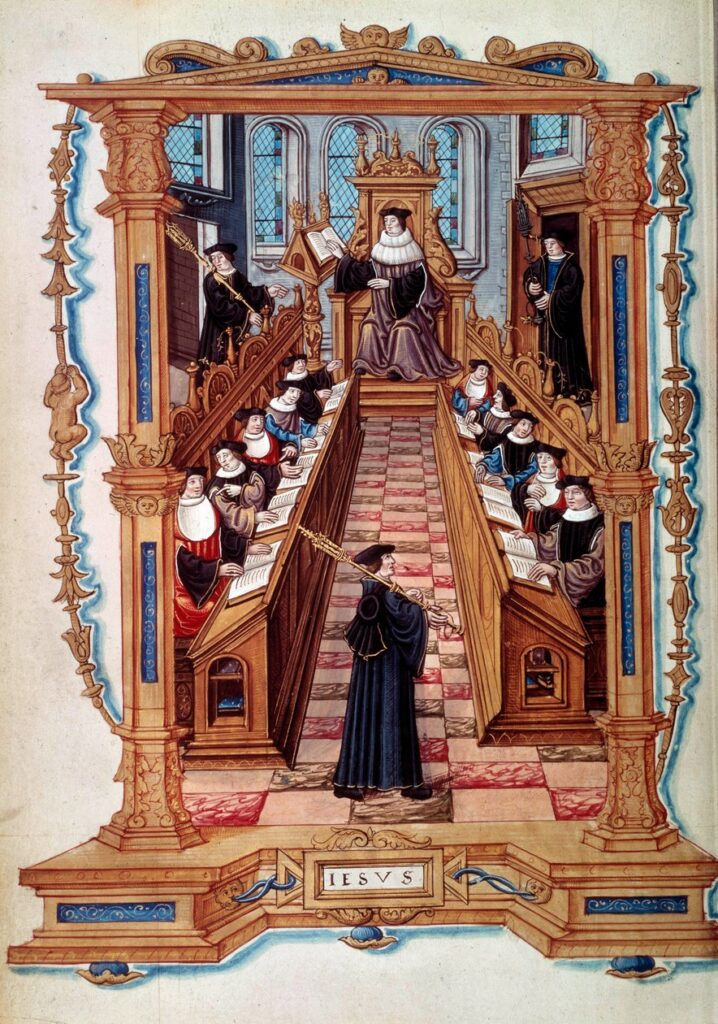
The Cenacle of Meaux immediately attracted the wrath of the Cordeliers (whom it deprived of the proceeds of their collections) and the theologians of the Sorbonne.
In April 1521, Luther’s theses, initially well received and studied, were condemned by the University of Paris.
Clichtove defected (he wrote a work on the cult of saints, proclaiming that « the intelligence of laymen will never be able to understand the sublime meaning contained in the divine books » which even the most learned struggle to understand).
Although Lefèvre’s translation of the New Testament is based on the Vulgate text, he makes about sixty corrections based on the Greek originals. The doctors of Paris are particularly irritated by the « Exhortatory Epistle » that he places at the beginning of the second part, where he recommends that all the faithful read Holy Scripture in the vernacular, that is, in French.
Eleven proposals were submitted to the faculty. The courts ordered that Lefèvre d’Étaples’s French New Testament be burned. But the king, informed of this affair, which he saw as nothing more than harassment by the dean of the Sorbonne, Noël Béda, intervened, and Lefèvre, having defended himself before the prelates and doctors whom the court had appointed as judges, emerged from this attack with his honor intact.
In October 1523, under pressure, Briçonnet banned Luther’s books in his diocese, and in 1524, he dismissed Farel, whose sermons were too provocative, in order to continue his work of spreading the Gospel. At his own expense, he organized public readings of the Bible and distributed translations, which reached Normandy, Champagne, and the Loire Valley.
This first phase of expansion of the Fabrist movement ended around 1525, when, under the regency, the conservative party imposed a repressive policy towards Lutherans and Evangelicals, without distinction.
The hour of persecutions
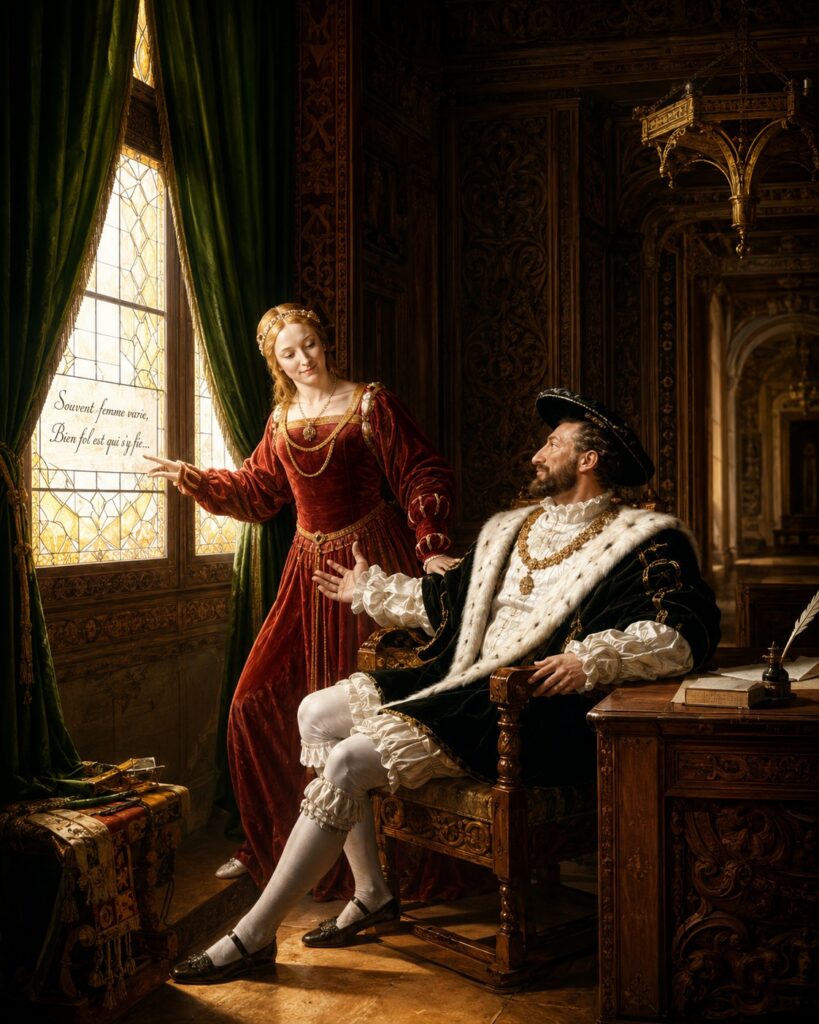
In 1525, geopolitical upheavals changed the situation in France. First, the trap set by the Italian Wars closed on Francis I. On February 24, 1525, the king was taken prisoner at Pavia by the troops of Charles V.
Consequently, he was no longer in a position to protect the Bishop of Meaux. Furthermore, in May, a papal bull authorized a group composed of three theologians from the Sorbonne and a priest to hunt down heresy.
While Lefèvre was publishing the Epistles and Gospels for the 52 Sundays of the coming year , his enemies were more successful with a new attack, taking advantage of the unrest stirred up in the diocese of Meaux by indiscreet preachers and turbulent monks. A trial opened before the Sorbonne at the instigation of the Cordeliers, who accused him of allowing « heresy » to spread.
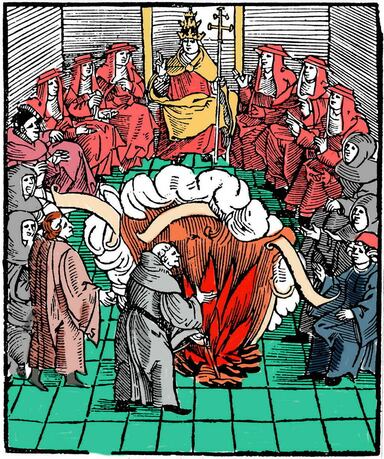
That same year, the Parliament of Paris brought a case against Briçonnet. As a conciliatory measure, he again authorized the Cordeliers to preach, asked his parish priests to restore the veneration of saints and the Virgin Mary, forbade preaching to the most extreme elements, and took the statues and images of saints under his personal protection. Jean Leclerc, a wool carder converted to the new ideas, was flogged for putting up posters hostile to the Pope.
After barely four years of existence, the Meaux circle was dissolved in 1525.
For several months, in order to avoid arrest and conviction, Lefèvre and his family were forced to leave the kingdom and take refuge in Strasbourg. There, he strengthened his ties with moderate Protestants such as Capiton and Butzer, and associated with Otto Brunfels, to whom he was linked by a Nicodemite attitude, recognizing the legitimacy of religious concealment in a context of persecution.
In 1526, with the return of Francis I, negotiated with Spain by Margaret of Navarre, and thanks to her protection, they were back in France and managed to maintain some influence for a few more years at court and throughout the rest of the kingdom, through intense activity in printing and disseminating written works, as well as through systematic preaching in the heart of the capital. The king granted Lefèvre the position of personal librarian at Blois and entrusted him with the education of his two children.
Guillaume Briçonnet, for his part, was acquitted. In 1528, he participated in the Synod of Paris that condemned Lutheranism. A year later, Francis I and Marguerite failed to save the life of preacher Louis de Berquin (1490-1529), a friend of Erasmus and also a translator of Lutheran treatises. He was burned alive in the Place de Grève in Paris.
Exile
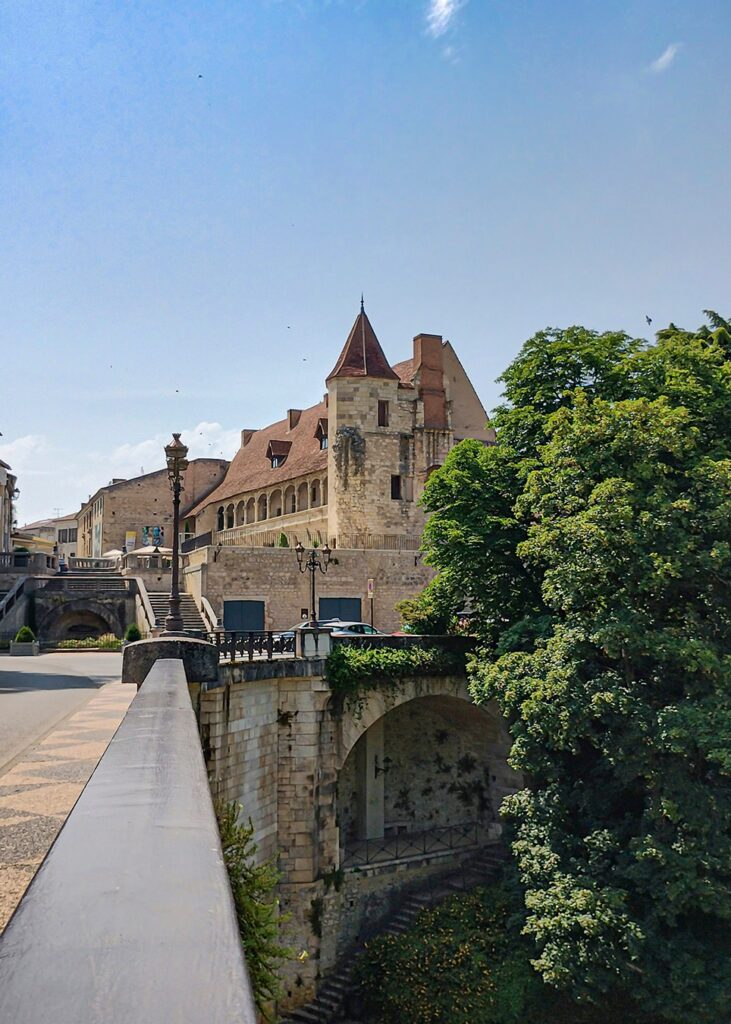
In 1530, Lefèvre chose to leave the court to go to Nérac to be with his patroness, Marguerite de Navarre. He remained there until his death in 1536, preferring not to take sides in the disputes between Protestants and Catholics.
He cannot be accused of Protestantism, although his comments on priestly celibacy, fasting, and the sacraments are extremely harsh and pave the way for the Reformed movement. The term « evangelicalism, » recently proposed, seems, on the other hand, to be appropriate for this attitude of absolute fidelity to the spirit and the letter of Scripture.
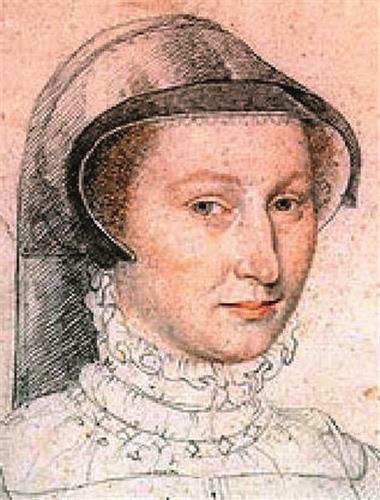
Marguerite de Navarre , it must be emphasized, was a learned woman.
While she knew Latin and even Greek, she was far from mastering these ancient languages like Lefèvre, whose lessons she was able to attend.
For religious reasons, she even received Hebrew lessons from Paul Paradis, nicknamed Canosse, who would later become a lecturer at the Collège Royal. She was greatly influenced by the inspiration and ideas of the Cenacle of Meaux, examples of which she provides particularly in her secular comedies and poems.
And according to one historian,
« She was also familiar with Nicholas of Cusa, author of ‘De Docte Ignorance’, also edited by Lefèvre, with Saint Bonaventure, and with Pseudo-Dionysius, actually a 5th-century Syrian monk. » 11
In 1531, the Venetian scholar Jerome Aleander, former papal nuncio who had become Erasmus’s chief persecutor for the Roman Curia, proved to be very well informed about the situation. He regretted that Lefèvre remained under the influence of his former disciple Gerard Roussel, Bishop of Oloron.
The ambition of the Roman and French conservatives at that time was to convince Lefèvre to write a retraction of his errors and to go to Rome to obtain his full reintegration into the Roman Church.
This was not the case. Although Lefèvre could no longer publicly display his spiritual beliefs, he remained close to the positions of his disciples Roussel and Marguerite, who, throughout the reign of Francis I, even after the Affair of the Placards, continued to advocate a third way between Rome and Geneva. In 1534, Briçonnet died at the Château d’Esmans, near Montereau-Fault-Yonne.
Conclusion
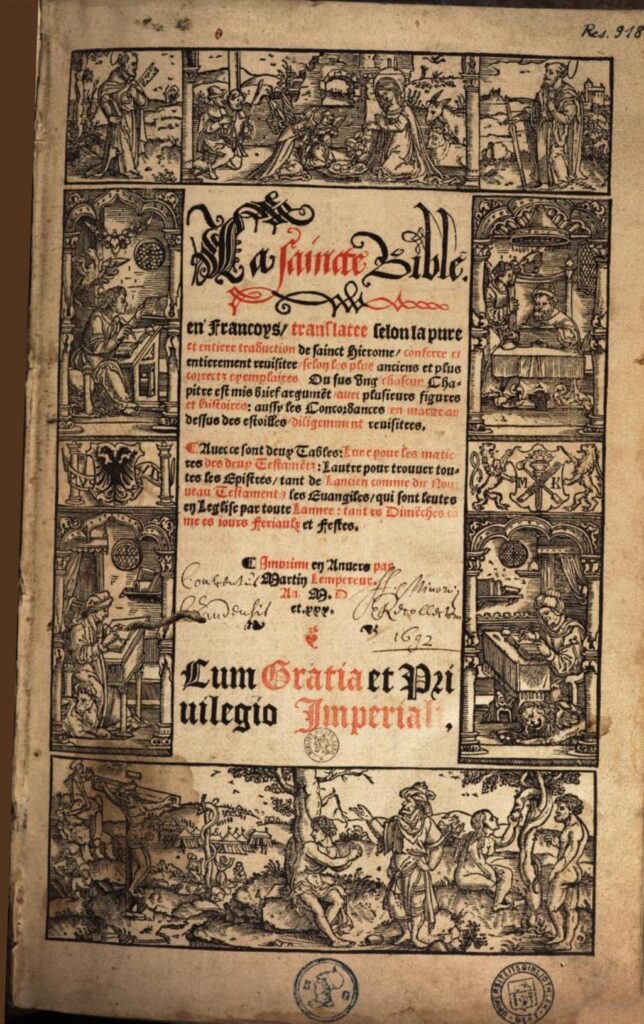
Lefèvre’s translation of the Holy Bible , based on the Vulgate text, was printed not in France, but in Antwerp in 1530.
This was the first Bible in the vernacular language, which served as the basis for all French translations, including modern ones.
A center of preaching, this epicenter of Christian humanism, the Cenacle of Meaux , a precursor of « reformism » , had a great influence on the humanists and writers of this generation.
Marguerite protected François Rabelais (1483-1553) and encouraged him to write Gargantua and Pantagruel.
A friend of Rabelais, the famous poet Clément Marot, entered Marguerite’s service. He was soon accused of heresy and took refuge in Nérac in 1535.
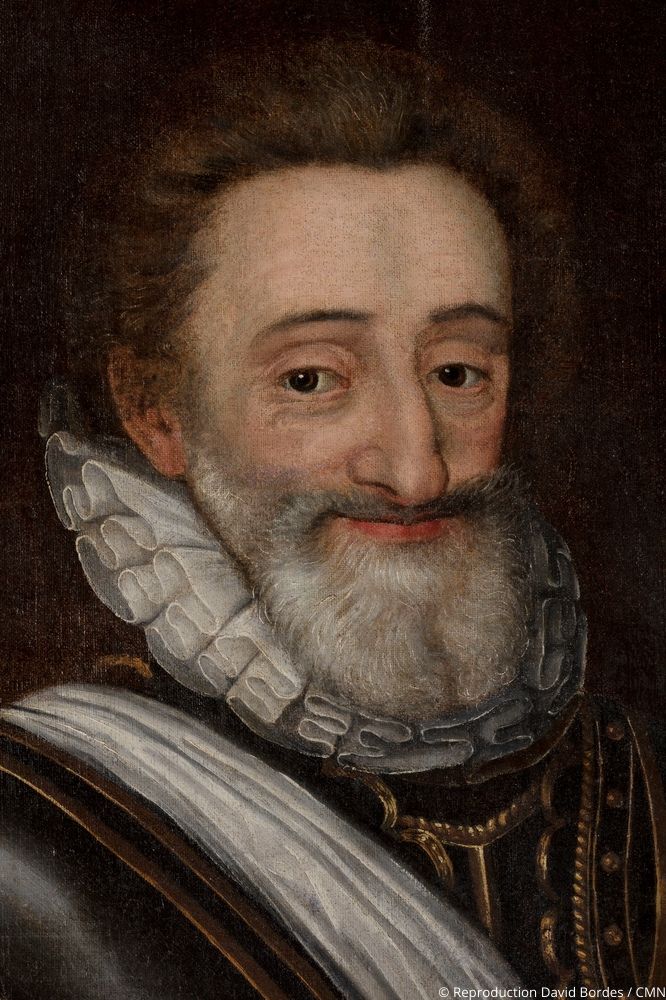
Nicknamed the « mother of the Renaissance, » Marguerite de Navarre was the mother of Jeanne d’Albret and therefore the grandmother of Henri IV, the good King Henri who, knowing this intellectual and spiritual lineage, would embody this ideal in action.
It was certainly with the work of the Cenacle of Meaux in mind that he succeeded, at least in part, in putting an end to the Wars of Religion ravaging France.
The inclusive peace he organized in France, based on the coincidence of opposites theorized by Nicholas of Cusa, would be the model for the Peace of Westphalia which ended the Thirty Years’ War in 1648.
Selected Bibliography
- ALONGE, Guillaume Jacques Lefèvre d’Étaples in the religious crisis of the 16th century , nord’ 2022/2 No. 80, pages 15 to 21, Éditions Société de Littérature du Nord.
- BARNAUD, Jean
— Jacques Lefèvre d’Etaples: the preparation , Theological and religious studies, 11th year, No. 1, 1936.
— Jacques Lefèvre d’Etaples, Master of Philosophy , Theological and Religious Studies, 11th year, No. 2, 1936.
— Jacques Lefèvre d’Etaples (continued) , Theological and Religious Studies, 11th year, No. 3, 1936.
— Jacques Lefèvre d’Etaples (continued and concluded) , Theological and Religious Studies, 11th year, No. 4-5, 1936. - CHARLIER, Yvonne , Erasmus and friendship, based on his correspondence , Editions Les Belles Lettres, Paris, 1977.
- DE ROMILLY, Jacqueline, Five centuries of Hellenism in France , Bulletin of the Association Guillaume Budé, March 1977.
- EICHEL-LOJKINE, Patricia, Marguerite de Navarre, pearl of the Renaissance , Perrin, Paris, 2021.
- PERNOT, Jean-François, Jacques Lefèvre d’Etaples (1450? – 1536), Proceedings of the Etaples colloquium on November 7 and 8, 1992, Classiques Garnier, Paris, 1995.
NOTES:
- https://www.facinghistory.org/resource-library/agreement-catholic-church ↩︎
- file:///C:/Users/User/Desktop/alonge-2022-jacques-lefevre-detaples-dans-la-crise-religieuse-du-xvie-siecle.pdf ↩︎
- Christian humanism differs from « secular humanism » (anti-religious) and supposedly « scientific. » Once the spiritual dimension was eliminated, the humanist dimension also fell by the wayside. Julian Huxley, one of the great promoters of « secular humanism, » ended up inventing the term « transhumanist, » an ideology he saw as capable of replacing all religions. Millionaire Jeffrey Epstein, as well as billionaires Elon Musk, Larry Ellison, and Peter Thiel, are adherents of this ideology .
- file:///C:/Users/User/Desktop/Jacques%20LEtap/Romilly_Helle%CC%81isme-France.pdf ↩︎
- Börje Knös , An Ambassador of Hellenism: Janus Lascaris and the Greco-Byzantine Tradition in French Humanism , Uppsala, Almqvist & Wiksells, 1945 .
- Philip. Monnier , The Quattrocento . Volume II, p. 82. ↩︎
- https://www.etudesheraultaises.fr/publi/evocation-de-guillaume-briconnet-eveque-de-lodeve-de-1489-a-1519/ ↩︎
- Heminjard , Correspondence of the Reformers, vol. I, p. 4, note. ↩︎
- https://theses.chartes.psl.eu/document/ENCPOS_1991_01 ↩︎
- Jonathan Reid , King’s Sister, Queen of Dissent: Marguerite de Navarre (1492-1549) and her Evangelical Network . Leyden, Brill, 2009; 2 vol. ↩︎
- Jean-Pierre Duteil . Marguerite de Navarre . Ellipses, 2021. hal-04186835.